

Travel Blog 2025
Nordic Echoes Meet Bordeaux Vibrance
After my scandinavian out where I found myself tracing Nordic landscapes and stories, now I am moving to a different vibe, this time exploring South France. In particular, I am delving into Bordeaux: a city where heritage doesn’t sit quietly in the background but pulses through the streets, the façades, the wine, the riverfront, and the people.
Bordeaux’s UNESCO World Heritage listing covers not a single monument but an entire urban ensemble — a living, breathing testament to centuries of trade, architecture, and cultural exchange. Here, the golden stone buildings glow under the southern sun, the Garonne shimmers beside sweeping 18th-century quays, and every corner seems to invite a conversation between past and present.
This chapter is not a break from Nordic Echoes but a continuation — an exploration of how World Heritage cities reveal their identities in very different ways. Where the Nordic cities represented an indissoluble relationship with nature and medieval textures and exceled in unpretentiousness and nature , Bordeaux bursts with a warmer, denser urban richness.
In the coming posts, I’ll share my experiences, impressions, encounters, and discoveries as I walk through Bordeaux’s cultural richness, tracing both the known landmarks, but also putting the lens on the small details that make this city vibrate with life.
**A heartfelt thank you to the OWHC (Organization of World Heritage Cities) for allowing me to continue sharing my journey here in Bordeaux. I’m grateful for the opportunity to explore, reflect, and contribute to this global conversation on heritage — and excited to bring you all along for this new chapter.**
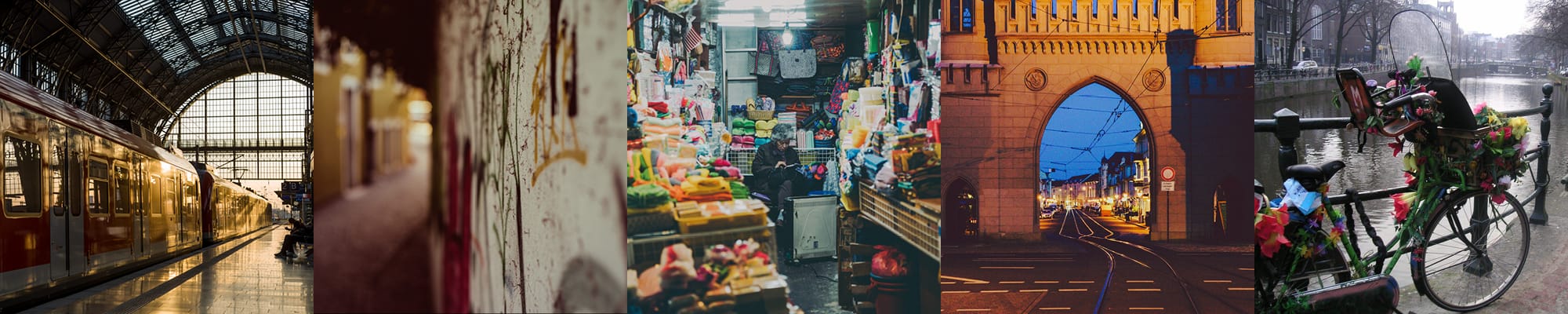
all images shown here were taken analog with my canon ae I
regensburg to experience – my personal favorite places in the city
as a native of regensburg, i’m lucky to live in one of the most beautiful cities in germany. i often hear visitors talk about how impressed they are with the old town, the danube, and the many historical sites – and rightfully so! but even as a local, i keep discovering new facets of my hometown.
wurstkuchl
the wurstkuchl isn’t just a highlight for tourists, it’s also a piece of identity for us locals. no matter how often i’ve been there, the sausages with their unique mustard and hearty sauerkraut are always a treat. what i find particularly special is how this place has combined tradition and taste for over 500 years. when friends visit me from out of town, it’s the first stop i recommend – and it’s always a hit.
town hall
regensburg is steeped in history, and one of its most remarkable landmarks is the old town hall. although i’ve lived here for years, i only recently explored it in depth – and i was immediately captivated by its significance and the stories it holds.
the old town hall stands in the heart of the old town and immediately catches the eye with its striking façade and tall tower. built in the 13th century and expanded over centuries, it wasn’t just an administrative building but also a place where major political decisions were made. most notably, in the 15th century, it served as the venue for the imperial diets of the holy roman empire. emperors, princes, and envoys gathered here to discuss important matters. you can almost feel the weight of history as you stand in front of the building.
at the heart of the old town hall is the so-called reichssaal,…
Geneva/Montreux/Nyon:
1. "Boogie Woogie Stomp" – Albert Ammons
To echo the wine-red-faced man’s performance of boogie-woogie in Nyon, my friend Archie (a talented pianist) played this song to me amongst the jazz nightlife. Not my usual cup of tea, I enjoyed it to start off the trip!
“ Lou’s Tune” - Dargz
Bizarrely at the festival, the actual amount of jazz played is limited. Moreso there is a huge plethora of pop artists available free-to-watch on the stages. Dargz, an artist I was unfamiliar with, played one of the main stages. This soulful, contemporary number was a good soundtrack to our evening in Montreux before we left amid a storm.
“ Stars (Live in Montreux)” - Nina Simone
This is a classic, I suppose, reflecting the history of the festival. As we say in Scotland this is a “ tune”. Not much to be said about Simone that hasn’t been said before, a classic for a classic festival. Switzerland is odd for music, not a huge folk-music tradition but lying within it one of the greatest stages for artists (jazz and other) in the world. A bizarre dichotomy, rounding off the great few days in Montreux and Nyon.
Nice:
"Ode to Rahsaan" – Berlioz
While not specifically french, this new jazz dance music reflects the romantic and artistic ambiance of the Côte d’Azur. I was maybe slightly reeling off of the jazz festival, but this song reflects the small winding streets and nightlife of Nice more appropriately. Nice felt more jazzy? Hopefully that makes sense. Modern and eclectic, whilst appropriately captivating and romantic.
5. "Nissa la Bella" – Traditional
A hymn to the beauty of Nice, this Niçois folk song is a celebration of the region’s identity. Nice was a favourite of the trip, a…
The bus pulled into Brussels just after 4 p.m., the kind of arrival where the city reveals itself in glimpses. The first thing we saw was the north of the city - towers of glass and steel buildings; where the European Union flexes itself. It was sleek; suits and briefcases, electric shiny black cars driving men in expensive ties and a stark lack of personality on first impression, but this glimpse of the city was such a contrast to the version of Brussels we’d come to explore later.
Our hostel provided us with a good laugh at the strange set-up of the room and the awkward interactions with our roommates for the next couple days, as we stashed our bags and grabbed a minute to breathe. The air was warm, humid in that way cities can be in the summer, and without the coastal breeze that we had quickly gotten used to, the pavement seemed to hold onto the heat long after the sun started its descent. We headed out, following the slow pull of curiosity toward the old city.
The streets tightened as we went, their stone edges softened with age. When we settled into some comfy seats on a side street somewhere, ordered a drink and began to people-watch, we realised that we had accidentally sat across from Manneken Pis, that tiny, odd little statue with a reputation bigger than it has any right to be, but a comical people watching spot all the same. Tourists crowded around him, snapping photos and pointing, as if they’d found a hidden treasure instead of a fountain with a boy peeing in it. Watching the scene unfold, it was one of those funny moments where either by coincidence or probability, I was reminded of just how much there is to see within heritage…
Canals to Cathedrals: Discovering Northwestern Europe’s Structural HeritageOWHC 2024December 2, 2024
Day 1 – 10/09/2024
Unfortunately, our first day in Amsterdam was only a short evening (we arrived at 8 pm), as we spent the day travelling from Cologne, Germany to the Netherlands on a 5-hour bus ride. As we came from Germany, we got to see quite a bit of the Dutch countryside (under the pelting of rain, typical) as we drove from the eastern part of the country to just a bit inland of the North sea coastline.
We arrived at the Amsterdam Sloterdijk Station in the northwestern part of the city, where we then jumped onto the metro to get us to our home for the next 5 days, which was a hostel located in the Noorderpark neighbourhood. Just a little bit outside of the historical center of Amsterdam, across the River IJ, the northern neighbourhood had a residential feel with masonry townhouses, some larger apartment complexes and small shops. Our hostel located right at the heart, being a rehabilitated church with a restaurant, bunks and full private rooms for the hostel residents, a library, and seating/working areas littered throughout. Staying outside the main urban center gave us a chance to see another part of the city, which we would have never explored originally.
Day 2 – 11/09/2024
Our first proper day in Amsterdam! As we headed straight to our hostel the night before this was our first chance at seeing the city in its full glory, arriving at the historic center's main station called "Amsterdam Central". Walking out from the north side of the station we got an amazing view of the IJ river, and the massive glass canopy stretching across the entirety of the station. Built in the late 20th century, the station's glass roof stands as a great example of engineering with an expansive…
all images shown here were taken analog with my canon ae I
after my stop in porto, something truly special was on the agenda: a quick detour home. but not to rest – instead, to discover my adopted hometown from a completely new perspective. it’s shocking how little you actually know about your own city, even after living there for over five years. it was time to change that. unfortunately, the first two days didn’t go as planned. i spent them sick in bed.
neupfarrplatz
imagine a city that feels like a living history book, its pages filled with medieval alleys, historic buildings, and a hint of mediterranean flair. welcome to regensburg, a jewel on the danube. here, history is tangible. the old town is a labyrinth of cobblestone streets, charming squares, and colorful facades that tell tales of emperors, merchants, and artists.
view from the stone bridge I
the highlight? without a doubt, the "steinerne brücke" (stone bridge), a masterpiece of medieval engineering that leads you straight to the heart of the city while offering the best views of the danube.
stone bridge
built between 1135 and 1146, the stone bridge was considered a technical marvel of its time. for over 800 years, it remained the only permanent bridge across the danube and played a vital role in european trade and transportation. its 16 limestone arches have withstood centuries of wind, weather, and floods – a true symbol of resilience that still inspires awe today.
danube I
danube II
crossing the bridge is immediately rewarding: the view of regensburg’s old town from here is simply breathtaking. to the left stands the mighty dom st. peter, and to the right, the historic city skyline unfolds in all its glory.
view from the stone bridge II
view from the stone bridge III
view from the stone bridge IV
even from afar, the two nearly 105-meter-tall…
Unfortunately, most of the information boards in the beguinage are just in Flemish so I could'nt understand so much. But what I understood is for example the following:
The first beguines lived around 1225 in Bruges. Characteristics of the beguinage were: community of women, solidarity and care, entrepreneurial activity in textile craft, economic independence, religion and spirituality and - as already mentioned - silence. Moreover, every beguine had her own little house. The community had a "grootjuffrouw" - she was the "head" of the beguines.
There was also to read that the beguines, their way of life and their own jurisdiction were viewed with suspicion by authorities because they exuded big independence. Therefore, they fall under the control of the religious and wordly authorities. Nevertheless, we can speak of an emancipatory movement.
In the guided tour I learned that no man was allowed to come into the beguinage so that the women are protected. Furthermore, there is a boundary stone between the beguinage and the city for delimitation. An important point is that beguines weren't nuns - they were religious persons but organized outside the church institution.
Very typical for the beguinage in Bruges is the water moat in front of the surrounding wall. So you can just enter when you walk over a bridge.
A similarity to the beguinage in Antwerp is that there are some signs which ask the visitors to be quiet. Also like in Antwerp there is often a wall with an additional door in front of the houses. But in difference to Antwerp some houses hadn't a wall but a hedge in front. Another similarity is that above some of these doors there are statues of Mary and of saints. But while the houses of the beguines in Antwerp are brown, many houses in Bruges are painted white. A difference is also that in Antwerp there was a little park in the middle, while in Bruges there was "just" a big meadow with trees and a church in the middle.
What I liked very much in the beguinage of Bruges is the very small inner courtyard between two houses - because there are interesting information boards:
Tine De Moor said: "The beguinages may have offered women in the low countries safety and security in the case they chose to remain single." This quote shows that women could feel safe (in the beguinages) although they did'nt marry.
Walter Simons said: "Beguinages indeed proved to be powerful devices to attract young women from the countryside eager to make a living in the city but in need of support and protection, as medieval cities were dangerous places for them." Also the quote of Walter Simons addresses the safety aspect.
Georges Rodenbach said: "Si vide, si muette, d'un silence contagieux qu'on y marche doucement, qu'on y parle bas, comme dans un domaine où il y a un malade." (engl.: "So empty, so mute, so contagiously silent that you walk softly and…