After a few days in Riga, I continued my journey to Vilnius by bus. The ride took only around four hours and was surprisingly comfortable, which makes travelling between Baltic cities by bus really easy. When I arrived, there was a huge storm and strong wind, so I spent the evening having some cepelinai, the traditional Lithuanian dish, and working on my blog. The storm was apparently quite a topic in Vilnius too, as locals kept mentioning it over the next few days.
Day 1
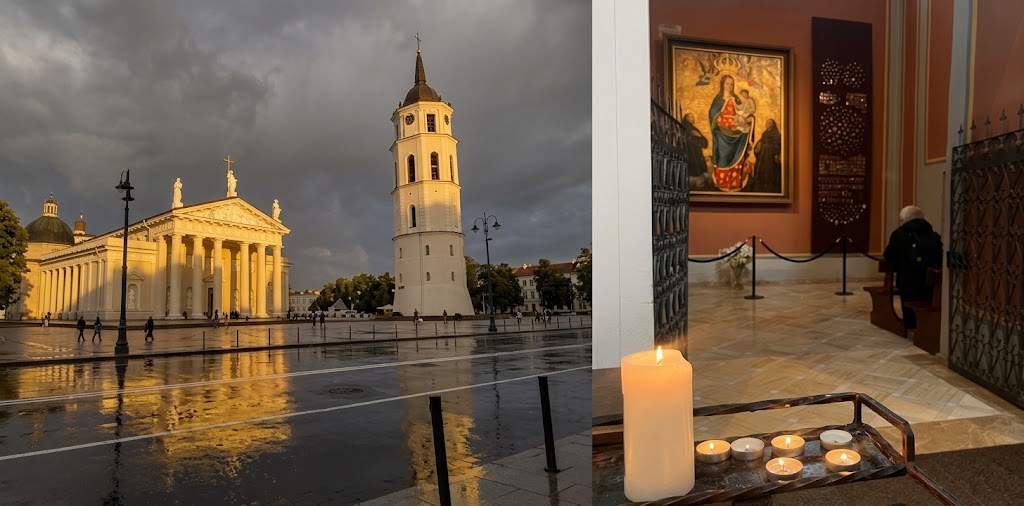
My first day in Vilnius started right in the historic centre, right in the middle of the St Bartholomew’s Fair. Suddenly, the old town felt less like a UNESCO site and more like a medieval town that had somehow forgotten to move on. There were craftsmen in period costumes, blacksmiths, potters, traditional textile techniques, music, dancing and plenty of street performances. The crafts were not just there to look at. They were actually being made, and visitors could try some of the techniques themselves.
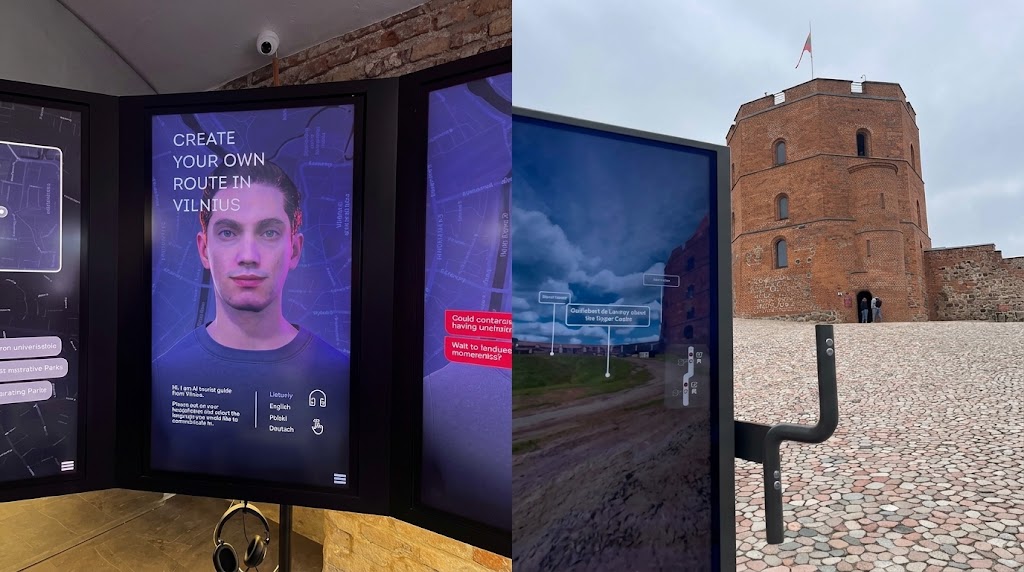
I was also pleasantly surprised by how much modern technology Vilnius uses in tourism. At the tourist information centre, artificial intelligence is already helping visitors find their way around the city, while interactive elements can also be found at some historic sites. It is a nice combination – old stones, new technology, and no need to choose between the two.
In the evening, I wanted to go up to the Hill of Three Crosses for the view. Unfortunately, it started rating, so the hill will have to watt for my next visit. I guess I need to leave something for next time.
Day 2
The second day started with a meeting with Jurate Raugaliene, an architect and heritage conservation specialist from the Vilnius Old Town Renewal Agency. We mainly talked about tourism in Vilnius, especially seasonality and how the city deals with the ups and downs of visitor numbers throughout the year. It was interesting to hear how the city looks at tourism not only in terms of attracting more visitors, but also in terms of creating a better balance throughout the year.
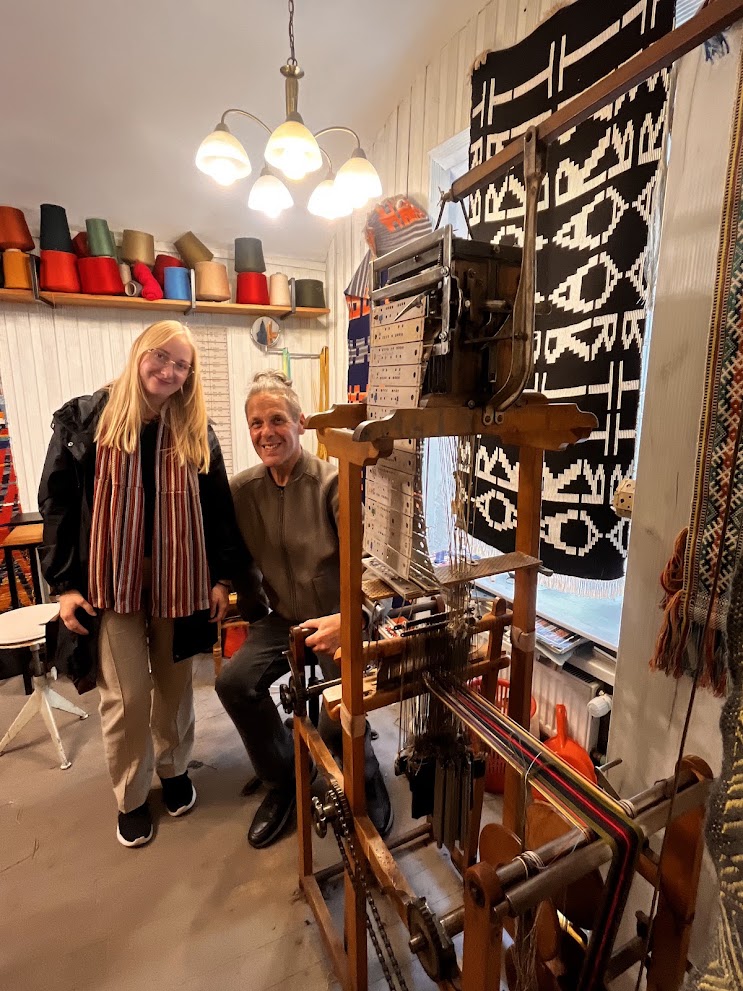
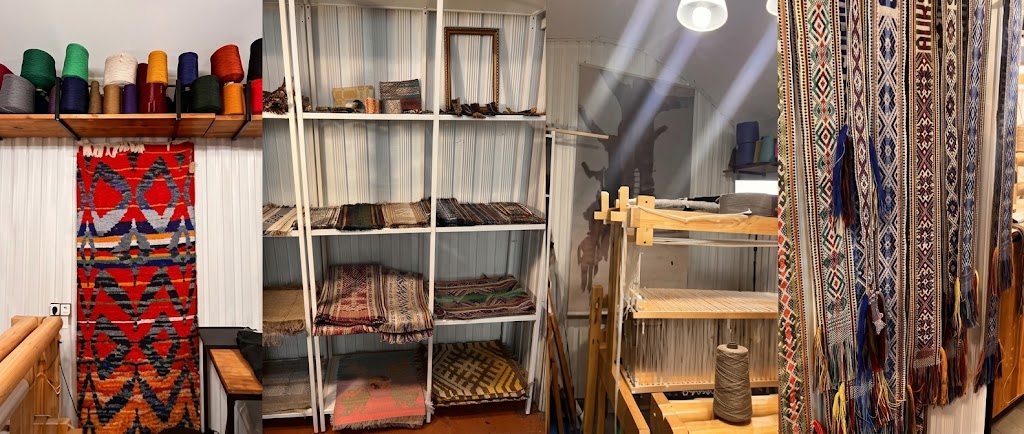
After our meeting, we went on a city tour. One of the stops was the Great Synagogue of Vilna. There is no synagogue anymore, but you can still see what has been found underneath the ground. Archaeologists are still working on the site and discovering more about what was once one of the most important places of Jewish life in Vilnius. Another stop was the Auskim weaving studio, where I met Vladas Daškevičius, a third-generation weaver. The studio has been weaving since 1963, and Vladas learned the craft from his mother and grandmother. Today, he continues the family tradition, creating woven bands, rugs and other textiles using traditional Lithuanian techniques, but with a more contemporary look.
What caught my attention was the 100-year-old loom he was working on. The principle is quite simple – threads are lifted in different combinations and the weft is passed through them to create the pattern – but the process itself is much more complicated than it looks. Watching Vladas work made me realise just how much patience and precision goes into something that can look so effortless when it is finished.
Then I went to Užupis, the artistic neighbourhood on the other side of the Vilnelė River. I had heard quite a lot about it, so I was curious to see it for myself. I spent some time just walking around and also talked to two locals about what ITL acually to live there. We talked about how Užupis has changed over the years and how they percieve the growing number of tourists.
It was a good way to end the day – with a lot of new things to think about and, of course, still a few places left on my list for next time ❤️
Day 3
On my third day in Vilnius, I continued exploring the historic centre. I visited several of the city’s churches, walked along Literatų Street, and stopped at the colourful Basilian Gate. Literatų Street was one of my favourite discoveries – its walls are covered with more than 200 small artworks dedicated to writers and poets, so it is basically an open-air literary gallery. I also went up to Gediminas’ Tower.
I also stopped at Galerija 16, right next to St Anne’s Church, where I bought a little ring. After hearing from Jurate about the guild connecting local craftspeople in Vilnius and how the city supports traditional crafts, I wanted to support local makers myself. So the ring became my little souvenir with a purpose.
At 5 p.m., I joined the Meet the Local project and met Natalja, who is 37 and lives in Vilnius. She asked me where I had been so far, and I proudly listed pretty much every place I had managed to see in the historic centre. When I finished, she simply asked: “And have you been across the river?” No. I hadn’t. Apparently, I had been exploring only half of Vilnius. So Natalja decided to fix that.
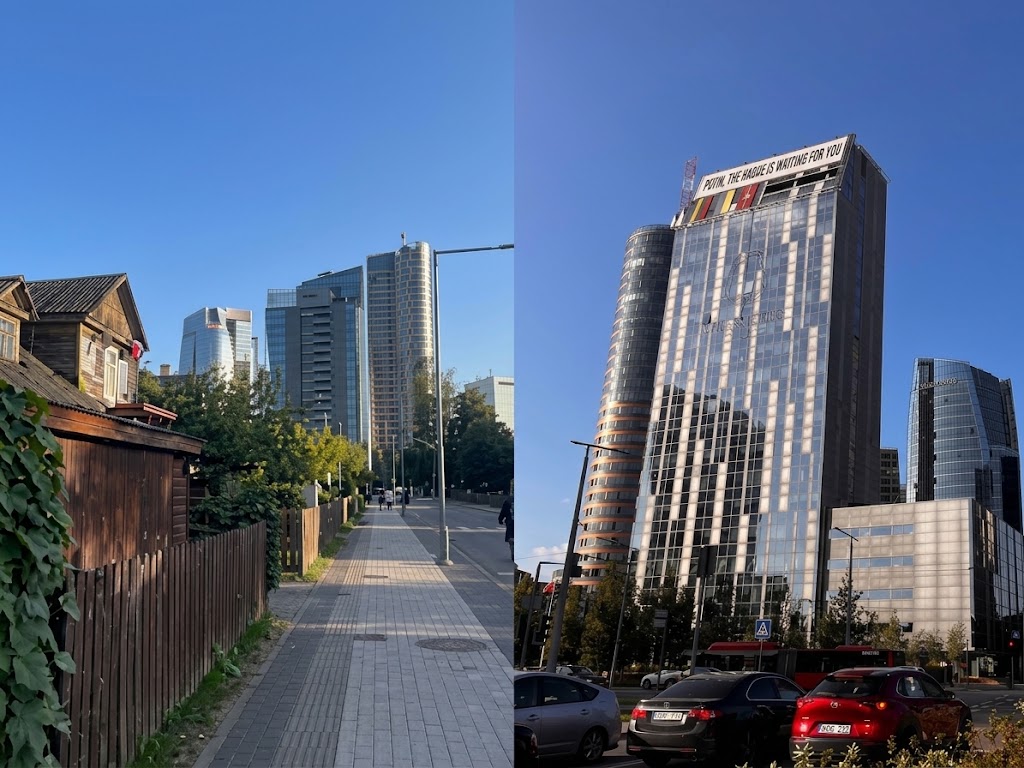
She took me to Šnipiškės, first through the modern part of the neighbourhood, with skyscrapers and a completely different city skyline. She even took me up to a viewpoint, so I could see the city from above. But then we walked a little further and suddenly the whole atmosphere changed. Among the skyscrapers were tiny wooden houses, gardens and narrow streets, and people were sitting outside, enjoying the summer and getting ready for a barbecue. It felt less like being in the middle of a capital city and more like I had somehow ended up in a little summer cottage area. The wooden houses are part of the historic Šnipiškės settlement, with many dating from the late 19th and early 20th centuries. They survived as the modern city grew around them, which is why today you can literally walk from a skyline of glass towers into an area that feels like a completely different world.
Natalja also took me to a Japanese garden, which was another unexpected stop. We talked about the neighbourhood, how it has changed. I was really impressed by how much she knew about Vilnius and how much she could tell me about the places we were seeing.
Having a local like Natalja with me was simply great – it made the whole afternoon so much more interesting and gave me a completely different perspective on the city 🤩