Skip to content Skip to sidebar Skip to footer

Three Days in Visby: former prison, one trip to hospital and some local stories

Day 1

After weeks of planning and looking forward to it, I’m finally sitting at
Prague Airport, flying towards Stockholm – and then on to Gotland, specifically
Visby, the first stop of my OWHC Young Travelling Scholarship project.

Getting to Gotland is a little logistical challenge in itself. You can fly
or take the ferry, but this time I chose the faster option. The moment I step
off the plane, I’m greeted by the typical Gotland wind. Visby immediately feels like my kind of place. It’s the main town of Gotland, with around 25,000 inhabitants, and its historic centre has been on the UNESCO World Heritage List since 1995. Yet despite its history and popularity, it still feels like a small town where everything is close.

And then I arrive at my accommodation. A former prison.

STF Visby Hamn Hostel is located in a building that was used as a prison
until 1998. Today, the former cells are rooms for travellers. So yes, my first
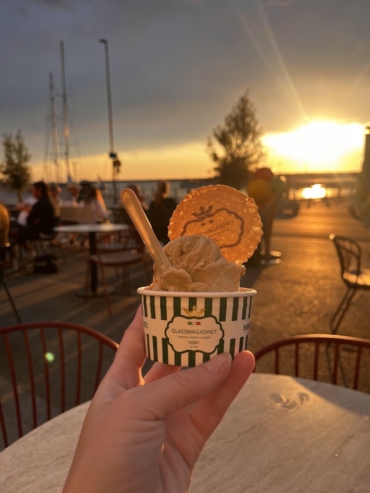
night on Gotland is spent in prison. I noticed a little problem – my leg started to swell.  But I wasn’t going to let that ruin my first evening in Visby. So I headed out anyway. I walked through the historic centre, wandered around the harbour and enjoyed the evening atmosphere. Visby in the evening was simply too beautiful to stay inside. At sunset, I came across an ice cream shop with around a hundred different flavours. Naturally, I had to try one: Coca-Cola. Later, I found out that this ice cream shop is actually a pretty popular spot in Visby. Apparently, I had accidentally stumbled upon one of the local favourites.

But about that swelling. I thought it would go away. It didn’t. It actually reminded me of a similar problem I had last summer. By the evening, my leg was about twice its normal size, so I decided to visit the hospital. It turned out I needed antibiotics and allergy medication. Luckily, the staff were incredibly kind and the treatment worked.

But before that, though, I did get to enjoy my first evening in Visby. So maybe my first day didn’t exactly go according to plan.

But honestly? A little chaos, a night in a former prison, Coca-Cola
ice cream and an unexpected hospital trip sounds like a pretty good start to an
adventure.

Day 2

After a long night, I start the day with breakfast at Babka and a walk
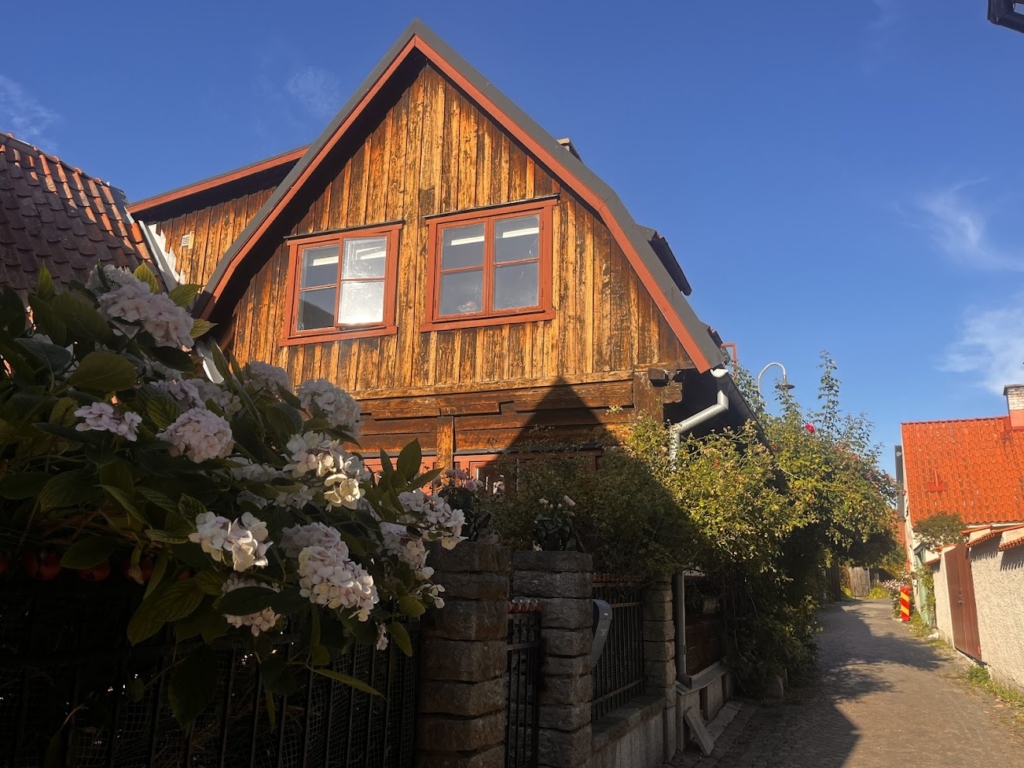
through the almost empty morning streets of Visby. The narrow streets, historic
houses and stone walls remind me a little of my beloved Kutná Hora.

Later, I visited Gotlands Museum, which gives me a completely different
perspective on the city. Behind the beautiful medieval walls is a place shaped
by centuries of trade and connections across the Baltic Sea. But my main goal isn’t only to learn about Visby’s history. I want to meet the people who actually live here. And that turns out to be harder than expected.

After the museum, I start approaching locals for the first time. And this is where I discover that finding young residents of Visby is going to be much harder than I expected. Almost every time I approach someone, I end up talking to a tourist – and surprisingly often, they’re from Stockholm.

But the conversations with people from Stockholm aren’t pointless at all. Quite the opposite. Most of them came to Visby specifically to get away from life in a big city. During the conversations, we keep coming back to the same topic – the pace of life. We agree that the world simply feels slower here. People aren’t as stressed, they don’t rush as much, and during the summer the whole island has an almost Mediterranean atmosphere. The sea, cafés, long summer evenings, and life outdoors create the feeling that everyday worries are temporarily a little further away.

Eventually, I manage to find several locals between the ages of 19 and 27. I’m particularly interested in what life on the island is like from the perspective of a young person and whether they can imagine staying here in the future.

Their answers have one thing in common – summer and winter are almost two completely different worlds on Gotland.

In summer, Visby is incredibly lively. Tourists arrive from all over Sweden and abroad, restaurants, cafés, and other businesses open, and young people have plenty of opportunities to find seasonal work. Summer offers a lot of jobs, but it’s also the time when people meet much more often. Because Visby is relatively small, people know each other well, and according to the locals, it’s not unusual for their social circles to constantly overlap. “Everyone knows everyone” isn’t just a saying here.

But when winter arrives, everything changes. The tourists leave, some businesses close, and the town becomes much quieter. While in summer it can be difficult to find a moment of peace, in winter it can be difficult to find enough people – and enough job opportunities. Work is one of the biggest issues mentioned by the young locals I speak to.

For someone who has graduated from university and is looking for a job in their field, finding the right opportunity on the island isn’t always easy. The job market is limited compared with larger Swedish cities, and many young people leave the island after university to look for work on the mainland. Some come back later. Others stay in Stockholm or another larger city.

This is probably the most interesting thing I discover that day. At first glance, Visby seems like the perfect place to live – a beautiful historic town, the sea, peace and quiet, nature, and an incredibly lively atmosphere during the summer. But for a young person thinking about their career and future, life on the island also has another side.

And maybe that is exactly what makes Visby so unique. In summer, the whole island seems to come alive. People spend time outside, work, meet each other, and the town is full of energy. In winter, everything slows down and life becomes much more private. Two completely different rhythms of life that alternate every year.

After a full day, I start looking at Visby differently. It is no longer just a beautiful medieval town with walls and picturesque streets. I’m gradually discovering what life on the island is actually like – not only for tourists, but for the people who call it home.

Day 3

On my third day, I continue looking for locals and trying to understand
where people who actually live in Visby spend their time.

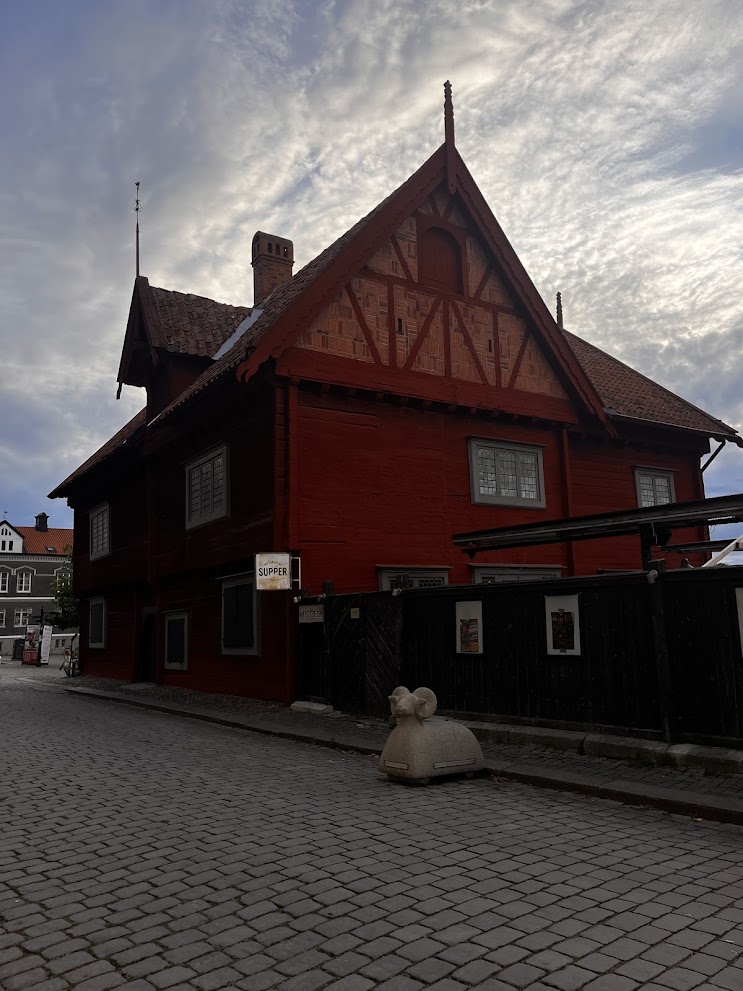
In the afternoon, I had the privilege of getting a walking tour of Visby’s historic centre from Louise Hoffman, World Heritage Coordinator and Site Manager in Visby. She showed me some of the most important places in the city, including the incredibly well-preserved old city wall and several impressive ruins. She also took me to the Burmeister House, one of the oldest surviving merchant houses in Visby, built in the mid-17th century. I really enjoyed seeing these places with someone who knows the city and its heritage so well.

After three days, Visby is no longer just a beautiful medieval town by the
Baltic Sea. It’s a place that comes alive in summer and slows down in winter, a
place with a strong sense of community but also real challenges for young
people.

Sometimes the most interesting part of travelling is what you can’t see at first glance.