Skip to content Skip to sidebar Skip to footer

Évora: Beauty lurking around every corner

Day 1

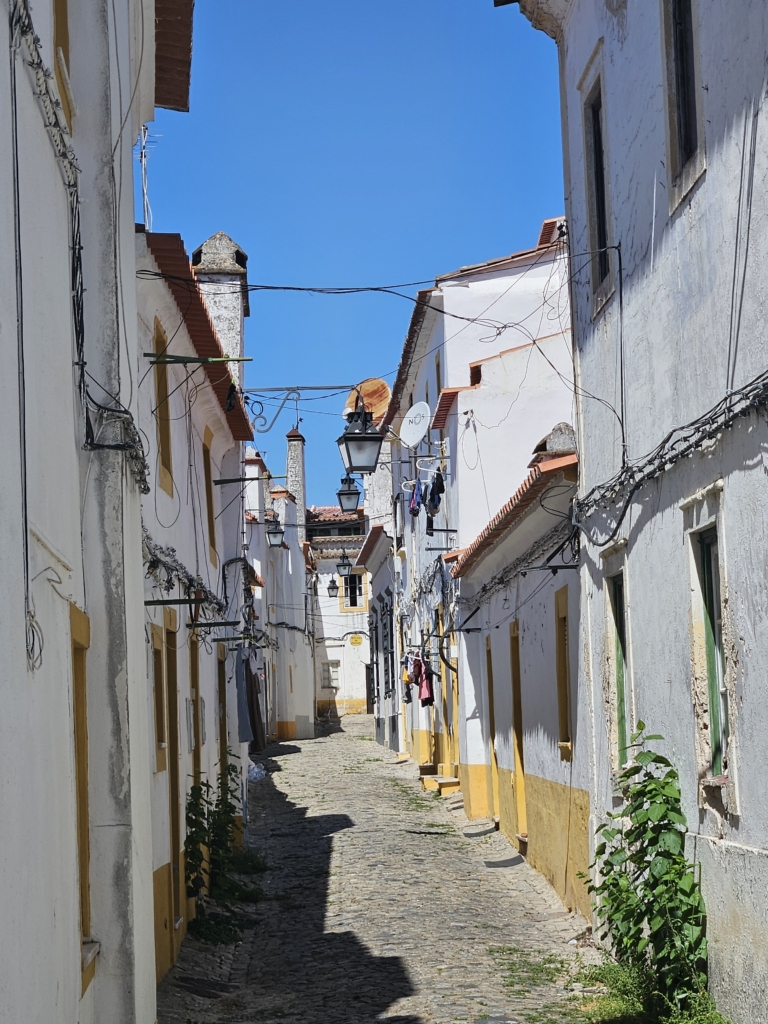
After enjoying a scenic train journey through the beautiful Alentejo countryside, we arrived in Évora. Once in the city centre, we set out to find some young locals. As we wandered through the narrow alleys, we were immediately captivated by the whitewashed houses with yellow trim. The winding streets and uniformly coloured houses made us feel as though we were in a maze.
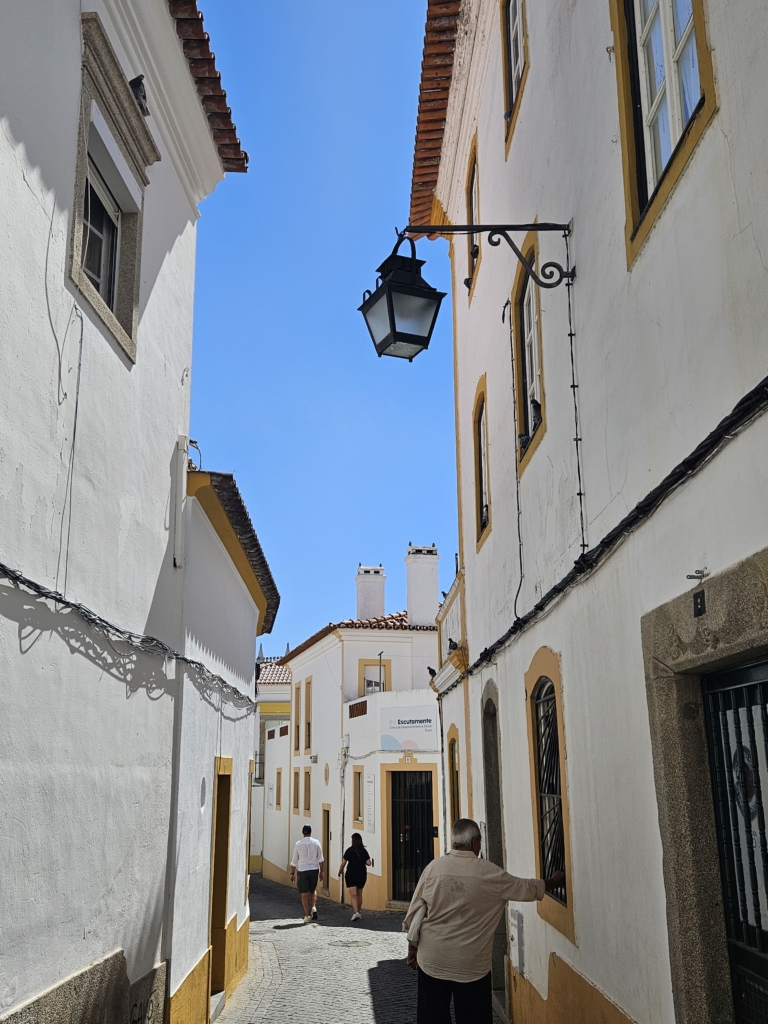
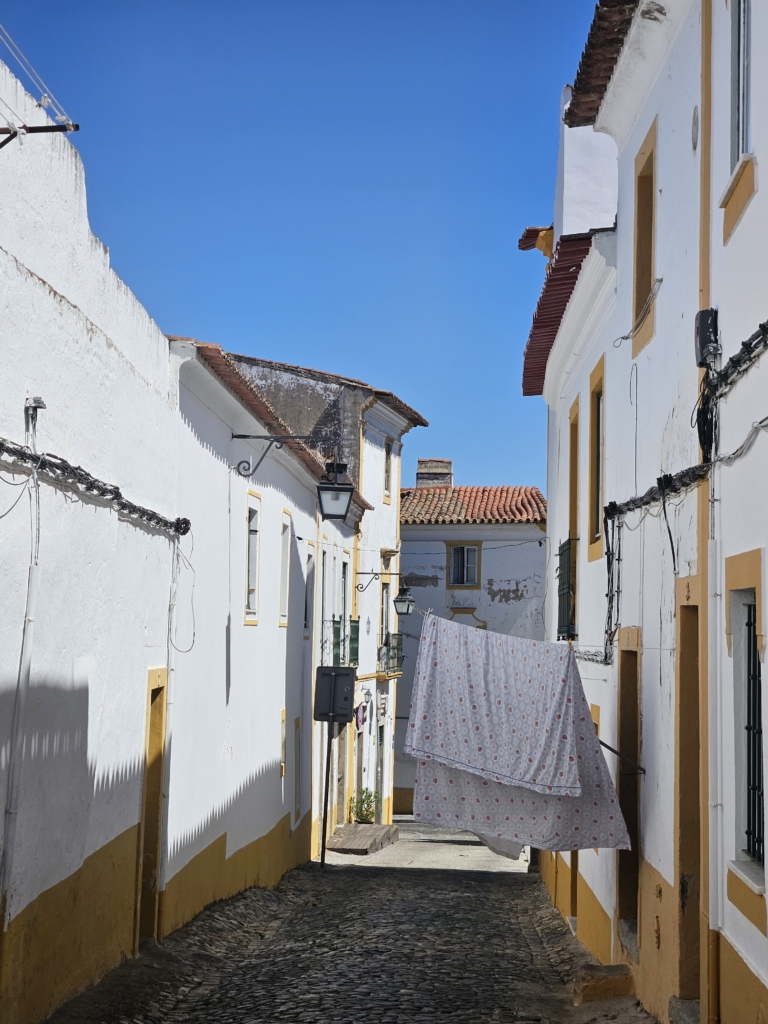
Évora's narrow streets

After dropping off our backpacks, we went to the Jardim Público and visited the Palácio de D. Manuel. Built in the late 14th century on the site of the former São Francisco monastery, the palace served as the seat of the Portuguese royal family for a long time. It was Manuel I, however, who transformed the palace into a magnificent royal residence in the 16th century, giving it his name.
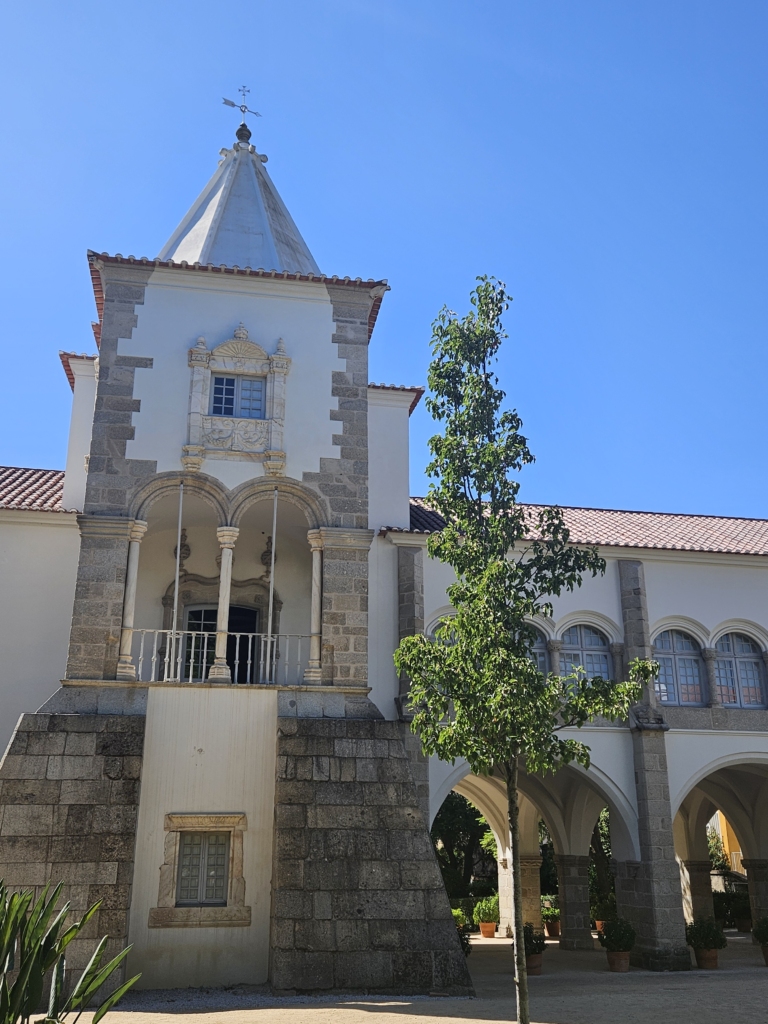
Palácio de D. Manuel

Today, the palace houses a museum dedicated to the history of Évora. Évora became a Roman municipium under the name Ebora Liberalitas Julia. During the Roman era, the city acquired its initial infrastructure and fortifications, and the Roman Temple in the city centre is unsurprisingly also from that time. From the 7th to the 12th century, Évora was an Islamic settlement known as Yāburah. A mosque and a trading centre were established here, as well as settlements outside the city walls. It was subsequently conquered by the Portuguese in the 12th century, after which it became part of the kingdom. Évora gradually expanded, adding new city walls, a cathedral, an aqueduct and an university, while gaining political importance within the realm. Thus, Évora has a remarkably diverse history, reflected in its cityscape.

Afterwards, we made an somewhat unusual stop at the university, where an anime convention was taking place. There were lots of young people in cool outfits and elaborate cosplays, as well as numerous artists, selling handmade stickers, keychains, jewellery and other anime-themed items at small stalls. One of the highlights for us was the ‘K-Pop random play dance’: visitors gathered in an open area while short excerpts from K-Pop songs were played in succession. If they knew the corresponding choreography, they stepped out of the crowd and performed the dance. It was wonderful to see how the anime convention created a safe space where people could celebrate themselves and each other, drawing attendees from far beyond Évora, as we discovered through conversation.

Local perspective: calmness, close community and culture

Sketch and watch: Jardim Diana

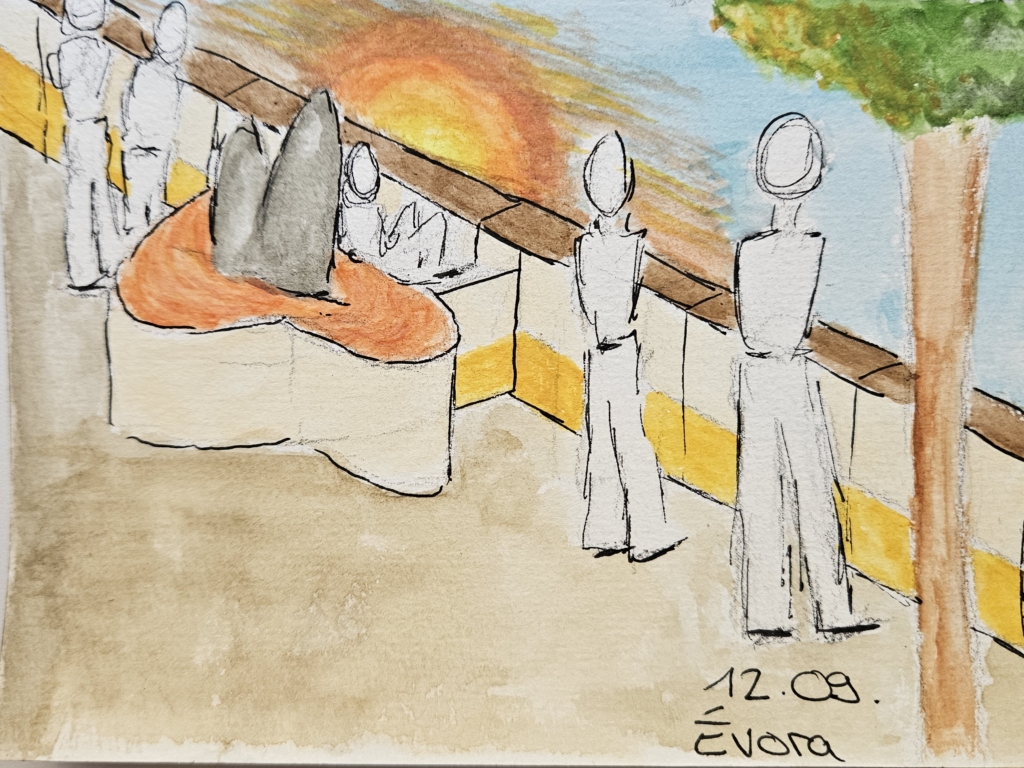
We set off for the viewpoint next to the Roman Temple of Diana, Anna and Pedro’s favourite spot. By the time we arrived at the park, the sun was setting. We knew right then that this was the place where we’d hold our final ‘sketch and watch’ session.
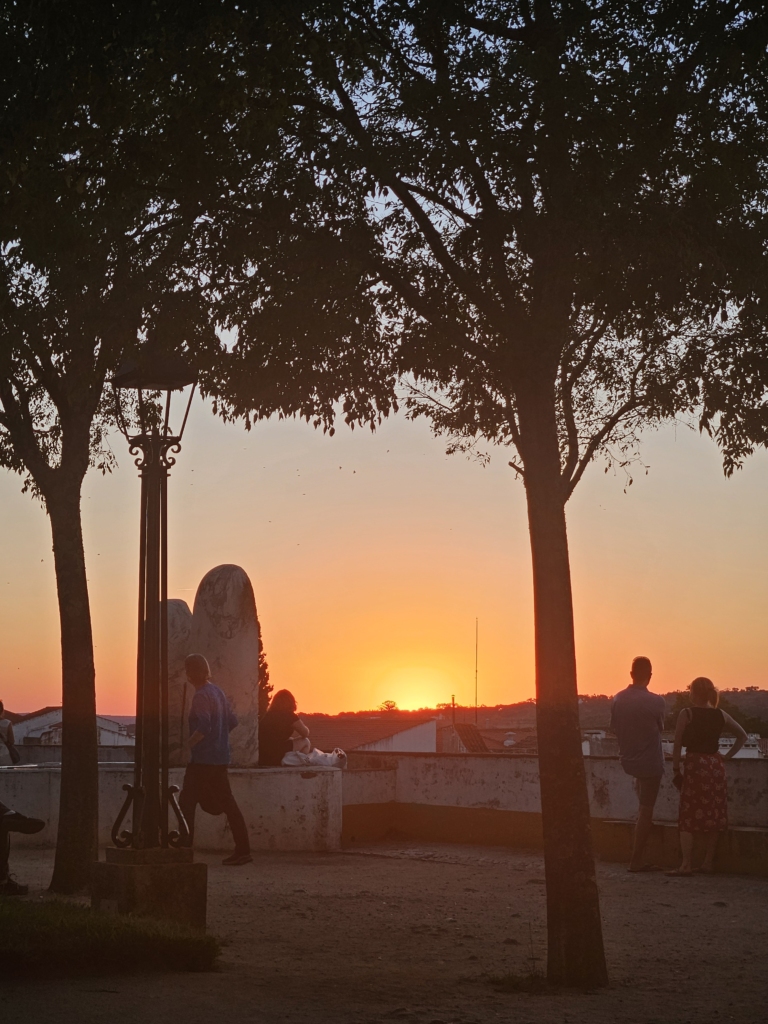
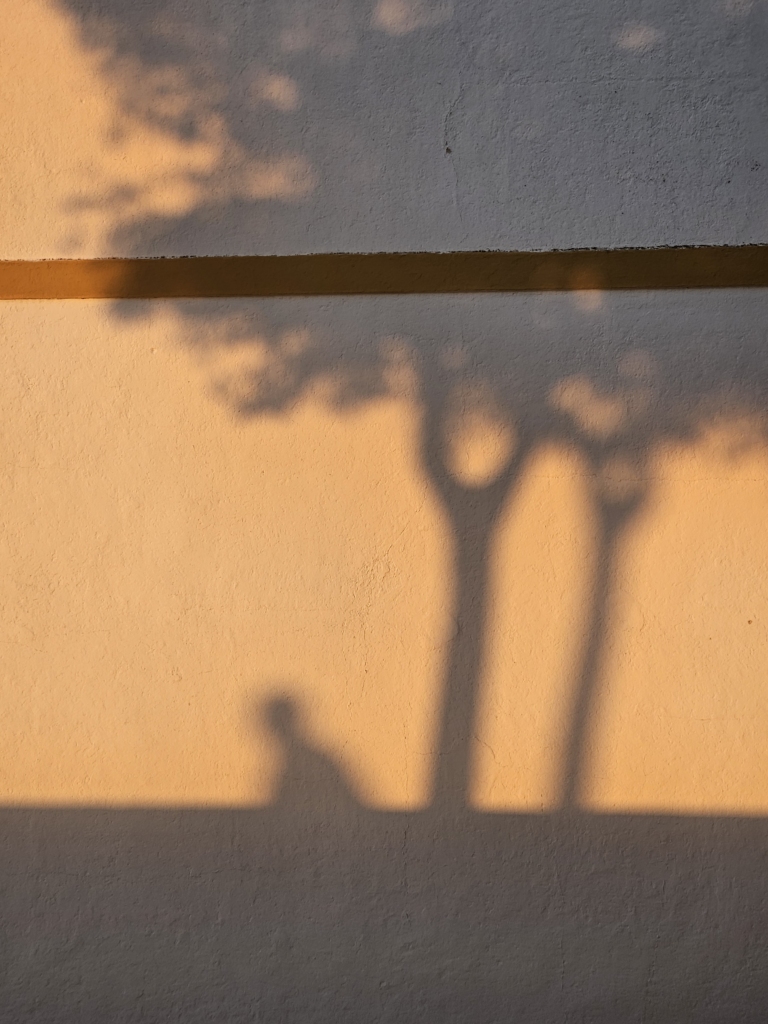
Sketch and watch in Jardim Diana
Sketch of Jardim Diana

Évora – shared sunset at Jardim Diana

The sun’s rays have now disappeared, and with them, so have almost all of the visitors. They experienced the sunset in very different ways: many tourists came just for a photo and left soon afterwards. The locals enjoyed the tranquillity with their loved ones, had a picnic to see the evening draw to a close, or lost themselves in a book. Ultimately, however, the sunset belonged to everyone – locals, tourists, dogs and birds. But surely not all visitors were able to truly experience the enchanting tranquillity of the moment.

Day 2

On our last day, we first made our way to the medieval aqueduct. We were amazed to see how the historic structure had been incorporated into the city, with houses even built into it.
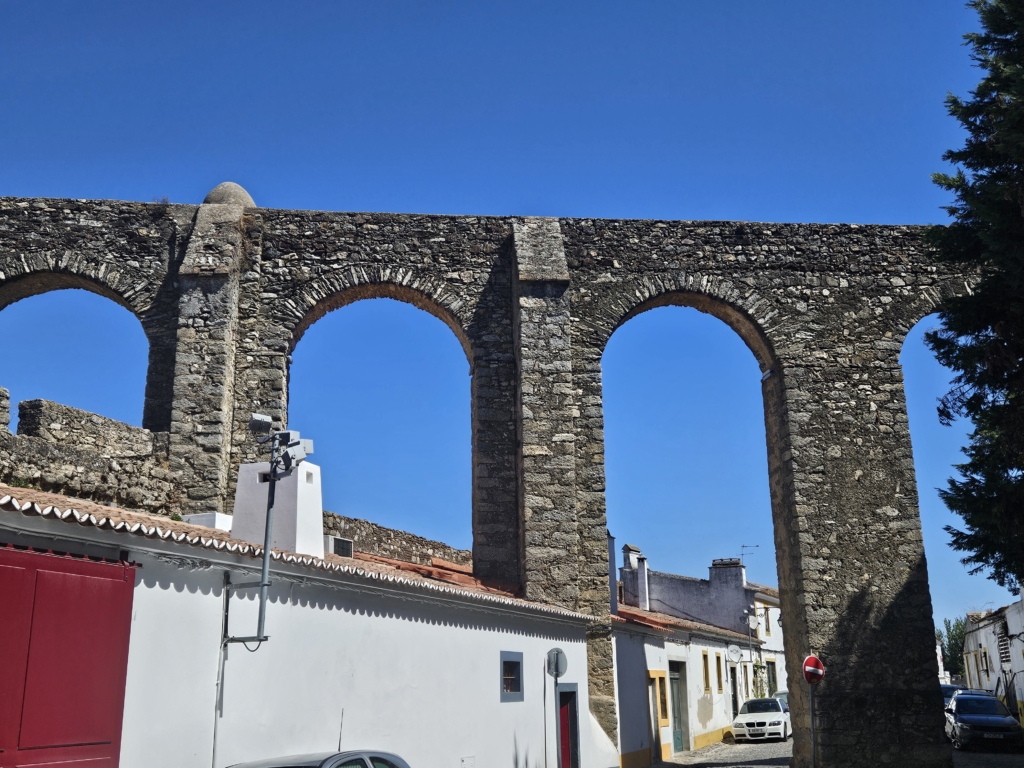
Aqueduct Água de Prata

We then moved on to the Roman Temple. It was not until the 19th century, following archaeological research, that the ancient temple’s unique nature was recognised and appreciated. Prior to this, it had even served as a butcher’s shop. There is a persistent (though unconfirmed) belief that the temple was dedicated to the goddess Diana. Consequently, the locals consistently refer to it as the Temple of Diana, whereas official English translations simply list it as the Roman Temple.

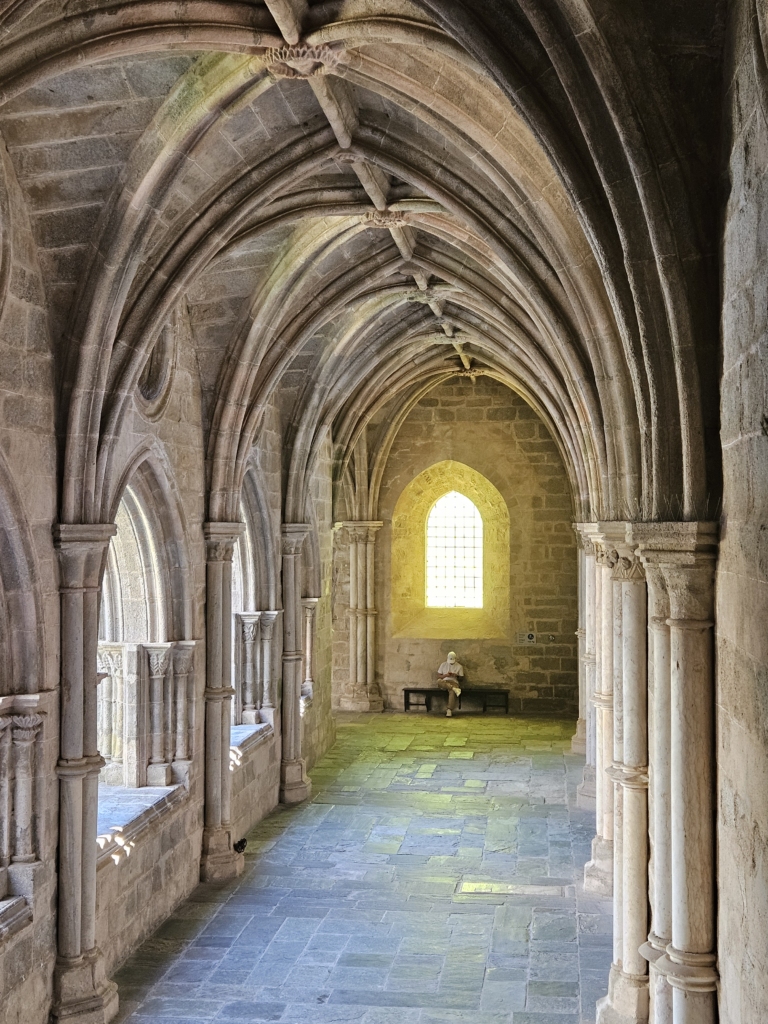
Our next stop was the Cathedral of Évora, which is apparently the largest medieval cathedral in Portugal. The cathedral’s roof offered a panoramic view of the entire city; surprisingly there was a large number of yellow butterflies up there. We were captivated by the blend of Romanesque and Gothic architectural styles in the cathedral, in particular also the interplay of light and shadow in the cloister.
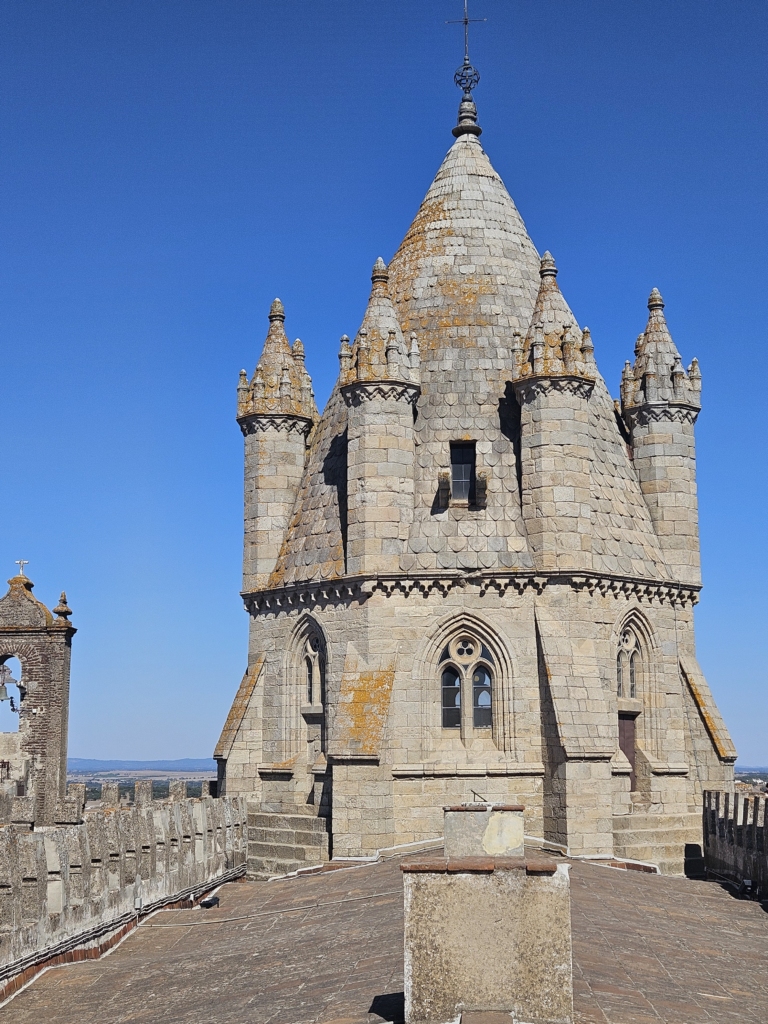
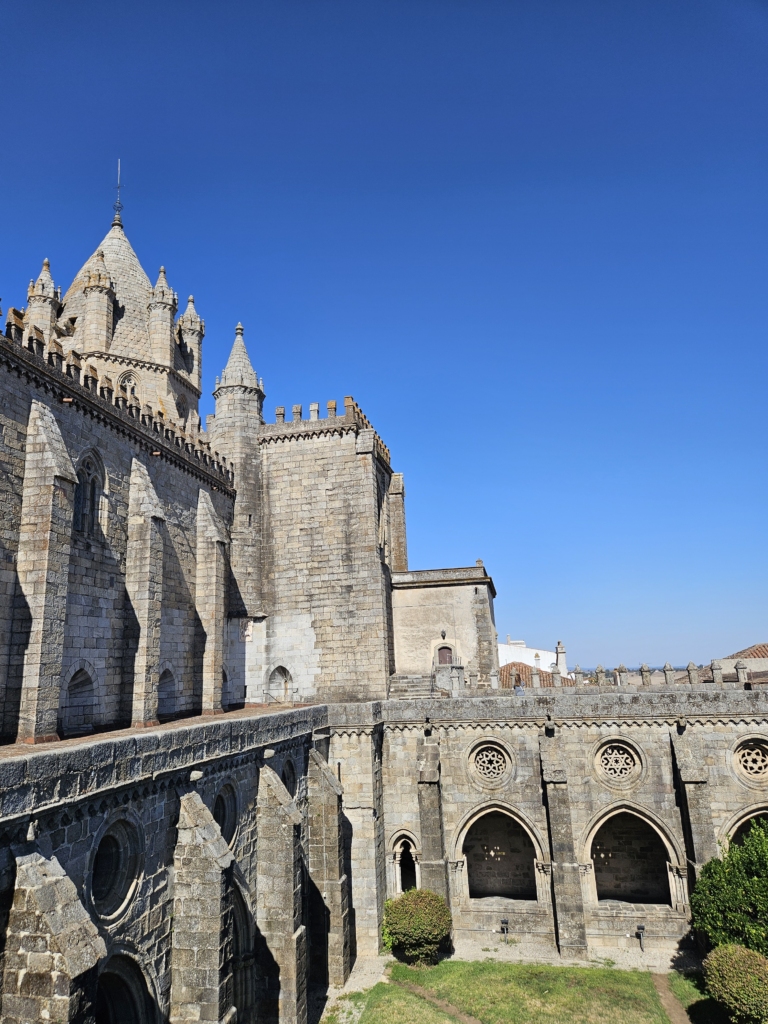
Cathedral of Évora

After a brief visit to the beautiful and much larger-than-expected Igreja e Mosteiro de São Francisco, we took a short break and enjoyed some ice cream in the Jardim Público. While we were there, we saw lots of peacocks that apparently live in the park.

Our final stop of the day was the Paço de São Miguel, a building with a long history dating back to the city’s Muslim era. It has had numerous owners and undergone many changes. Highlights include the ceiling frescoes depicting Ovid’s Metamorphoses, the well-maintained garden, the extensive collection of kitchen copperware and the impressive furniture.
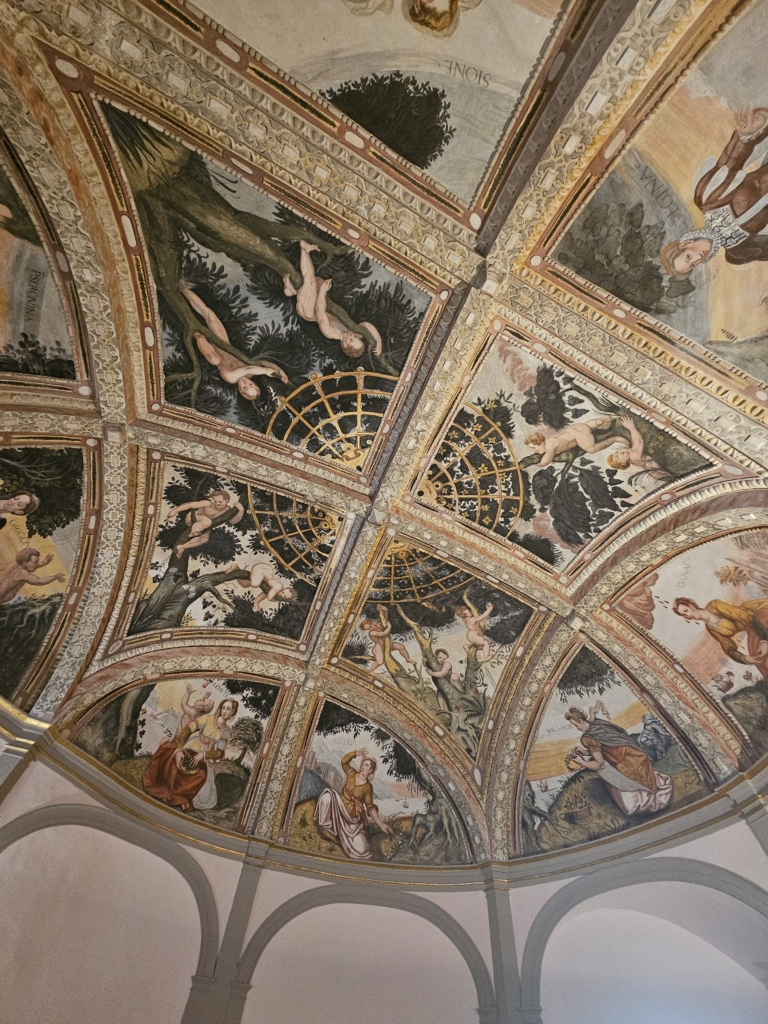
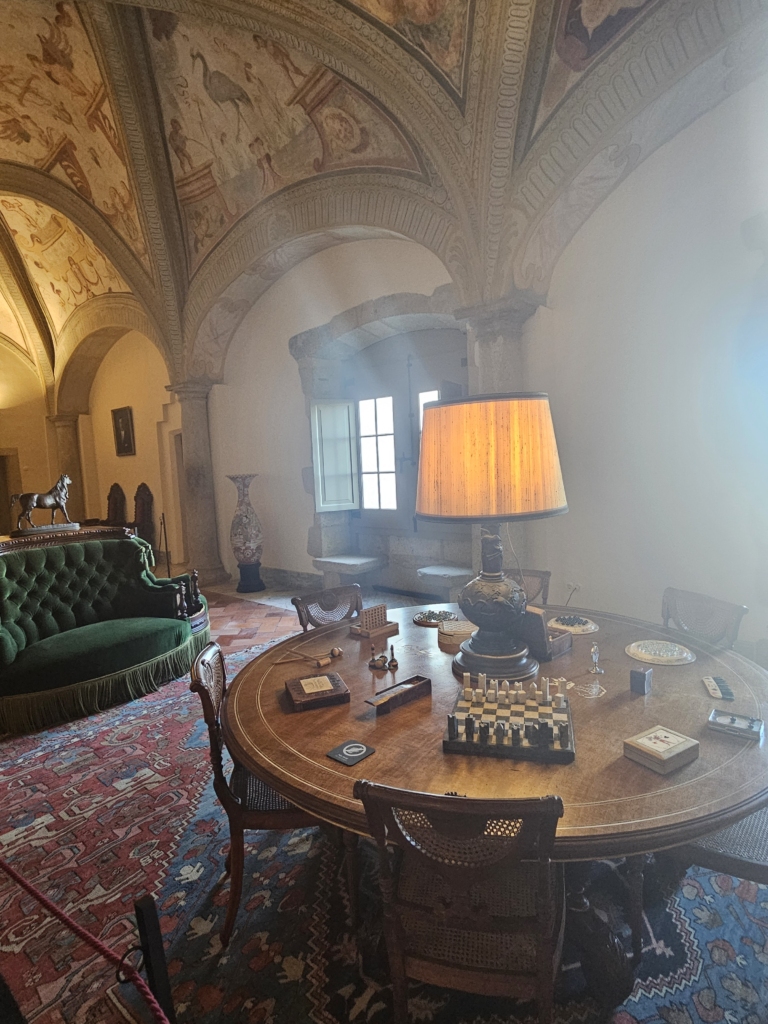
Interiors of Paço de São Miguel

Once again, we ended our day at the viewing platform by the Roman Temple. The sunset the previous day had been so beautiful that we wanted to enjoy it again on the last evening of our trip. Sadly, we had to leave Évora the next morning, but not before having a quick coffee with Paula from the Municipality of Évora!

The locals painted a picture of Évora as a tranquil place with a close-knit community. By the end of our trip, we could really feel this sense of unwinding. Although the city itself is small, it has a young, international population — largely thanks to the university — and is located in a beautiful region that lends itself to exploration, which is highly valued.
Sintra: Sharing uniqueness

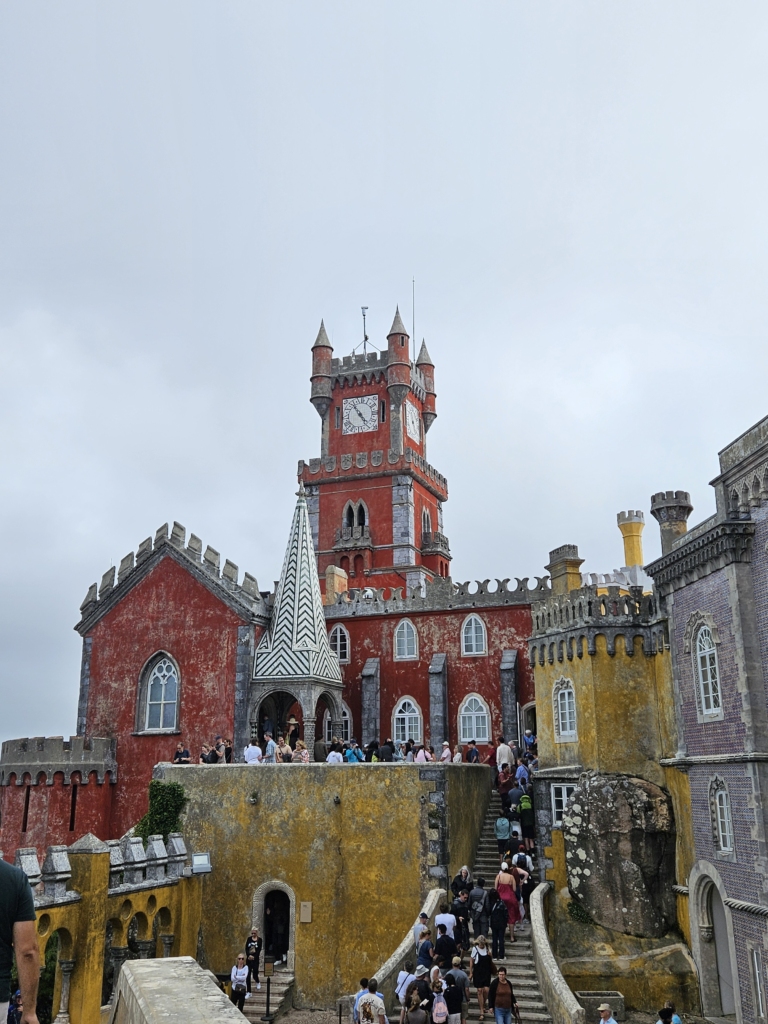
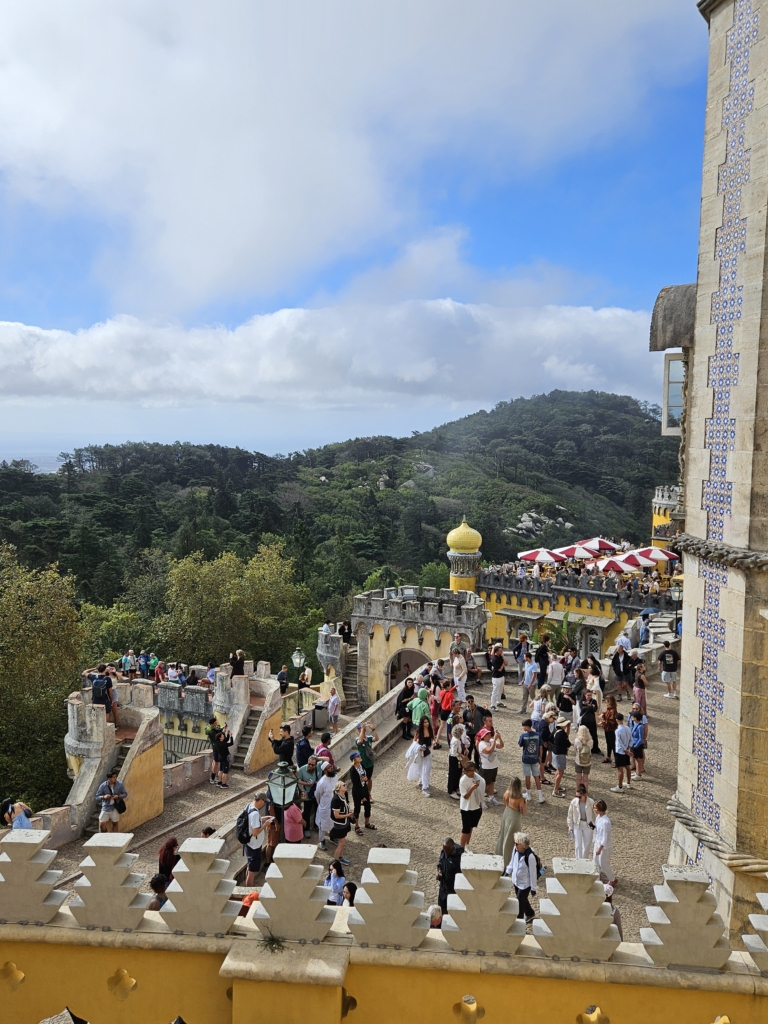
We took a day trip from Lisbon to Sintra. We arrived at the earliest possible hour and headed straight for the Palácio Nacional de Pena. After a dizzying bus ride along the winding mountain pass, we reached the entrance to Pena Palace—and we were far from the only ones there!

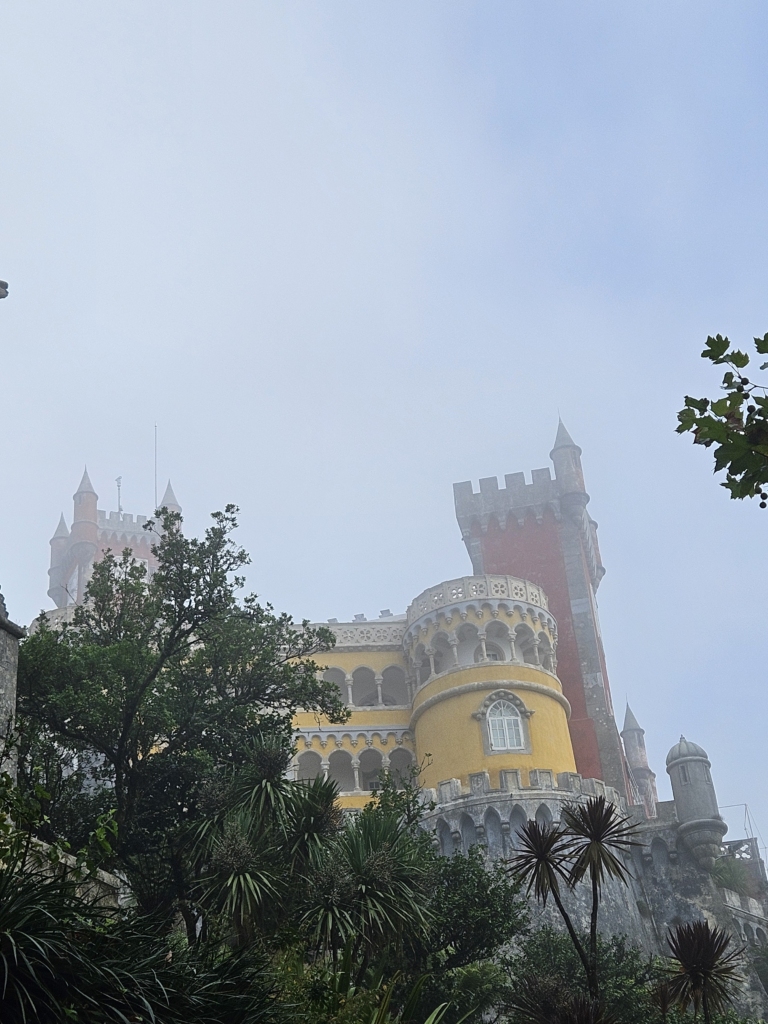
The former royal residence was built in 1840 on the orders of Ferdinand II, one of the last kings of the Portuguese monarchy. It was constructed on the site of a medieval monastery destroyed in the 1755 earthquake. The building’s blend of Egyptian, Moorish, Gothic and Renaissance elements reflects the spirit of the Romantic movement.

Pena Palace shrouded in fog

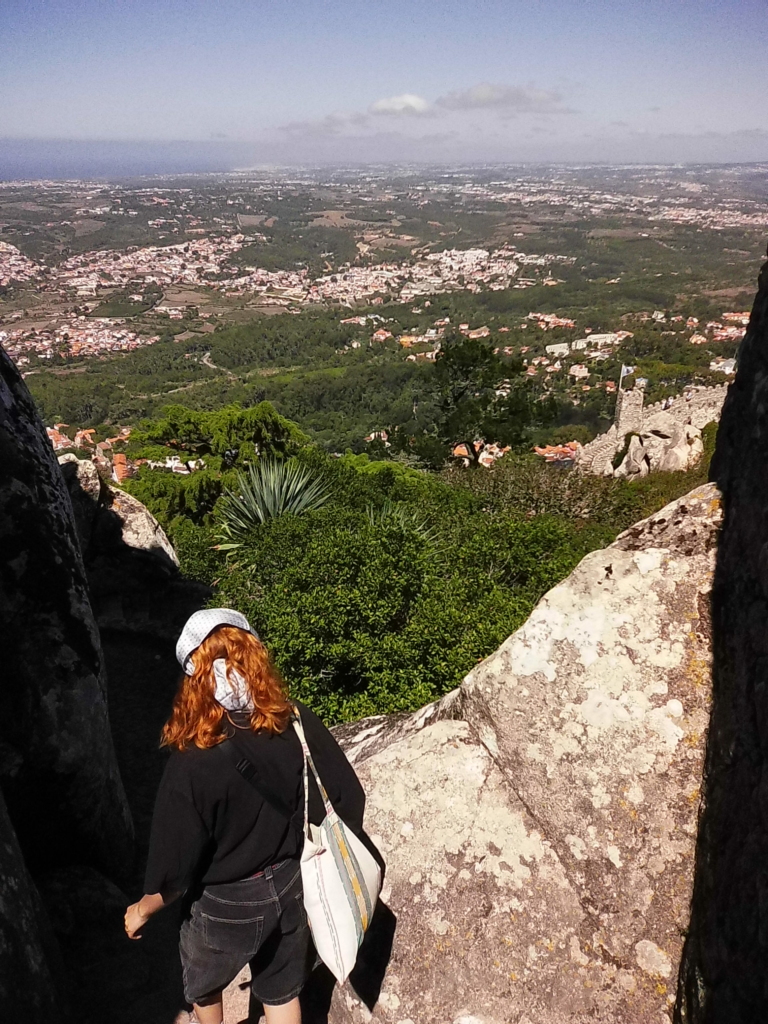
It was very windy at the palace – we never thought we’d get cold on this trip! Despite the large number of tourists and the somewhat hurried nature of our tour, the palace, both inside and out, was truly unique and beautiful. The views were stunning, too – you could see the city and the Moorish Castle, which we were due to visit afterwards.

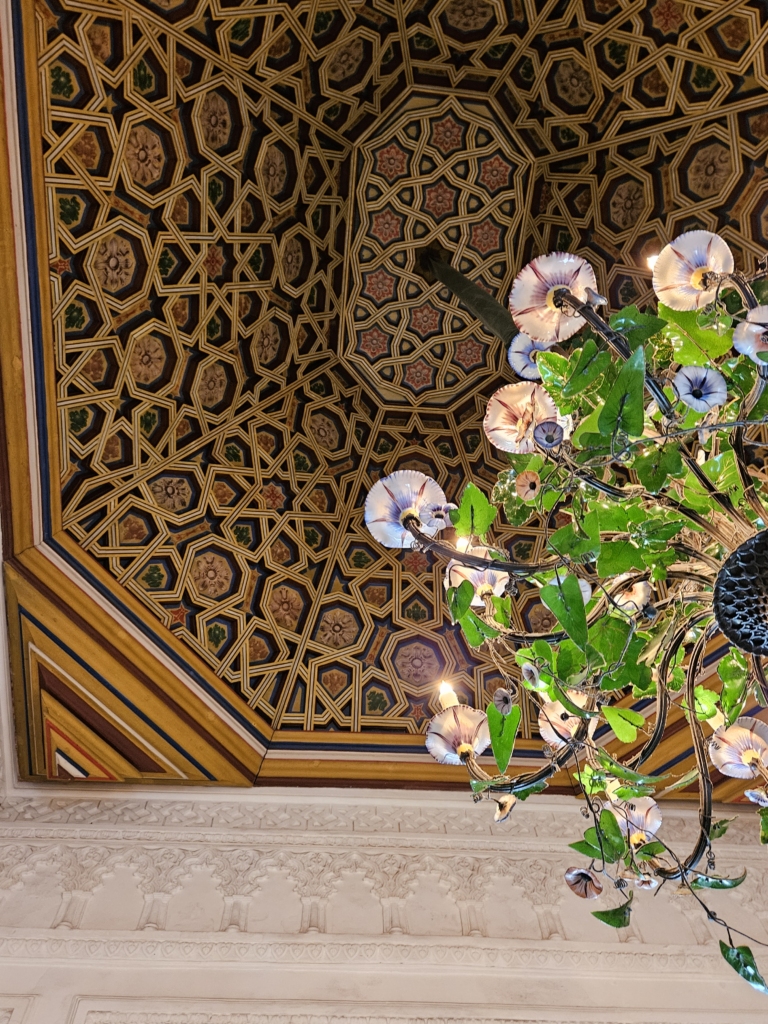
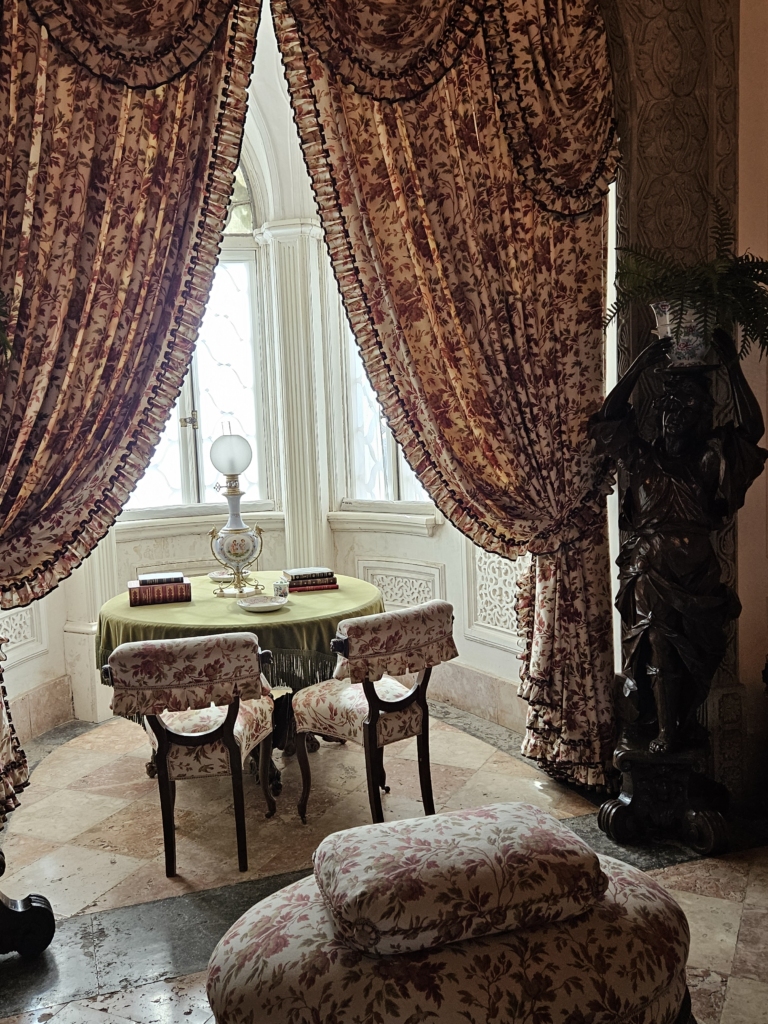
During the construction work, Ferdinand was keen to honour the remains of the destroyed monastery by restoring parts of it. A new section of the palace was also added. The interior design truly showcases the palace’s eclectic style, and we found the recurring Moorish elements particularly fascinating. We were especially captivated by the ceiling of the Smoking Room, which is pictured here.
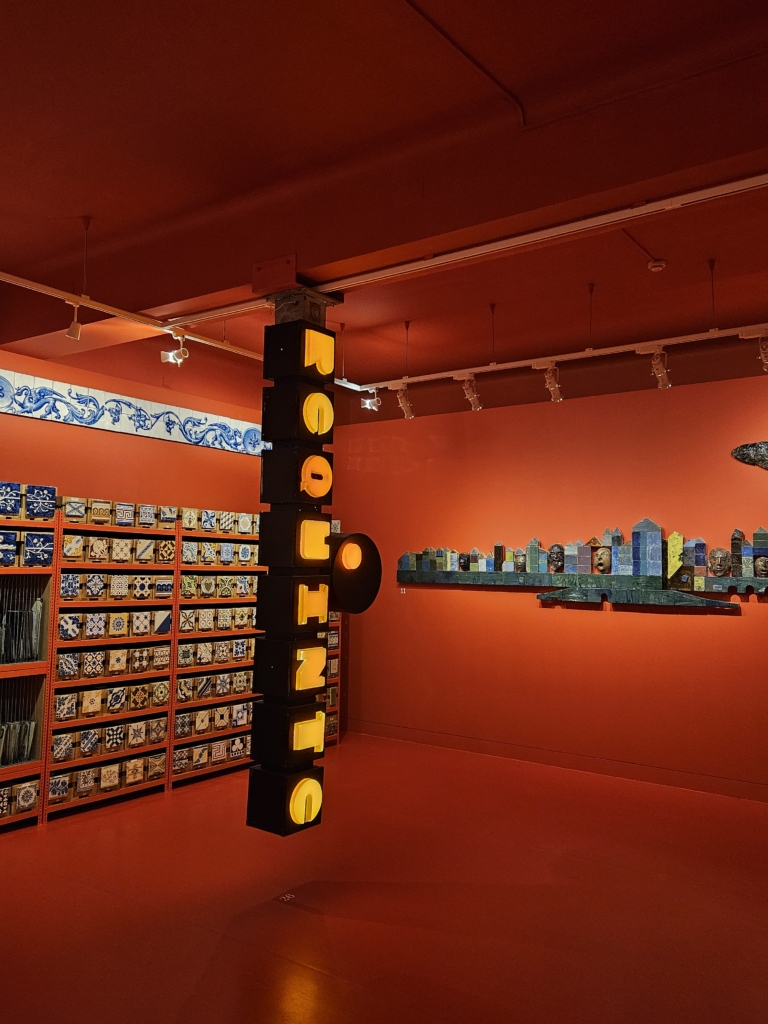
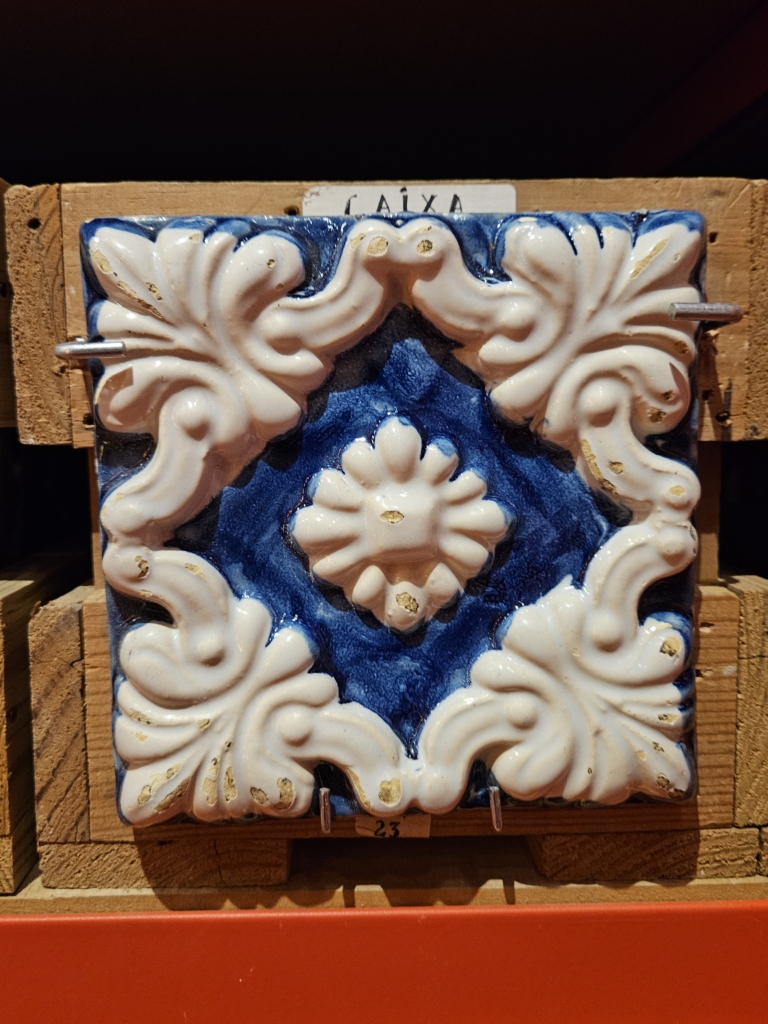
Impressions of Pena Palace

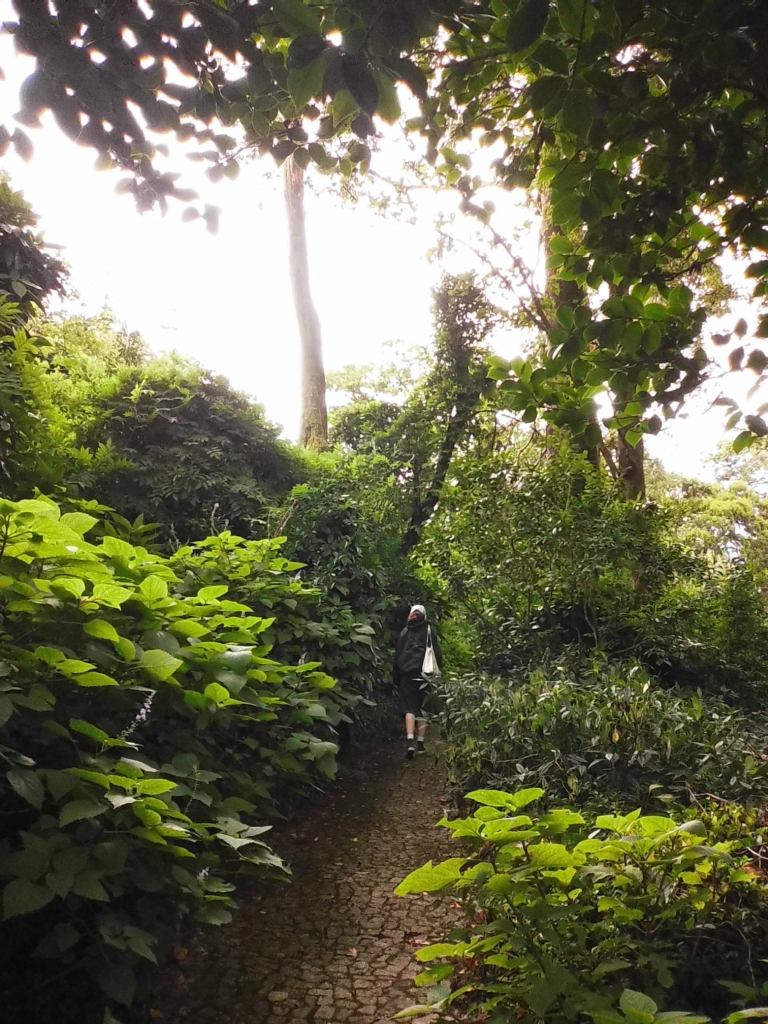
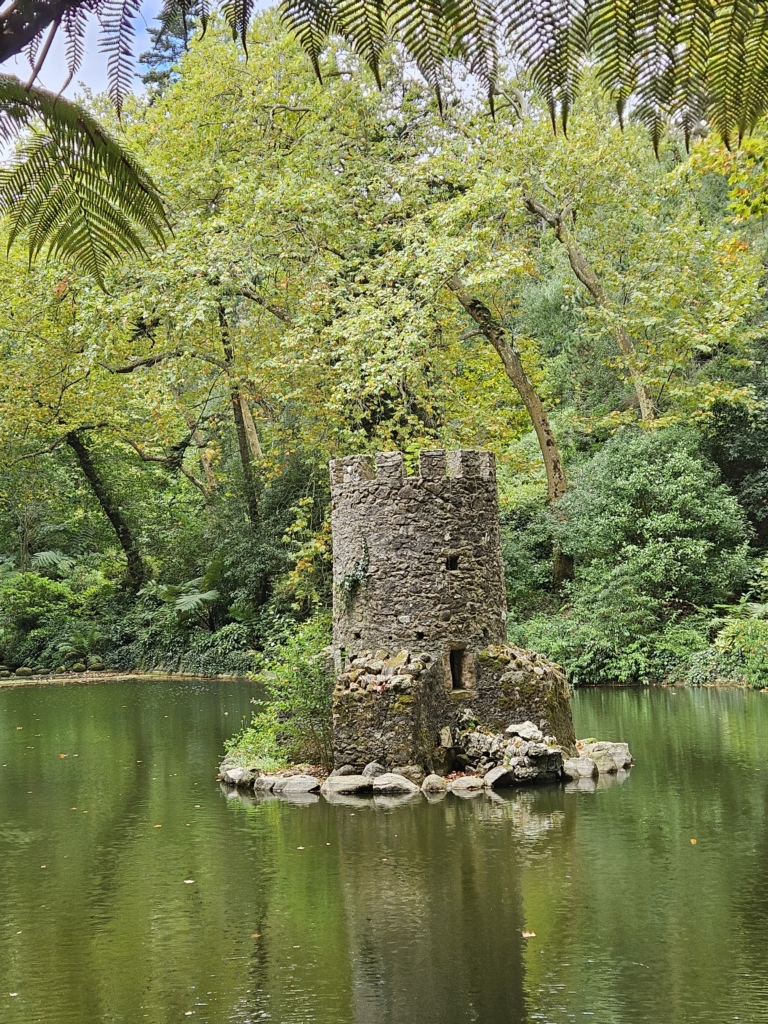
Once we had seen everything, we strolled through the vast palace gardens. They were like a dense forest, with many small, winding paths. We then came to a pond where ducks and geese were swimming. There, we briefly chatted with Kathi who was out riding in a horse-drawn carriage and who later gave tours to tourists. We continued on and arrived at a tower in the lake – It was like something from a fairy tale.

Magical garden and tower

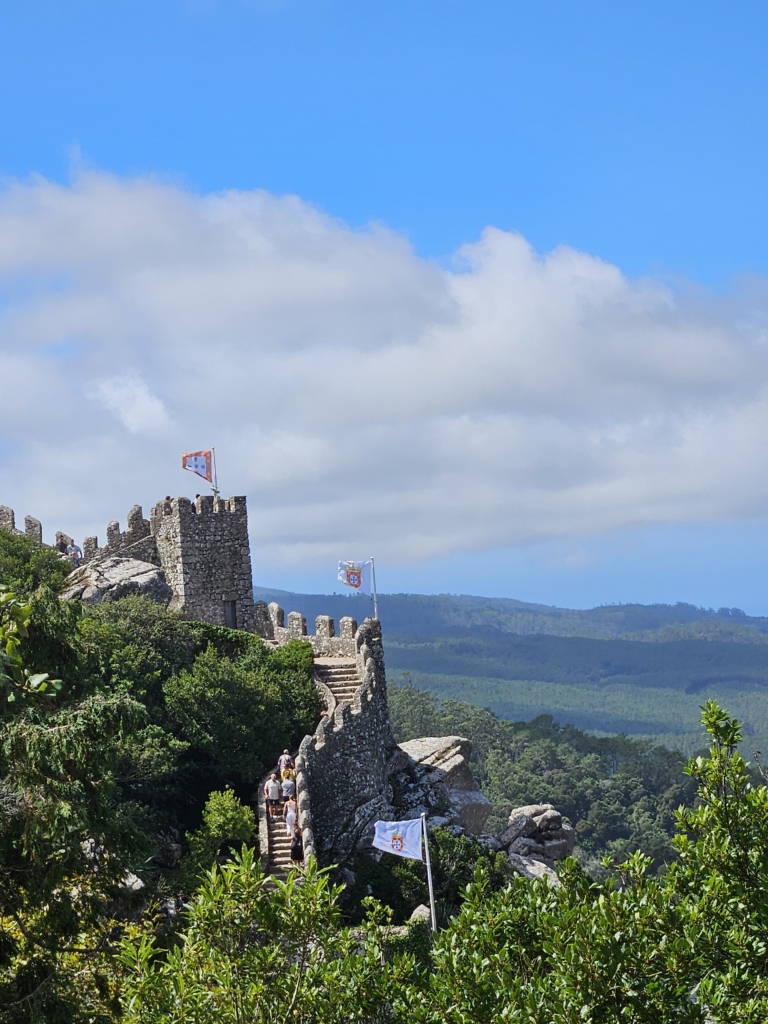
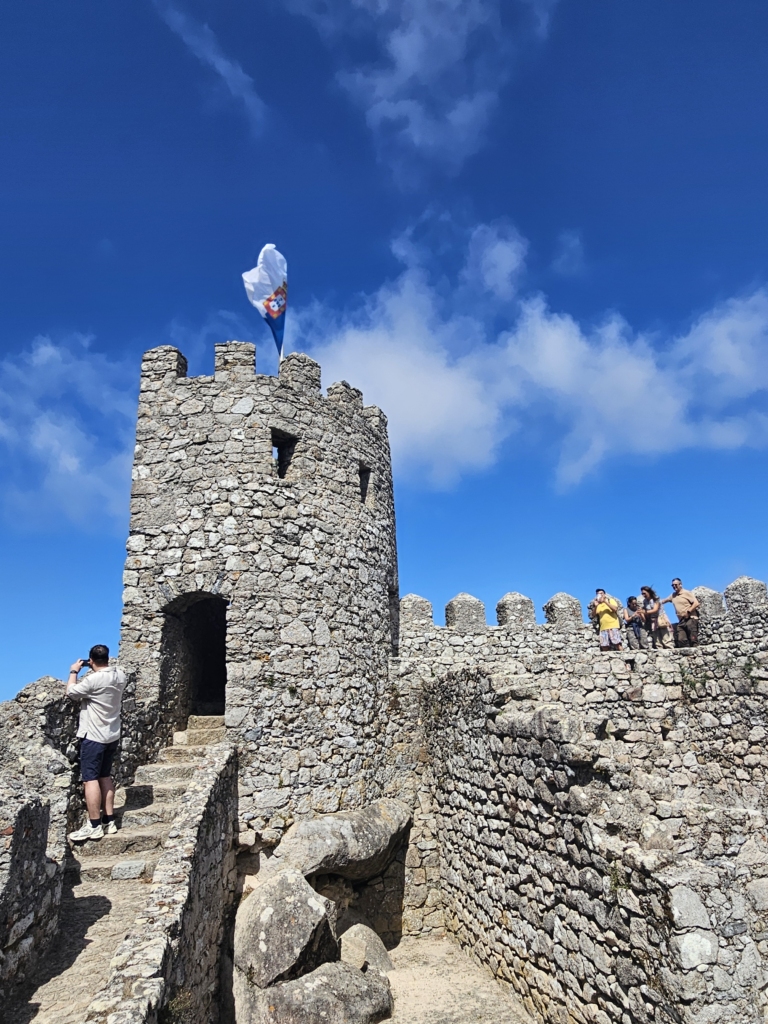
From there, we walked to the Moorish Castle. It was used in the 9th century during the Moorish occupation. After Portugal was reconquered, however, it was abandoned. It’s amazing that such a fortification could be built in such a high, hilly location. The way the stone castle wound its way along the landscape sometimes reminded us of the Great Wall of China.
As it was less crowded and quieter here, we were able to explore the castle at our own pace. It was enormous and offered truly unique views!

Moorish Castle

After our tour, we took the bus back down and stopped at a small café run by an older man. He told us that we wouldn’t find many young locals in the old town itself, but rather on the street parallel to the train station, as there are good restaurants.

The café owner was right. We really struggled to meet any young locals on our way to and through the town centre of Sintra. Eventually, however, we met Rodrigo and Lorenzo. Lorenzo owns a large café near the centre and spent a long time speaking openly with us about the challenges of living in Sintra. Unfortunately, the microphone ran out of battery, so we lost the audio for almost the entire interview :/

Local perspective: nature, surroundings, community and Mass tourism

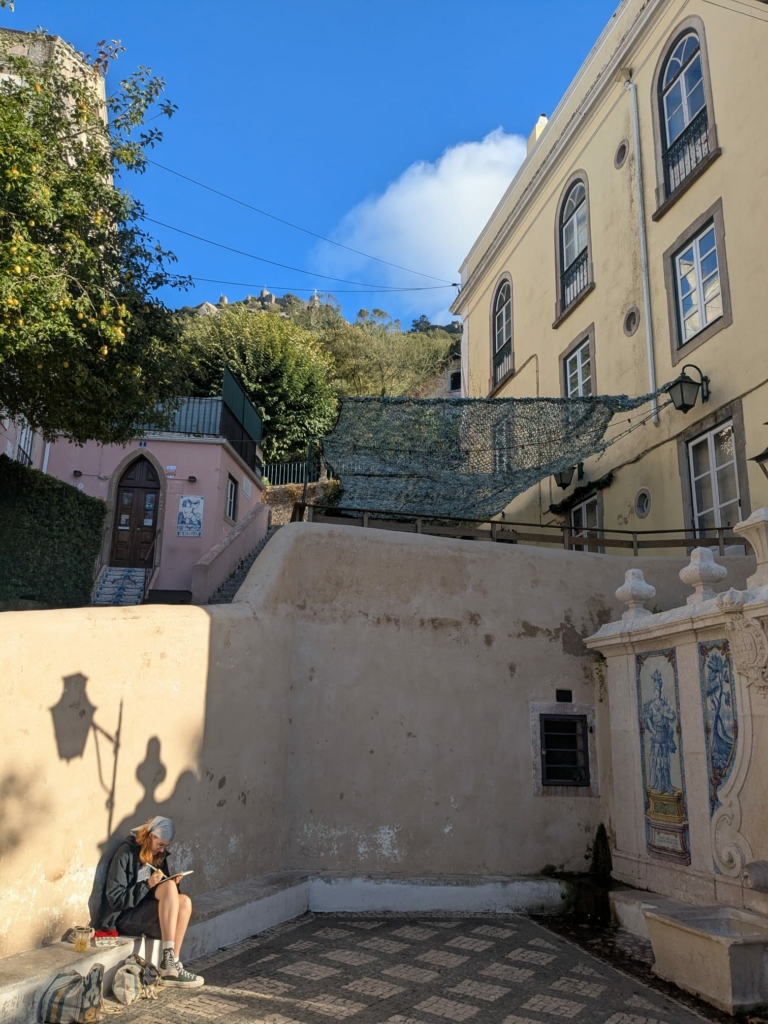
After our conversations, we walked to Piriquita, which Rodrigo had suggested, and to Fonte da Pipa, which Lorenzo had suggested. Piriquita was very crowded and busy, there were many tourists here.

Sketch and watch: Fonte da Pipa

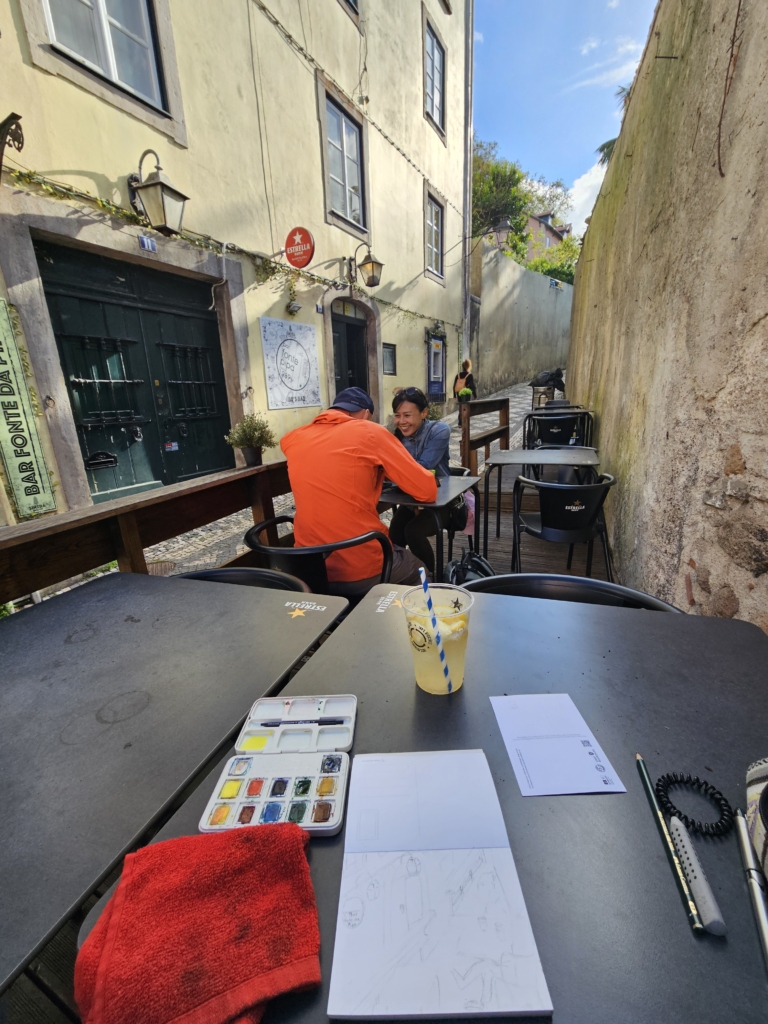
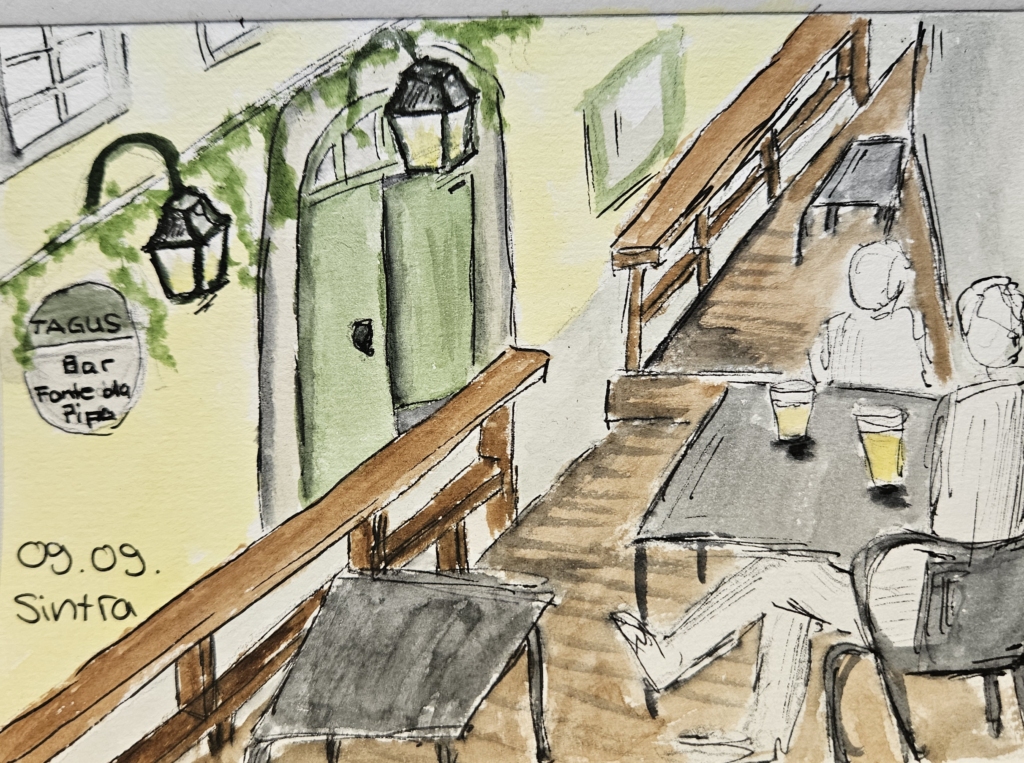
We arrived at Fonte da Pipa shortly before 5 p.m. Seeing only a handful of people sitting on the terrace and noticing that the bar was about to close made us realise that this was exactly what Lorenzo had told us! It was clear to us that we should hold our ‘sketch and watch’ session there.

Sketch and watch at Fonte da Pipa
Sketch of Fonte da Pipa

Sintra - Closing Song at the Fonte da Pipa

A bar closing at five o’clock – that’s absurd! Mind you, I can well understand why: the peak visiting hours for Sintra are already over, and the Fonte da Pipa is obviously just far enough out of the way that only the most adventurous tourists end up here by chance. The locals aren’t in the mood to party just yet, or they live outside the city anyway. So why should the barman stay open any longer just for a few confused tourists like us? Yet at the same time, the young barman’s charisma, the two regulars, the plenty of seating and the cosy atmosphere give me the impression that it can be a great place to meet up with friends for a lovely evening. The Fonte da Pipa is certainly a second living room for many regulars. But as tourists, however, we weren’t part of the lively hustle and bustle of the locals in the bar – maybe it’s better that way, too.

After our day trip to Sintra, we headed back with mixed feelings. On the one hand, we were fascinated by the beautiful buildings, parks and views. On the other hand, we knew that tourism was taking space and opportunities away from residents, forcing them to move elsewhere and change their way of life. However, we also left feeling that we had only seen the touristy side of Sintra. At the same time, we became curious to explore the many places around touristy Sintra that locals cherish and frequent — spots that make life here so liveable, as we gathered from our conversations.

Guimarães: Hometown pride

Day 1

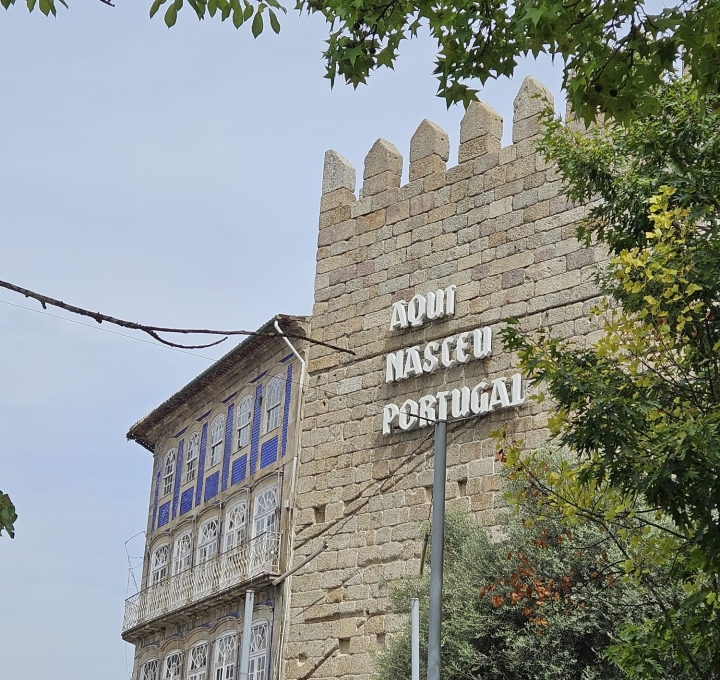
After an enjoyable train journey through the Ave region, we arrived in Guimarães. During our uphill walk into the historic city centre, laden with heavy rucksacks, we came across the town’s famous inscription: ‘Aqui Nasceu Portugal’, meaning ‘Portugal was born here’. Our first stop in the birthplace of the Nation was the tourist information centre, where we met Paulo. He provided us with all the information we needed to explore Guimarães, which we did over the following days:

WhatsApp Image 2026-09-22 at 12.22.07 (3)
Portugal was born here

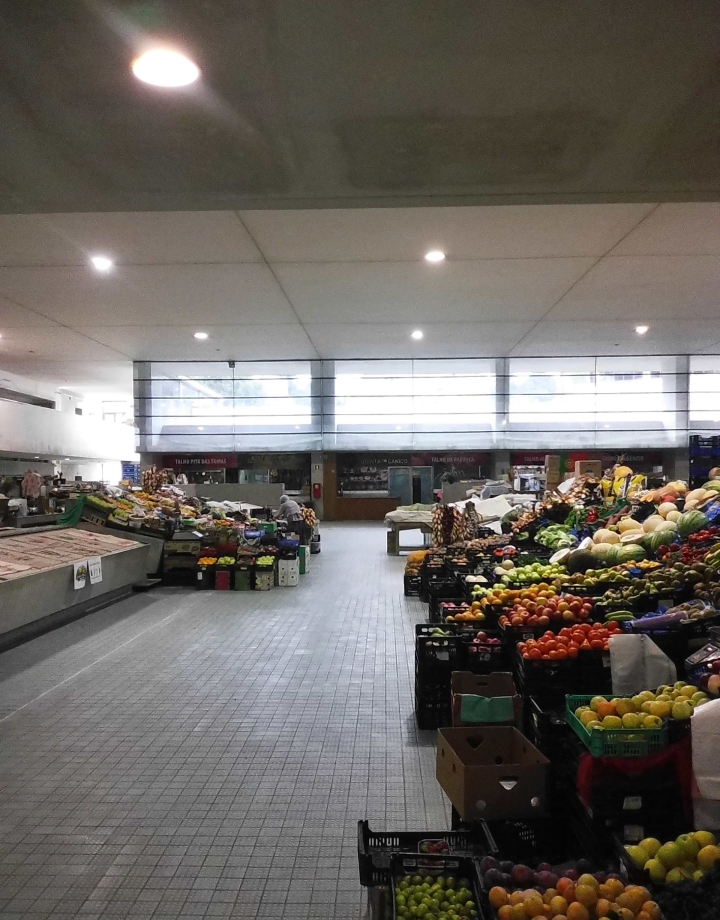
After chatting spontaneously with a few locals in the city centre, we took their advice and headed to the large market hall.

However, by the time we arrived, the stalls were already being cleared away. We still wandered through the hall, which felt like a liminal space, when an elderly saleswoman spoke to us in Portuguese. We couldn’t exactly make out what she was saying, but she surely was trying to tell us in a friendly manner that they unfortunately were already packing up and we were a bit too late.

DSCF1769
Mercado Municipal de Guimarães
WhatsApp Image 2026-09-22 at 12.22.07 (5)
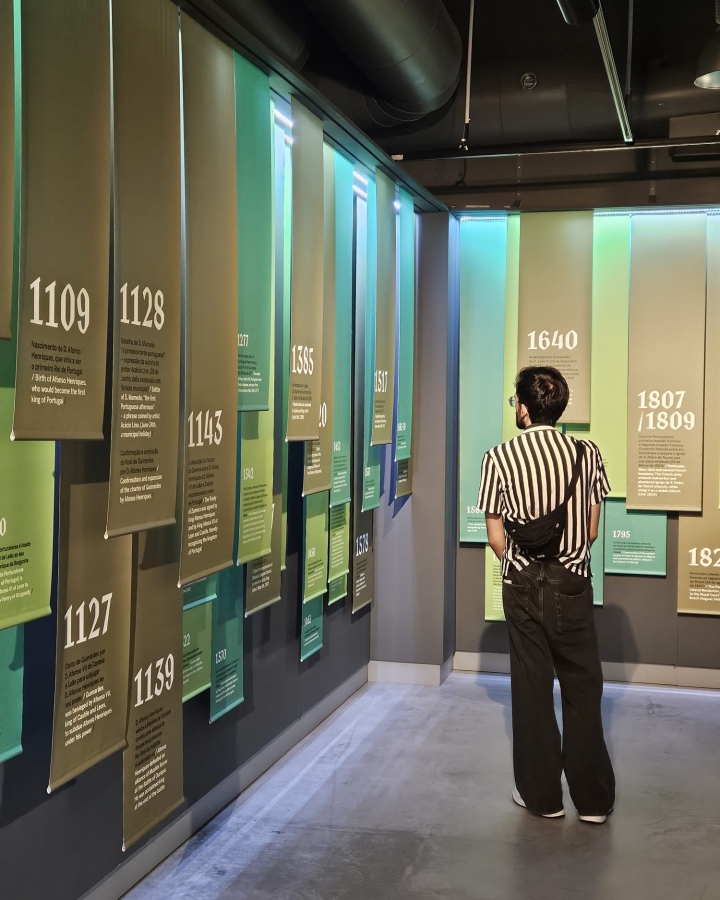
Historical timeline

Our route took us to the Casa de Memória. The city museum is divided into two sections – Território and Comunidade.

The first section focuses on the historical and physical development of the city and its region – exploring its past, present and future. Here, we learnt why Guimarães is considered the birthplace of Portugal: Afonso Henriques was born in the town in 1109. He later fought for Portugal’s independence and was proclaimed the first King of Portugal in 1139 – making his birthplace the birthplace and capital of the kingdom.

The second section focuses entirely on the culture that has come to define Guimarães, and which is still practised by its residents today. It covers aspects of everyday life – such as idioms and baking traditions – as well as industrial heritage and the Nicolinas, an annual festival celebrated by Guimarães students. And, of course, this section doesn’t fail to highlight the city’s beloved football club, Vitória Guimarães.

We particularly liked how the impact of historical figures on the city was demonstrated, and how residents were given the opportunity to explain what their city means to them as part of an artistic project.

WhatsApp Image 2026-09-22 at 12.07.56
'I bought a house for a crust of bread!'

Local perspective: Heritage, culture and a sense of belonging

During our initial exploration of Guimarães, we had the opportunity to chat with a few young locals, who shared with us their connection to the town.

Sketch and Watch: Largo da Oliveira

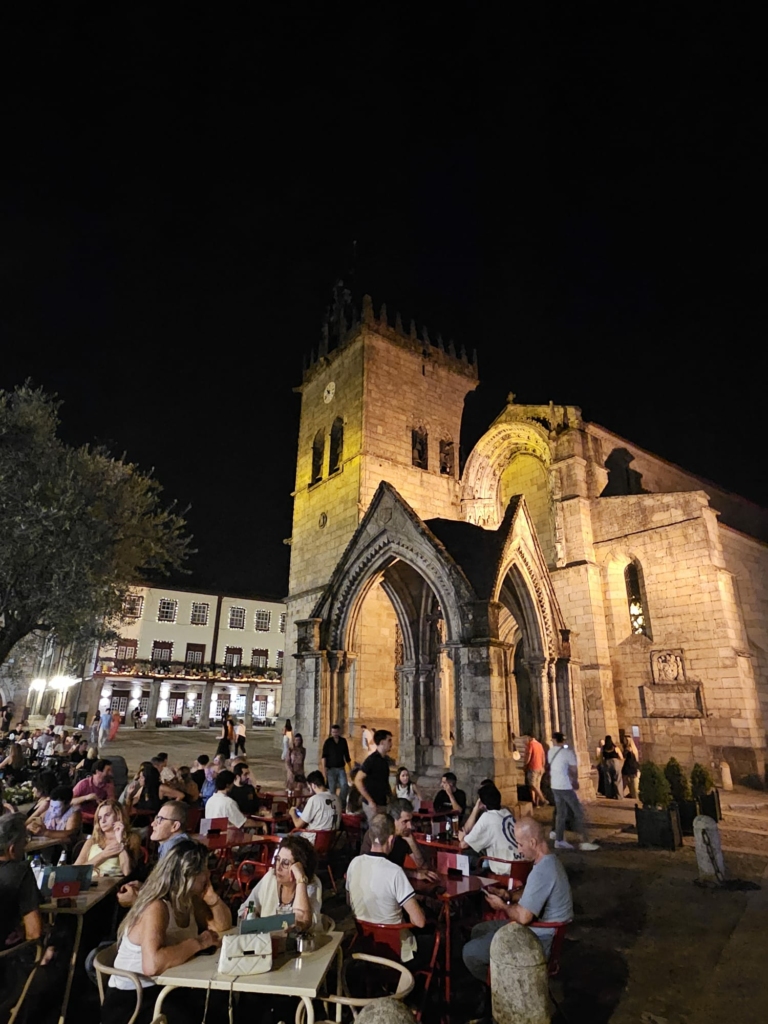
Since many locals had told us about Largo da Oliveira—and, luckily, it was right next to our apartment—we went to the square that evening. Just one glance out our window made it clear: it’s a very popular spot in the evening!

So we decided to hold our ‘sketch and watch’ session there and found a spot.

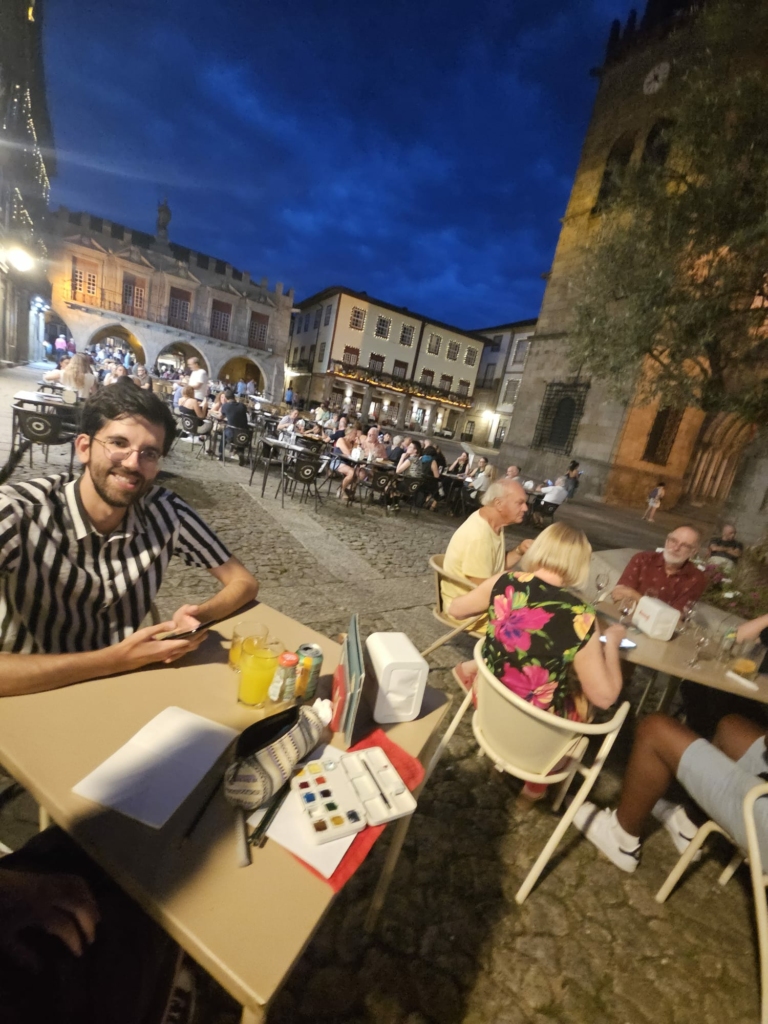
Sketch and Watch at Largo da Oliveira
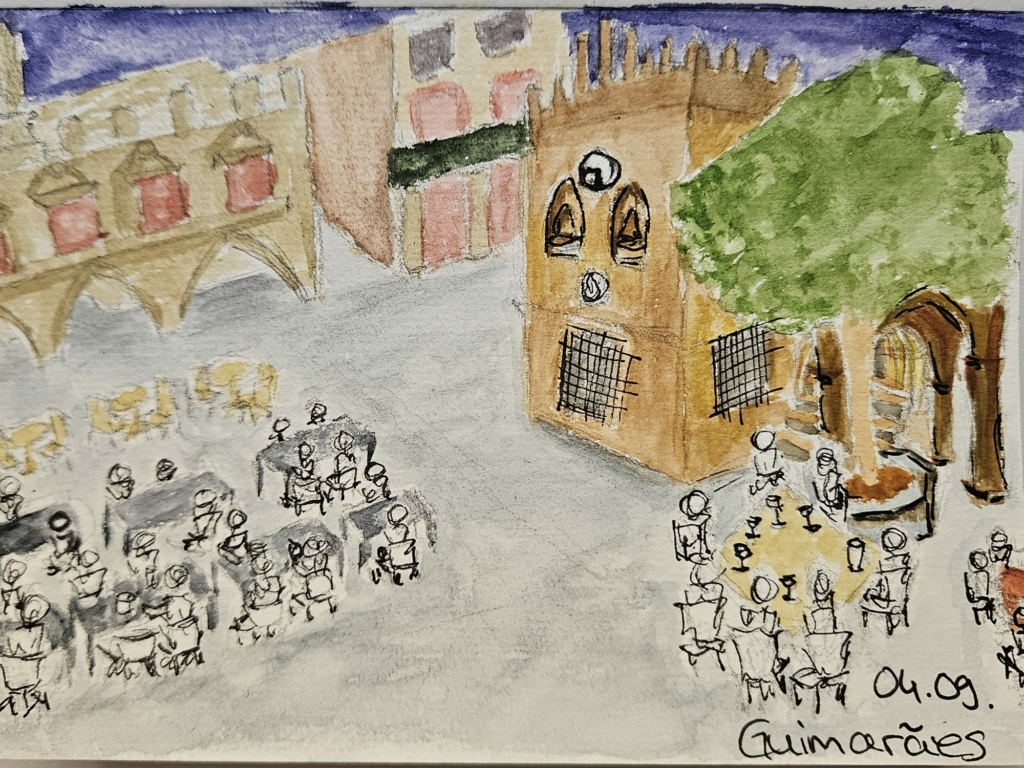
Sketch Largo da Oliveira

Guimarães - Oh, you’re here at Largo da Oliveira too?!

Largo da Oliveira is certainly no hidden gem – it’s the heart of Guimarães’ nightlife! Locals start their evening here with a few drinks and lively conversations, before moving on in groups. I am amazed at how the large groups at the tables keep getting bigger. There is always a place made at the table for any friend who joins them spontaneously! It is similar to when you’d go out onto the street as a child, knowing you’d bump into friends and have a great time with them. If you turn up at Largo da Oliveira on a weekend evening like this, you can be sure you’ll be in good company!

Day 2

On our second day, our first stop was a small flea market located right next to Largo da Oliveira. There were lots of antiques, comic books, porcelain, jewellery and cassette tapes.

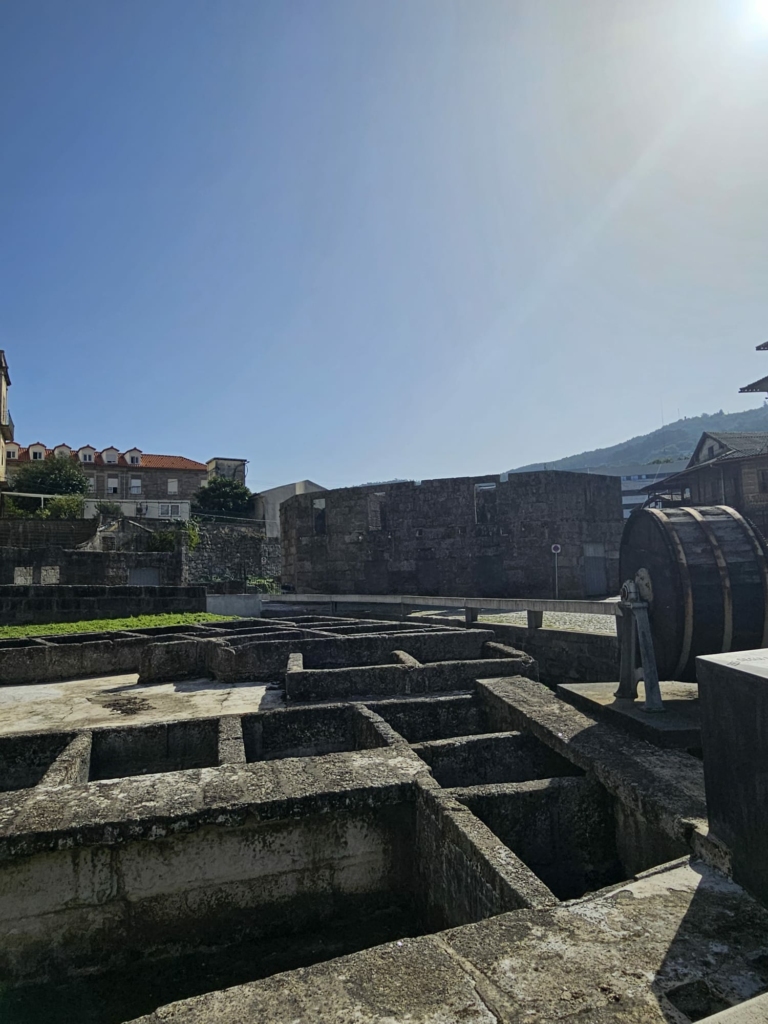
After that, we headed to the Couros Zone, a UNESCO World Heritage Site which was once an industrial area named after the traditional craft of leather tanning. You can still see the old tanneries and workers’ houses here. Water was clearly important to the city!

Couros Zone
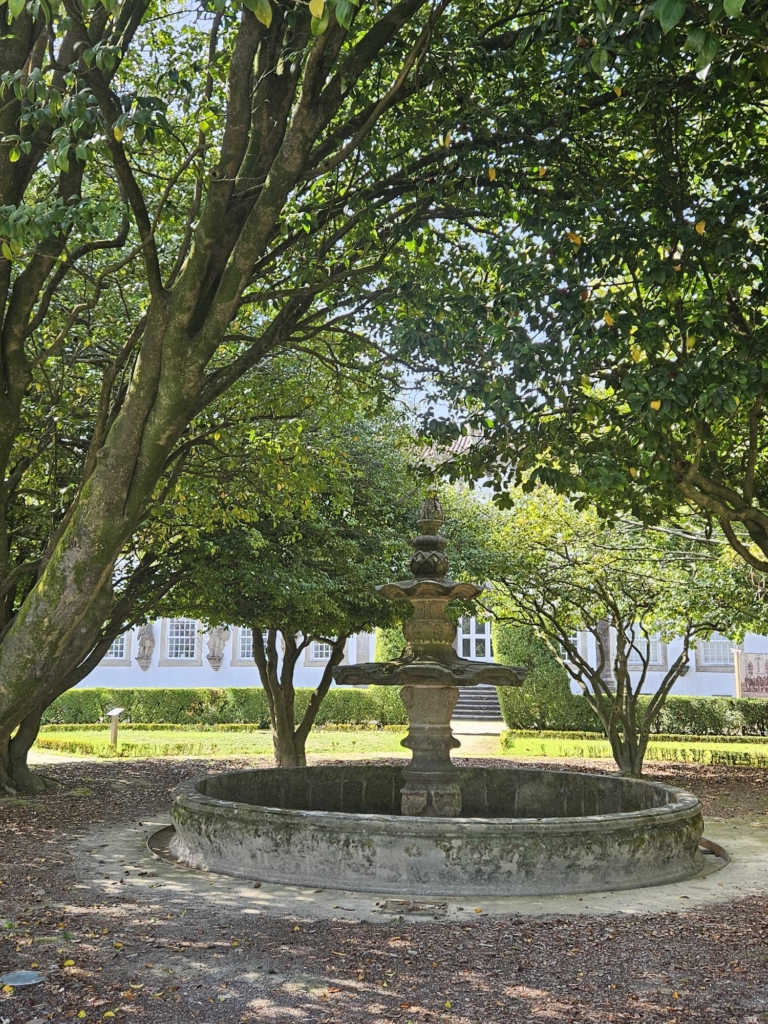
Jardins do Palácio Vila Flor

Next, we made our way to the Jardins do Palácio Vila Flor, which Melissa had recommended to us. The park was beautiful, like something from a fairy tale, and felt a little enchanted. It wasn’t crowded and was very quiet.

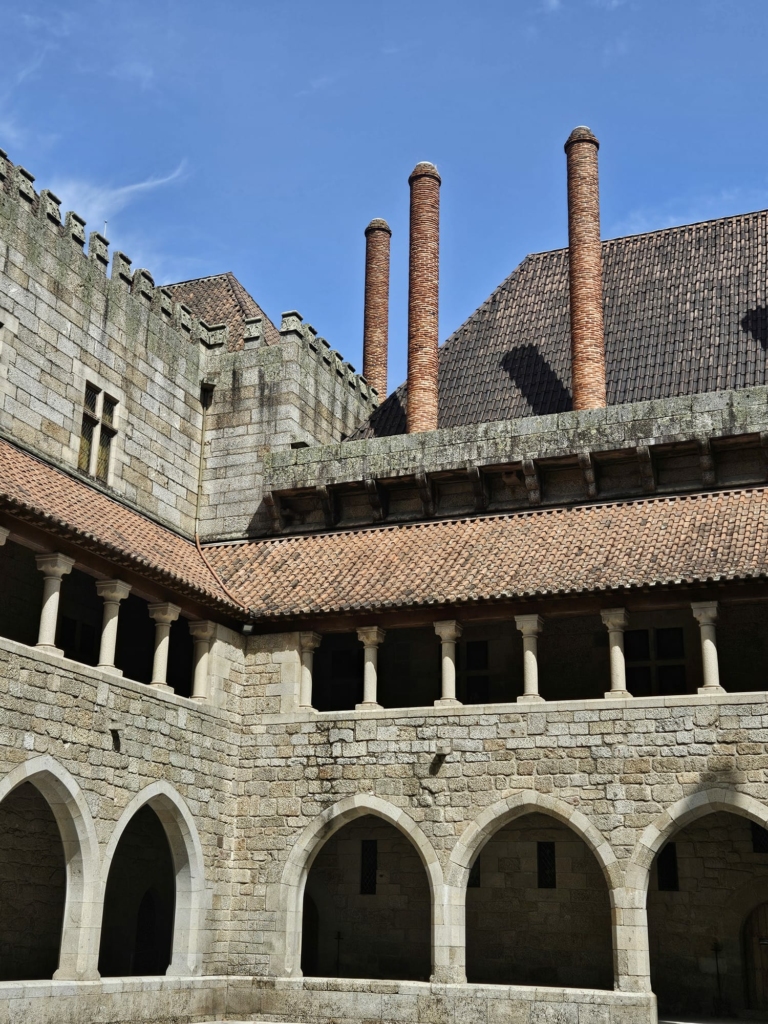
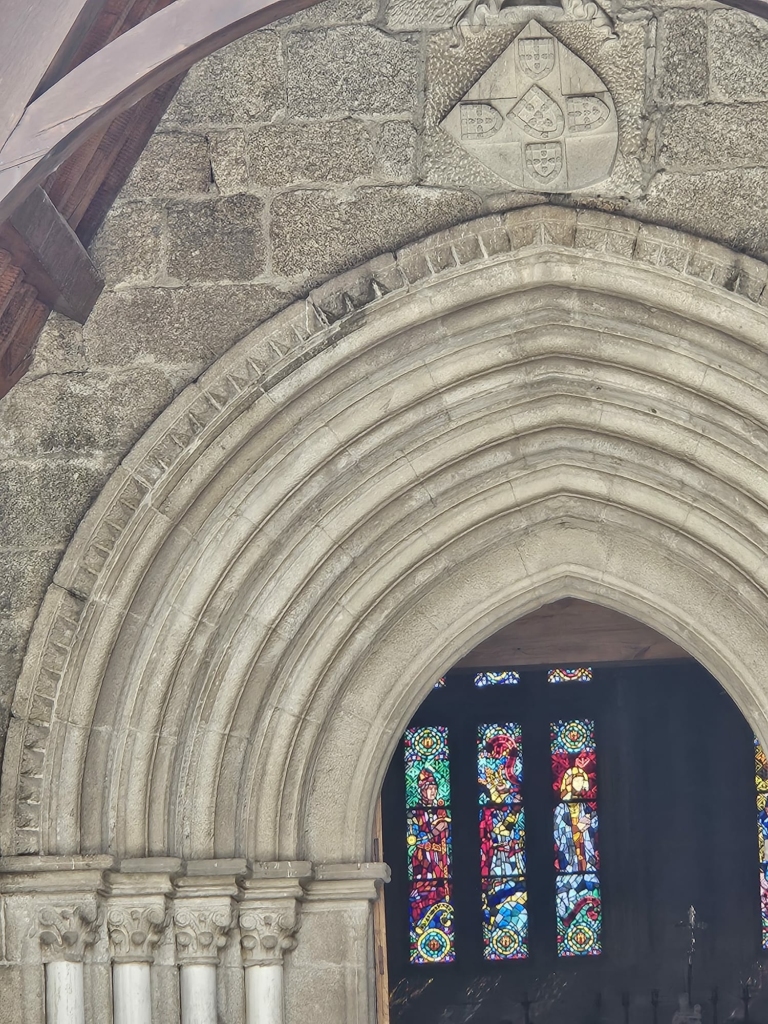
We then moved on to the Palace of the Dukes of Bragança. Built in the 15th century, it is the birthplace of the House of Bragança. Inside, we saw several large rooms adorned with elaborate tapestries depicting battle scenes. We also viewed collections of porcelain, paintings, furniture and sculptures. There was also a beautiful church with stunning stained-glass windows. The many chimneys, each connected to a fireplace, were particularly striking.

Palace of the Dukes of Bragança

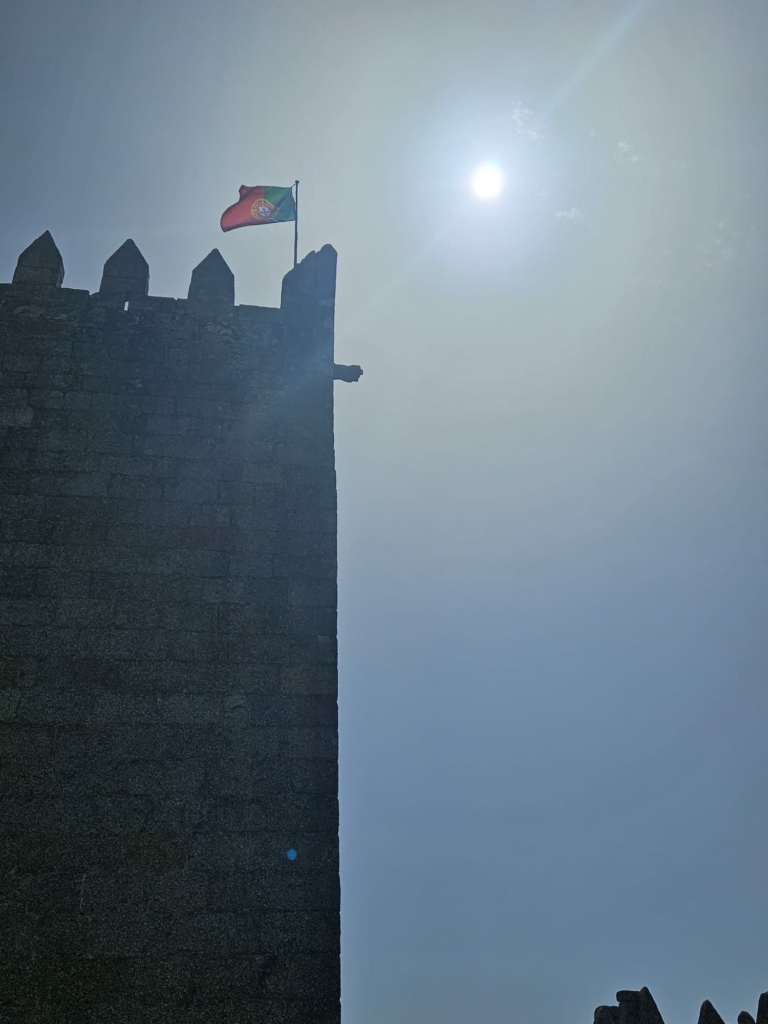
Then we walked to the Castle of Guimarães. A crucial monument for the city, it was the first defensive structure built to protect Guimarães and the Monastery of Santa Maria, which is now located in the Largo da Oliveira, from Norman and Moorish attacks. Dating back to the 10th century, the castle has been remodelled and expanded several times throughout history. We strolled along the ramparts and enjoyed the beautiful views of the city and Penha.

View on the Castle of Guimarães
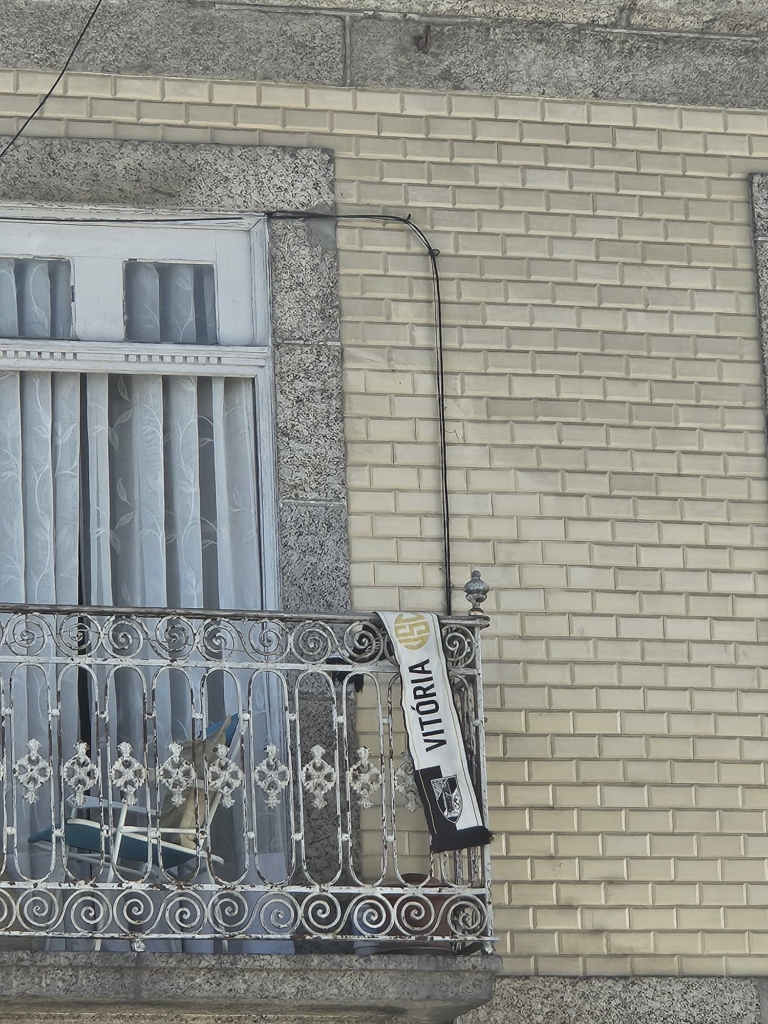
Vitória scarf

On the way back, we strolled along the city walls and spotted a scarf belonging to the local football club, Vitória, hanging from a balcony.

After a short lunch break, we were about to head to Penha Mountain when we saw a musical group of medical students called ‘Tuna de Medicina da Universidade do Minho’. They wore traditional costumes and carried unusual instruments. They didn’t just wave their flags — they danced with them, too! They were very enlivening for the Largo da Oliveira.

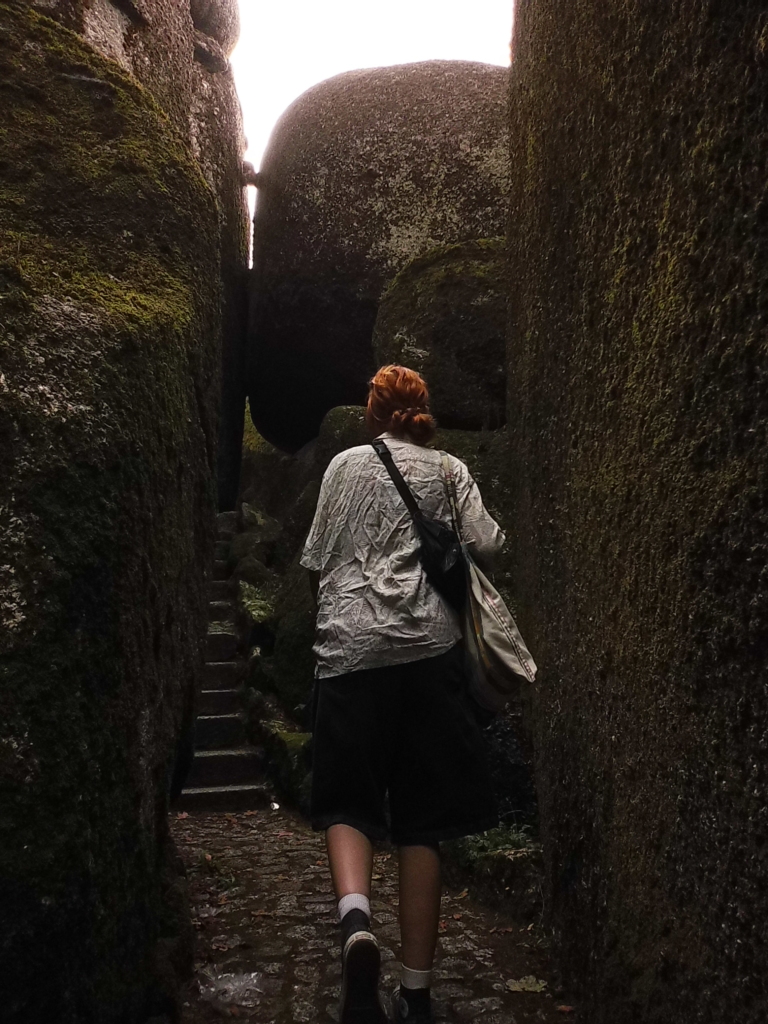
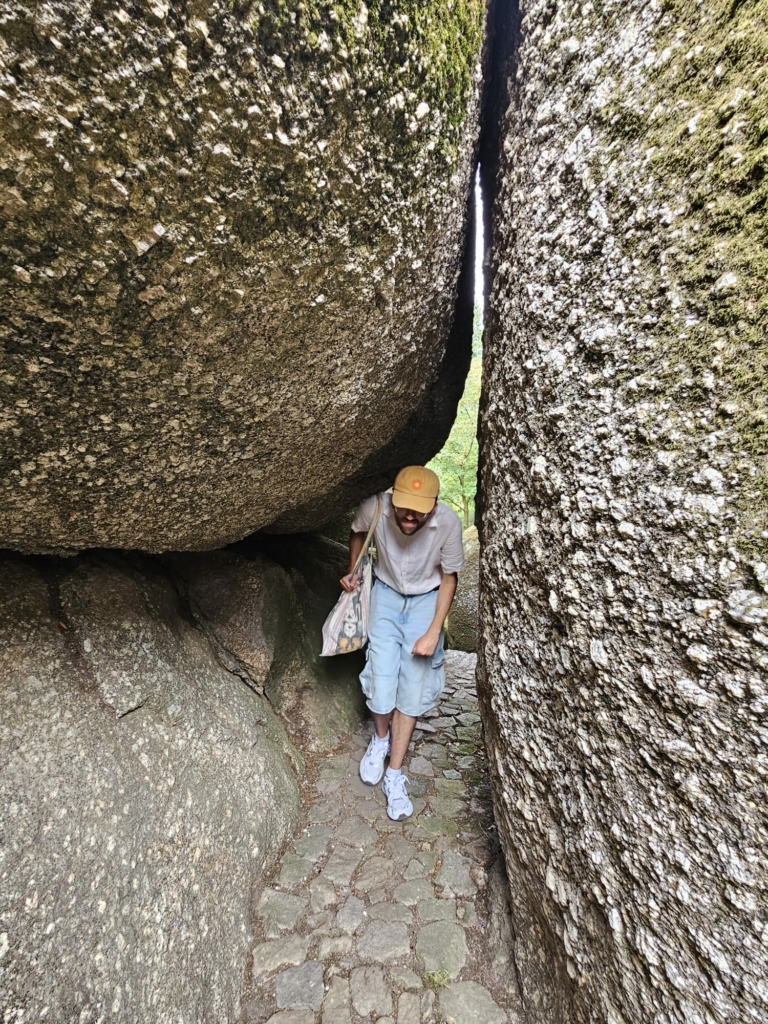
We then made our way to the cable car and rode up Mount Penha. Once we reached the top, we had a beautiful view of the city from the Penha Sanctuary. We kept walking and saw a pastry and fruit stand. We also saw many families having a big family gathering with a picnic in the woods on the mountain. We then just started walking along narrow paths and stairs that were built into the large granite boulders of the forest. Sometimes we had to duck a little, but it was really, really beautiful! Later, we walked through a cave—the Hermit’s Cave—where they were selling lots of fish dishes. On the way back to the cable car, we stopped to check out Saint Christopher’s Chapel. After all that walking on the adventurous paths, we took the cable car back down.

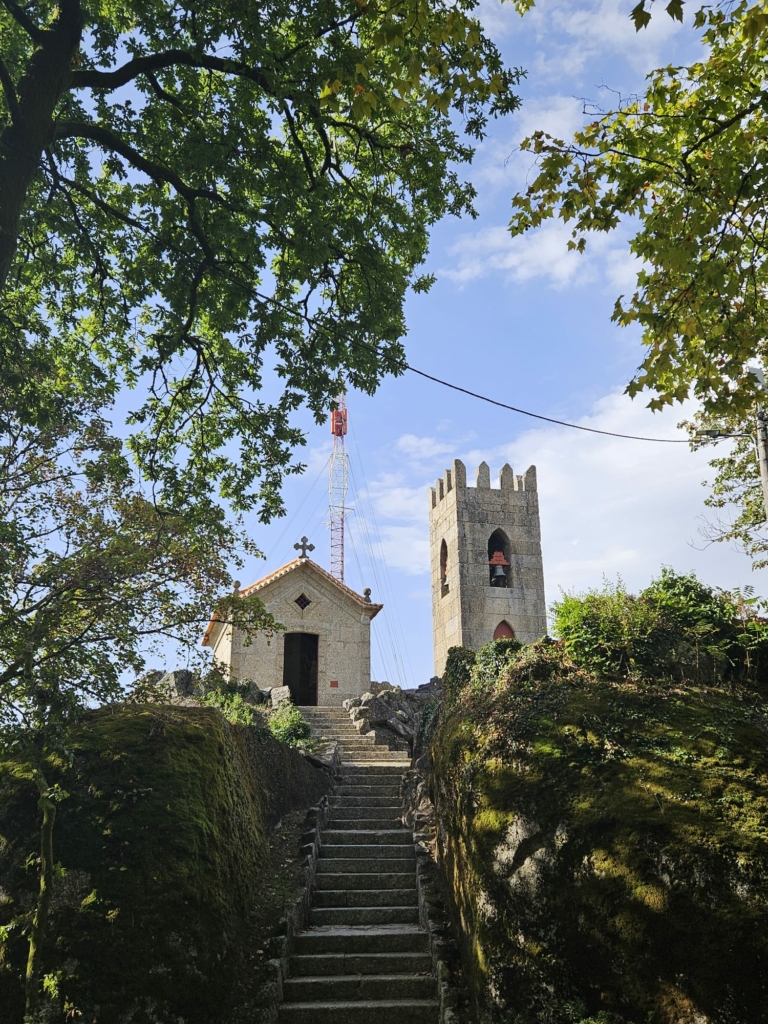
Saint Christopher’s Chapel
Climbing up Mount Penha

On our way back to our apartment, we walked briefly in the Igreja Nossa Senhora da Consolação. When we wanted to get out again, the church attendant ran after us and gestured that we could go back in and take a look around. After a more thorough visit, he held the door open for us as we left. We were really happy about how nice this interaction was!

That evening, an indie band was playing right in front of our apartment on Largo da Oliveira. We rounded off the evening with a delicious vegan buffet.

During our stay in Guimarães, we constantly sensed that the residents have a strong connection to their city and community—and let’s not forget Vitória! Precisely because its compact size, we think what makes Guimarães truly great is that it remains manageable and peaceful, yet is full of places where you can enjoy spending your free time with others.

Porto: The port of well-being

Day 1

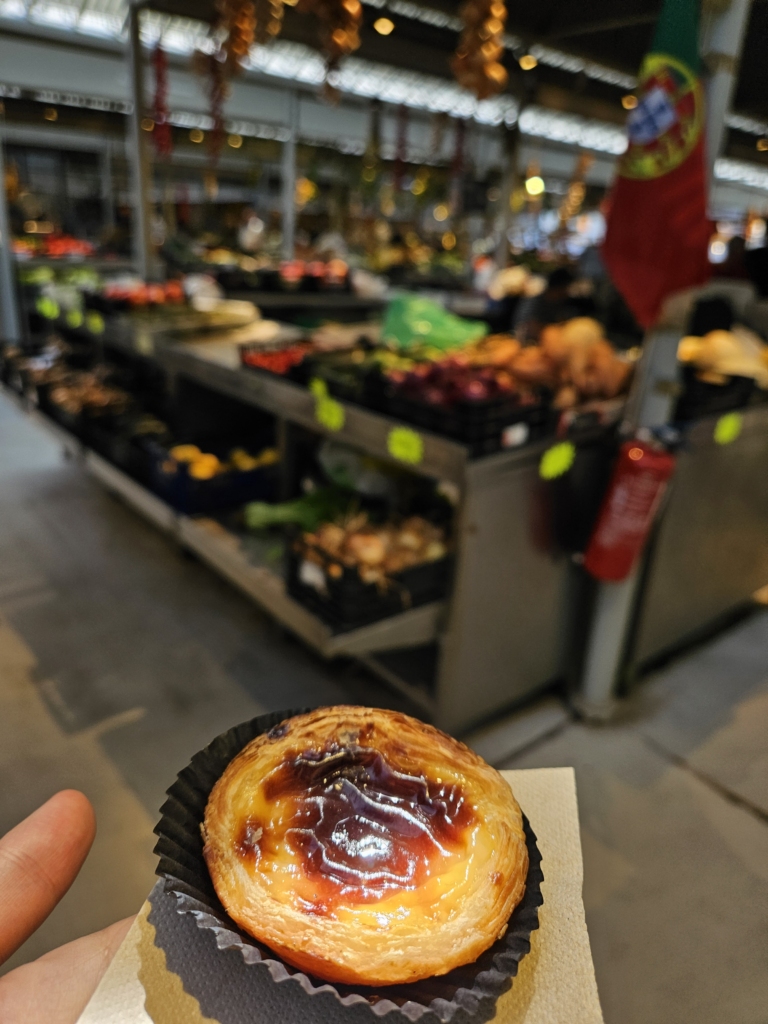
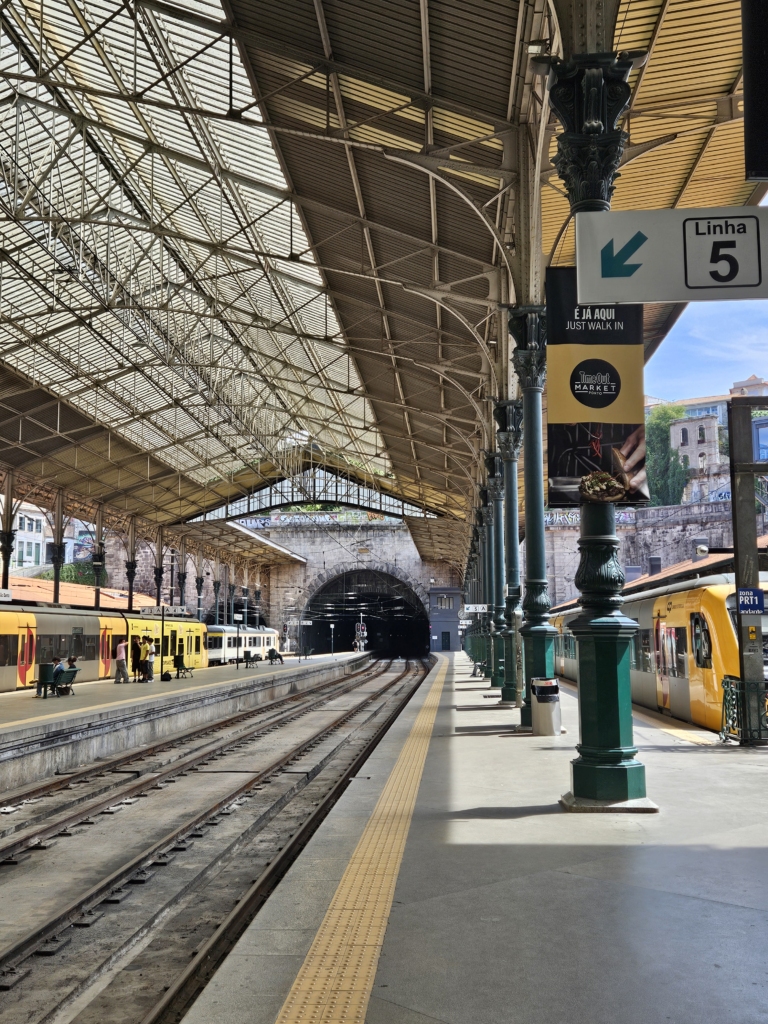
After a three-hour flight, we finally landed in Porto! Once we arrived in the city by metro, we had three hours before we could check into our accommodation. So, with our backpacks, we set out to explore hilly Porto for the first time. On the way, we came across the Mercado do Bolhão, with its many stalls selling baked goods, fruit, spices and much more besides. After Mia devoured her first Pastel de Nata, we continued on our way to buy train tickets at São Bento station. It was the most beautiful train station we had seen so far!

Mercado do Bolhão
São Bento station

During the rest of our exploration, we came across the Ohana Market, a small market in a courtyard where vendors sold crafts and art. As we strolled through the streets, we spotted capoeira dancers and narrow, steep alleys, and heard the calls of seagulls.

After checking into our apartement, we went for groceries at a mall and chatted with some very friendly and warm-hearted Portuguese people.

Local perspective: Warm and open-hearted people, a fast-paced lifestyle and an international city

Day 2

The next day, we went to a vegan bakery first and stocked up on Portuguese pastries. We then headed to Fountainhas, following Vitoria’s advice. En route, we admired the beautiful tiled houses. Once we arrived in Fontainhas, we enjoyed a wonderful view of the Douro River and its bridges. We were in a large square with a basketball hoop and concrete slabs to sit on. That’s where we ate our Pasteis de Nata and Pão de queijo.

Fountainhas

Afterwards, we continued walking and found the steepest street. There were also lots of seagulls and a few cats who apparently liked to sleep and relax by the life-threatening precipice.

Cat in danger
View of Ponte Dom Luís I
Fountainhas

We also walked to the Museu da Cidade do Porto. There, we saw many different types of tiles that you see everywhere on the streets. Unfortunately, the information boards were only in Portuguese and we couldn’t understand anything.

Museu da Cidade do Porto

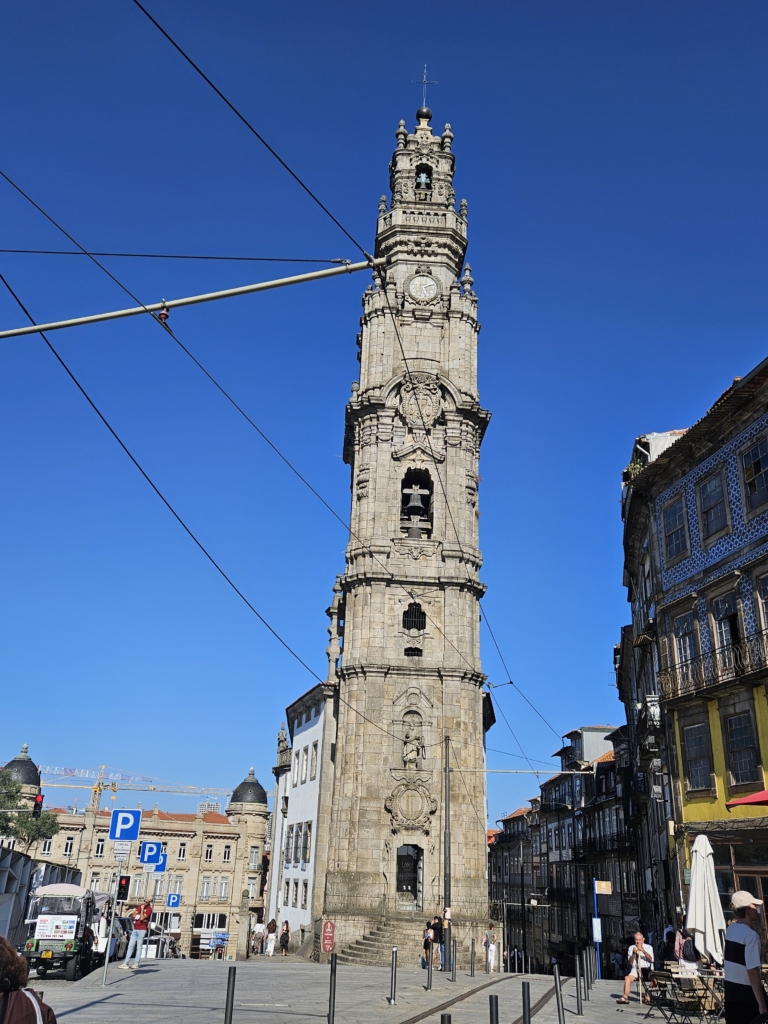
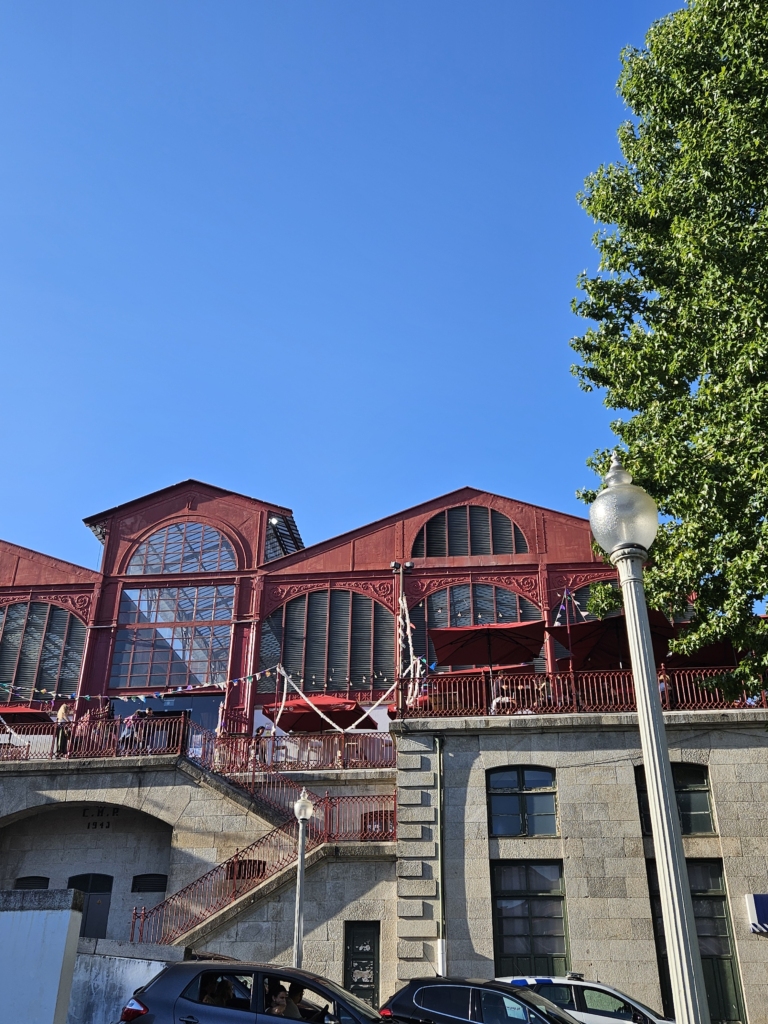
We then wandered aimlessly through the city towards the river, seeing lots of things along the way, like the Mercado Ferreira Borges, Torre dos Clérigos, a ceramics shop and a lookout point that could only be accessed by squeezing through gaps in a fence.

Mercado Ferreira Borges
Torre dos Clérigos

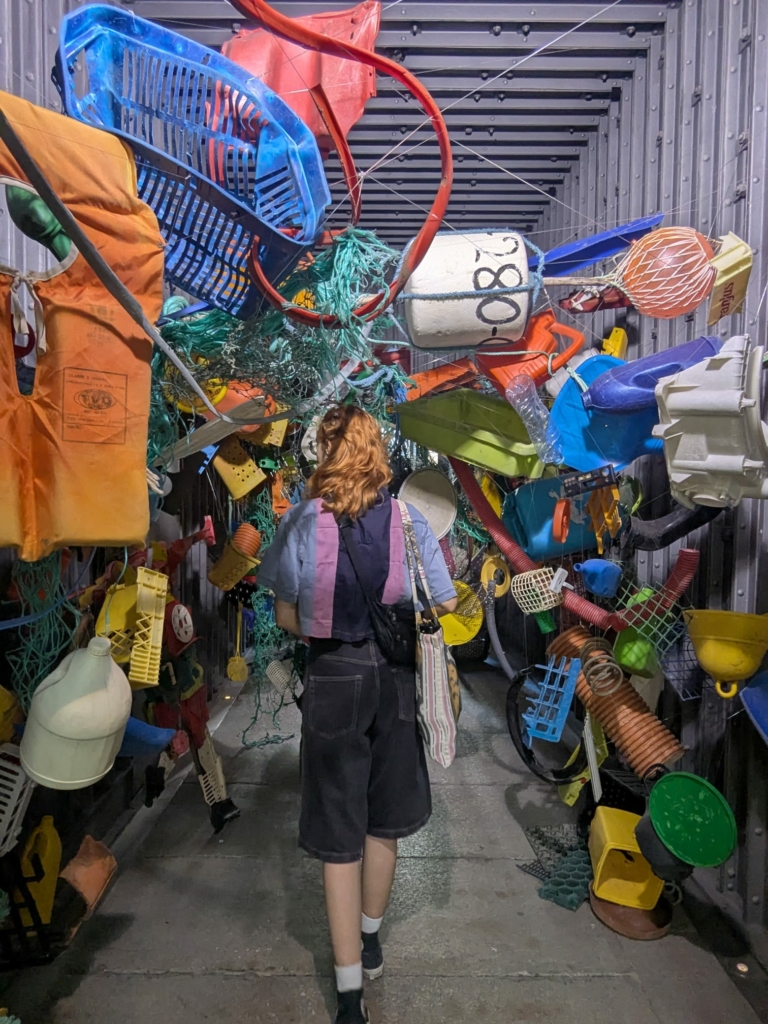
After squeezing through and enjoying the view, we continued walking down the stairs to a market where young artists were exhibiting and selling their crafts. We saw an installation that allowed you to view all the rubbish collected from the ocean from a fish’s perspective.

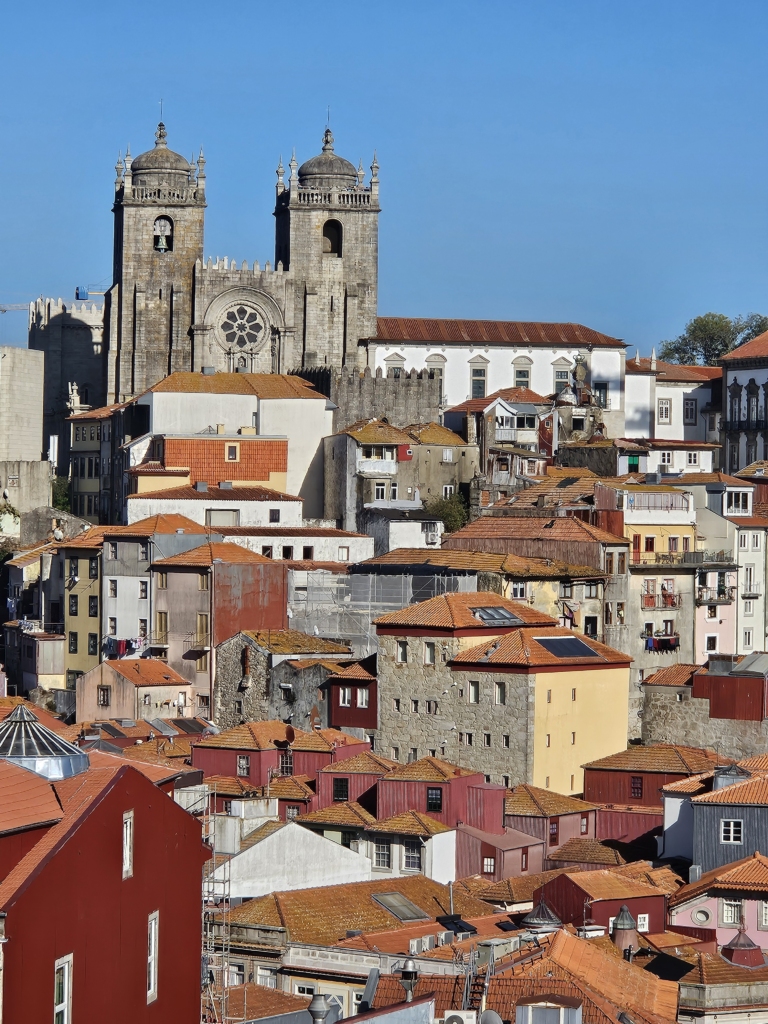
View
Fish Eye

As we walked along, we saw lots of graffiti, beautiful tiles and lovely churches. Wherever you look, you will find elements that make the street special!

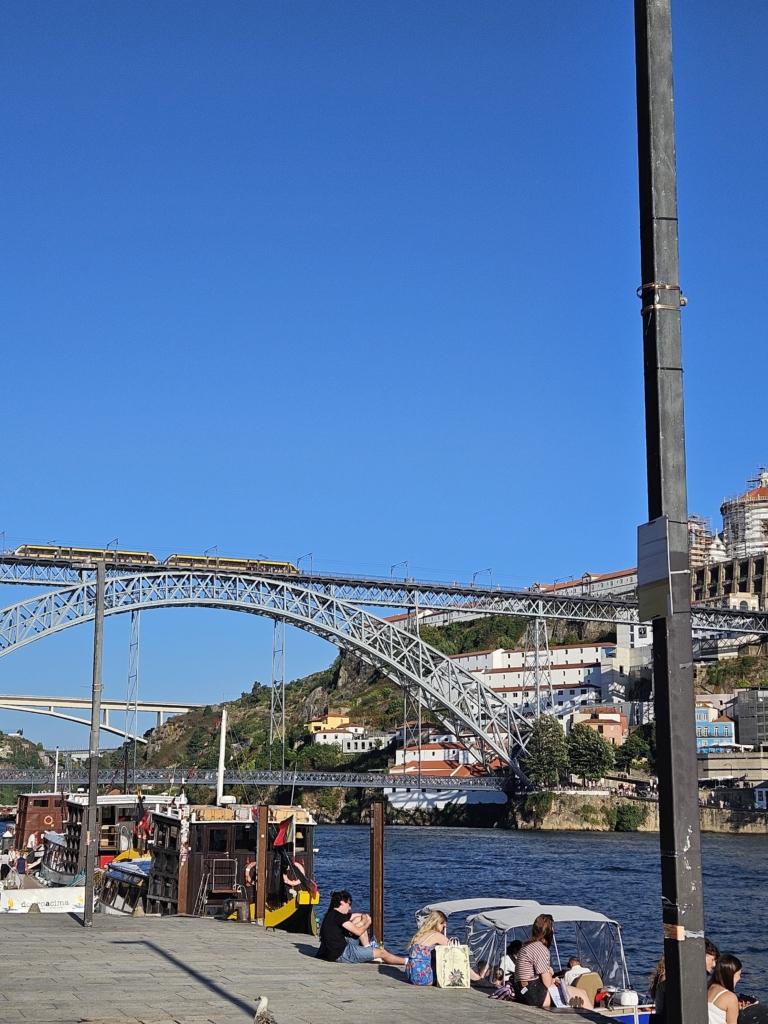
We also went to the banks of the Douro, where we sat down for a while to relax.

Douro banks
Aliados Avenue

Afterwards, we headed to Aliados, Mariana’s favourite spot. On the way, we saw people jumping into the water from the bridge and watched a breakdancing show right next to it.

However, Aliados Avenue was a bit of a letdown since there weren’t that many people hanging out there. However, we did spot a few small tables and chairs inviting you to linger, and there were a few people sitting here and there.

Day 3

On our third day, we walked across the Ponte Dom Luís I, which was very crowded, but which offered beautiful views of the river and the city.

On the other side of the Douro River lies the Jardim do Morro, which wasn’t crowded yet, but every shaded spot was in high demand. After a short, steep climb, we made our way up to the Igreja e Claustro da Serra do Pilar and were rewarded with another beautiful view!

Jardim do Morro
View of Jardim do Morro

We then set off for the old town of Gaia — the neighbourhood on the opposite riverbank — and climbed lots of stairs again. On the Gaia riverbank, we took another short break to listen to a street musician confidently improvising lyrics.

Gaia riverbank

Sketch and watch: Fountainhas

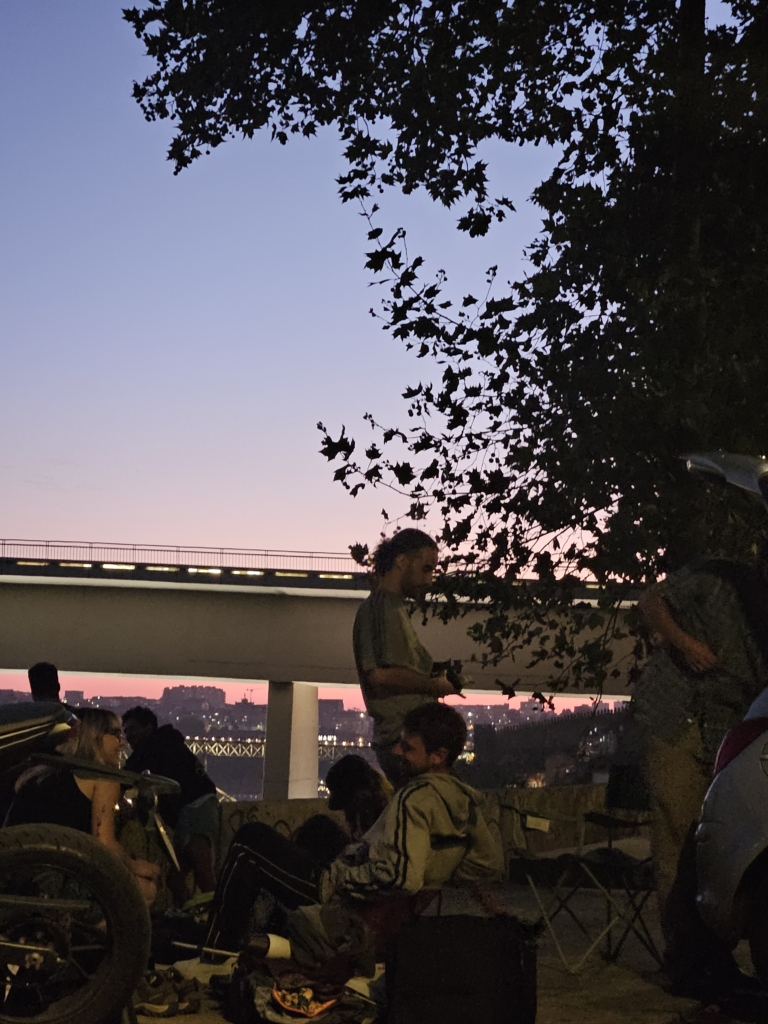
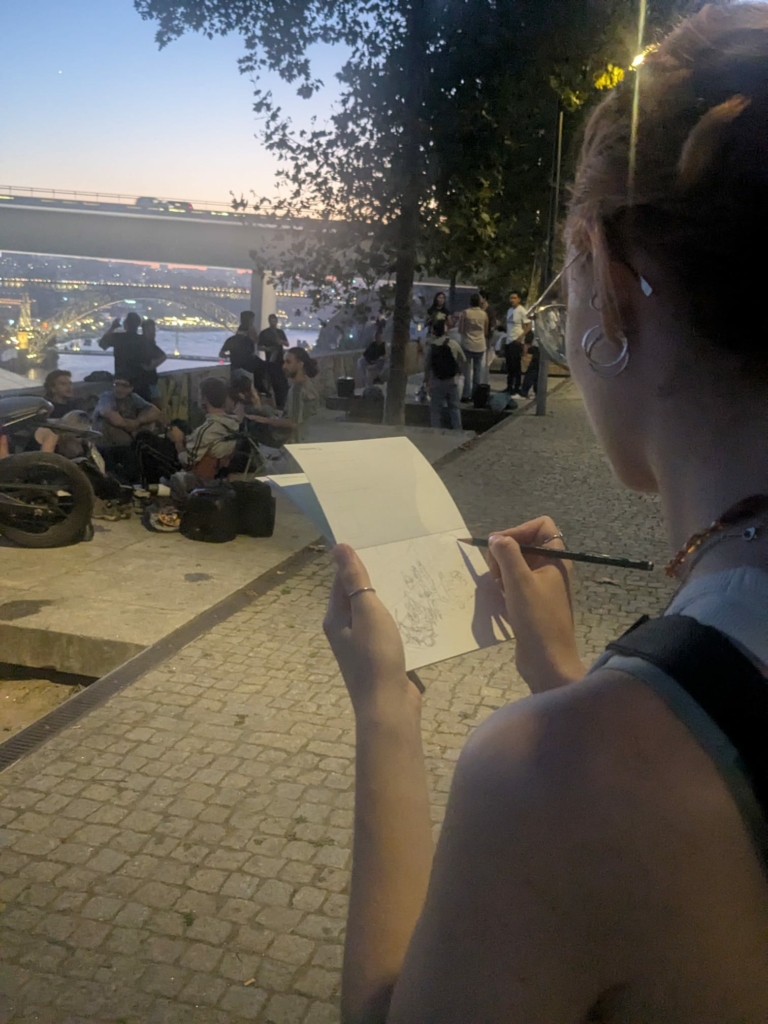
That evening, we went back to Fountainhas. At first, from a distance, we thought there wasn’t much going on, but then we were in for a big surprise! We decided to hold our ‘Sketch and Watch’ session there.

Sketch and Watch in Fountainhas
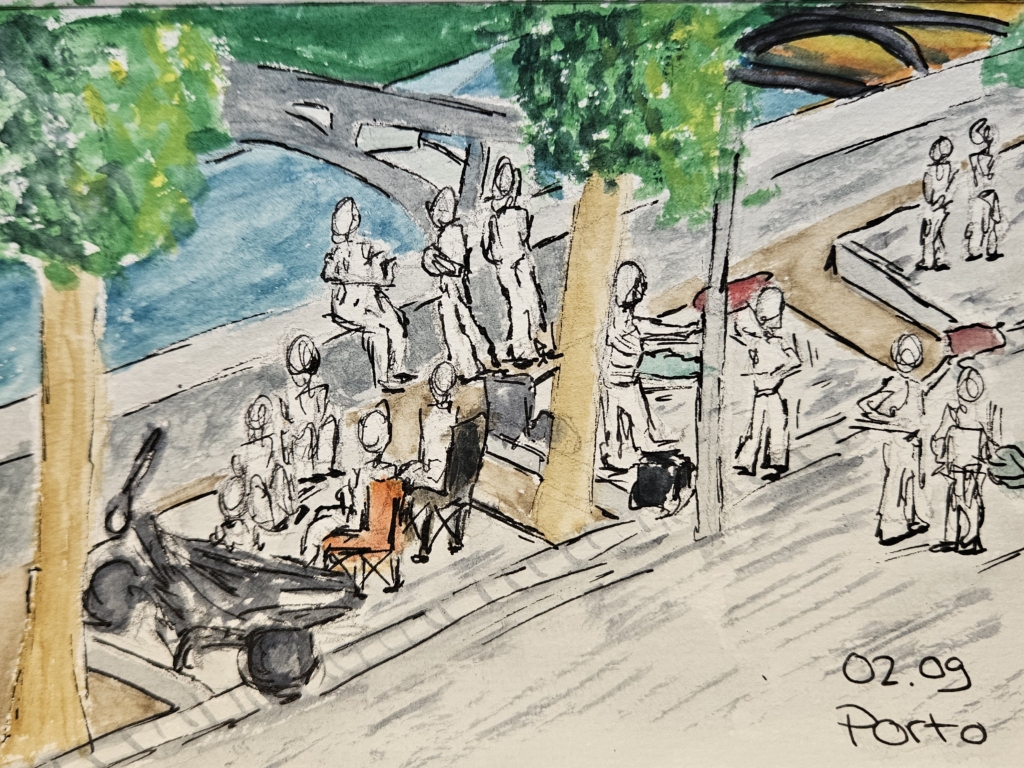
Sketch Fountainhas

Porto - The magic of Fontainhas

It’s impossible to capture the energy of the evening, which leaves me feeling slightly disappointed. The gathering of people creates a unique atmosphere. The dreary concrete slabs are brought to life and transformed into a social space tailored to the needs of the groups – be it a flat-share party, a dance studio or a tapas bar. The presence of the river, the sunset and the city glowing in the distance creates a magical aura that undoubtedly draws people to this viewing platform like moths to a flame. It becomes a place for chatting, relaxing, eating, dancing and pursuing other hobbies – it’s frequented by locals, but is just as much a place for newcomers to Porto. It’s a place to meet friends or make new ones.

Day 4

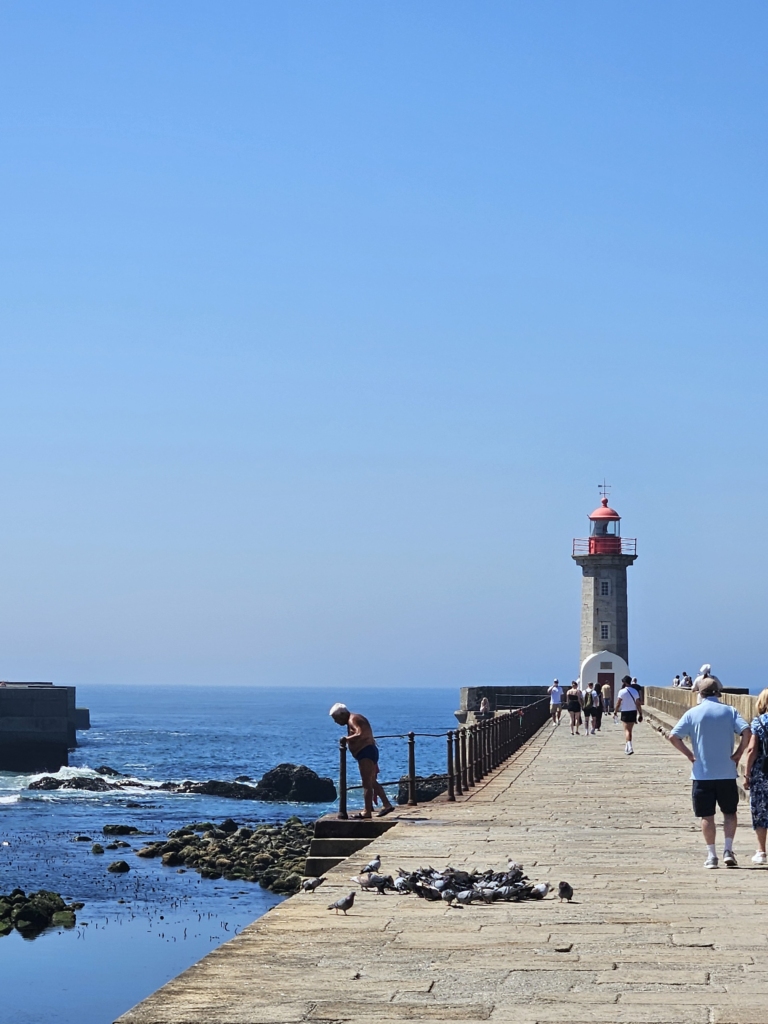
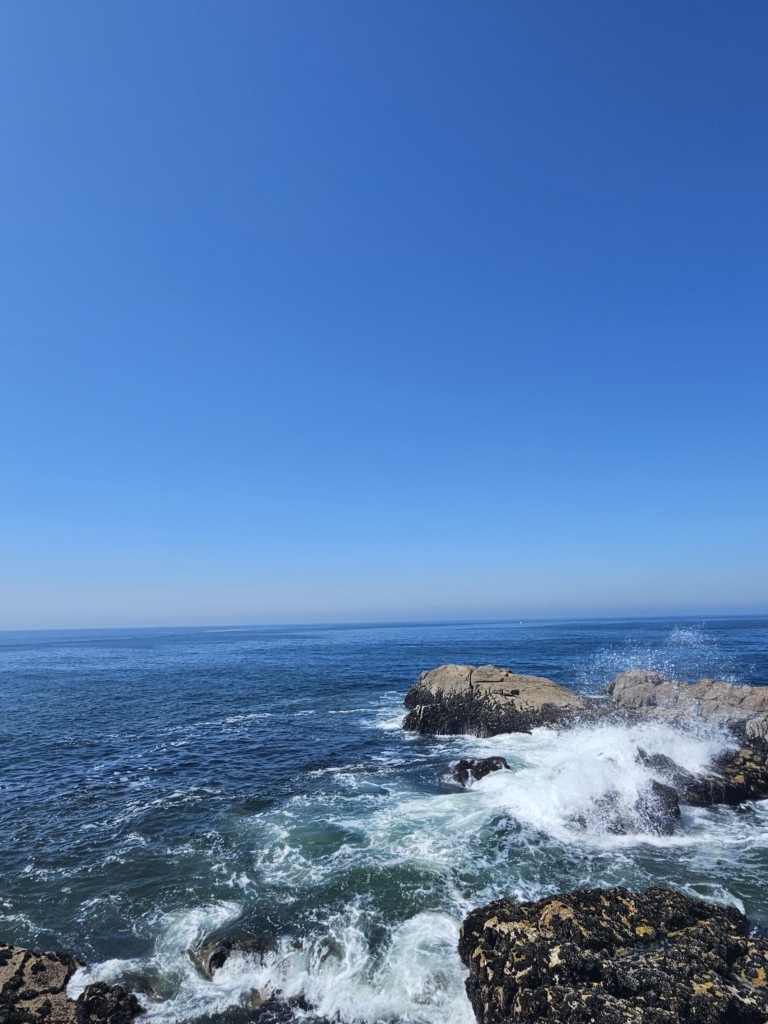
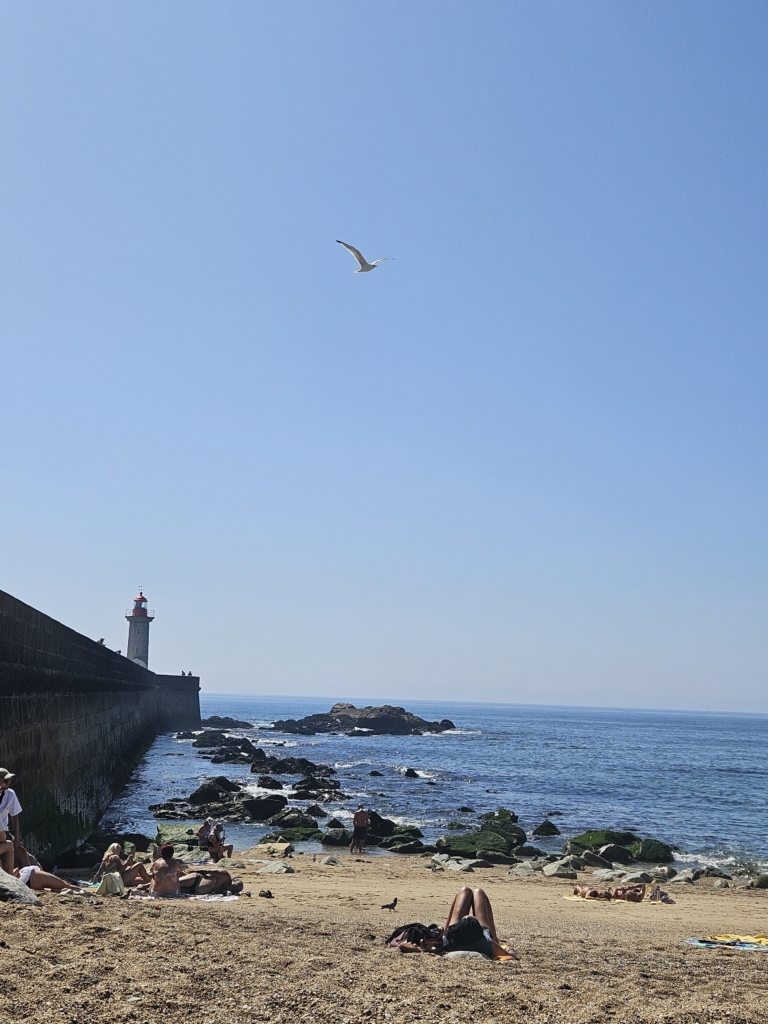
On our last day, we explored Foz. We took the bus to the ocean and saw a lighthouse there. The waves crashing against the rocks were so mesmerizing that we had to watch them for a while.

Foz

After that, we went to the beach right next to it. We even went for a swim—the water was very cold and the waves were strong. After playing a quick card game and sunbathing for a bit, we headed back.

Beach in Foz

Porto—and especially the people there—made us feel so welcome that we felt very at home here. The fact that everyone we interviewed emphasized the warmth of the city’s residents and saw it as such an important part of Porto led us to wonder: What if it’s not just the buildings, but also the people who make this place so special and are part of the World Heritage Site?

Augsburg: Go with the flow!

Day 1

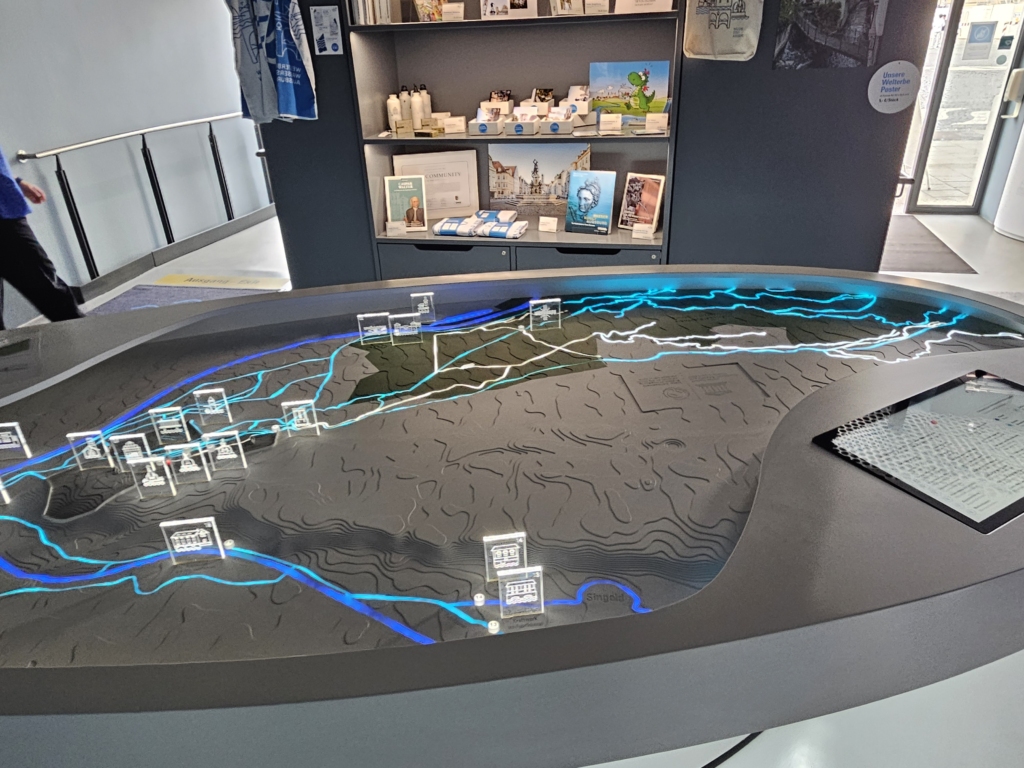
Our first day in Augsburg got off to a slightly late start, because our train was delayed. We headed to the World Heritage Centre and were greeted by Kristen, Gabi and Margit. They gave us an introductory tour and used their map installation to provide an overview of the many diverse heritage sites of Augsburg’s Water Management System.

Map of Augsburg's Water Management System

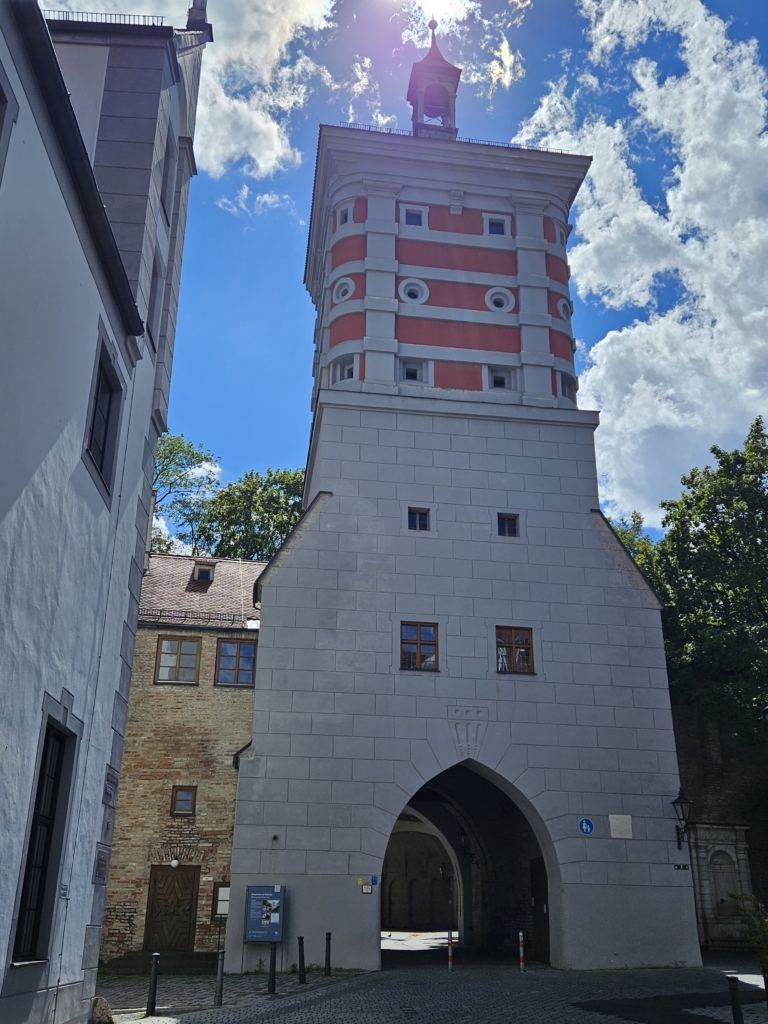
22 objects of the Water Management System were designated a UNESCO World Heritage Site in 2019 – including the Lech Canals, the Hochablass, the Rotes Tor, and the Augustus Fountain.

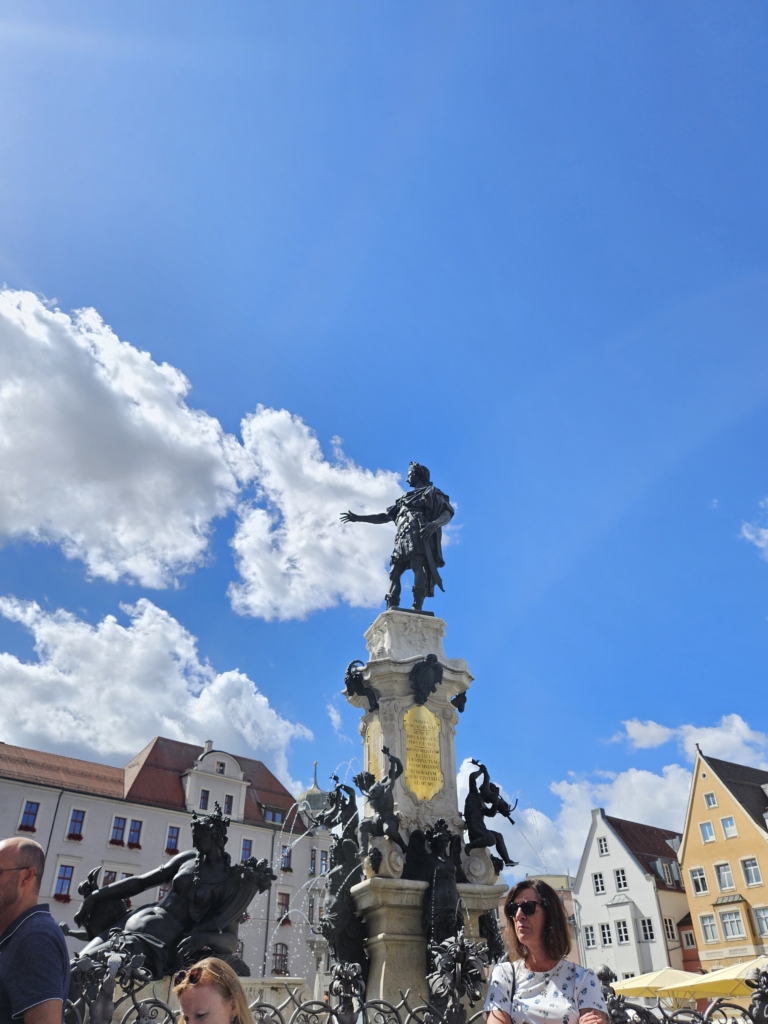
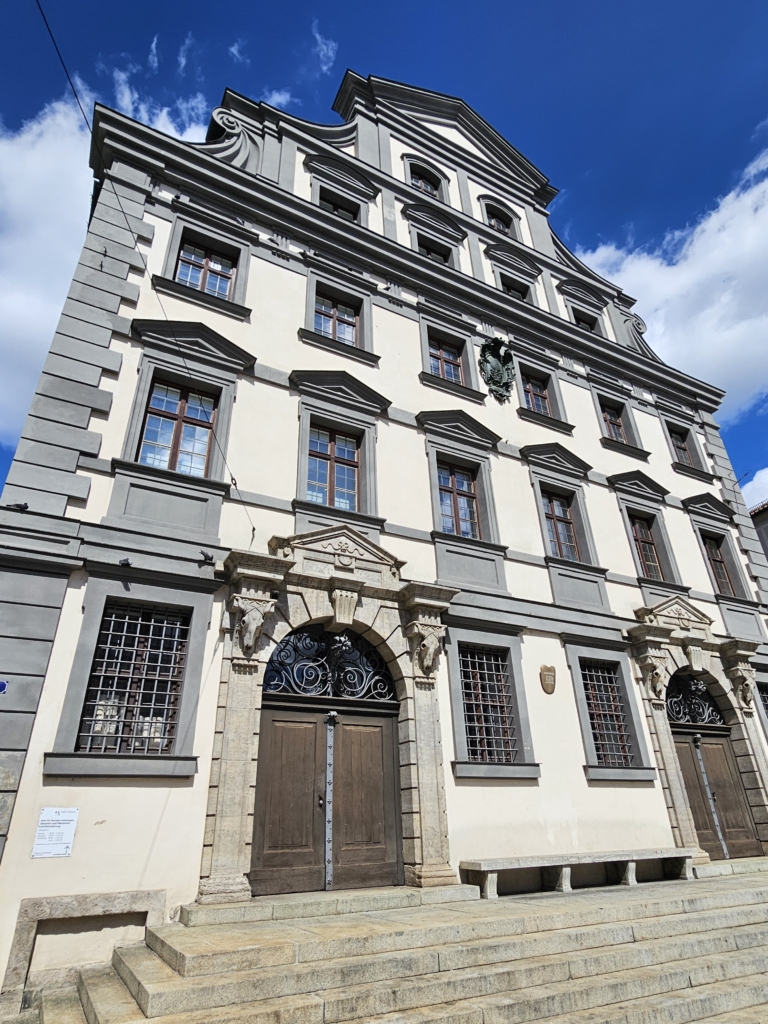
Margit took us straight on a guided tour of Augsburg, and right at the start, we happened upon another folk festival parade: the Plärrer. She showed us the magnificent 16th century Augustus Fountain on Rathausplatz, which features a total of four river gods. Three of the gods represent the rivers Lech, Wertach and Singold, while the fourth represents the Brunnenbach, a stream created to supply drinking water.

Augustus Fountain
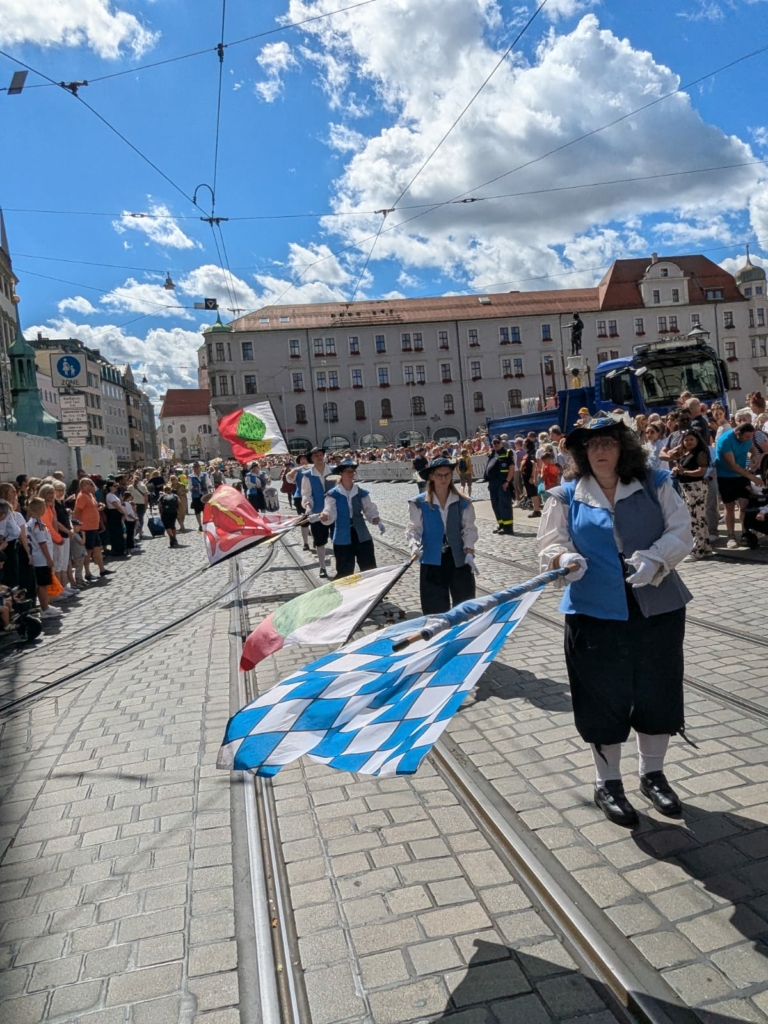
Plärrer Parade
Stadtmetzg

After making our way through the parade, we walked to the Stadtmetzg, an old municipal butcher’s shop with a canal running through its basement. The canal was used to cool the meat and dispose of waste. Margit continued showing us around, pointing out where the canal runs. 

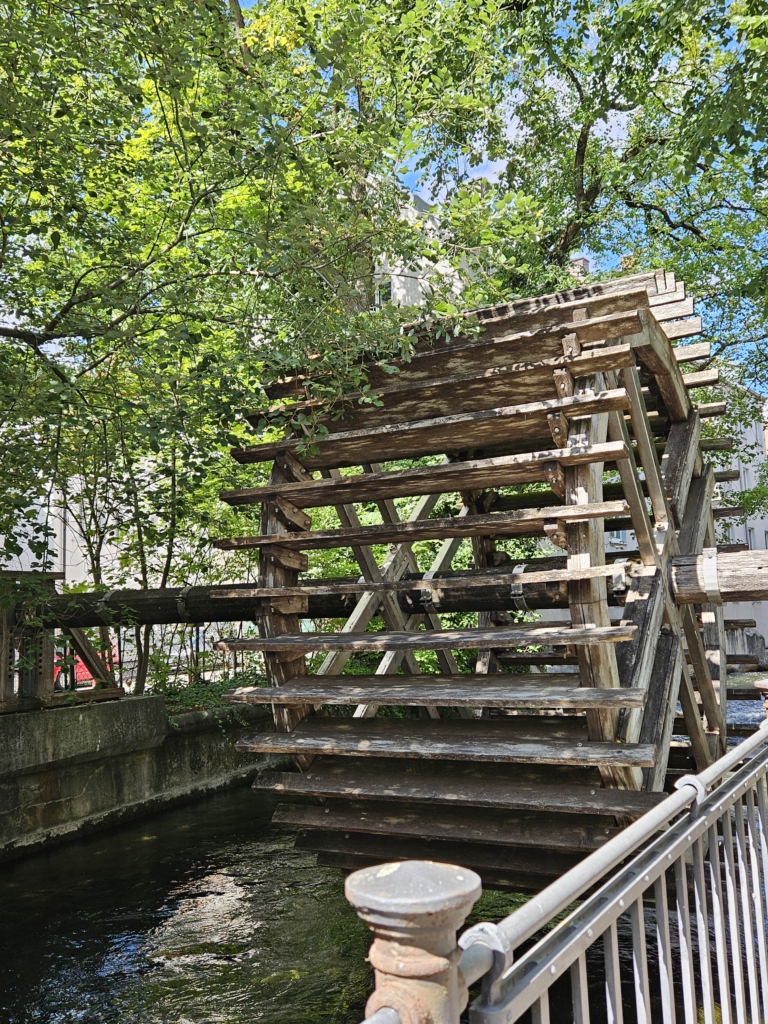
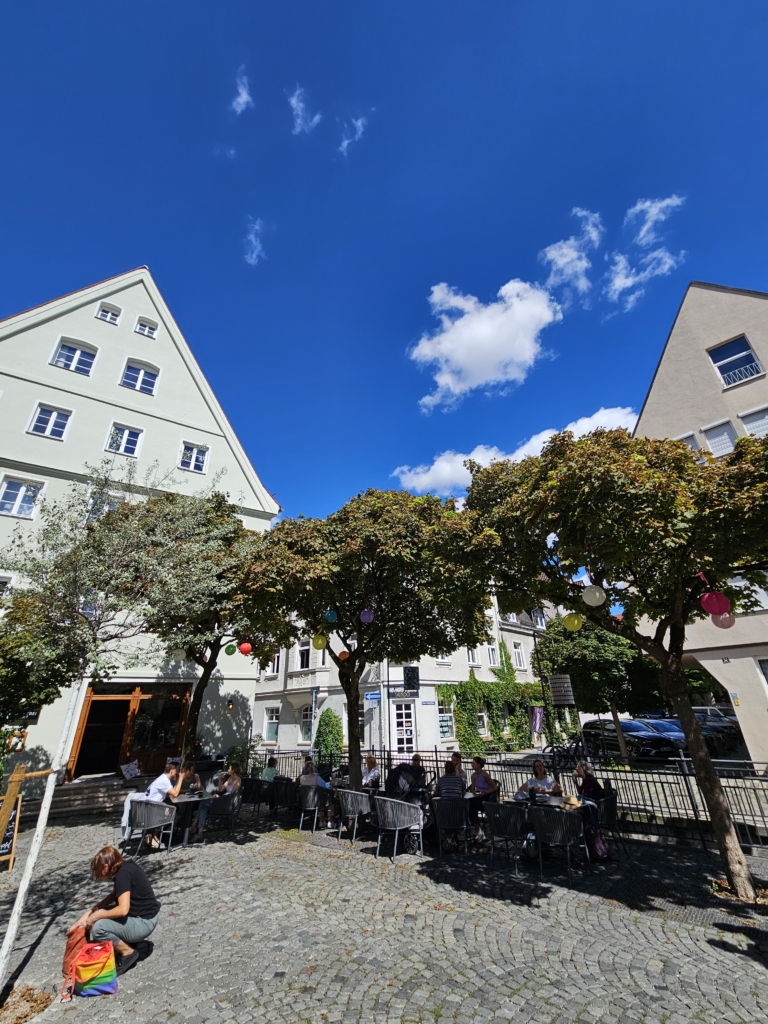
Later, we saw a wooden mill, though it was only a replica and never actually operated. Continuing on our way, we saw a hydroelectric power plant that’s still in operation today and a tannery where leather was hanging to dry. When we arrived at the beautiful Holbeinplatz, Margit told us that it’s a place where people like to linger, which is why flowers were later added there.

Replica of a wooden mill
Holbeinplatz

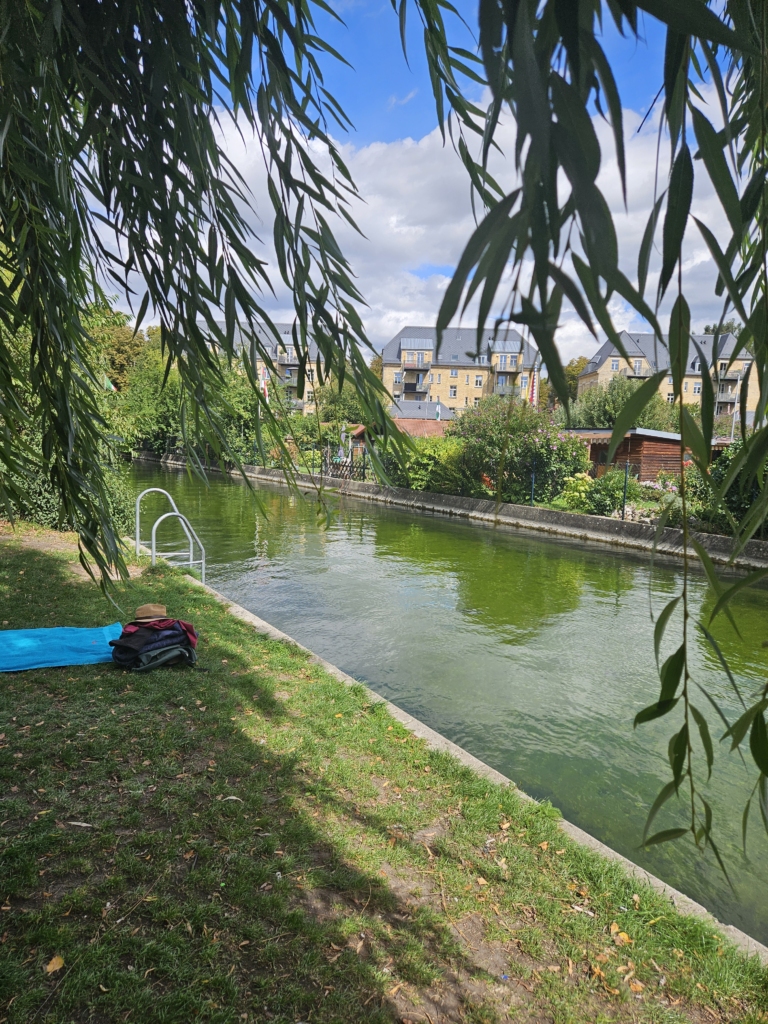
On our way, we came to a former bathing spot on a canal located right next to the Ursula Convent. According to local stories, bathing during the day was forbidden there so that the nuns wouldn’t see anyone naked.

Former moat as herb garden

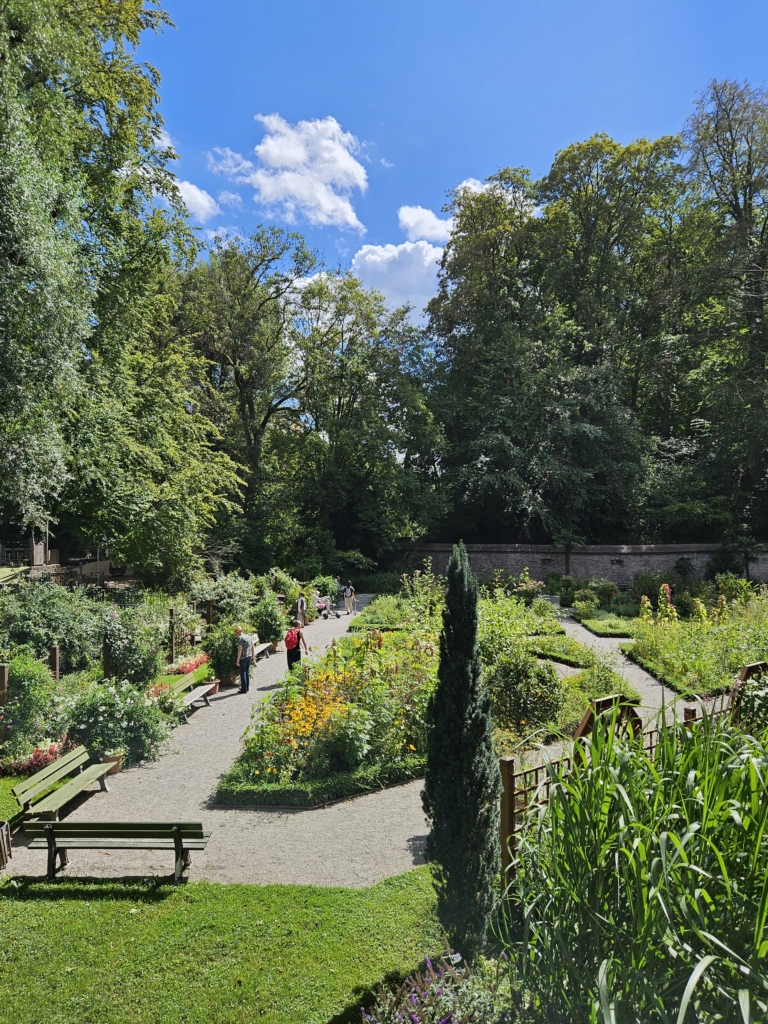
When we arrived at the Rotes Tor, we saw a former moat which now serves as a public herb garden, where visitors are welcomed to help themselves.

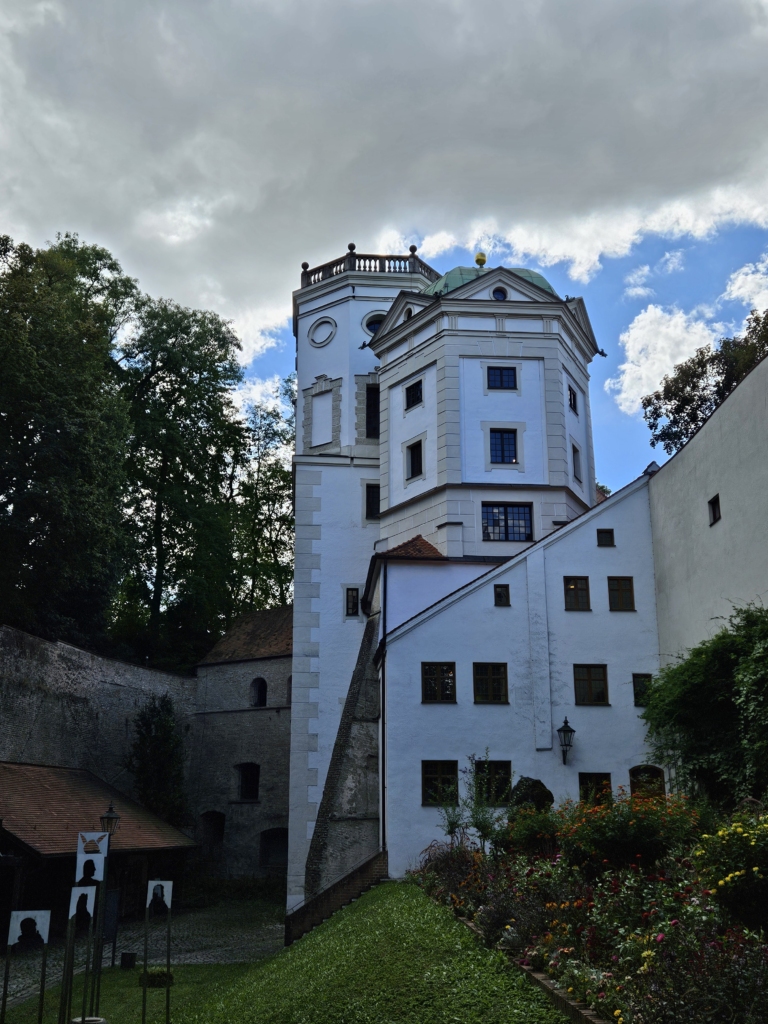
Kristen was waiting for us there and led us into the water tower. The former apartments of the well masters were located here, including those of Casper Walter, a leading engineer who played a very important role.

Water Tower
Rotes Tor
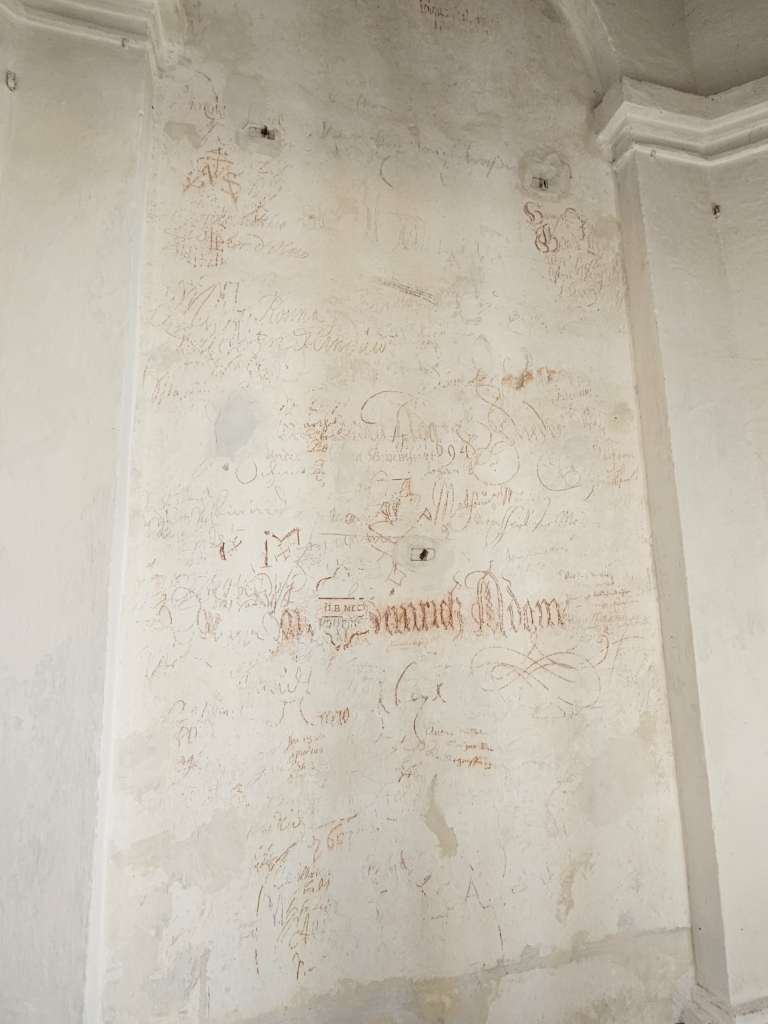
Historical graffiti

During the tour, we saw historical graffiti on the walls, some of which dated back to the 17 th century, as well as old wooden pipelines used to transport water.

Even the necessary tools were made right here. Casper Walter was the driving force behind the project, inventing a new engine that was significantly quieter — legend has it that this enabled his wife to sleep better. Another particularly exciting development was the early separation of water into utility and drinking water in Augsburg, achieved by means of a wooden partition.

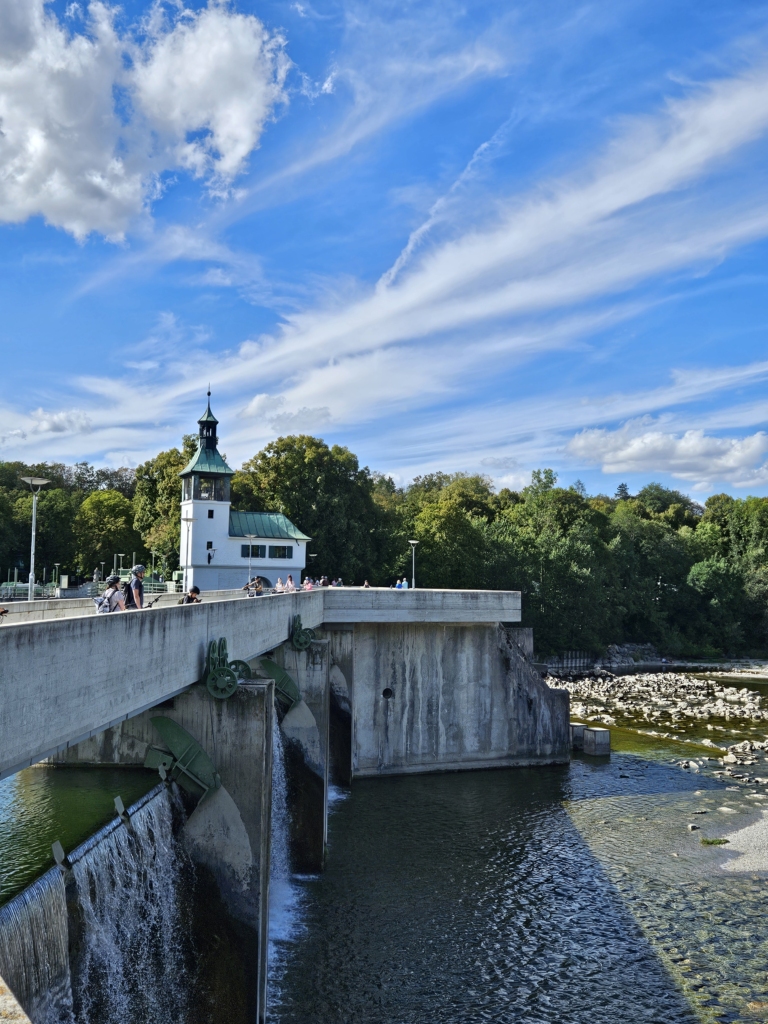
Next, we took the tram to the ice canal and met Gabi at the Hochablass.

Hochablass
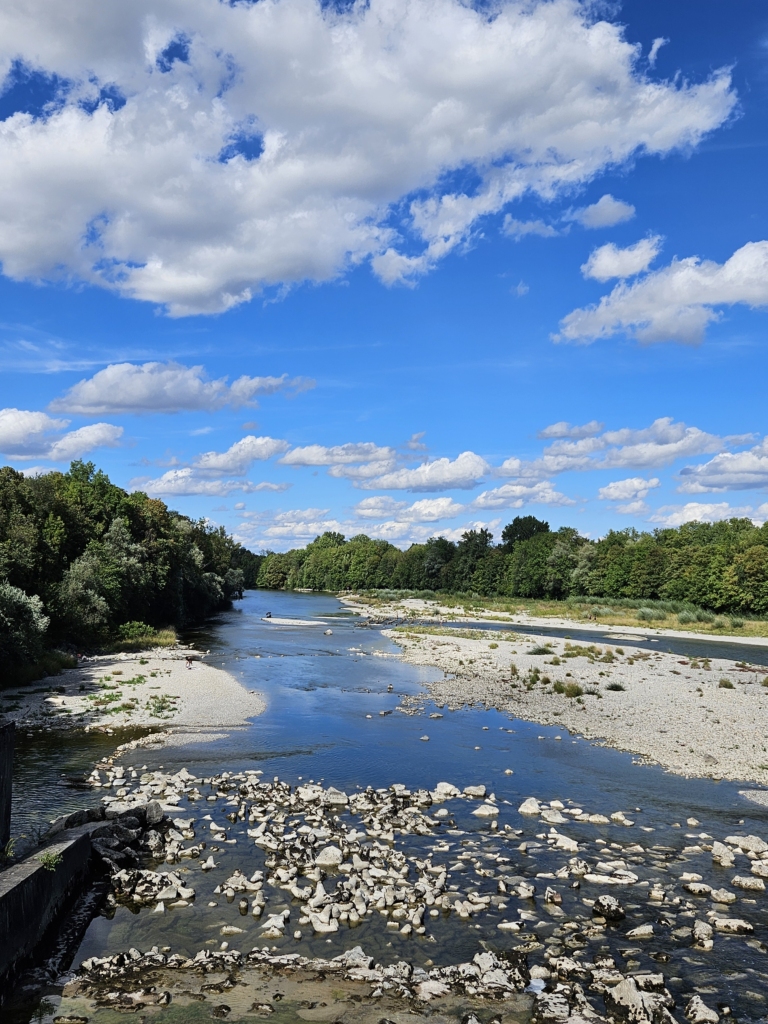
Lech

She gave us a tour of the area and told us more about the plans to restore the river: the Lech is to be widened from 70 metres to 130 metres and a fish ladder is to be built. We then made our way to the historic Hochablass waterworks and drank some delicious water from a fountain there. We were really surprised at how good it was!

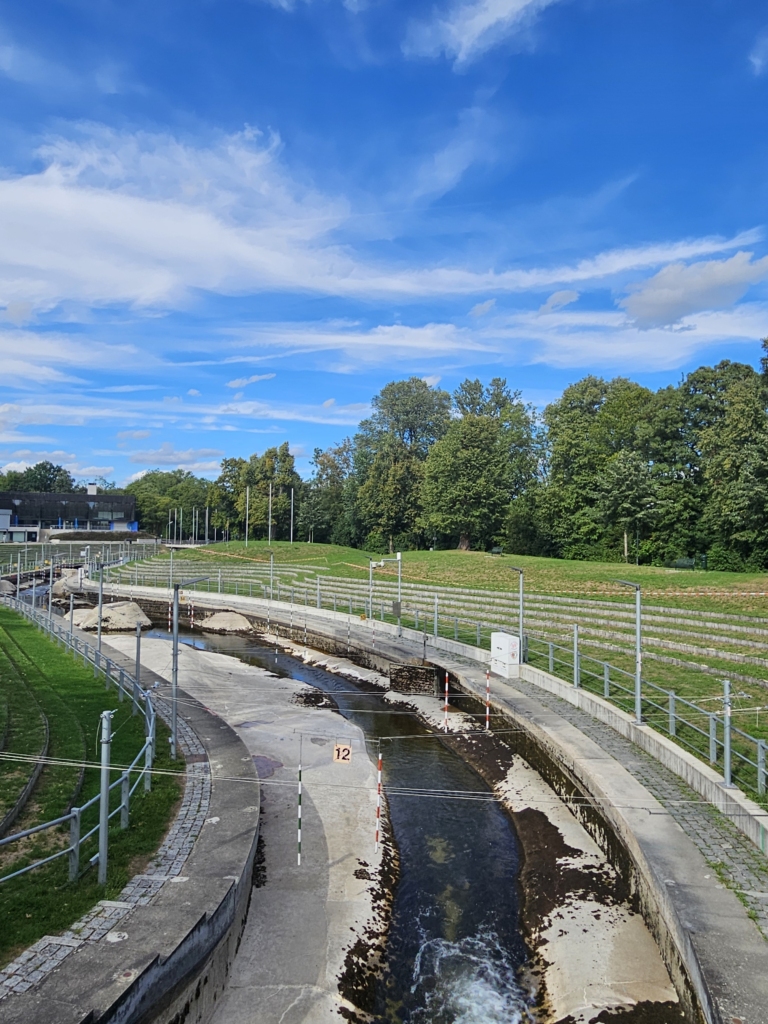
Next, we passed the Olympic canoe course, where water is drawn from and later returned to the Lech River. The course was artificially constructed for the 1972 Olympic Games. At the same time, the GDR built a virtually identical replica of the course, so that during the Olympic Games themselves, the GDR athletes were able to win all the medals. There wasn’t much water in the course that day as filling it with water isn’t the highest priority.

Thank you so much for the great day and all the informative tours!

Olympic canoe course

Day 2

Our second day in Augsburg got off to a fairly slow start. The city was quiet, but there were lots of football fans around. As we strolled through the Old Town en route to the Town Hall, we chatted with a few locals.

Local perspective – a green city, water in the city center, and a beautiful old town

Exploring together

We went back to Holbeinplatz, where the cafés were already quite crowded. We refilled our water bottles at a fountain here and thought about where to go next. We wanted to check out the spot by the Proviantbach that Lena and Finn had recommended, so we set off. First, we took the tram to Jakobertor and explored the Textilviertel a little. Here, too, the canals wind their way through the residential neighbourhoods. When we arrived at the Proviantbach, we passed a football pitch belonging to a Turkish football club. They were playing against a Romanian team, there was a large crowd, and there was plenty of food.

When we first arrived at the Proviantbach, there weren’t many people there yet. We saw a retired couple swimming in the canal. As we continued to explore the area, we found an old train track overgrown with trees and bushes.

Proviantbach

Sketch and watch: Proviantbach

After dipping our feet in the cold canal water, we spontaneously decided to hold our ‘sketch and watch’ session there, as more and more people were arriving.

Sketch and Watch at the Proviantbach
Sketch Proviantbach

Augsburg – Everything, everywhere, all at once at the Proviantbach

Several spaces emerge alongside the Proviantbach: here people swim, there they chat, here they play football, and over there they relax in the allotment. Although everyone can create their own little haven in this way – whether to relax or socialise with friends – interactions constantly arise between these spaces.

After spending two days in Augsburg, we got the impression that young locals especially enjoyed the city’s natural surroundings and waterways. These both bring a sense of calm to their daily lives and provide opportunities to socialise. They also really appreciate the beautiful old town.

Regensburg: A place you can call Home!

Day 1

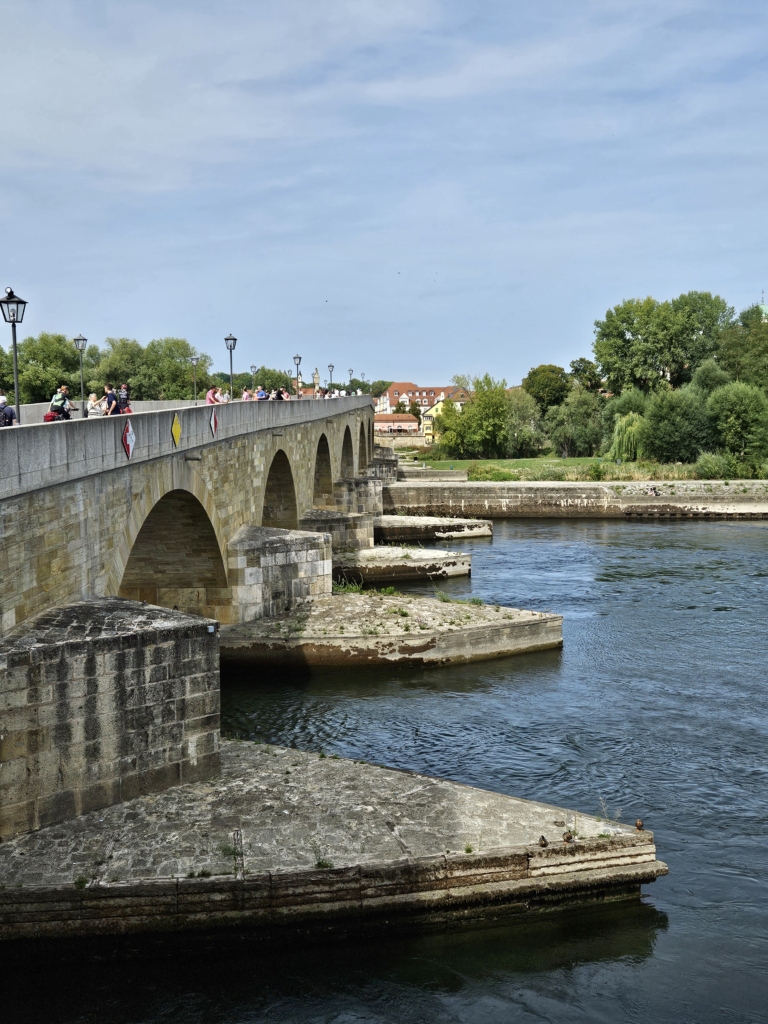
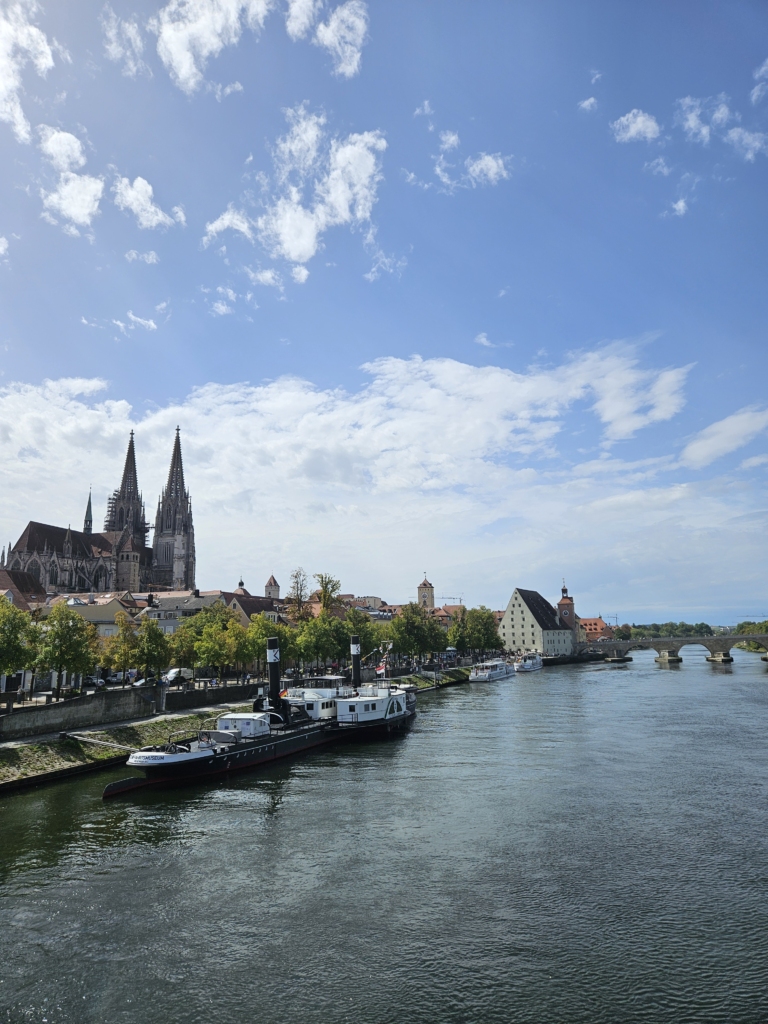
We started the next day in our hometown of Regensburg with a walk across the Stone Bridge.

Regensburg’s Old Town, including Stadtamhof, is a UNESCO World Heritage Site. It was once a medieval trading city and political centre.

As usual, there was a street musician on the bridge, either early in the morning or late in the evening, and today it was a harpist. We also saw many tourists from cruise ships.

Stone Bridge
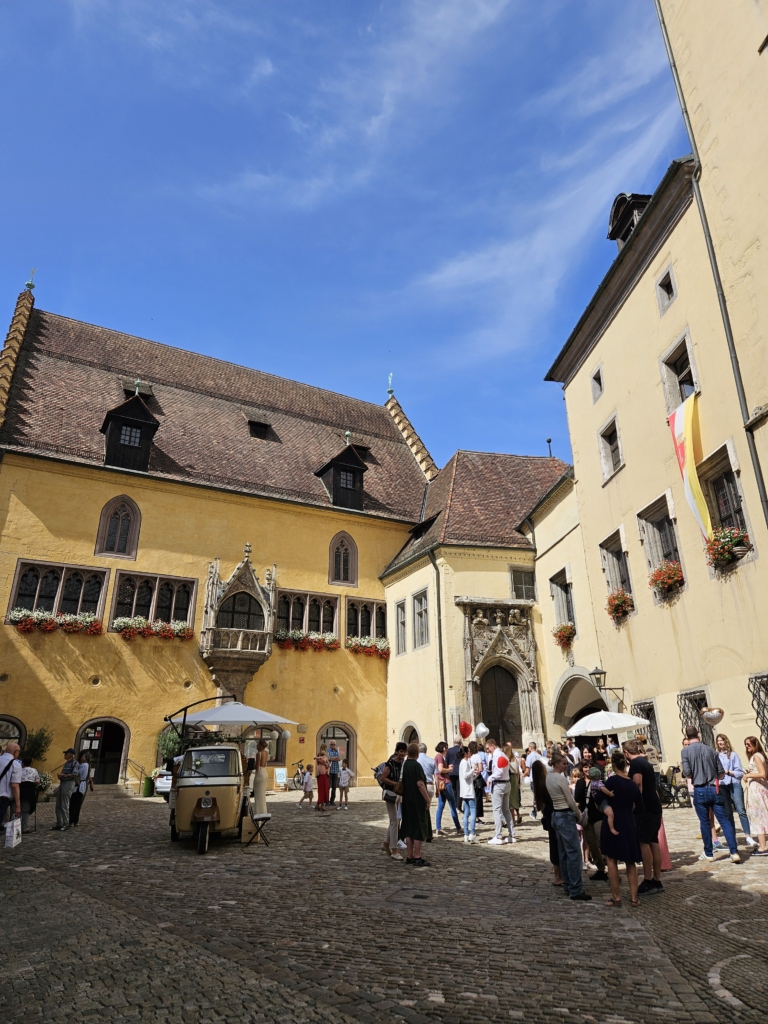
Old Town Hall

After that, we walked all over the city, stopping by some of our favourite places along the way. We spoke to lots of people passing by at the Old Town Hall, Neupfarrplatz and Bismarckplatz to find out about their favourite places and what they thought about living in Regensburg. Initially, this proved more difficult than expected, as a significant proportion of the young people we approached were not actually residents of Regensburg, but were visiting the city.

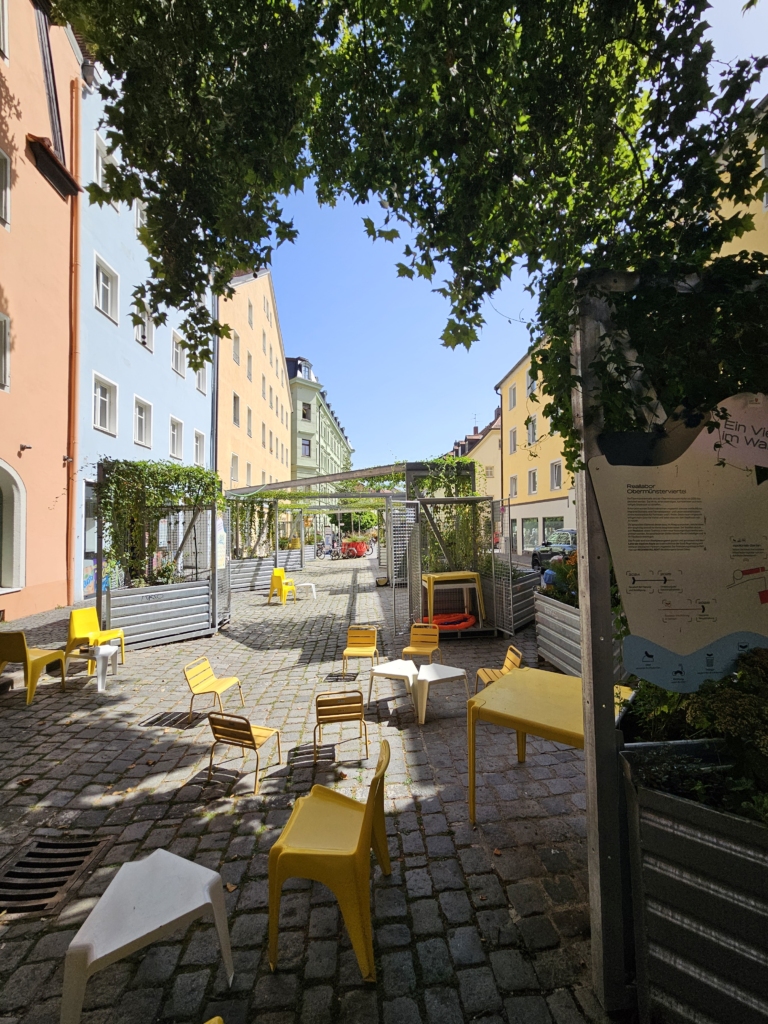
We then went to Obermünsterplatz, one of our favourite places in Regensburg, where we saw lots of people either picking up lunch or sitting on the benches.

Apollonia’s Garden
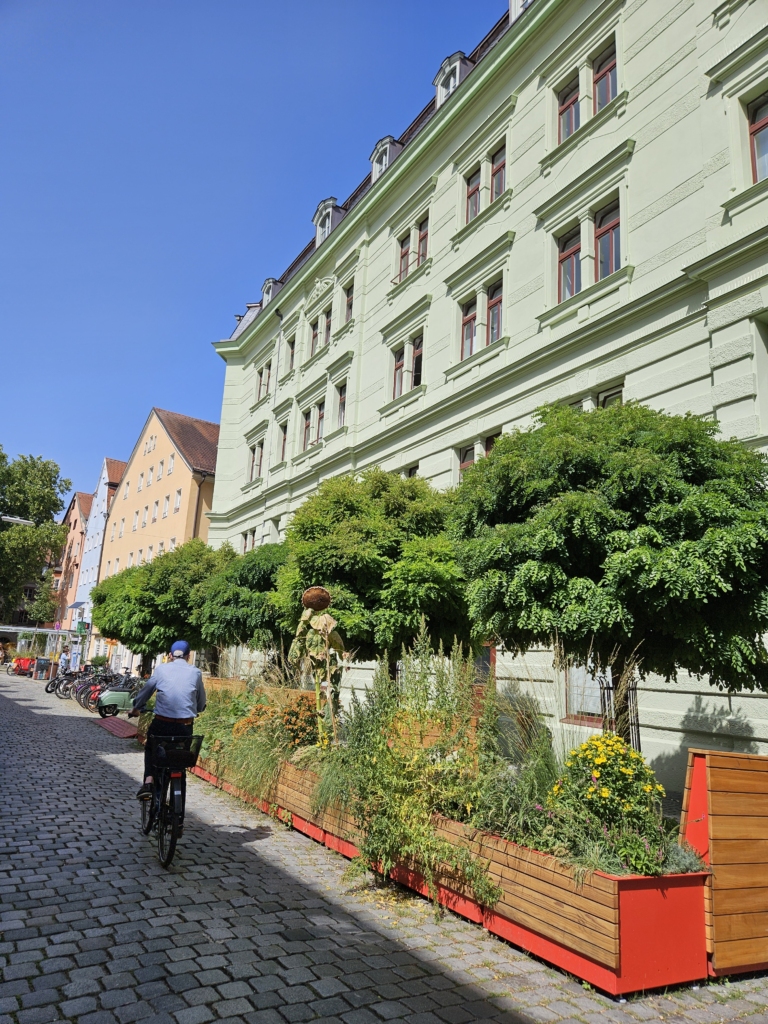
Obermünsterstraße

Local perspective: The Danube, a youthful city and bustling squares in the Old Town

Exploring together

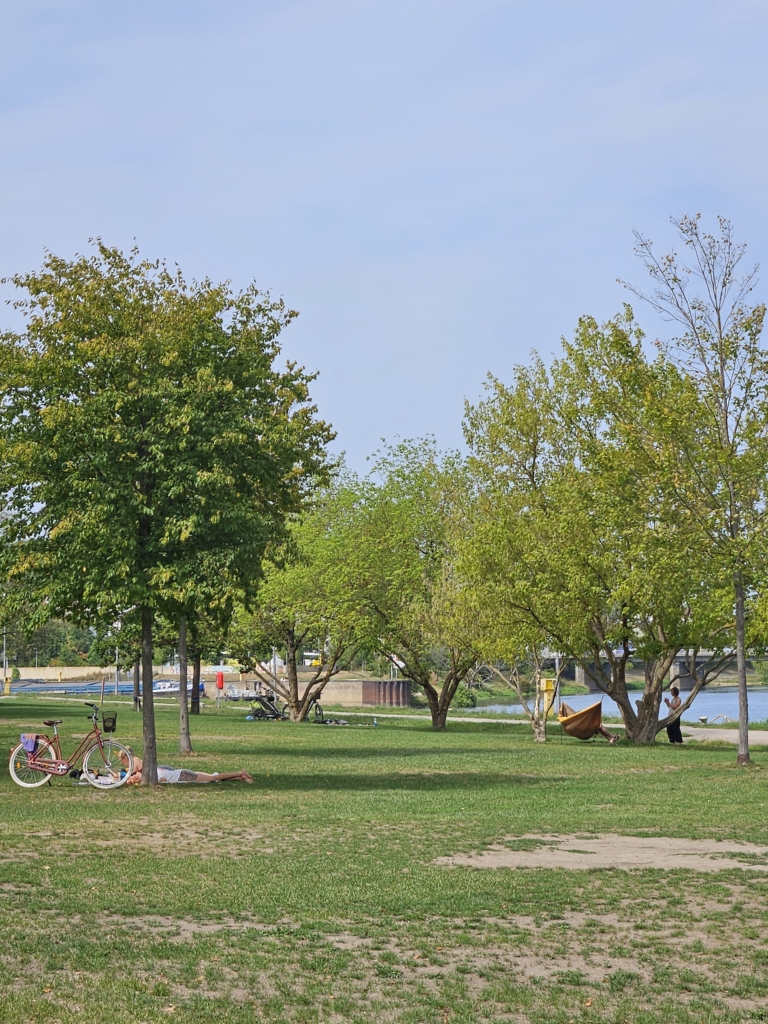
Our walk then took us to Stadtamhof via the Stone Bridge once again, where the harpist was still performing. From there, we could see people swinging on the Grieser Steg over the Danube, so we made our way over there. At the Grieser Spitz, there were lots of people swimming or relaxing in hammocks or on towels. It is this, along with the peace and quiet, that makes this one of our favourite places. After resting on a bench for a while, we made our way to the visitor centre.

Grieser Spitz
Grieser Steg

When we arrived, we were warmly welcomed by Bernhard, Moni and Janina! After sharing our impressions of Bamberg and Regensburg so far, they treated us to ice cream. Standing on the stone bridge, we chatted about their favourite places in Regensburg. Moni likes to unwind in Stadtamhof in the evening, while Janina spoke about Bismarckplatz, which comes alive in the evening, especially with students.

Sketch and watch: Danube promenade next to the Stone Bridge

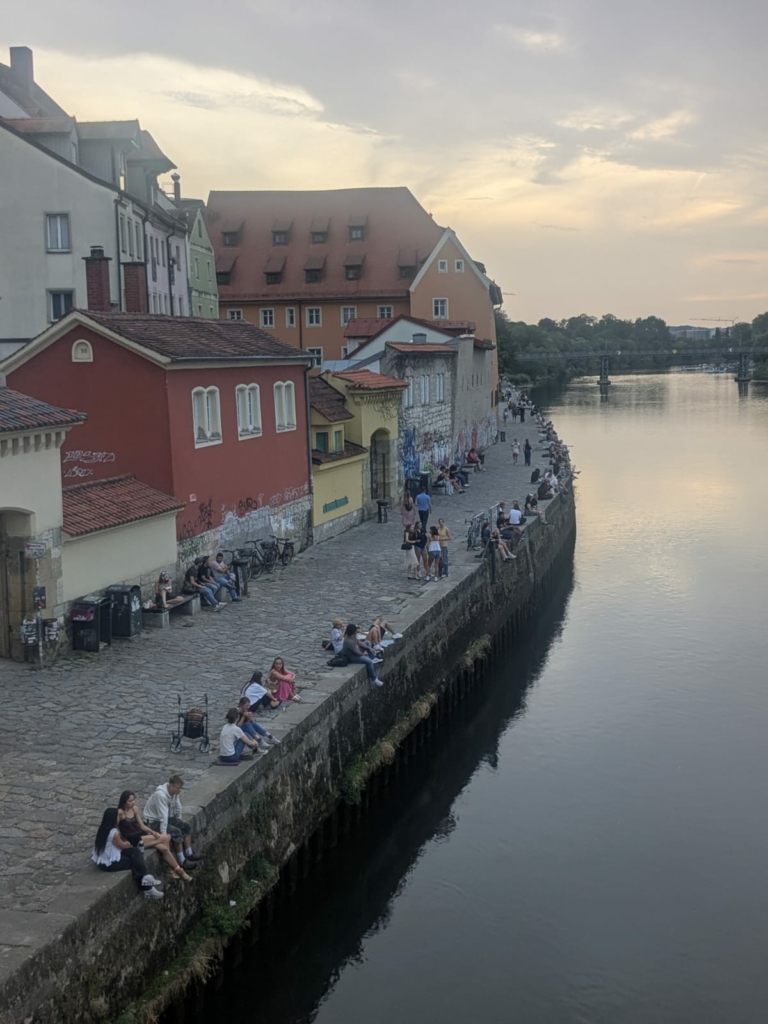
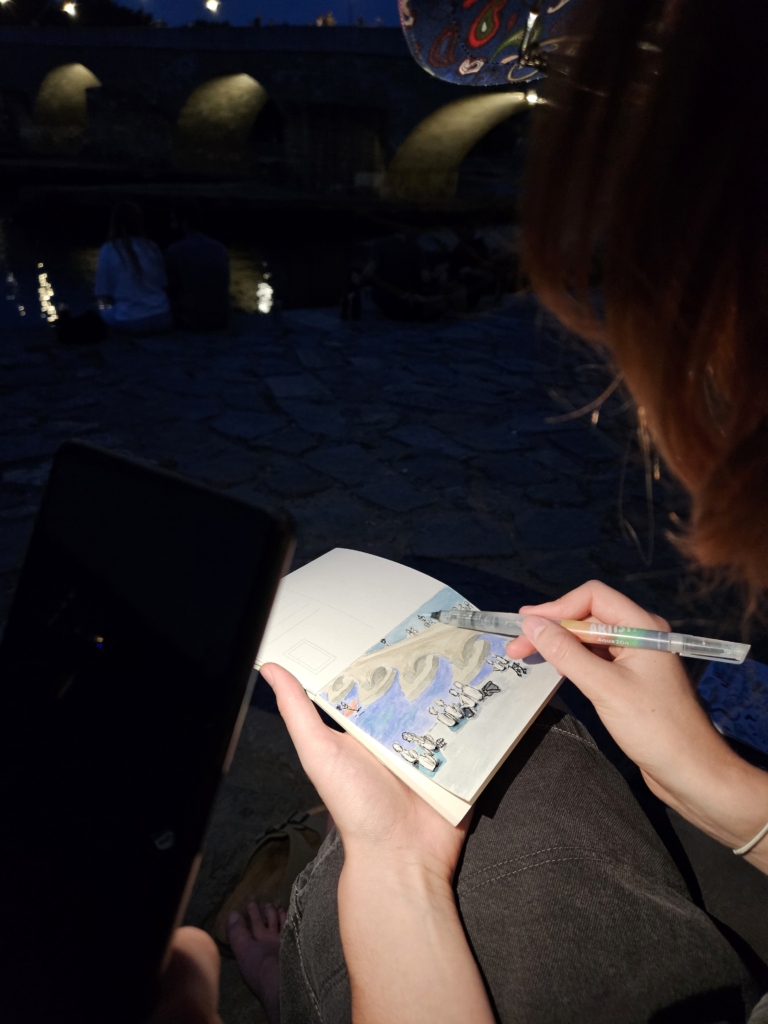
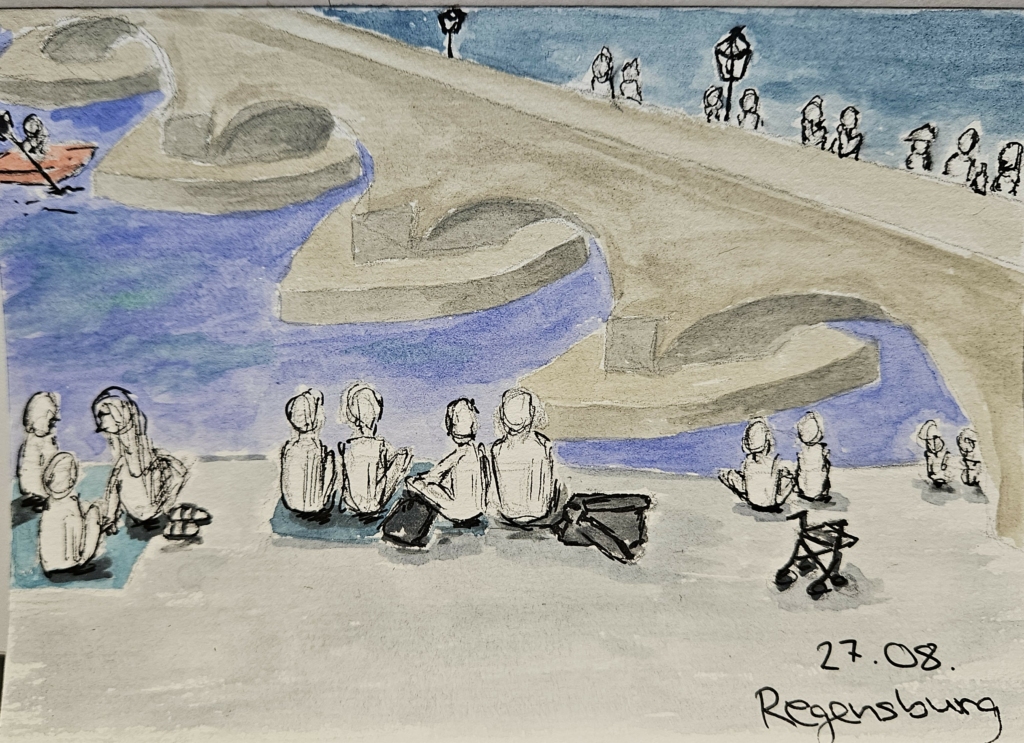
Once again, we ended our day by the Danube. As most locals had recommended the riverbank as their favourite spot, we decided to hold our ‘sketch and watch’ session there, right next to the Stone Bridge — a place we love too and visit often.

Behind the Scenes: The Beginning
Behind the Scenes: The Ending

Regensburg’s shared living room

Conviviality, exuberance and tranquillity: people sit shoulder to shoulder, regardless of occasion, cultural background or food. Mostly young (female) student have come with their blankets and food to linger – it all feels familiar, like an evening ritual. You can tell that they are finding a soothing end to their day on the banks of the Danube – the flowing river and the tranquillity of the bridge help you unwind. Yet lively conversations take place, too: people laugh, they eat, and no personal topic is off limits – whether the neighbour hears it or the whole city, and nobody minds. The Danube promenade becomes a shared living room and Regensburg’s biggest picnic.

Day 2

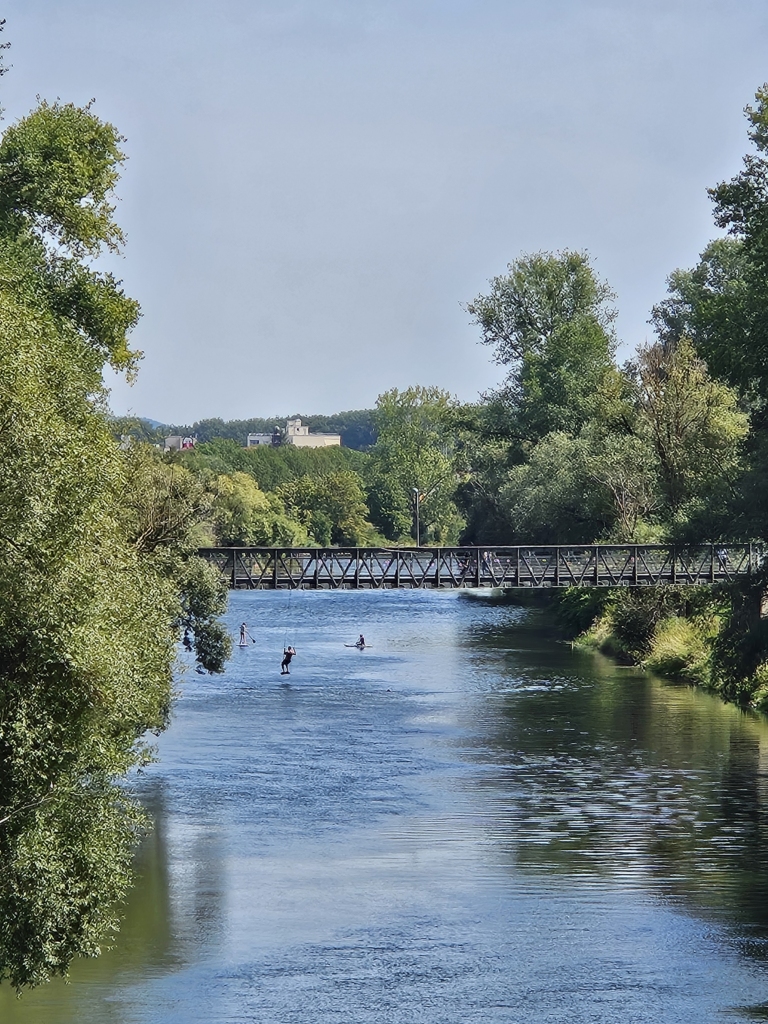
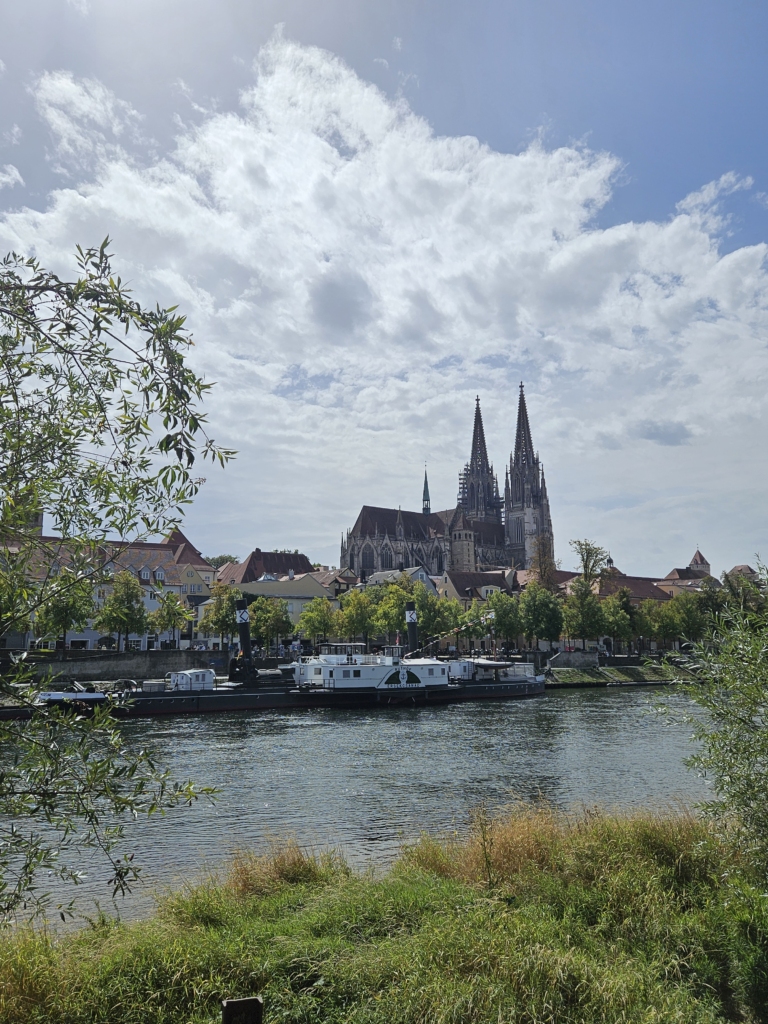
Regensburg lives up to its name! It rained a lot on our second day. We made the most of the sunny breaks, though, and first went to another one of our favourite spots along the Danube. There is a beautiful view of the city, so we sat down and took a little break to read. Later, we walked down to the riverbank, where we saw a man and his dog who wanted to play in the water. Every now and then, a few boats passed by and there were also a few ducks swimming around.

View of Eiserne Brücke
View of our favourite spot

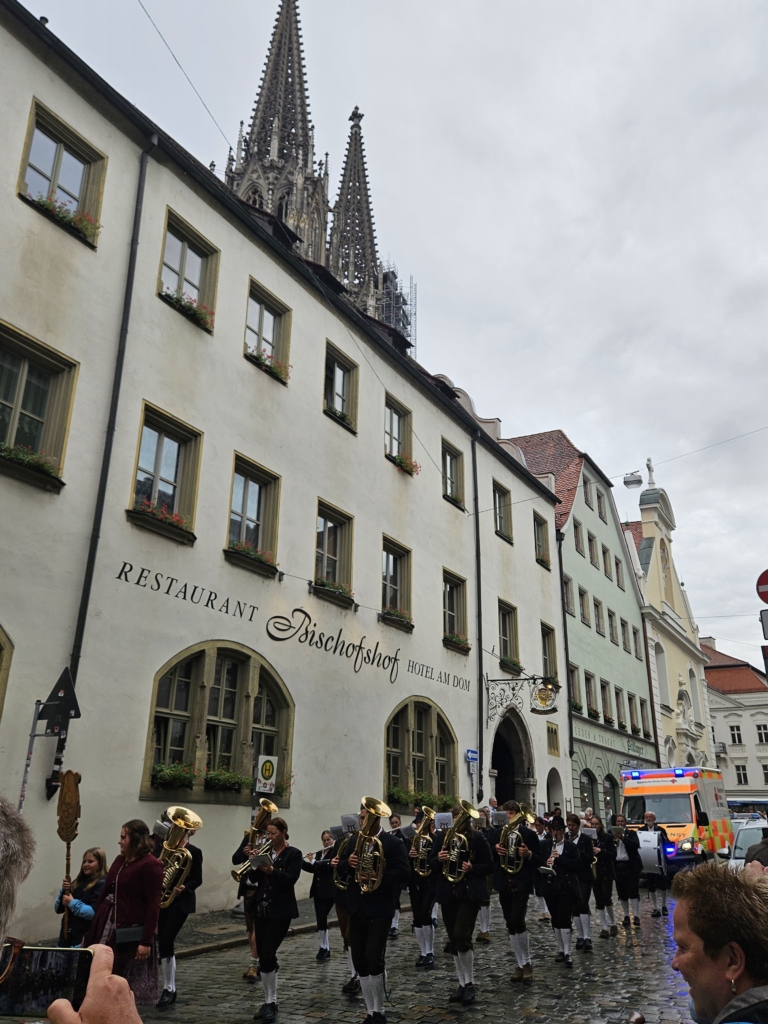
After that, we went to the Dult Parade at the cathedral and walked with the crowd for a while until we reached the Stone Bridge. The Dult is a folk festival held in Regensburg, which started on that very day.

Dult Parade
Ciao festival in Stadtamhof

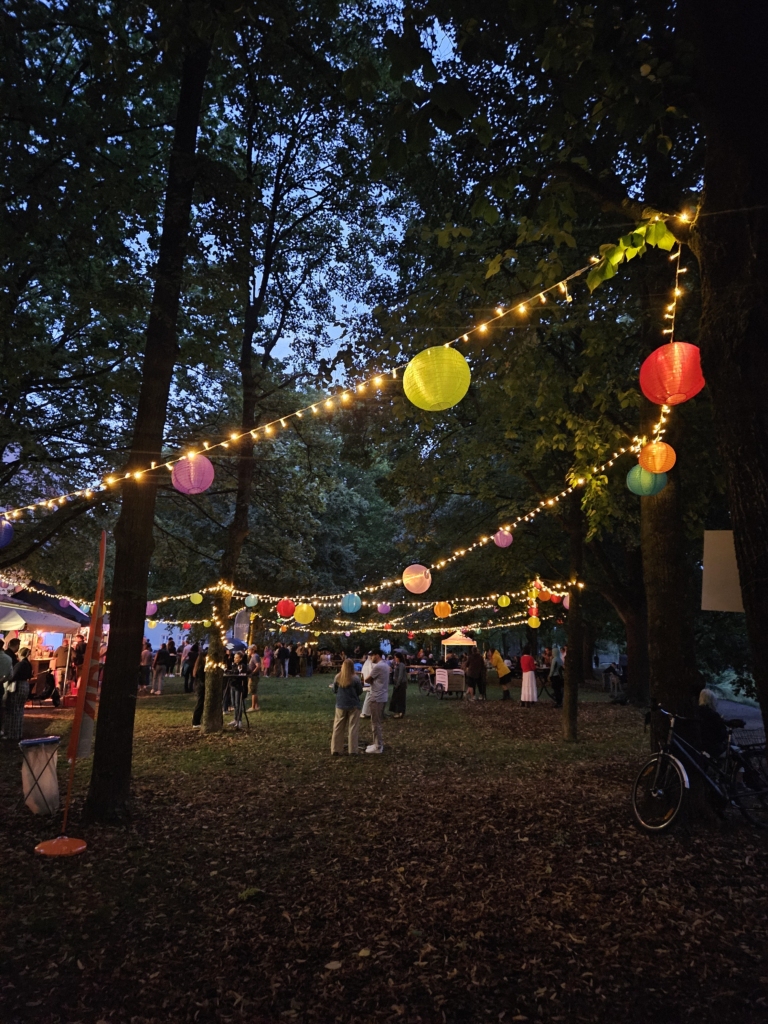
In the evening, we went to the ‘Ciao’ festival in Stadtamhof. Held in a meadow next to the Danube, the area was heavily decorated with lanterns and string lights. There were quite a few people sitting at tables or standing at bar tables, enjoying a drink and a chat. After a while, it started raining lightly again.

Based on our conversations with locals and our own impressions, we can say that Regensburg is a very livable city for young people. Thanks to the compact layout of the Old Town, its young and open-minded inhabitants, and above all the Danube, it offers plenty of places to meet up and relax!

Bamberg: City of Garden, Hills and Water

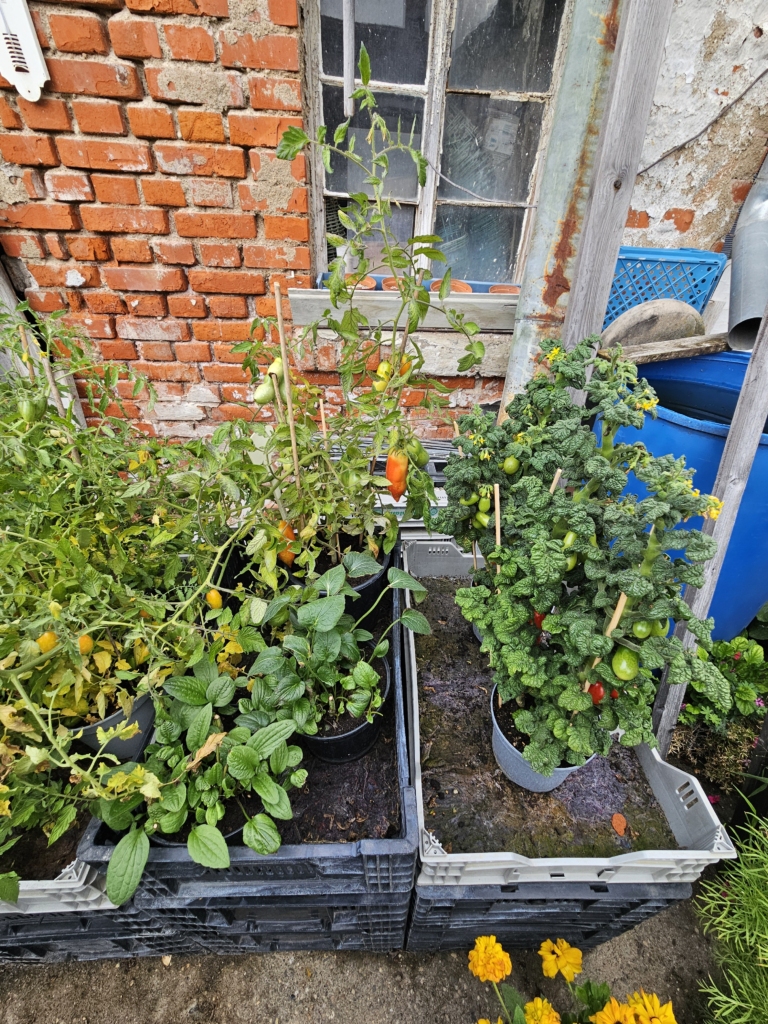
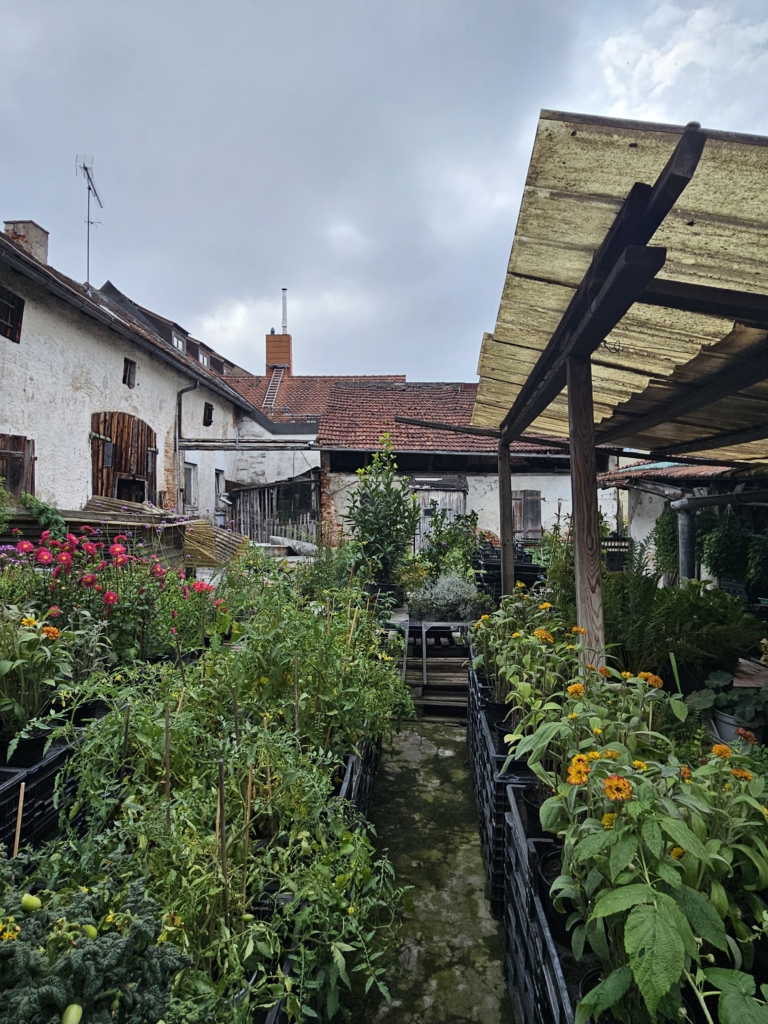
Once we arrived in Bamberg, we first explored one of its three unique historic districts: The Gärtnerstadt. As we passed a garden, a woman waved us inside. We were invited to take a tour of the entire garden, which surprised us with its size. Before us stretched a vast expanse filled with cultivated plants. There were bell peppers and tomatoes, strawberries and herbs.

Hofstadt Garden, Gärtnerstadt

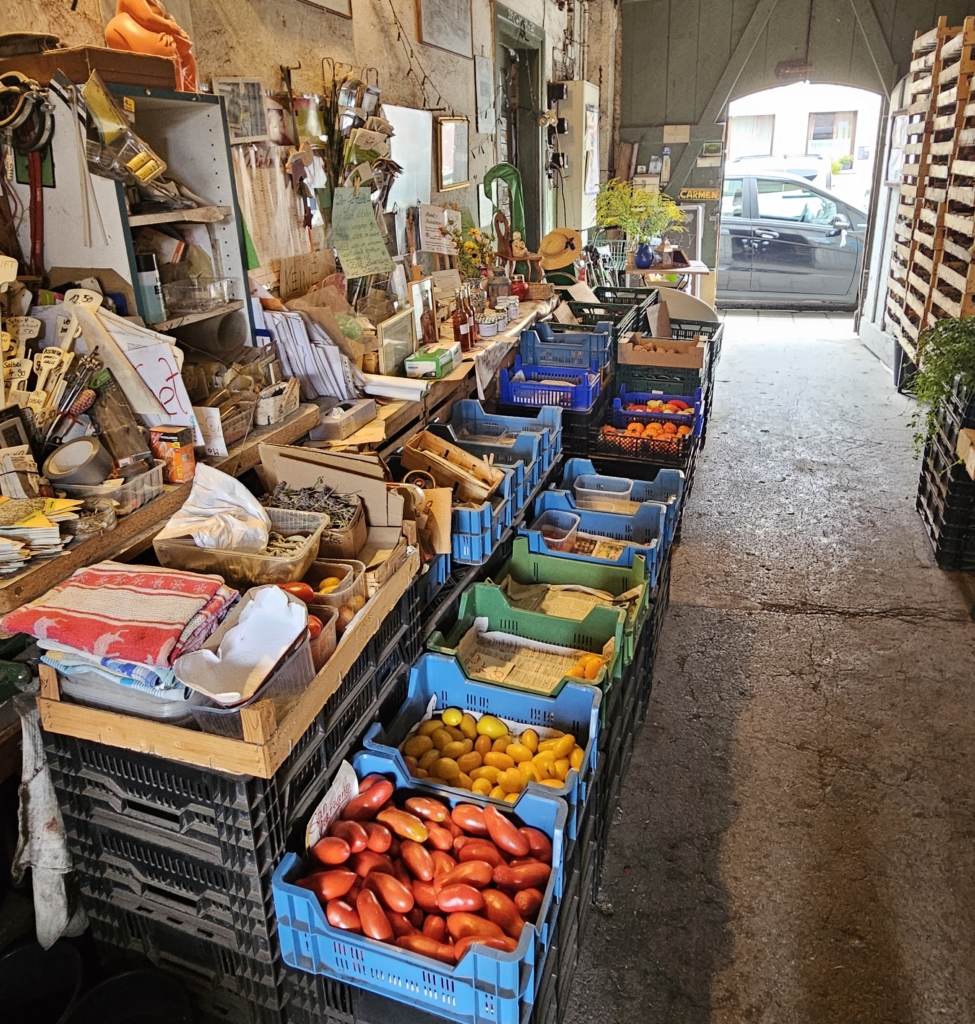
An employee at the Hofstadt Garden told us that the farm has been in operation since the 16th century and that it covers 4,500 square metres. However, during our conversation, it also became clear that it is becoming increasingly difficult to keep the garden running due to a lack of support and customers. More and more locals are shopping at stores or online, whereas tourists are the ones who appreciate the work and tradition, she said. Afterwards, we stocked up on vegetables and made our way to the World Heritage Centre.

Hofstadt Garden, Gärtnerstadt

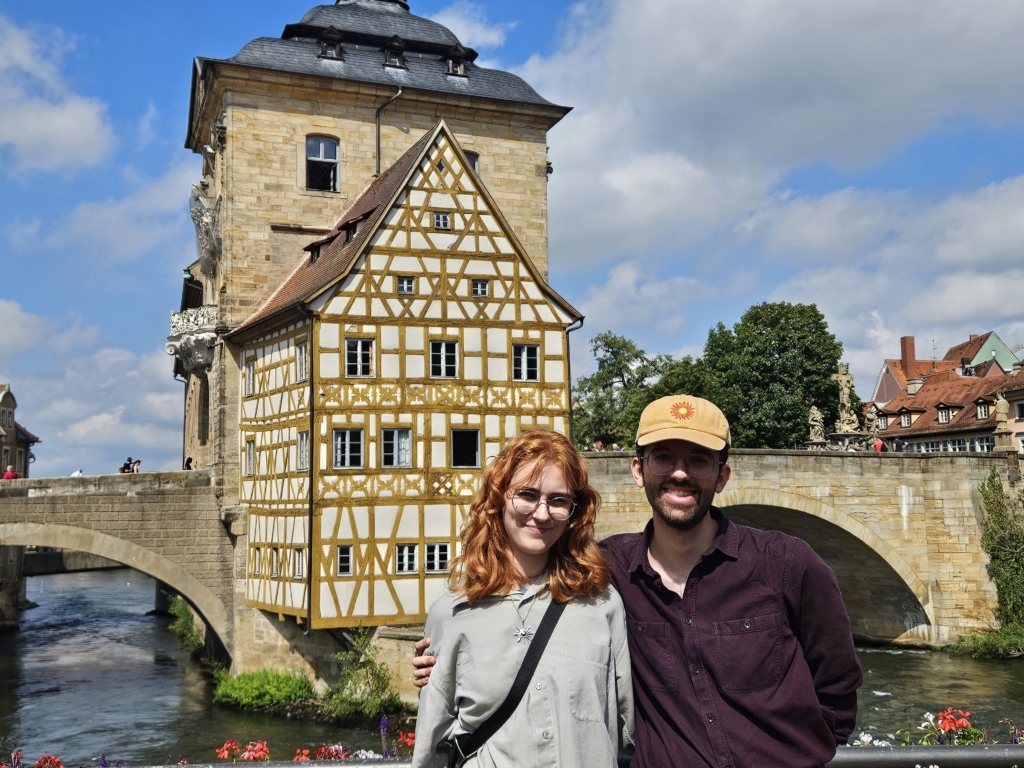
We were warmly welcomed there by Simona, Rabea and Maurice. We discussed how places like Bamberg can remain habitable and the challenges involved in preserving the gardeners’ way of life in the Gärtnerstadt district. We also learnt about the differences and unique features of the three historic districts. In the Gärtnerstadt, vegetables have been grown by hand and sold for many centuries. The Inselstadt, home to the old town hall, was the seat of the middle class, while the Bergstadt was the seat of the church and the powerful. All three districts are part of the UNESCO World Heritage Site, showing the city’s well-preserved early medieval structure.

Local perspective: nature, pub culture and a compact city

Everyone highlighted the city’s compact size, diversity and proximity to nature in the Hain and along the Regnitz River as particularly appealing aspects of city life, as well as the lively beer cellar and pub culture. The beautiful architecture is also highly valued here.

Exploring together

After getting a sense of the city from the locals, we wanted to explore it a bit more on our own.

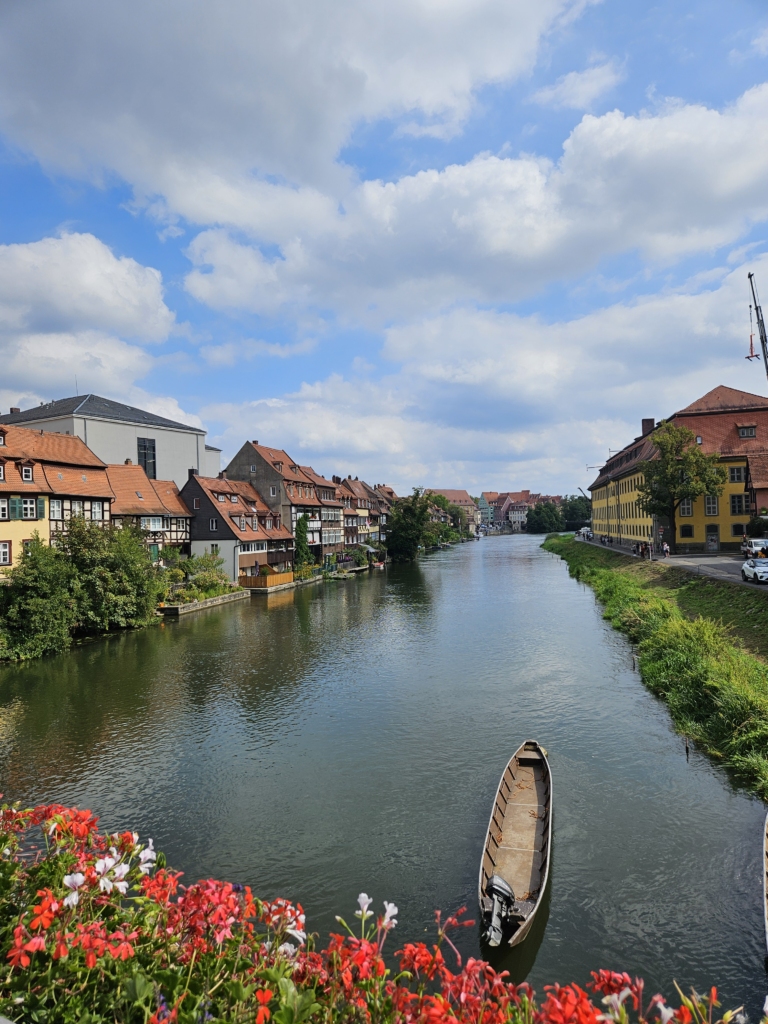
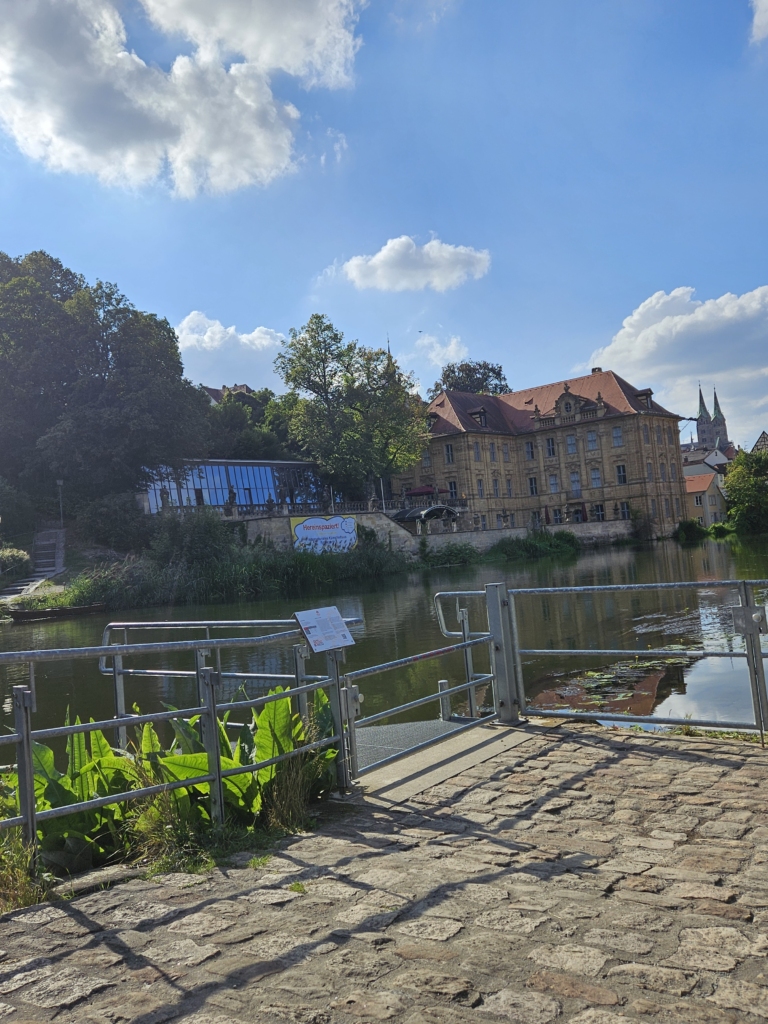
Regnitz, Inselstadt
Old town hall, Inselstadt


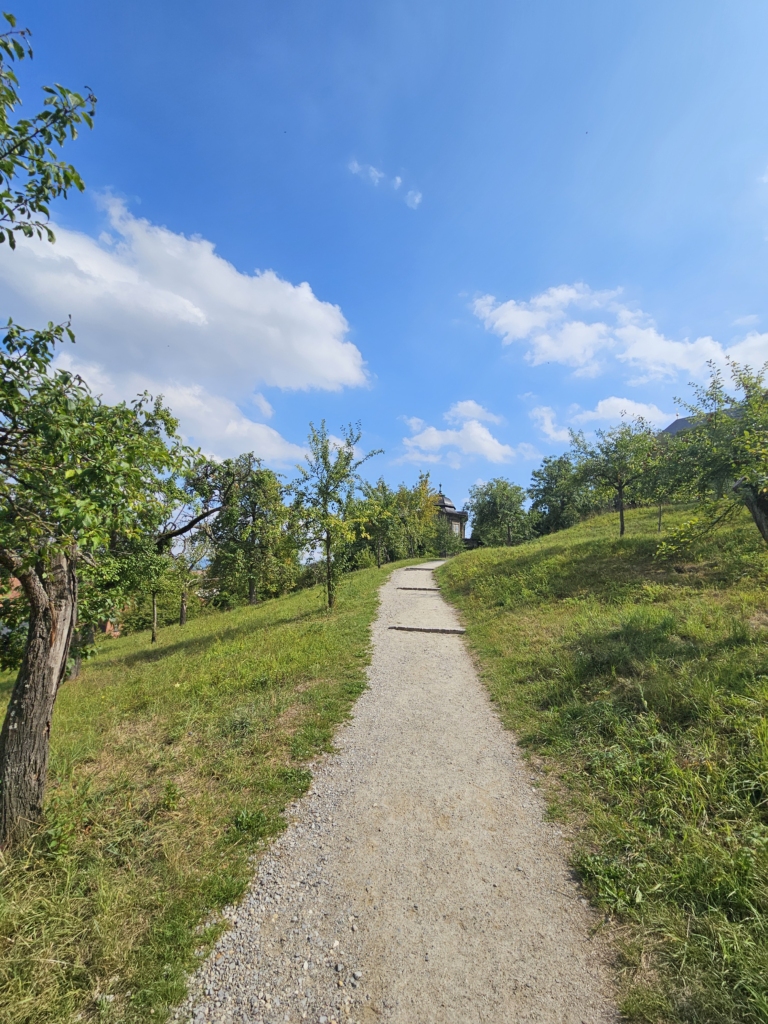
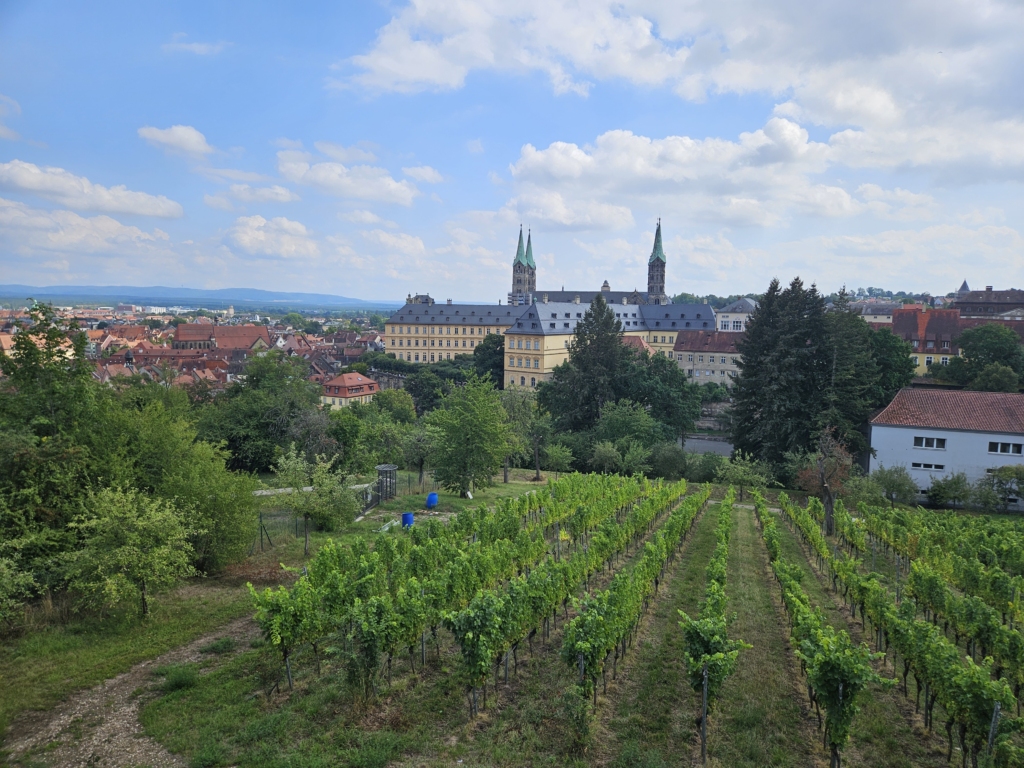
We first walked through the Inselstadt, and then walked up to the St. Michael monastery complex through an orchard meadow, which was quite a workout! Once we reached the top, we were rewarded with a beautiful view of the city.

Orchard meadow, Bergstadt
View from St. Michael monastery, Bergstadt

Unfortunately, due to construction work, we weren’t able to go inside the church. On our way back, we walked to Bamberg Cathedral and stopped for a quick bite to eat.

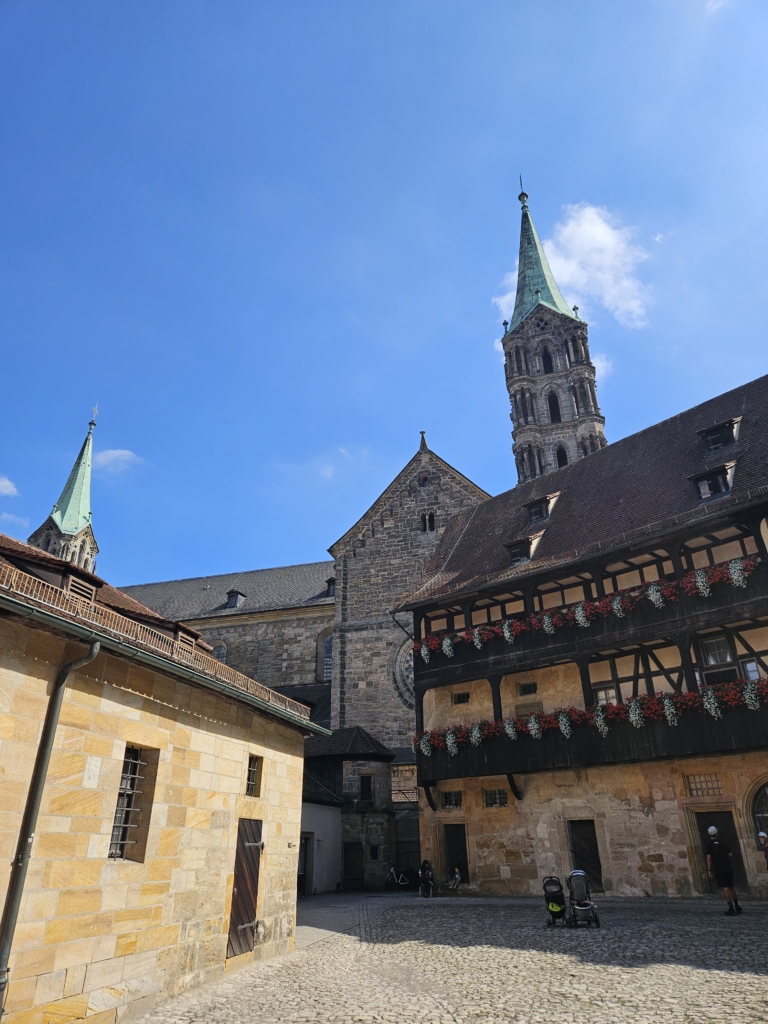
Alte Hofhaltung, Bergstadt

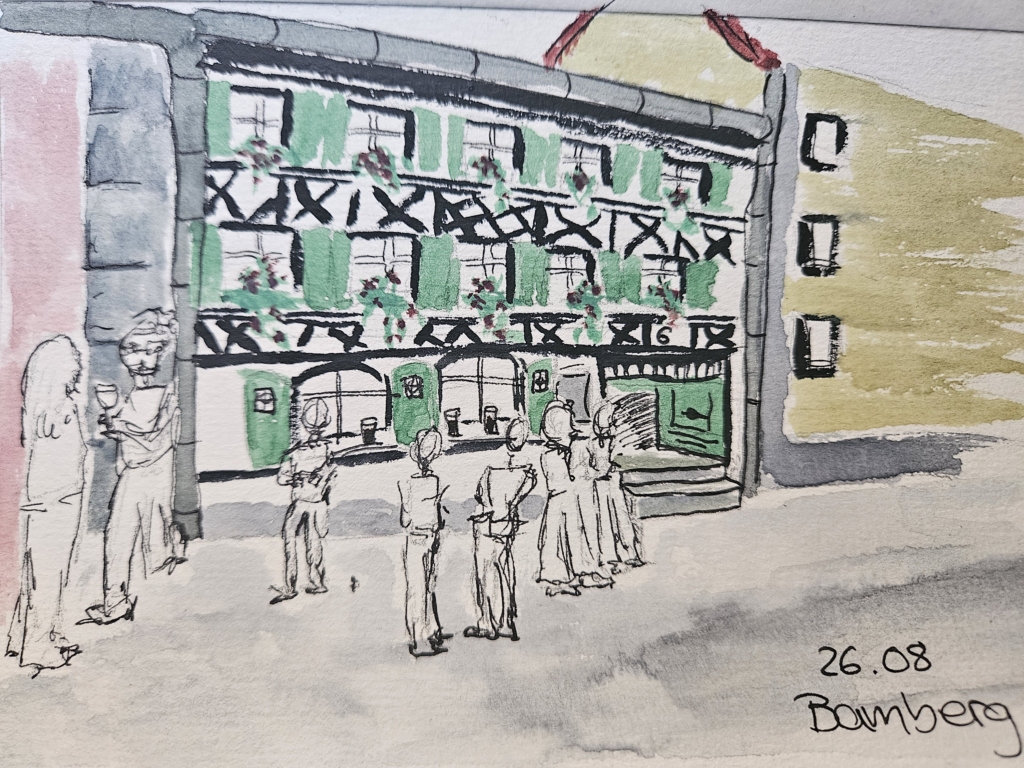
Sketch and watch: Schlenkerla

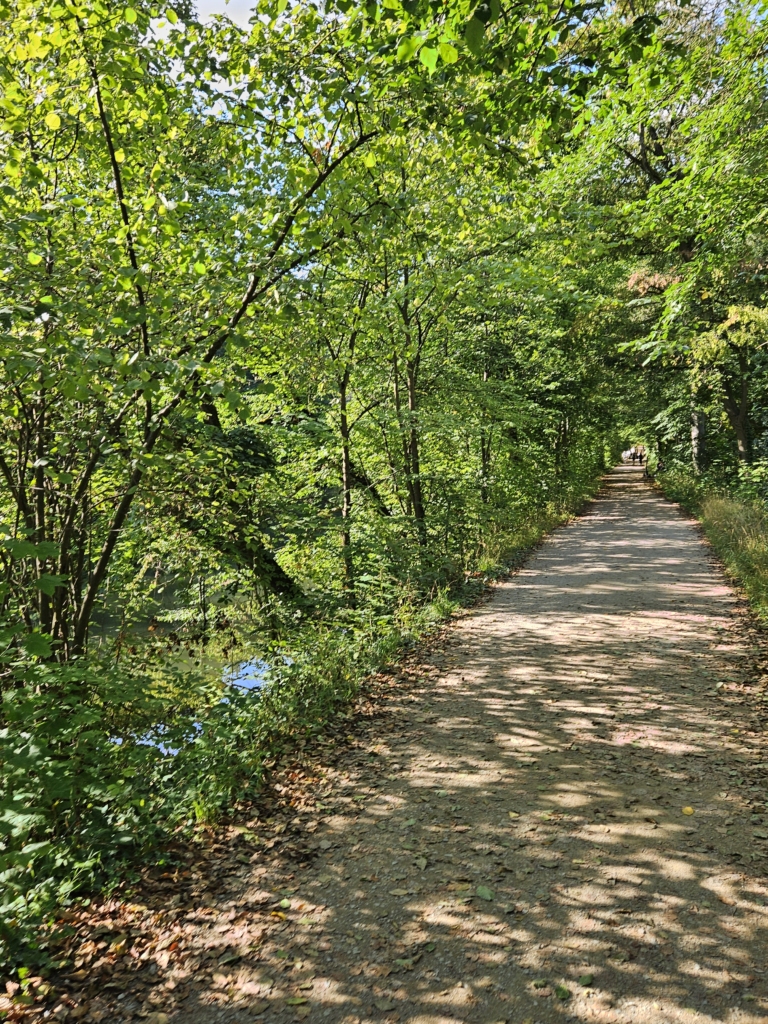
For our sketch and watch session, we started searching for a place recommended by the locals, where people like to spend their free time. After Maurice, Rabea and Sophia had recommended the Hain to us as a special gathering place and recreational spot, we set off along the Regnitz River to find it. The Hain was beautiful, wooded, and perfect for a walk. However, as we explored further, we didn’t see many people. Only a few people were swimming here and there, so we headed back. 

Hain, Inselstadt
Ferry, Inselstadt

Our next idea was to visit a beer cellar. To reach it, we spoke to the ferryman, who unfortunately informed us that the next two beer cellars were closed. During the conversation, he also shared his thoughts on the city. For him, too, nature and the Regnitz River play a very important role in his daily life. He also mentioned the Schlenkerla, talking about its Rauchbier culture as a place for people to gather.

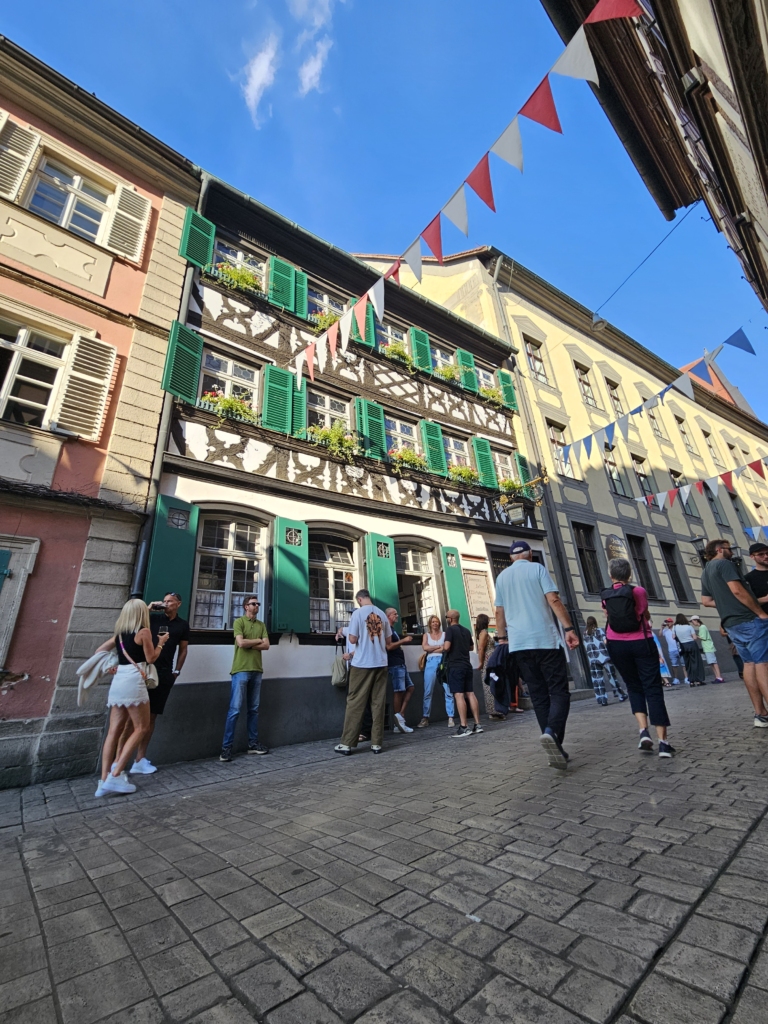
After searching for a long time, we finally arrived at the Schlenkerla, where lots of people were already standing outside with a beer in hand. That sealed the deal for us!

Schlenkerla, Bergstadt
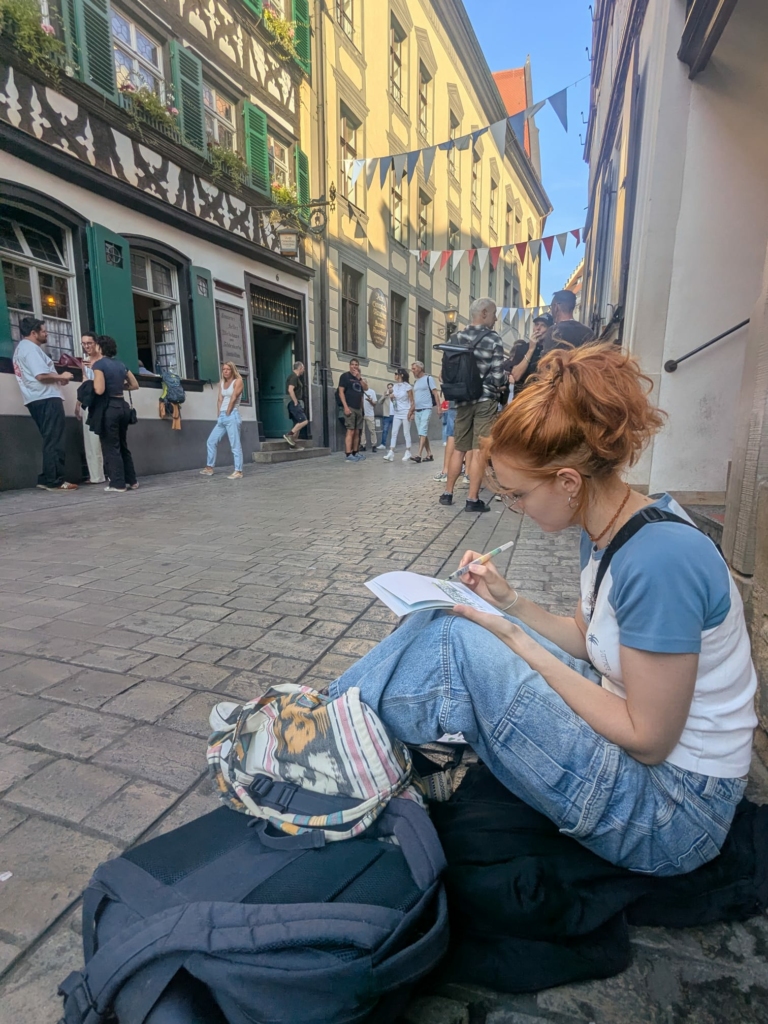
Sketch & watch
Sketch of Schlenkerla

Schlenkerla – Bamberg’s largest bar counter

The street in front of the Schlenkerla becomes one big open-air bar for everyone. You can chat with your friends or strike up the sort of conversations you would have in a pub with people at ‘neighbouring tables’ or passers-by. The outdoor setting – and no doubt the Rauchbier too – creates a lively atmosphere where, in fine weather, you can forget your worries, get caught up in conversation and make new friends. 

After spending a day in Bamberg, we have to say that it is a beautiful, compact and nature-oriented city with a lively atmosphere. The high quality of life was especially seen in the vibrant pub culture, as observed at Schlenkerla, where locals mingled together.