


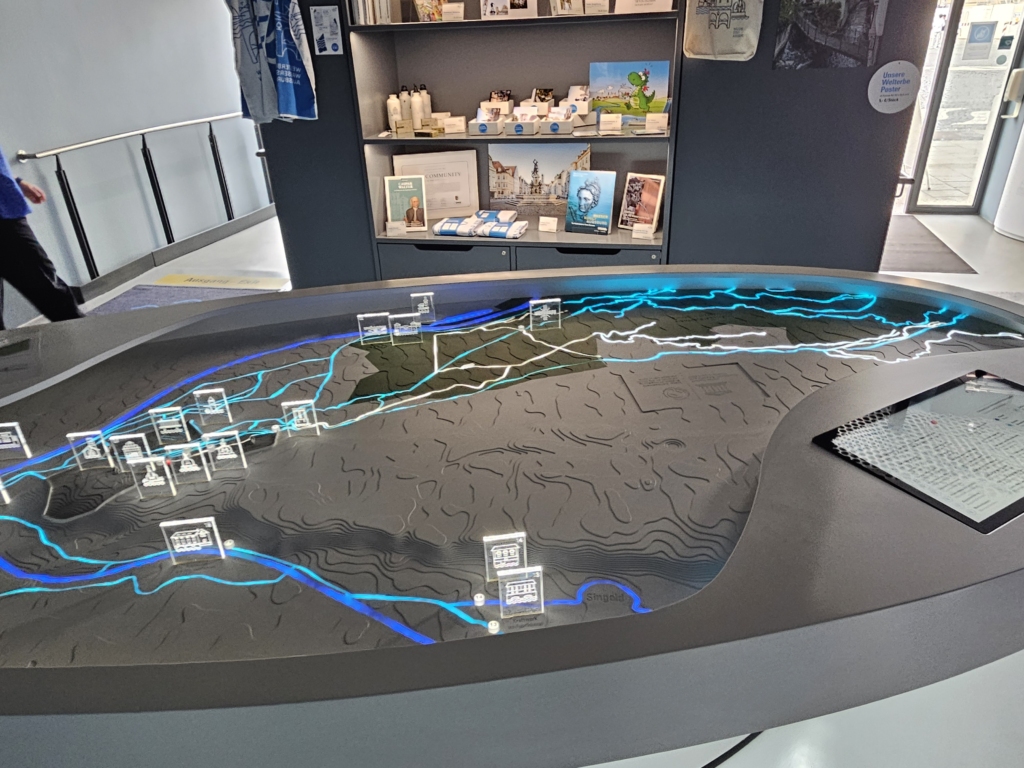
Our first day in Augsburg got off to a slightly late start, because our train was delayed. We headed to the World Heritage Centre and were greeted by Kristen, Gabi and Margit. They gave us an introductory tour and used their map installation to provide an overview of the many diverse heritage sites of Augsburg’s Water Management System.
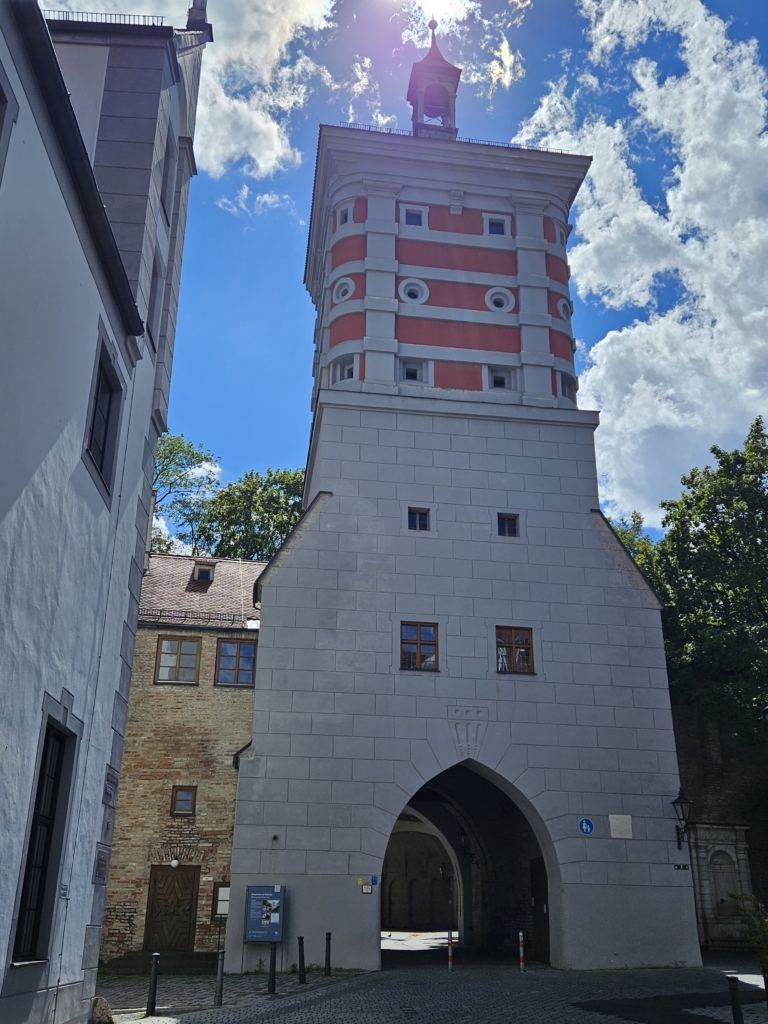
22 objects of the Water Management System were designated a UNESCO World Heritage Site in 2019 – including the Lech Canals, the Hochablass, the Rotes Tor, and the Augustus Fountain.
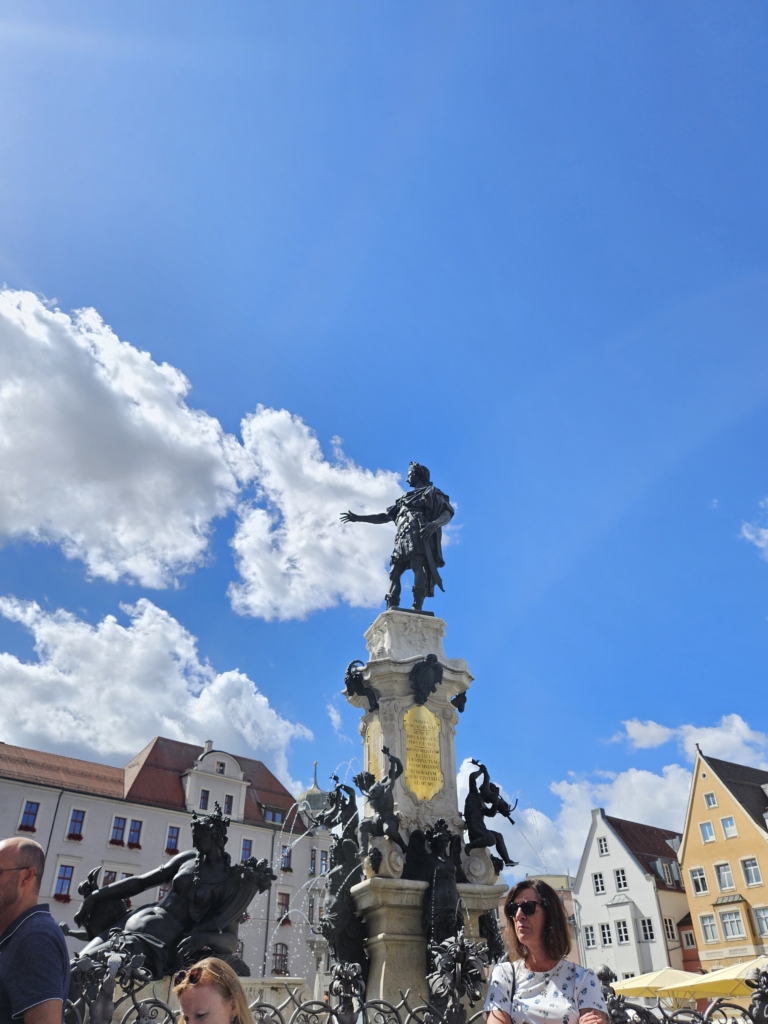
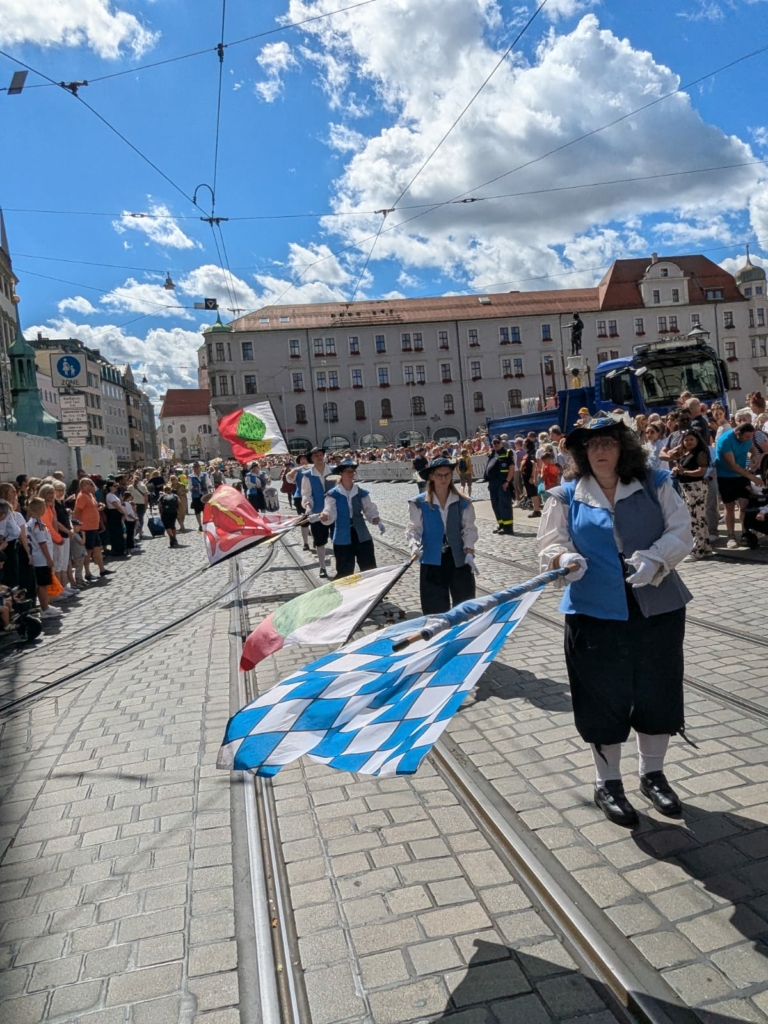
Margit took us straight on a guided tour of Augsburg, and right at the start, we happened upon another folk festival parade: the Plärrer. She showed us the magnificent 16th century Augustus Fountain on Rathausplatz, which features a total of four river gods. Three of the gods represent the rivers Lech, Wertach and Singold, while the fourth represents the Brunnenbach, a stream created to supply drinking water.
After making our way through the parade, we walked to the Stadtmetzg, an old municipal butcher’s shop with a canal running through its basement. The canal was used to cool the meat and dispose of waste. Margit continued showing us around, pointing out where the canal runs.
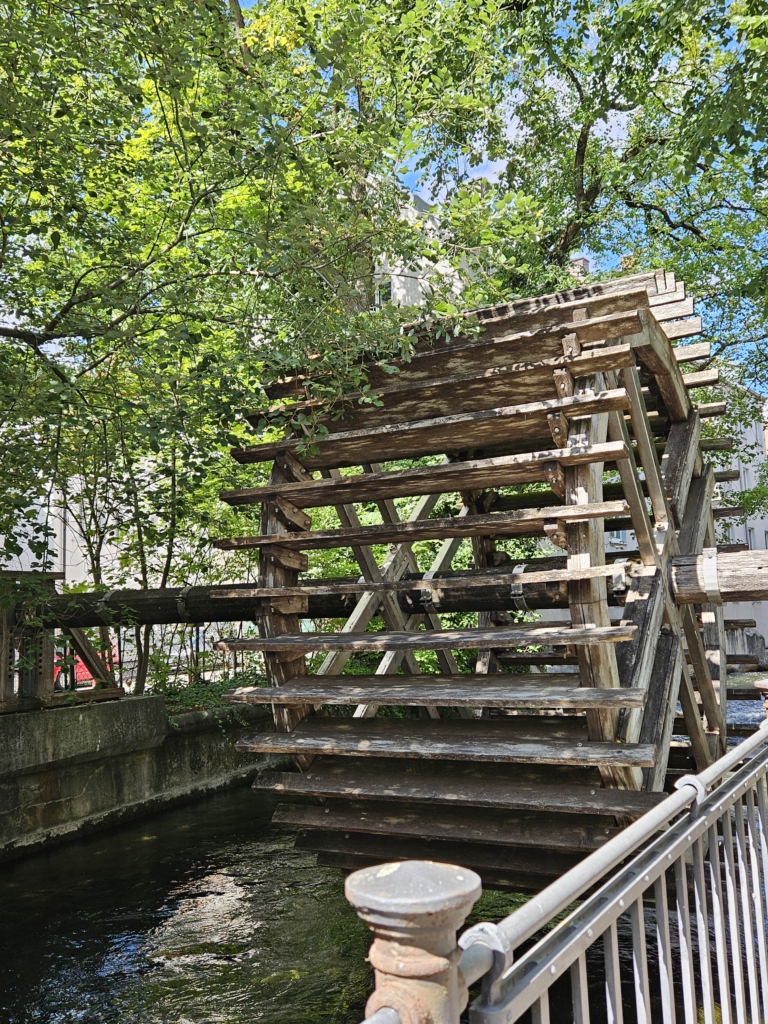
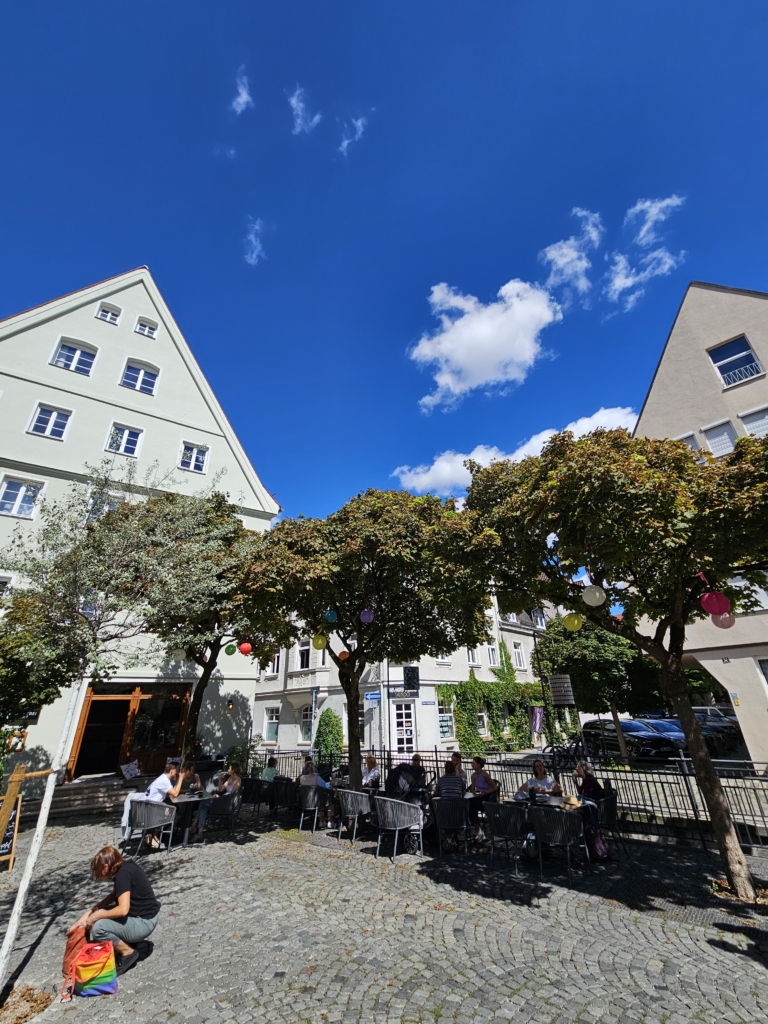
Later, we saw a wooden mill, though it was only a replica and never actually operated. Continuing on our way, we saw a hydroelectric power plant that’s still in operation today and a tannery where leather was hanging to dry. When we arrived at the beautiful Holbeinplatz, Margit told us that it’s a place where people like to linger, which is why flowers were later added there.
On our way, we came to a former bathing spot on a canal located right next to the Ursula Convent. According to local stories, bathing during the day was forbidden there so that the nuns wouldn’t see anyone naked.
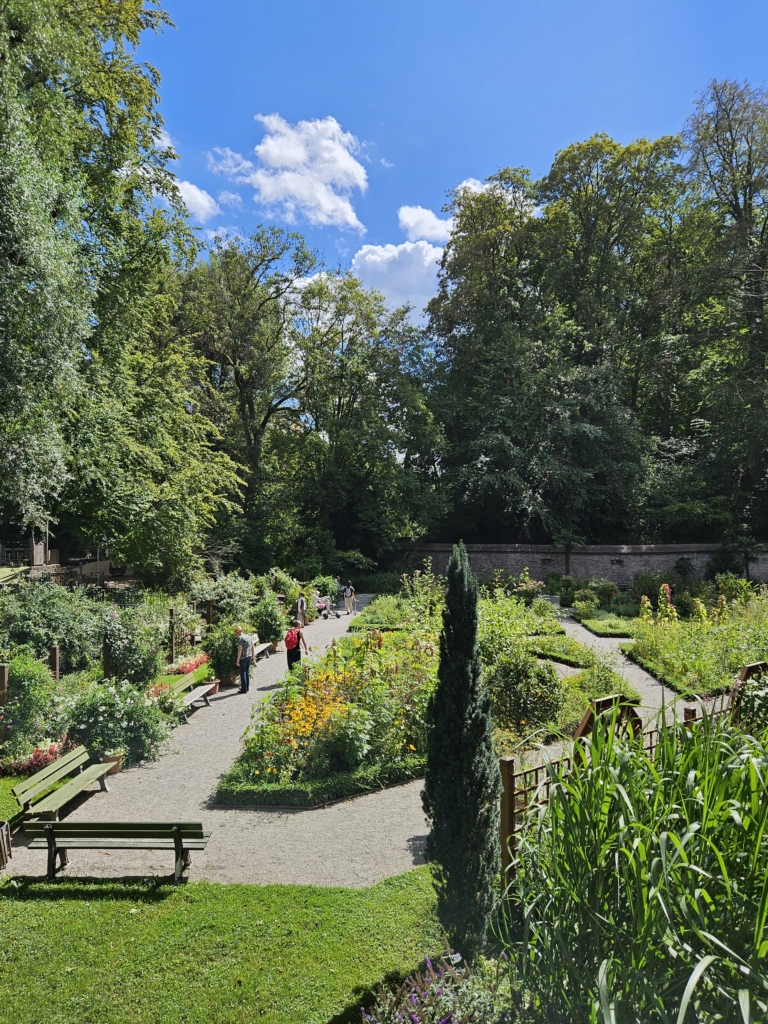
When we arrived at the Rotes Tor, we saw a former moat which now serves as a public herb garden, where visitors are welcomed to help themselves.
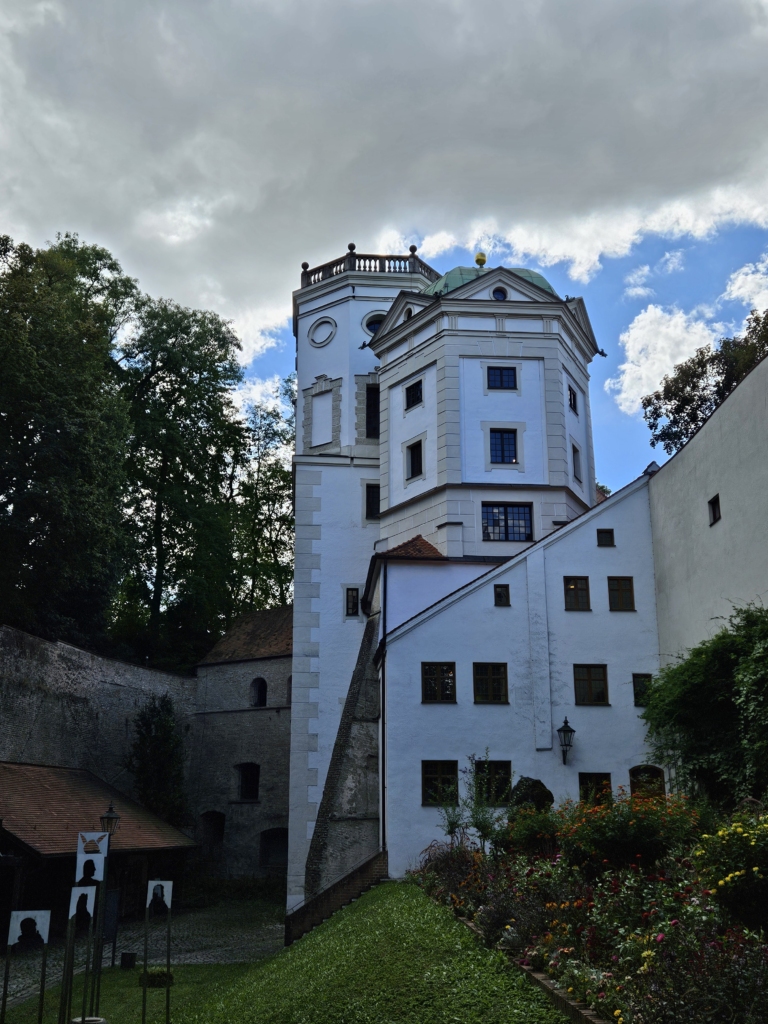
Kristen was waiting for us there and led us into the water tower. The former apartments of the well masters were located here, including those of Casper Walter, a leading engineer who played a very important role.
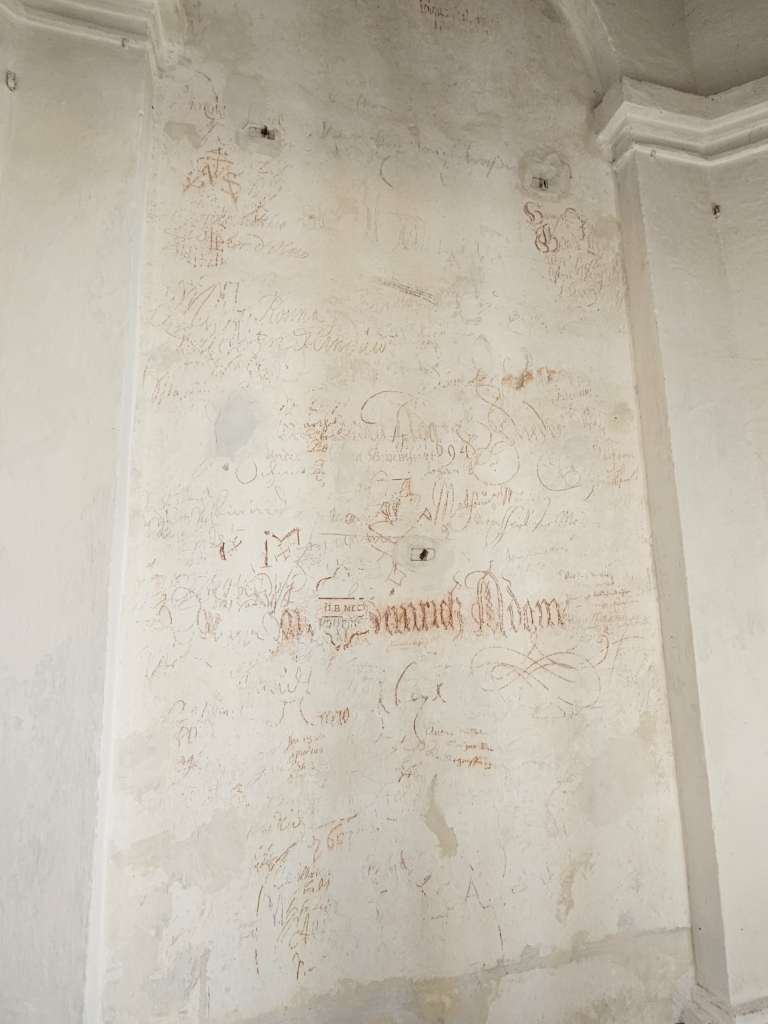
During the tour, we saw historical graffiti on the walls, some of which dated back to the 17 th century, as well as old wooden pipelines used to transport water.
Even the necessary tools were made right here. Casper Walter was the driving force behind the project, inventing a new engine that was significantly quieter — legend has it that this enabled his wife to sleep better. Another particularly exciting development was the early separation of water into utility and drinking water in Augsburg, achieved by means of a wooden partition.
Next, we took the tram to the ice canal and met Gabi at the Hochablass.
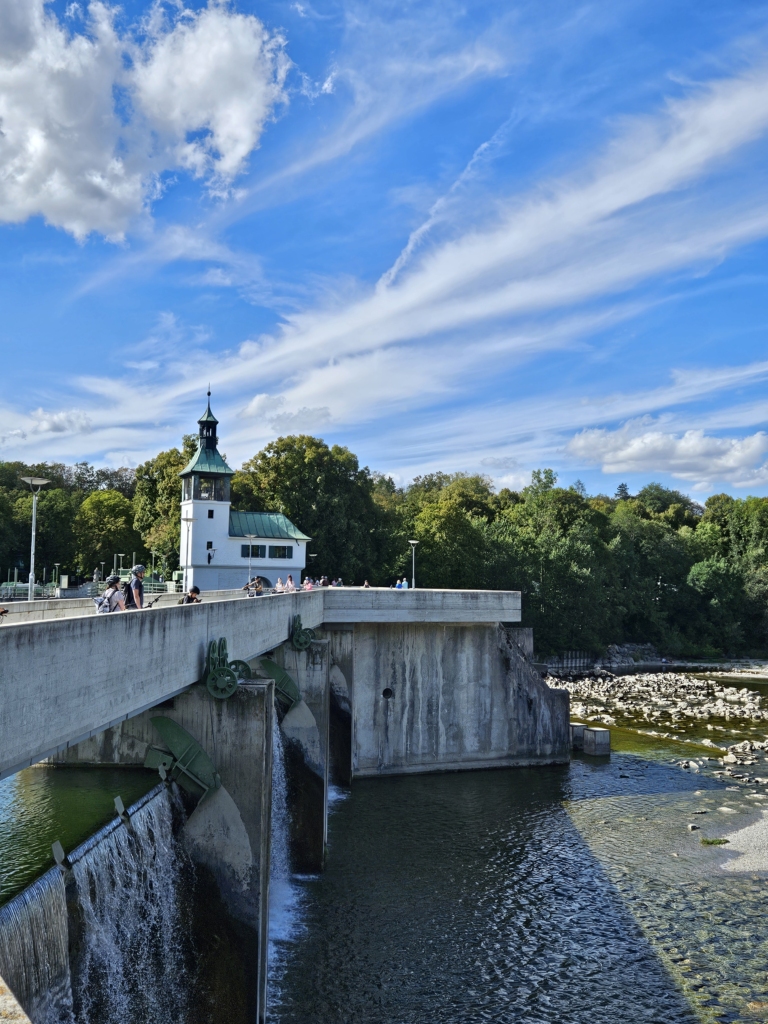
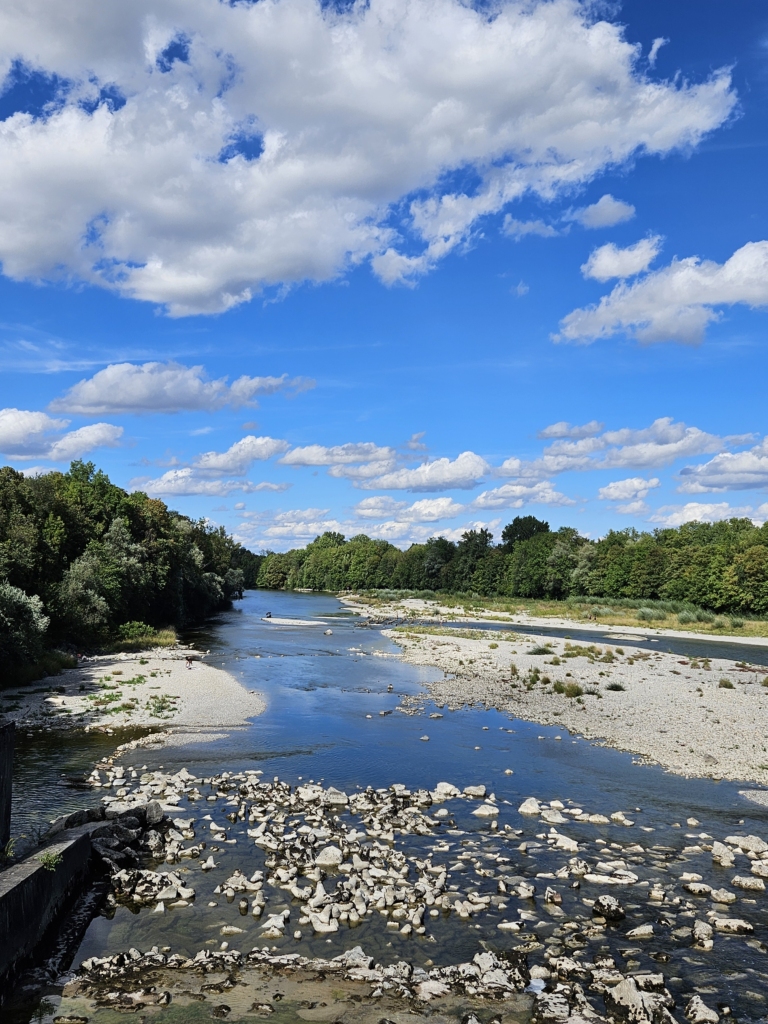
She gave us a tour of the area and told us more about the plans to restore the river: the Lech is to be widened from 70 metres to 130 metres and a fish ladder is to be built. We then made our way to the historic Hochablass waterworks and drank some delicious water from a fountain there. We were really surprised at how good it was!
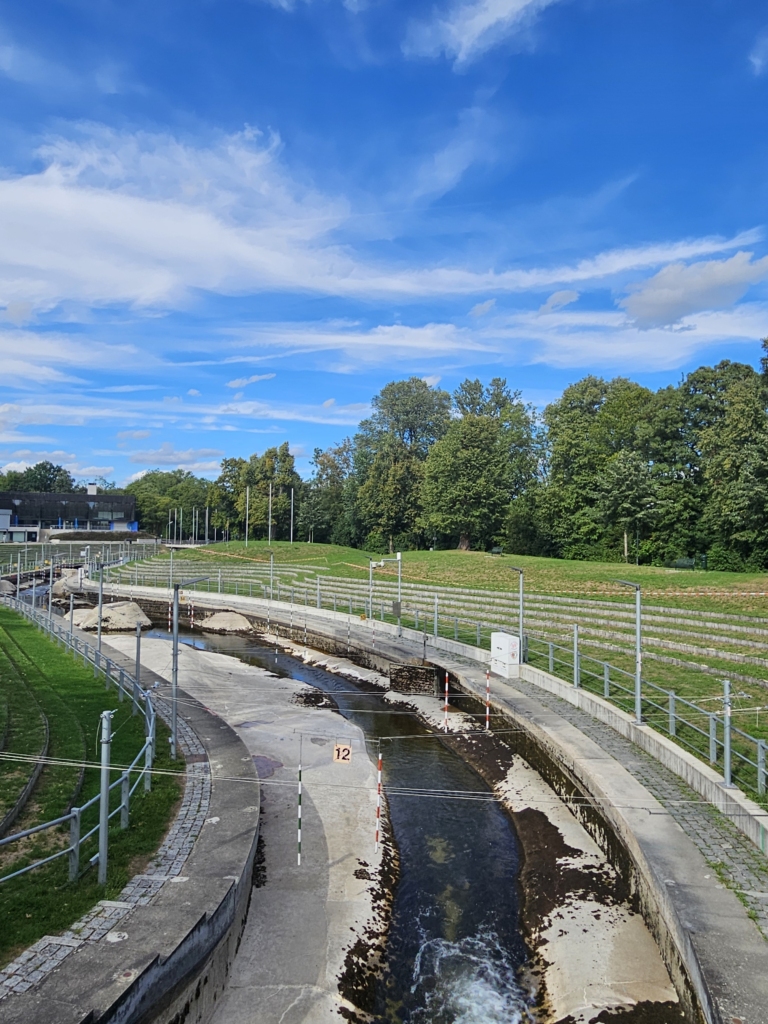
Next, we passed the Olympic canoe course, where water is drawn from and later returned to the Lech River. The course was artificially constructed for the 1972 Olympic Games. At the same time, the GDR built a virtually identical replica of the course, so that during the Olympic Games themselves, the GDR athletes were able to win all the medals. There wasn’t much water in the course that day as filling it with water isn’t the highest priority.
Thank you so much for the great day and all the informative tours!
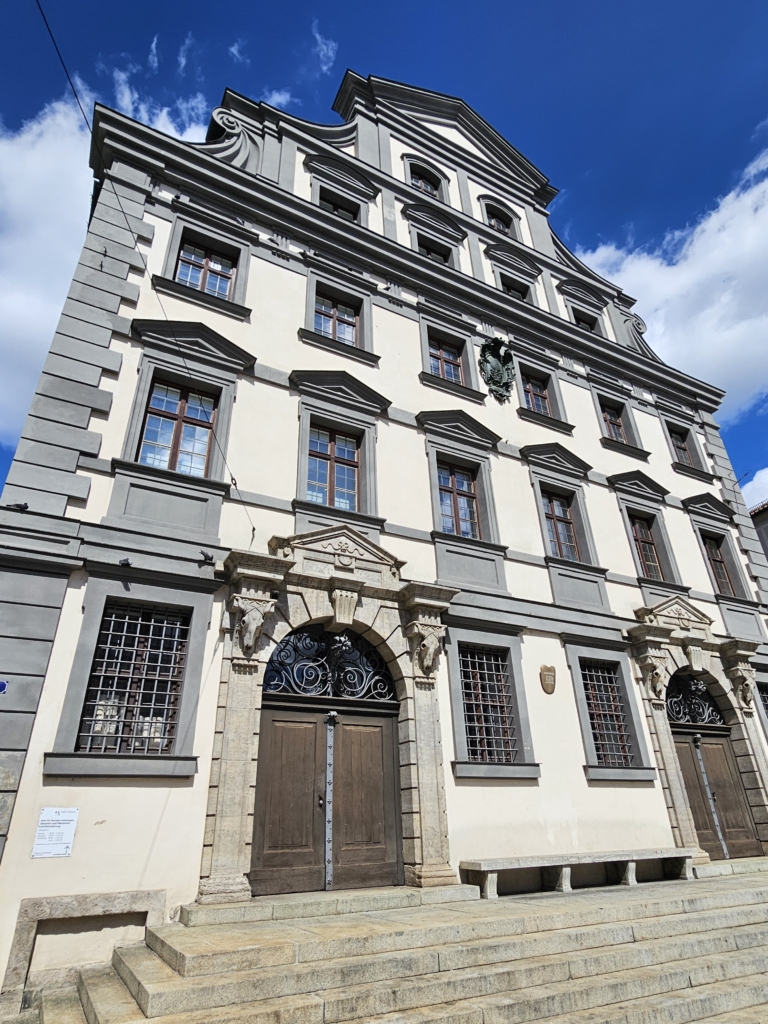
Our second day in Augsburg got off to a fairly slow start. The city was quiet, but there were lots of football fans around. As we strolled through the Old Town en route to the Town Hall, we chatted with a few locals.
First, we met Laura on our way to the town hall. She particularly likes the old town and the nature within the city. Laura especially appreciates the water in the city centre and the parks. In the summer, she loves spending her free time by the Proviantbach, swimming in the canal.
Next, we met Raphael at the Rathausplatz. He moved here for work and really appreciates the abundance of nature in Augsburg, as well as the many canals and bodies of water. He believes that nature and water help people to feel calm and less stressed. His favourite spot is a place near the town hall, where two canals flow through.
As we continued walking through the streets of the Old Town, we bumped into Lena and Finn. Finn grew up nearby, so he knows his way around well. Lena moved to Augsburg about a year ago to study. What Finn especially likes about Augsburg is the beautiful Old Town, and the fact that you can always find people to go out drinking with! Lena also likes the beautiful Old Town and the Textile District. They both emphasise that they appreciate the canals and enjoy swimming in the Proviantbach in the summer. They told us about a swimming spot near a football pitch where they like to swim.
We went back to Holbeinplatz, where the cafés were already quite crowded. We refilled our water bottles at a fountain here and thought about where to go next. We wanted to check out the spot by the Proviantbach that Lena and Finn had recommended, so we set off. First, we took the tram to Jakobertor and explored the Textilviertel a little. Here, too, the canals wind their way through the residential neighbourhoods. When we arrived at the Proviantbach, we passed a football pitch belonging to a Turkish football club. They were playing against a Romanian team, there was a large crowd, and there was plenty of food.
When we first arrived at the Proviantbach, there weren’t many people there yet. We saw a retired couple swimming in the canal. As we continued to explore the area, we found an old train track overgrown with trees and bushes.
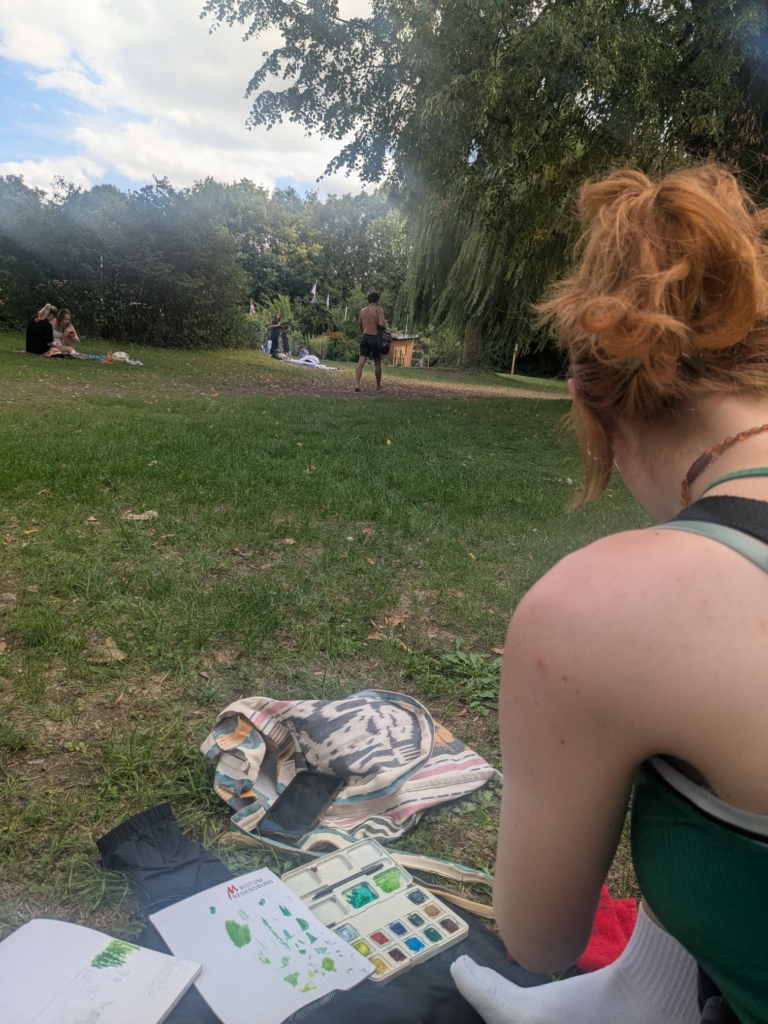
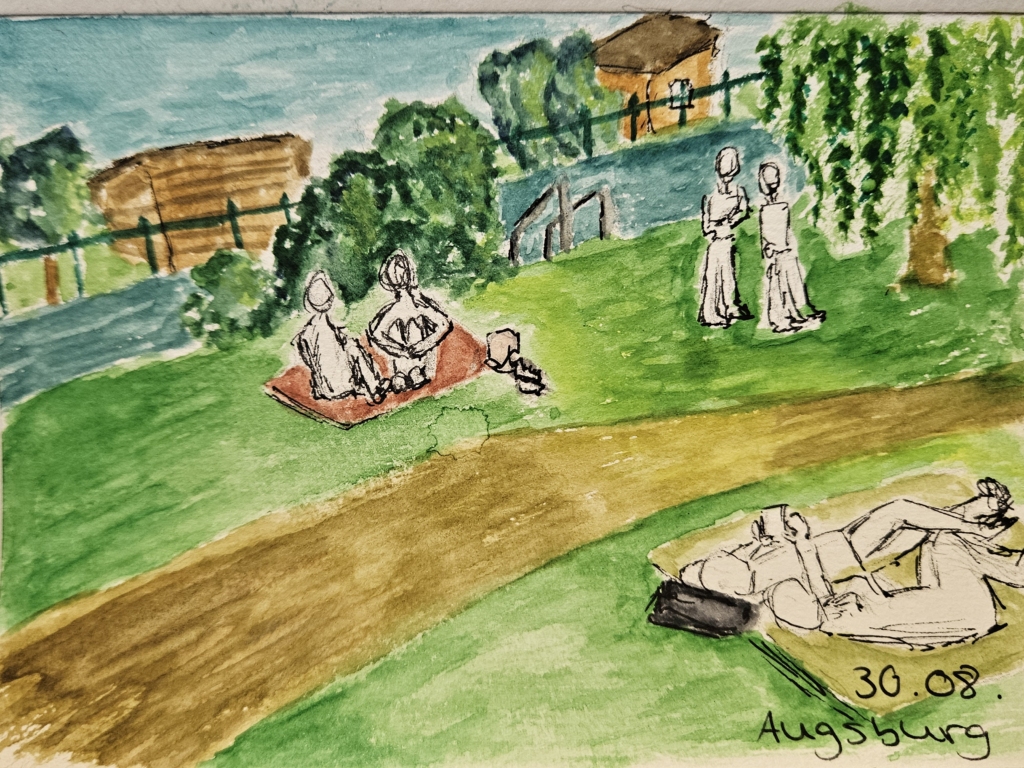
After dipping our feet in the cold canal water, we spontaneously decided to hold our ‘sketch and watch’ session there, as more and more people were arriving.
1. We spontaneously decide to start our observations at the Proviantbach. Although there are hardly any people there at first, the calming effect of the surroundings had initially put us off doing so. As our observations progress, however, a great many more people arrived to spend the rest of their afternoon by the river.
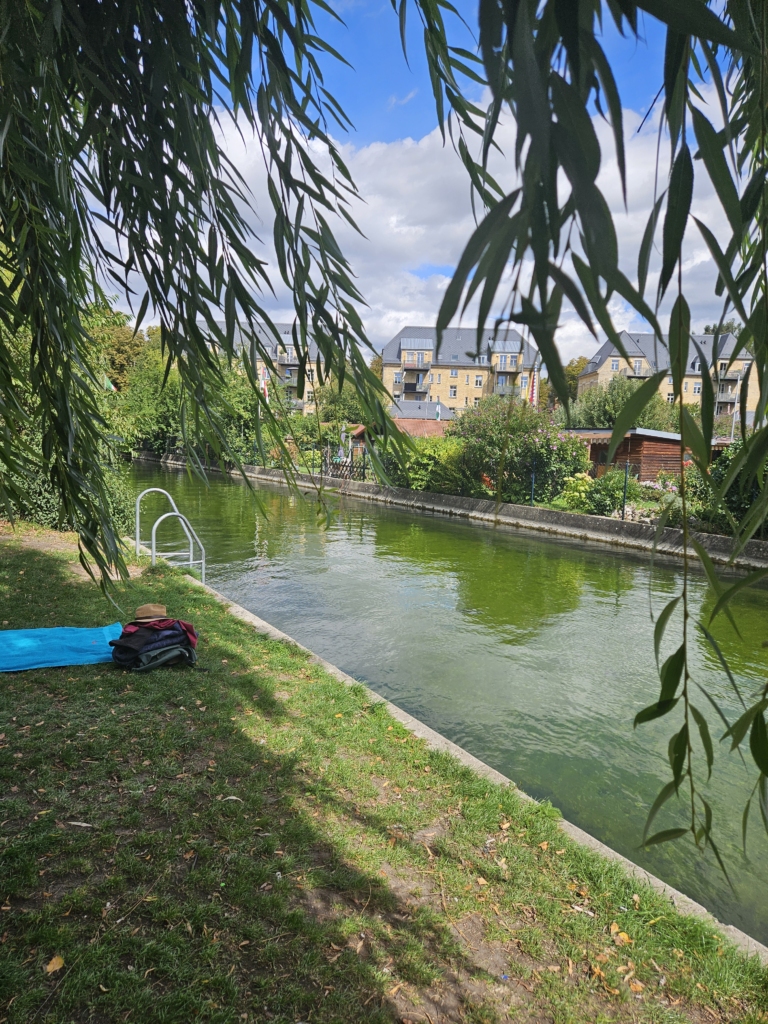
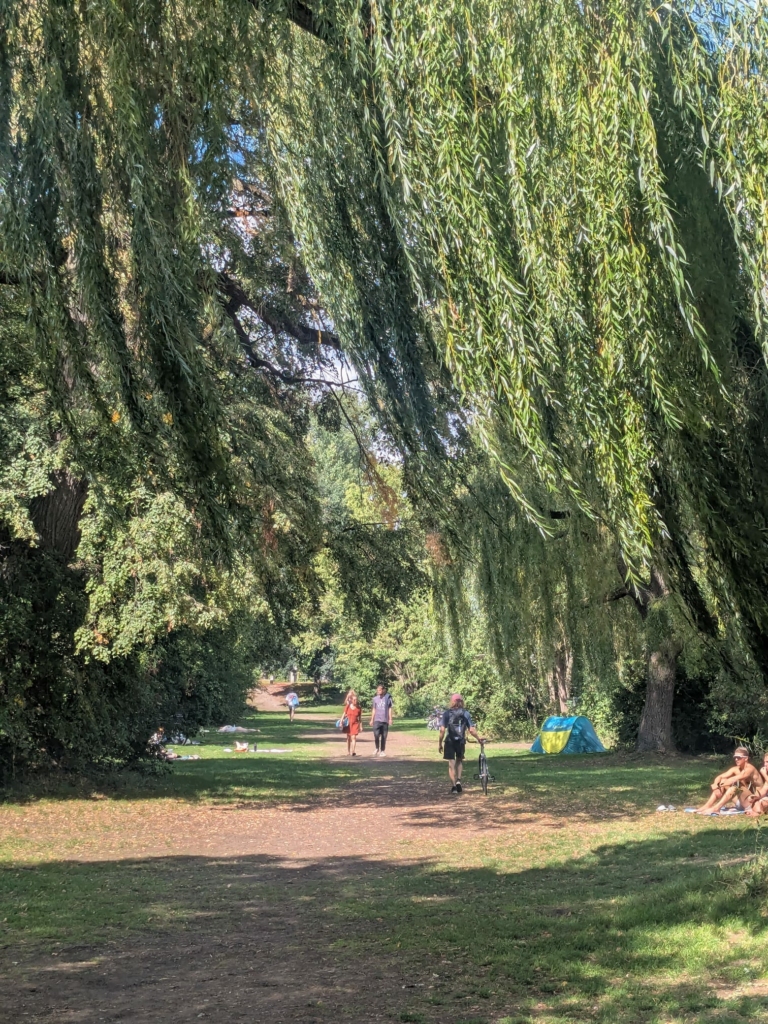
2. The area by the Proviantbach is divided into four sections: at the centre is the river itself, which people frequent for swimming. On one bank, there is a green space surrounded by tall weeping willows – this is where the bathers are lying. Immediately behind that is the football pitch of an amateur club, where a match is taking place at the same time. On the other bank is a large allotment garden, where I can see Italian and Bulgarian flags flying.
3. It must be emphasised that the trees and the river create an atmosphere of extreme tranquillity – that not even the boisterous shouts from the football pitch can disturb. It is precisely the rustling of the weeping willows that brings about an indescribable sense of calm. This is complemented by the chirping of the birds, that also find refuge in the birdhouses of the allotments. Even though I could barely see the river, I could always hear it – whether bathers were drifting along, walking down to the river’s edge, or splashing about with a loud cannonball.
4. Right in front of us, a father and his two daughters are pitching a tent right by the river’s edge – it’s like having a house with a swimming pool. They’re well-equipped and will probably stay the night. When the man first steps into the water, he lets out a cry of pain. The daughters are young enough to laugh at it, but old enough to realise he’s just putting on an act. They also get into the Proviantbach and float along together.
5. Later, they set up a hammock together. At first, the girls find it a bit challenging to climb into the tightly stretched hammock. Once inside, they quickly get bored. One of the girls climbs out and starts swinging her sister around wildly. They’re both clearly having fun – but I don’t envy the little trees to which the hammock is attached.
6. To our left, two female students are reading, lying on their stomachs on two bath towels. A friend joins them just as one of the students starts to eat something. After a brief greeting, a joking argument breaks out: ‘Who on earth brings just half an apple?’ The student takes a bite of her apple and replies cheekily: “Me!” She explains that the apple was a leftover from a fruit salad, and that she took it with her so that it wouldn’t have to stay in the fridge all on its own.
7. Shortly afterwards, several students arrive one after the other on their bikes. One of them apologises for being late. She had to go and get some lunch – she holds up her matcha as she speaks. Parallel conversations develop, which I find hard to follow. They’re about veganism, films, football and parents. Later, all the friends get changed and float down the Proviantbach.
8. Further away, at a river access point, a group of men are spreading out their belongings: bath towels, rucksacks and an inflatable unicorn. A little beagle is running frantically towards them. They all get changed, almost in unison, using a bath towel wrapped around their waists as a privacy screen. Only one man doesn’t get changed. Whilst the others enter the stream, he watches them longingly, with his dog on his lap. It’s only later that I see him running energetically along the riverbank with his dog – who is now wearing a life jacket – and swimming together in the river.
9. Later, two more women join the group. I suspect they’ve brought the life jacket for the dog. They’re also the ones who introduce the inflatable unicorn. They drag it all the way along the promenade, past all the visitors, and float down the entire length of the river several times.
10. To our right, two women lie on a large picnic blanket. Gazing shoulder to shoulder at the treetops of a weeping willow, they scroll through social media on a shared mobile phone. They are the only visitors – apart from us – not wearing swimwear.
11. Right in front of us, two female students are sitting on towels. Their hair is wet and they’re wearing loose-fitting tops over their bikinis. They are having an intense conversation which seems to take several twists and turns – I can only pick up a few keywords: they’re talking about their studies and moving plans; perhaps they’re facing difficult decisions about their future.
12. A young man wearing large headphones walks purposefully past us, spreads out his towel, changes his clothes, and enters the Proviantbach. I lose sight of him for a moment, but a few minutes later, he emerges from the same spot where he entered the river. He doesn’t waste any time: he dries himself off, gets changed and walks past us again. Is it his daily ritual to take a quick dip in the Proviantbach? Or was the river water simply far too cold for him?
13. A middle-aged couple step into the Proviantbach via an access point located right next to their allotment garden. After swimming for a short while, they climb out using a ladder and make sure to lock the small garden gate behind them – rather handy.
14. An elderly couple who have been swimming in the Proviantbach, are now standing in front of a river access point. The woman is already changing, while the man stands with both hands on his hips, staring stoically in the direction of the football match without saying a word. A long time after the woman has finished changing, the man snaps out of his trance and changes as well. His wife had given him time to watch a bit more of the match. Afterwards, they walk off together.
15. At the same time as our observations, an amateur football match is taking place. I don’t have a direct view, but the background gives me a clear idea of what’s happening. The home team, ‘Türkspor Augsburg’, have the loudest supporters – when they score a goal, you can hear it loud and clear. They’re playing against a Romanian team with a modest fanbase. It’s amusing that, apart from a few phrases – such as ‘ref, ball in play and foul’ – the match is conducted entirely in Turkish or Romanian. From the Romanian team, I can make out motivational shouts, tactical instructions and insults directed at the referee. In the end, Türkspor wins.
Several spaces emerge alongside the Proviantbach: here people swim, there they chat, here they play football, and over there they relax in the allotment. Although everyone can create their own little haven in this way – whether to relax or socialise with friends – interactions constantly arise between these spaces.
After spending two days in Augsburg, we got the impression that young locals especially enjoyed the city’s natural surroundings and waterways. These both bring a sense of calm to their daily lives and provide opportunities to socialise. They also really appreciate the beautiful old town.