


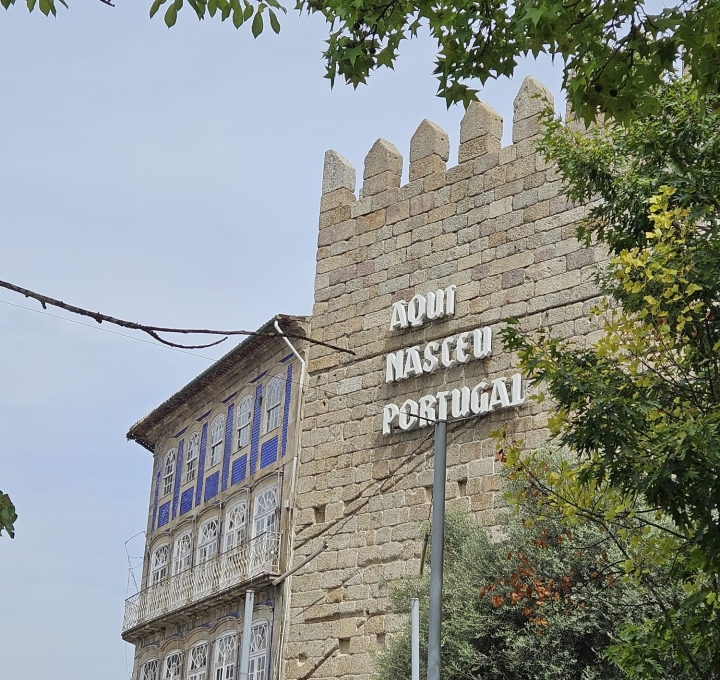

After an enjoyable train journey through the Ave region, we arrived in Guimarães. During our uphill walk into the historic city centre, laden with heavy rucksacks, we came across the town’s famous inscription: ‘Aqui Nasceu Portugal’, meaning ‘Portugal was born here’. Our first stop in the birthplace of the Nation was the tourist information centre, where we met Paulo. He provided us with all the information we needed to explore Guimarães, which we did over the following days:
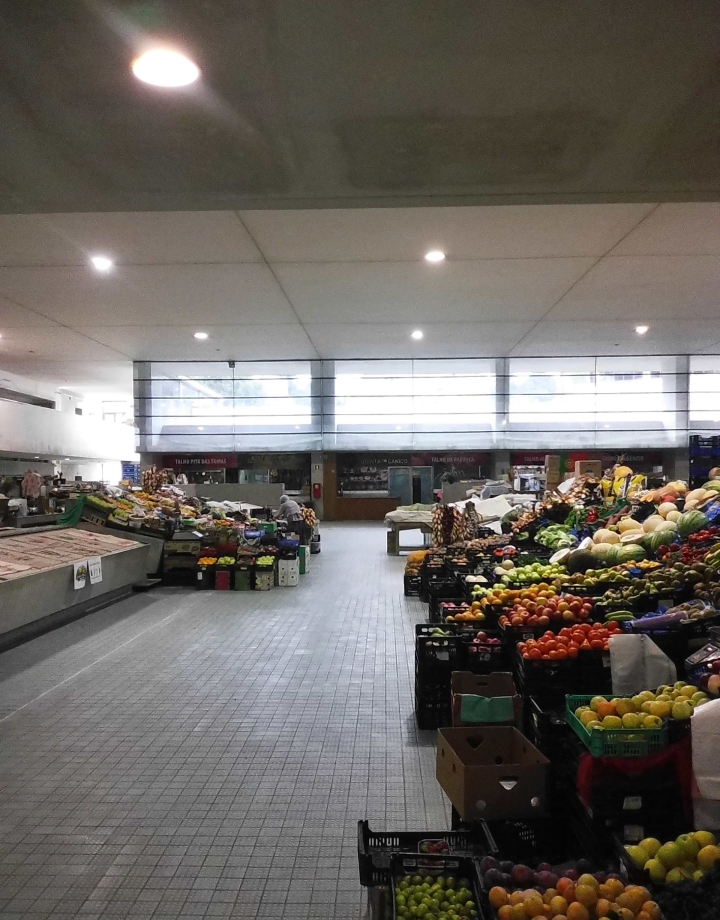
After chatting spontaneously with a few locals in the city centre, we took their advice and headed to the large market hall.
However, by the time we arrived, the stalls were already being cleared away. We still wandered through the hall, which felt like a liminal space, when an elderly saleswoman spoke to us in Portuguese. We couldn’t exactly make out what she was saying, but she surely was trying to tell us in a friendly manner that they unfortunately were already packing up and we were a bit too late.
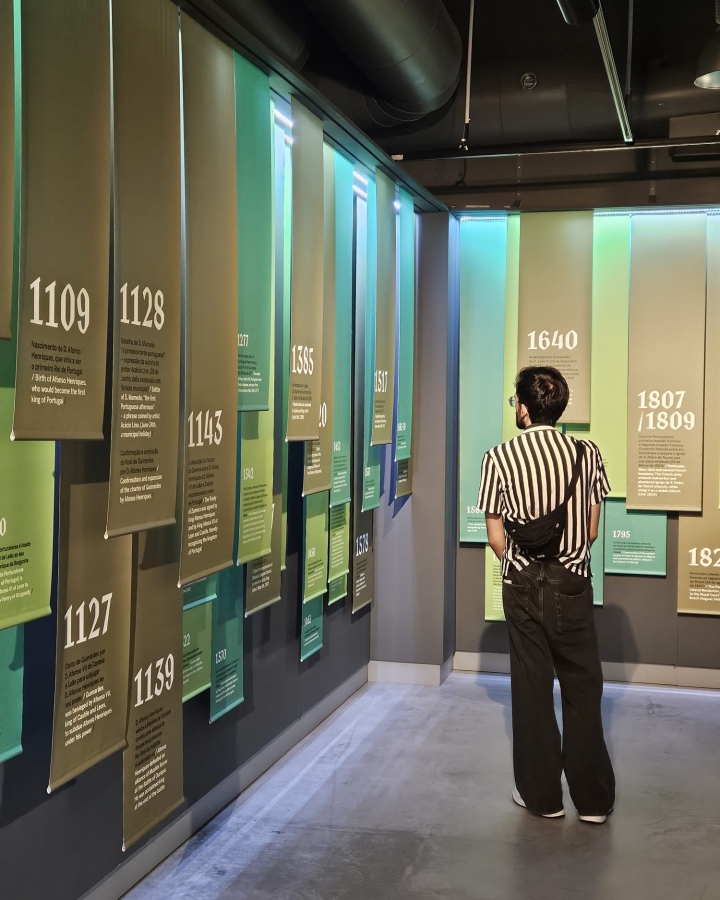
Our route took us to the Casa de Memória. The city museum is divided into two sections – Território and Comunidade.
The first section focuses on the historical and physical development of the city and its region – exploring its past, present and future. Here, we learnt why Guimarães is considered the birthplace of Portugal: Afonso Henriques was born in the town in 1109. He later fought for Portugal’s independence and was proclaimed the first King of Portugal in 1139 – making his birthplace the birthplace and capital of the kingdom.
The second section focuses entirely on the culture that has come to define Guimarães, and which is still practised by its residents today. It covers aspects of everyday life – such as idioms and baking traditions – as well as industrial heritage and the Nicolinas, an annual festival celebrated by Guimarães students. And, of course, this section doesn’t fail to highlight the city’s beloved football club, Vitória Guimarães.
We particularly liked how the impact of historical figures on the city was demonstrated, and how residents were given the opportunity to explain what their city means to them as part of an artistic project.
During our initial exploration of Guimarães, we had the opportunity to chat with a few young locals, who shared with us their connection to the town.
Beatriz describes the strong sense of belonging that the residents of Guimarães have, and how closely they are connected to their football club. She likes that, the town is also less crowded and touristy, so it’s a bit quieter. Theresa told us that she looks forward to attending the Festas Nicolinas every year. She also shared her favourite places with us: Praça da Santiago, Largo da Oliveira and Penha, where she has been spending time with her friends since childhood.
Achmed has lived in Guimarães for five years; he grew up in Afghanistan and is studying music. What he likes about the city is that it isn’t too big and everything is close together. He also enjoys the tranquility of Guimarães. He likes to spend his free time on Mount Penha.
We talked to Melissa, a museum attendant who moved to Guimarães from a big Brazilian city. This was quite a challenge and a big adjustment for her. But now that’s exactly what she likes about the city: she can walk everywhere, and she knows a lot of people in town. She studies theatre and really enjoys the Jardins do Palácio Vila Flor garden, which is right next to the theatre.
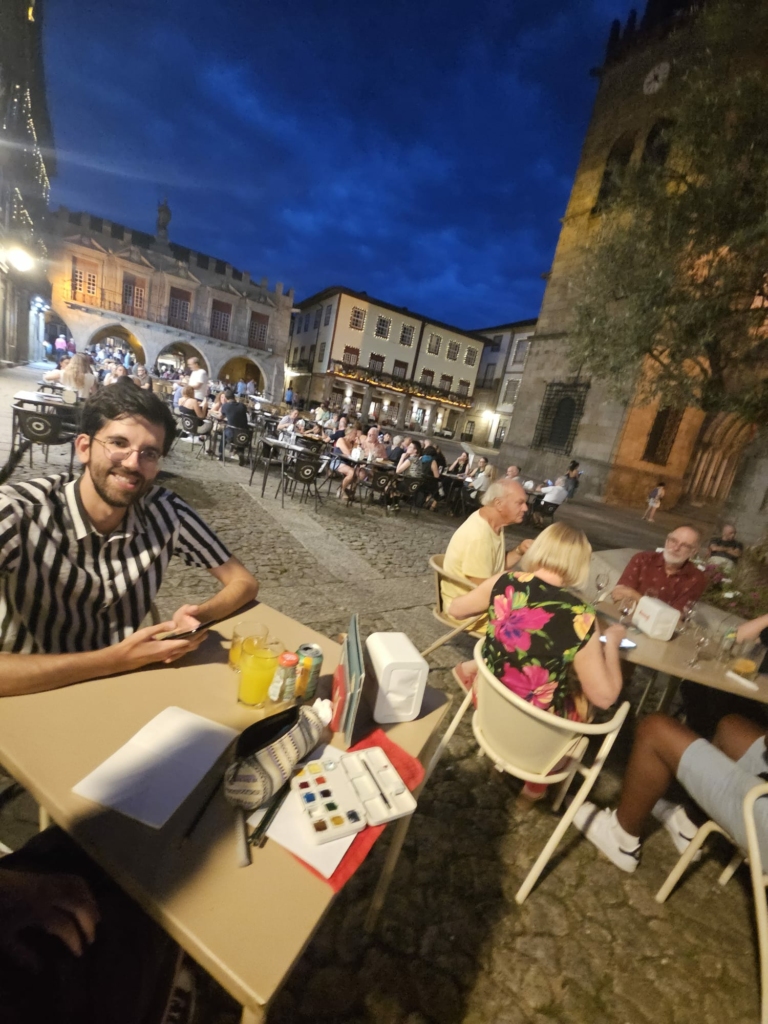
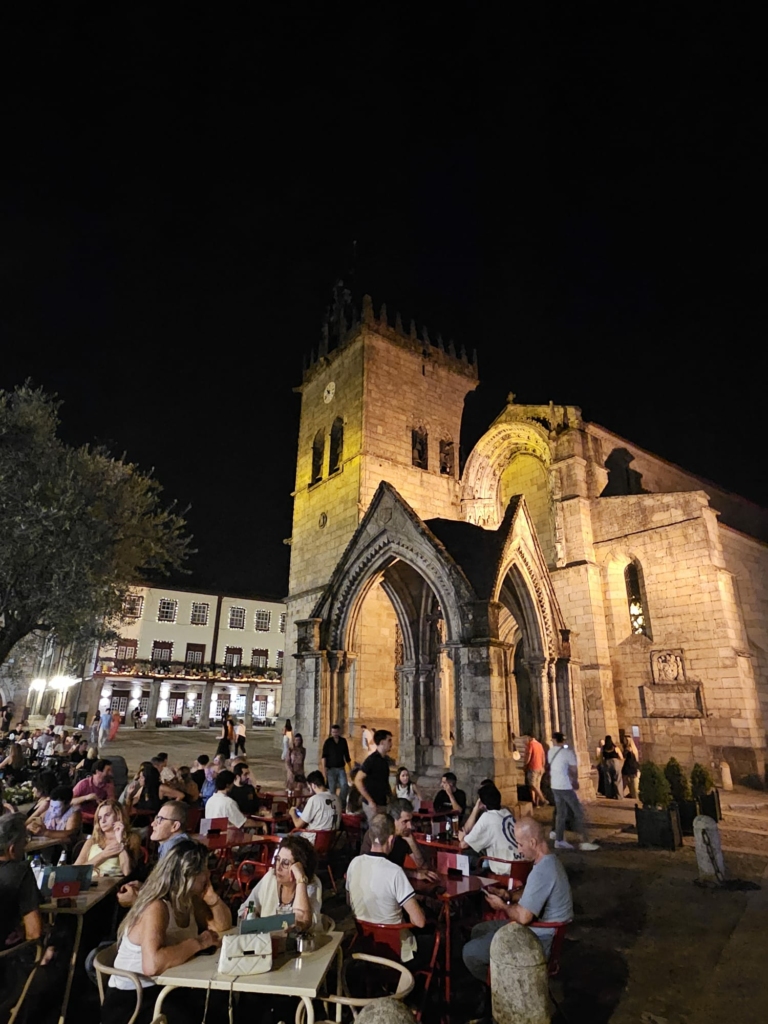
Since many locals had told us about Largo da Oliveira—and, luckily, it was right next to our apartment—we went to the square that evening. Just one glance out our window made it clear: it’s a very popular spot in the evening!
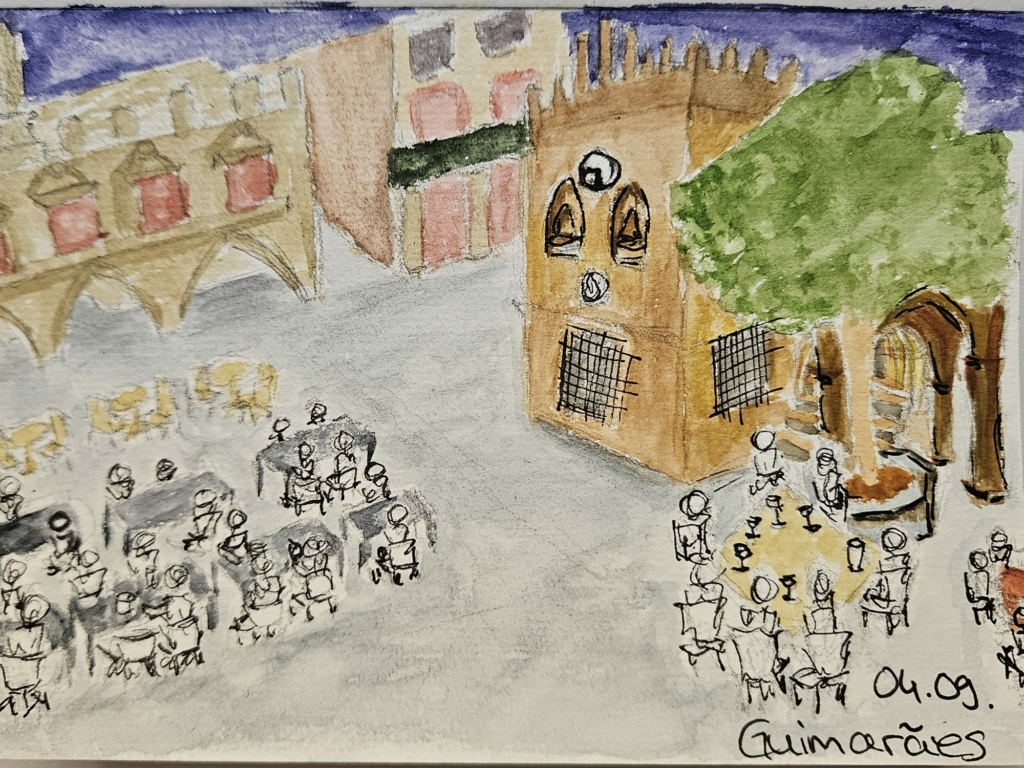
So we decided to hold our ‘sketch and watch’ session there and found a spot.
1. We don’t have to travel far for our observations today. Our rented apartment is located right on Largo da Oliveira – the largest square in the historic centre of Guimarães. Even from our sofa, we can already catch a first glimpse of the lively evening atmosphere in the square.
2. In front of the Gothic church and the impressive memorial archway, there are dozens of tables and chairs. Five establishments are spread across the Largo da Oliveira. One bar and three restaurants are practically full to bursting – we’re lucky to have managed to get a seat. Only the seating area of an empanada bakery is, absurdly, completely empty. Perhaps it’s no longer the right time of day for a stuffed pastry.
3. The mix of sounds at Largo da Oliveira is like a mesmerising beehive: the many conversations at the tables, a football match being broadcast on TV, the sound of children playing and jazz music from the neighbouring bar. Added to this is an enchanting atmosphere of light: the church is brightly lit, lanterns frame the square, and shutters and balconies are all uniformly decorated with fairy lights. Have the residents decorated them of their own accord, or is it all orchestrated? Well, never mind – it certainly adds a lot to the evening!
4. We sit down and are immediately addressed by a waiter in Portuguese. Although we reply in English, he unconcernedly carries on speaking in Portuguese. Somehow, we manage to make ourselves understood anyway and order drinks – we have a laugh about it afterwards.
5. There are six elderly people sitting at the table next to ours, talking loudly in French. Just as I’m about to start describing them, one of the women tries awkwardly to take a photo of the whole group. She turns to me and even before she can ask, I kindly agree to take a photo of them. Meanwhile, the group asks me if I speak French. A bit rusty, I reply: ‘Un peu!’ Roaring laughter breaks out and I’m bombarded with questions in French, to which I respond with polite nods while taking photos. I hand the woman her mobile and she thanks me. She turns around again, looks at the pictures herself first and then shows them to the group in amazement. She likes the photos so much that she feels the need to turn around and thank me again in French. When everyone subsequently gets up and leaves, they say a polite goodbye to me – I manage to get out a “Bonne soirée”.
6. Many other languages can be heard at Largo da Oliveira – such as English, German and Spanish – it’s no wonder that tourists are also to be found in the main square. Yet the large groups at the tables speak only Portuguese: a group of young adults has added two chairs from the neighbouring table to their own. Three more friends join them – they weren’t expecting them to turn up, but they are delighted to see them. Without further ado, they extend their table with one that has just become free a few moments ago. After a drink, they leave the restaurant again. A brief group discussion takes place in the square before they all disappear in the same direction: their Friday evening isn’t over yet!
7. A similar example at a neighbouring table: a group of people of the same age are crammed so tightly around a table that there is already a second row of chairs. Here, too, a man suddenly joins them; the group members greet him with surprise and warmth. A short while later, the man launches into a long monologue. His facial expressions and gestures are out of this world: He rolls his eyes, makes faces, pounds his thigh with his fist, traces a route on his palm with his finger and moves his hand towards his bottom with a sweeping motion. I can not (or will not) fathom the meaning of all of his remarks. The group is clearly entertained. Even before the man has a chance to order anything, they all stand up and move on together.
8. A middle-aged couple sit down at a table: she is still talking animatedly on her mobile when a waiter approaches them and asks her husband what they’d like to order. The woman responds to her husband with an indifferent wave of her hand. He mimics the same gesture, laughing, in the direction of the waiter. He asks the waiter for a menu, which he then studies intently – while wearing his glasses on his bald head. Suddenly, she hands him the mobile and he starts talking just as cheerfully. I get the feeling that they’re both probably talking to their child on the phone. Because long after the couple have finished their drinks and have almost nothing left to say to each other, a young couple arrives at their table, whom they greet warmly. Their son and daughter-in-law breathe new life into the conversation and they’re off to the next round of drinks. Had they been persuaded over the phone to pop by the Largo da Oliveira for a quick visit?
9. Two young women are engaged in a loud but heartfelt conversation. They’re casually holding hands and gazing into each other’s eyes for a long time. They seem like opposites: one in a summer dress and high heels, the other in workout clothes. There are empty glasses on their table; they wave the waitress over. She takes their orders, but not without having a quick chat with the women – they obviously know each other. Suddenly, a man joins them. He greets the woman in the summer dress with a kiss and the other woman with a kiss on the cheek. The tone of the conversation remains relaxed, but it’s different nonetheless. The man dominates the conversation and the women listen to him – not necessarily because they want to, but partly because they have to. The man has put a stop to the ‘girl talk’ session.
Largo da Oliveira is certainly no hidden gem – it’s the heart of Guimarães’ nightlife! Locals start their evening here with a few drinks and lively conversations, before moving on in groups. I am amazed at how the large groups at the tables keep getting bigger. There is always a place made at the table for any friend who joins them spontaneously! It is similar to when you’d go out onto the street as a child, knowing you’d bump into friends and have a great time with them. If you turn up at Largo da Oliveira on a weekend evening like this, you can be sure you’ll be in good company!
On our second day, our first stop was a small flea market located right next to Largo da Oliveira. There were lots of antiques, comic books, porcelain, jewellery and cassette tapes.
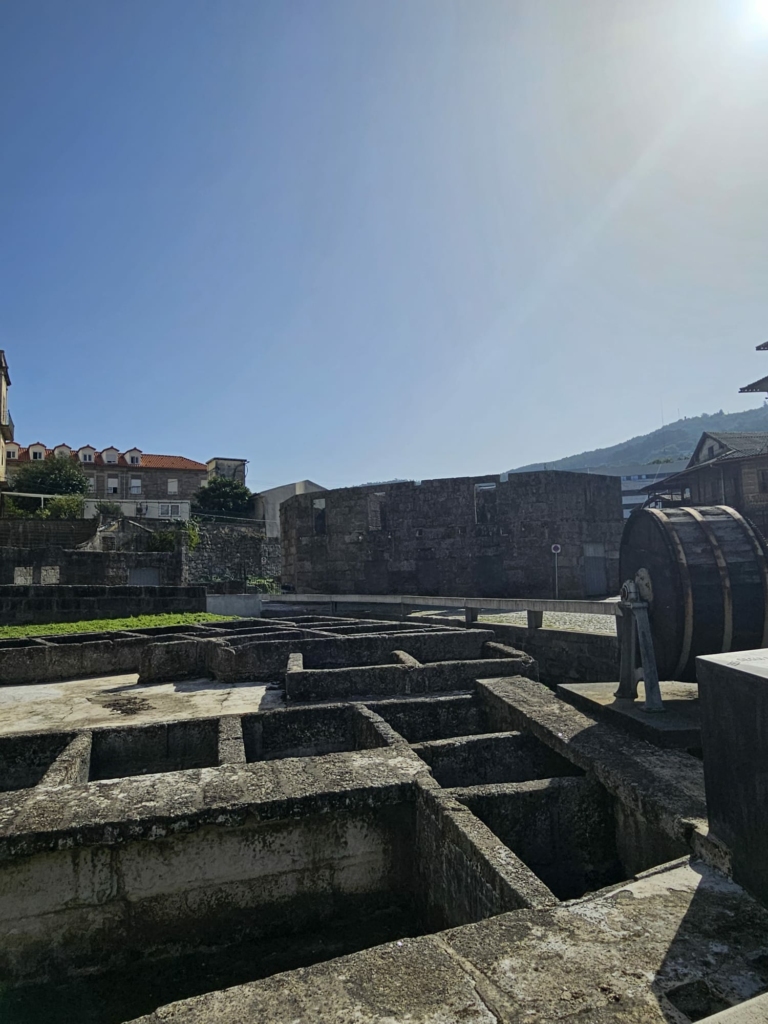
After that, we headed to the Couros Zone, a UNESCO World Heritage Site which was once an industrial area named after the traditional craft of leather tanning. You can still see the old tanneries and workers’ houses here. Water was clearly important to the city!
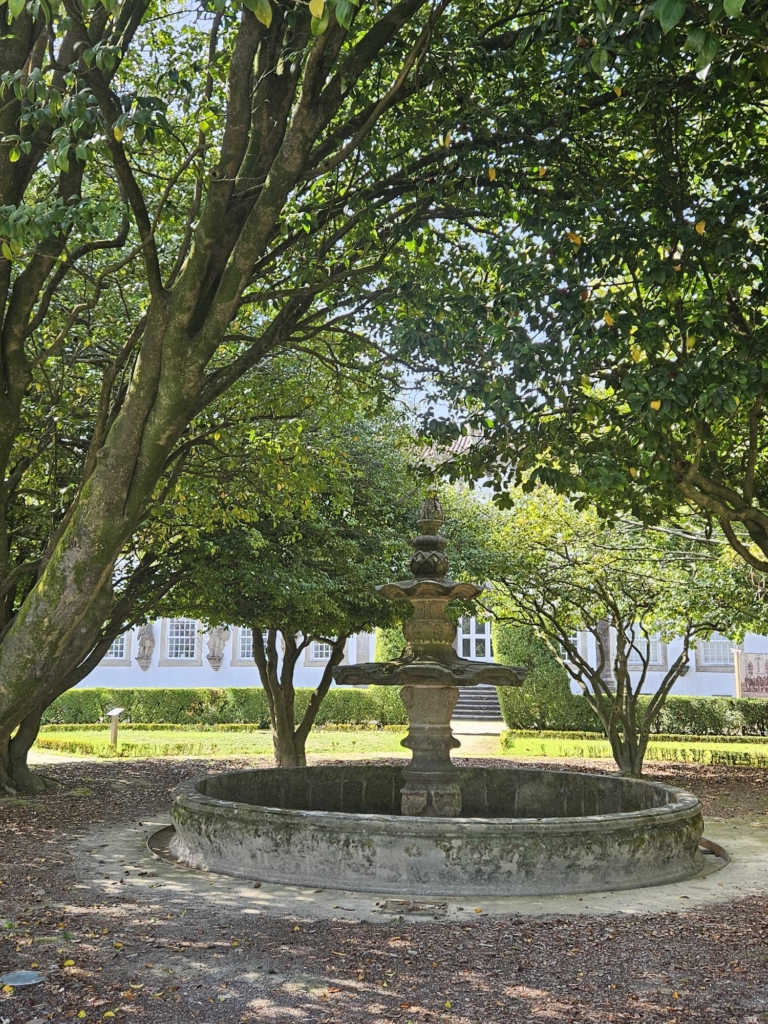
Next, we made our way to the Jardins do Palácio Vila Flor, which Melissa had recommended to us. The park was beautiful, like something from a fairy tale, and felt a little enchanted. It wasn’t crowded and was very quiet.
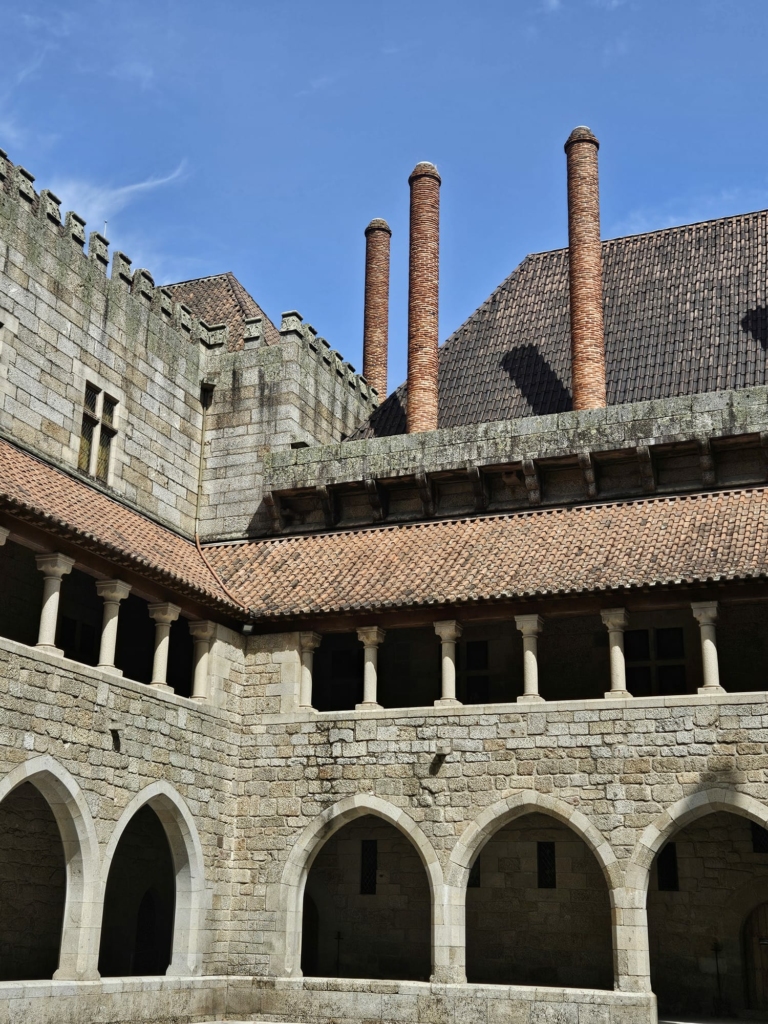
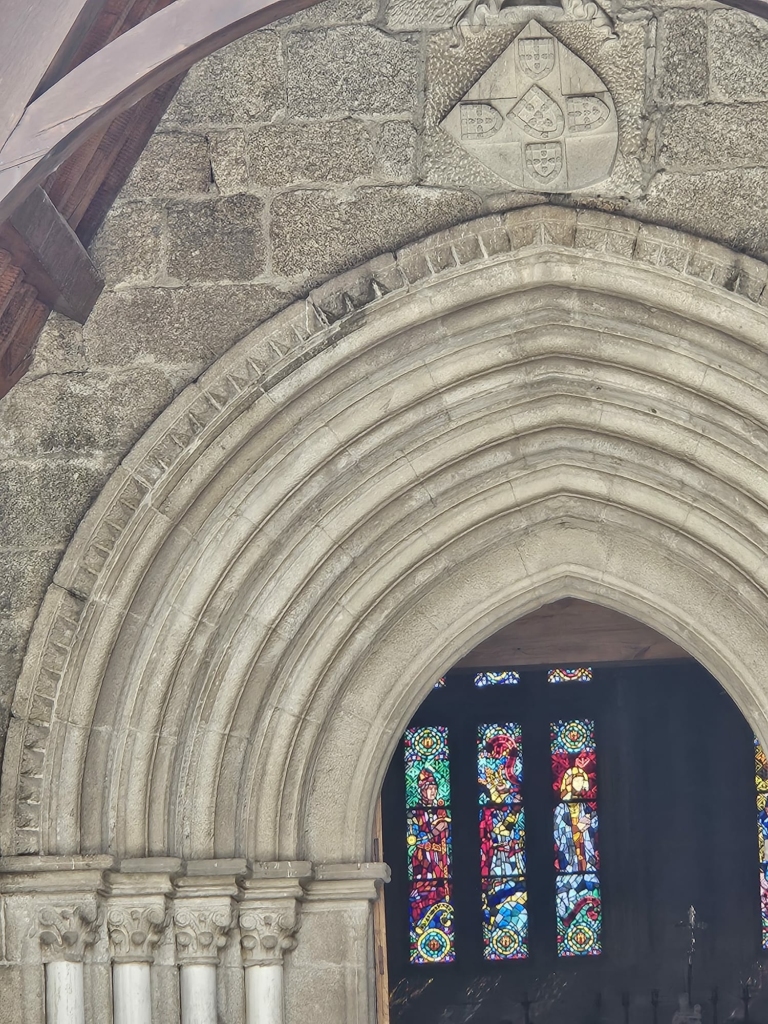
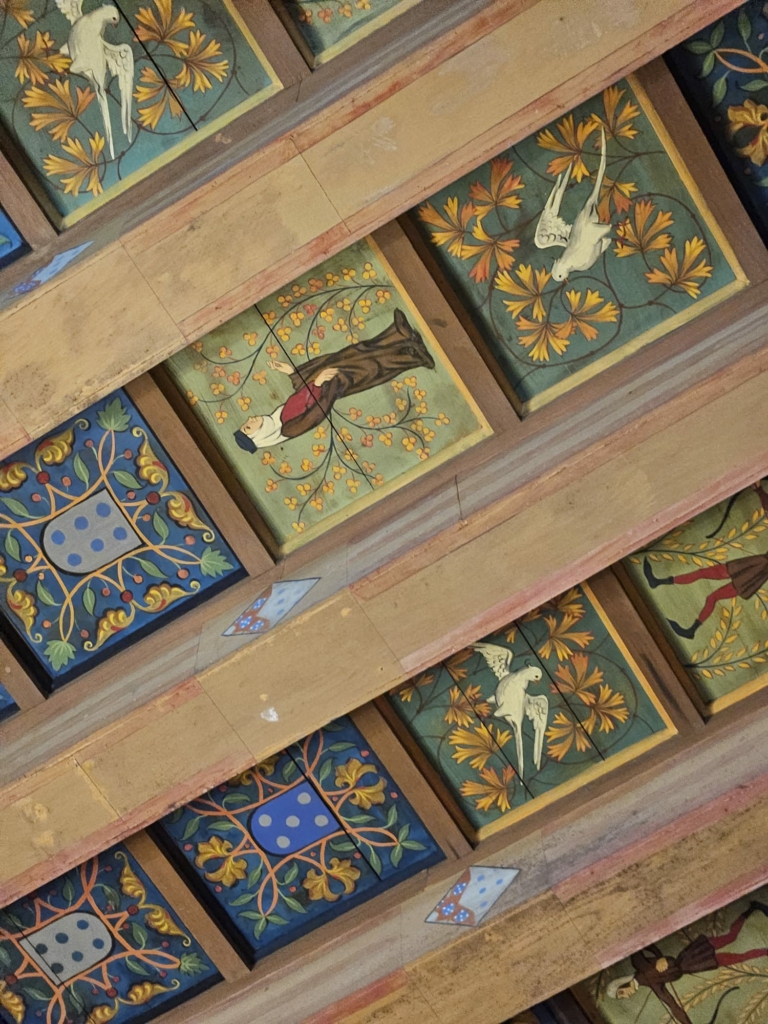
We then moved on to the Palace of the Dukes of Bragança. Built in the 15th century, it is the birthplace of the House of Bragança. Inside, we saw several large rooms adorned with elaborate tapestries depicting battle scenes. We also viewed collections of porcelain, paintings, furniture and sculptures. There was also a beautiful church with stunning stained-glass windows. The many chimneys, each connected to a fireplace, were particularly striking.
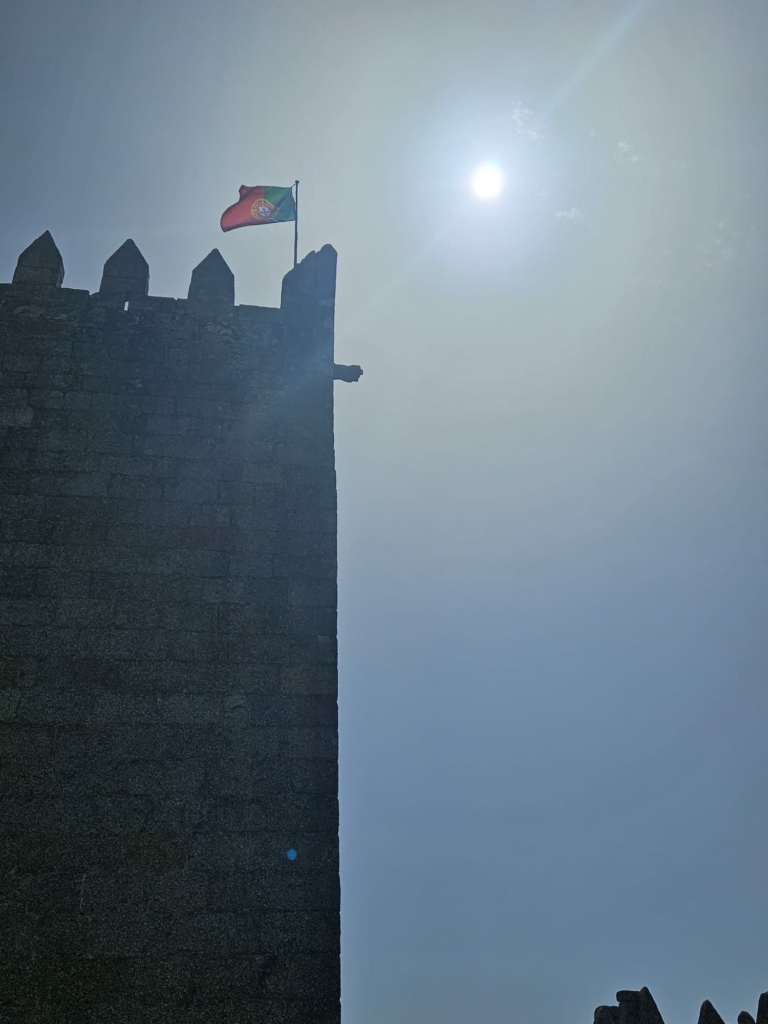
Then we walked to the Castle of Guimarães. A crucial monument for the city, it was the first defensive structure built to protect Guimarães and the Monastery of Santa Maria, which is now located in the Largo da Oliveira, from Norman and Moorish attacks. Dating back to the 10th century, the castle has been remodelled and expanded several times throughout history. We strolled along the ramparts and enjoyed the beautiful views of the city and Penha.
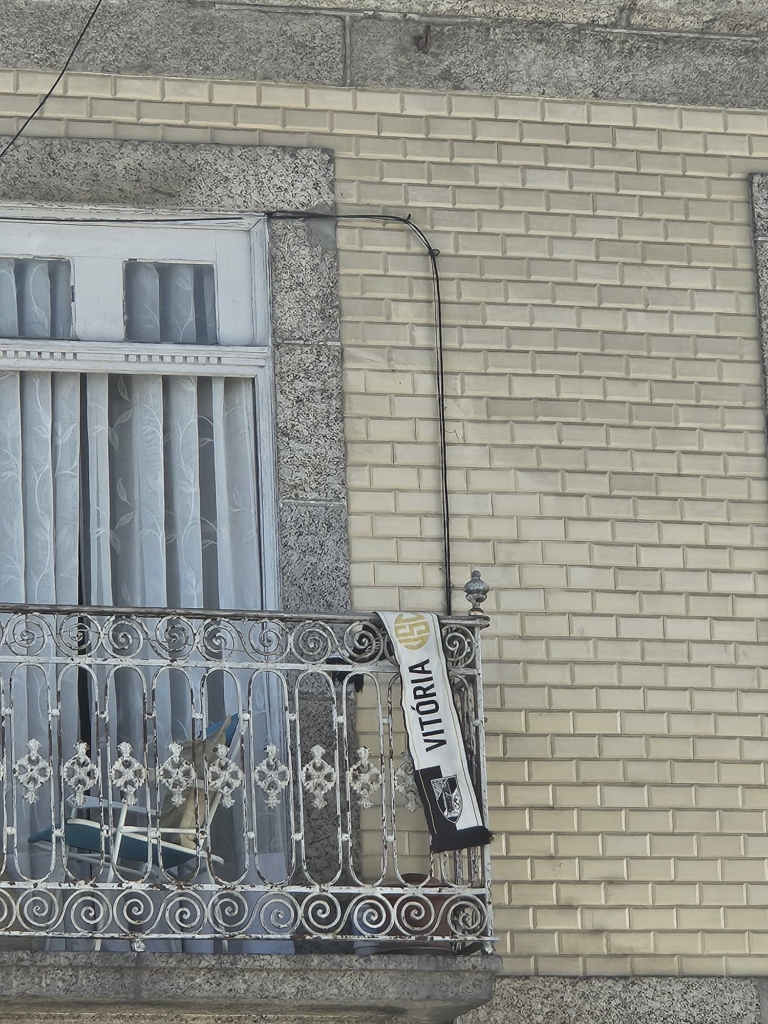
On the way back, we strolled along the city walls and spotted a scarf belonging to the local football club, Vitória, hanging from a balcony.
After a short lunch break, we were about to head to Penha Mountain when we saw a musical group of medical students called ‘Tuna de Medicina da Universidade do Minho’. They wore traditional costumes and carried unusual instruments. They didn’t just wave their flags — they danced with them, too! They were very enlivening for the Largo da Oliveira.
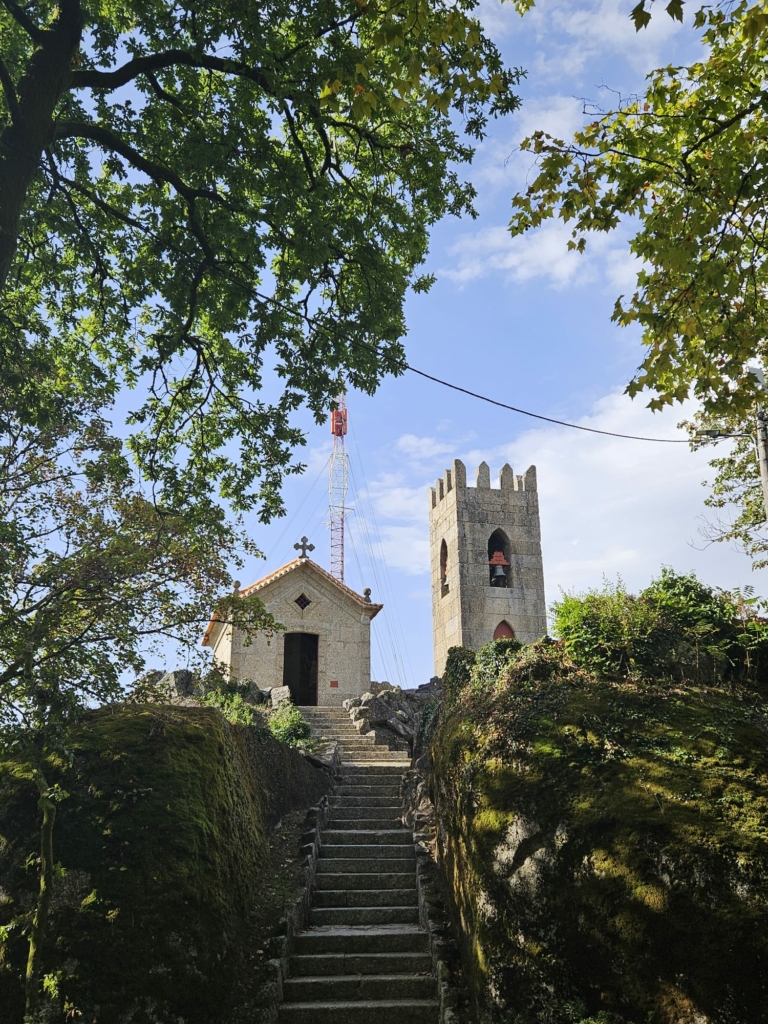
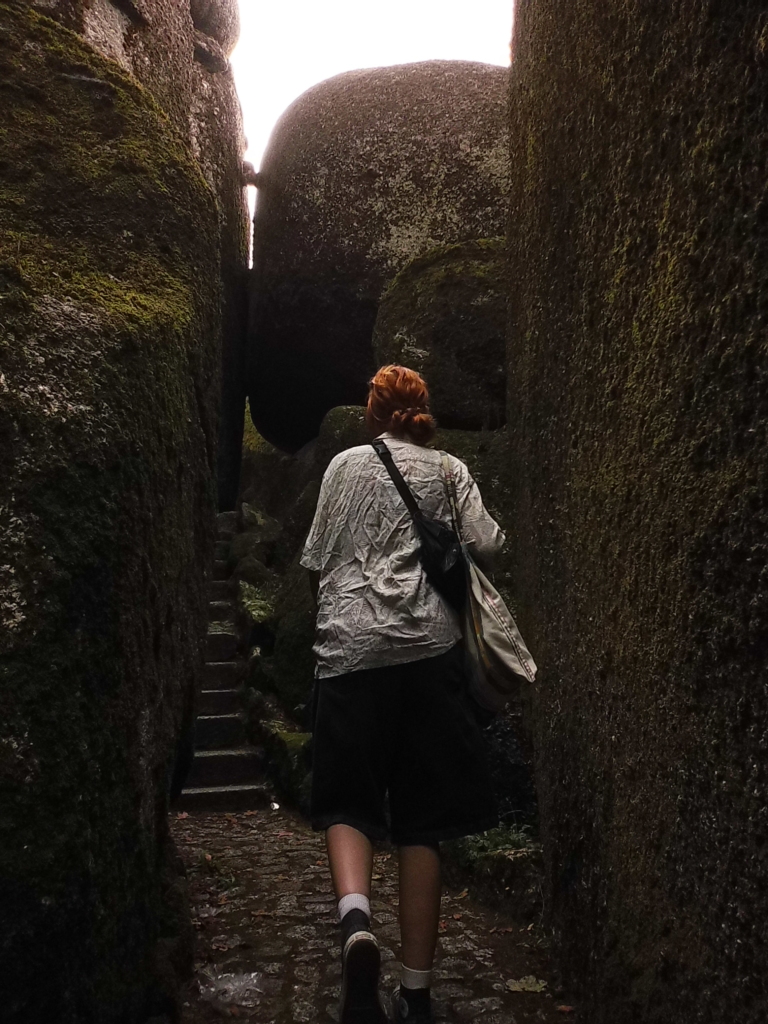
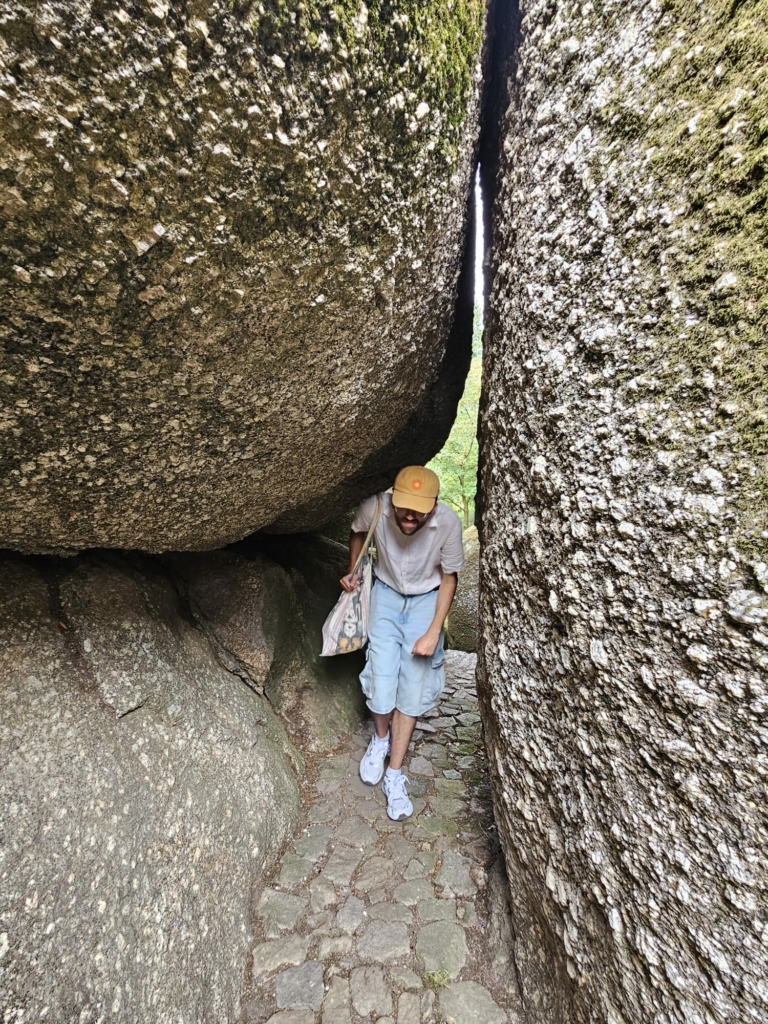
We then made our way to the cable car and rode up Mount Penha. Once we reached the top, we had a beautiful view of the city from the Penha Sanctuary. We kept walking and saw a pastry and fruit stand. We also saw many families having a big family gathering with a picnic in the woods on the mountain. We then just started walking along narrow paths and stairs that were built into the large granite boulders of the forest. Sometimes we had to duck a little, but it was really, really beautiful! Later, we walked through a cave—the Hermit’s Cave—where they were selling lots of fish dishes. On the way back to the cable car, we stopped to check out Saint Christopher’s Chapel. After all that walking on the adventurous paths, we took the cable car back down.
On our way back to our apartment, we walked briefly in the Igreja Nossa Senhora da Consolação. When we wanted to get out again, the church attendant ran after us and gestured that we could go back in and take a look around. After a more thorough visit, he held the door open for us as we left. We were really happy about how nice this interaction was!
That evening, an indie band was playing right in front of our apartment on Largo da Oliveira. We rounded off the evening with a delicious vegan buffet.
During our stay in Guimarães, we constantly sensed that the residents have a strong connection to their city and community—and let’s not forget Vitória! Precisely because its compact size, we think what makes Guimarães truly great is that it remains manageable and peaceful, yet is full of places where you can enjoy spending your free time with others.