


We took a day trip from Lisbon to Sintra. We arrived at the earliest possible hour and headed straight for the Palácio Nacional de Pena. After a dizzying bus ride along the winding mountain pass, we reached the entrance to Pena Palace—and we were far from the only ones there!
The former royal residence was built in 1840 on the orders of Ferdinand II, one of the last kings of the Portuguese monarchy. It was constructed on the site of a medieval monastery destroyed in the 1755 earthquake. The building’s blend of Egyptian, Moorish, Gothic and Renaissance elements reflects the spirit of the Romantic movement.
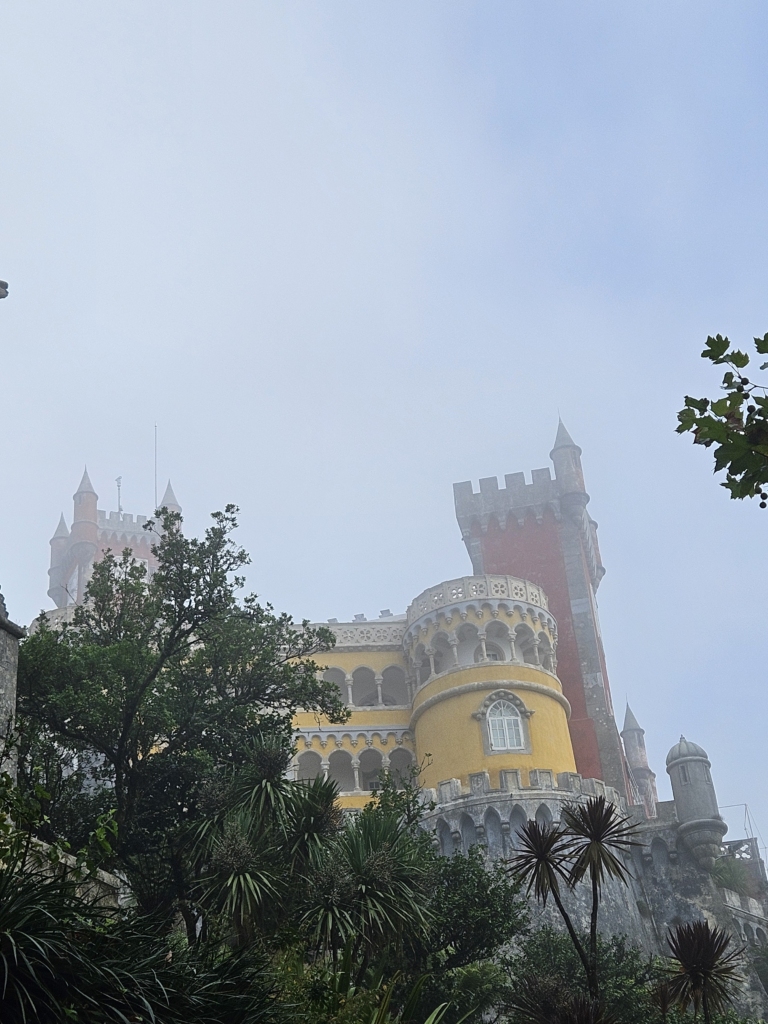
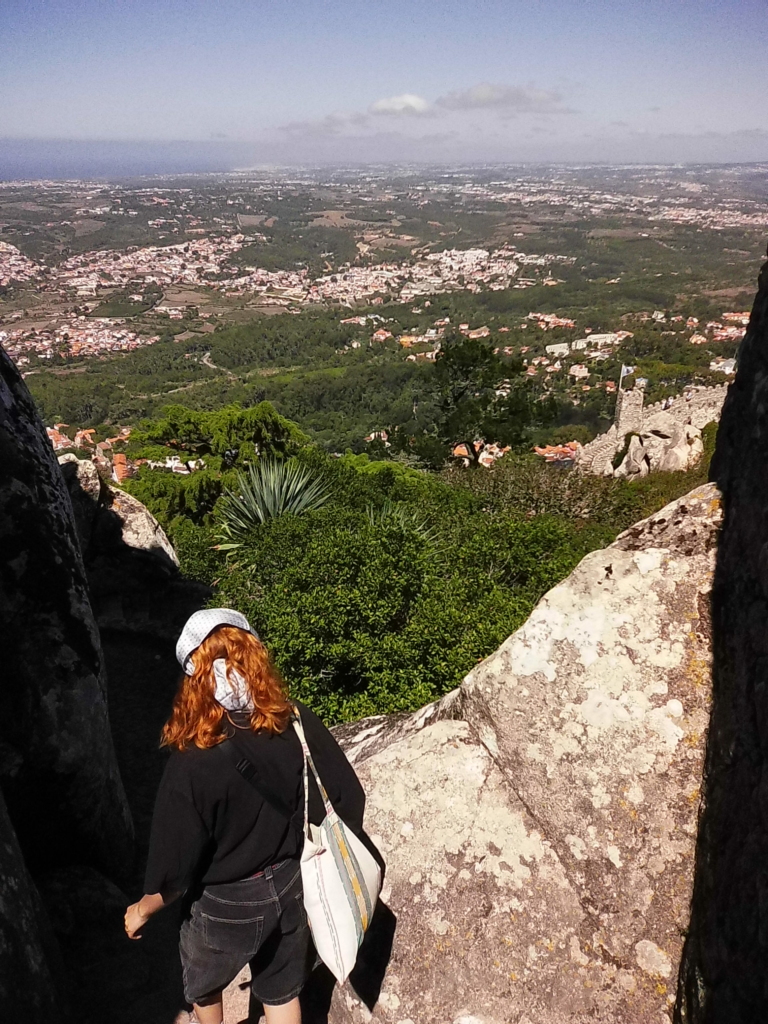
It was very windy at the palace – we never thought we’d get cold on this trip! Despite the large number of tourists and the somewhat hurried nature of our tour, the palace, both inside and out, was truly unique and beautiful. The views were stunning, too – you could see the city and the Moorish Castle, which we were due to visit afterwards.
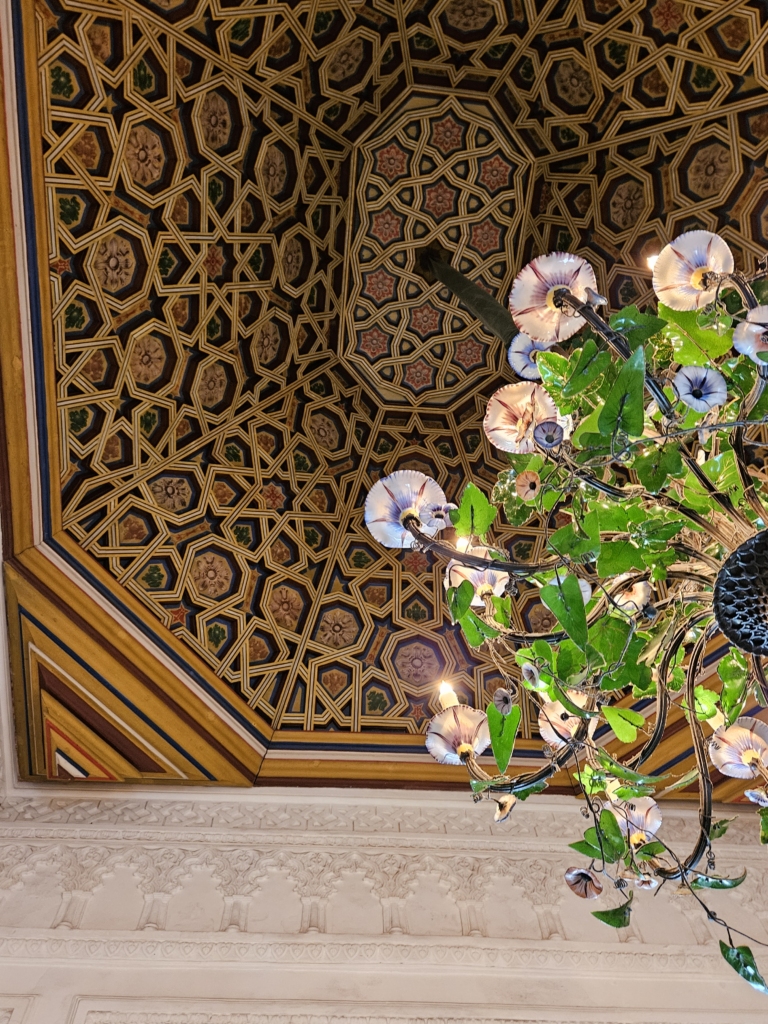
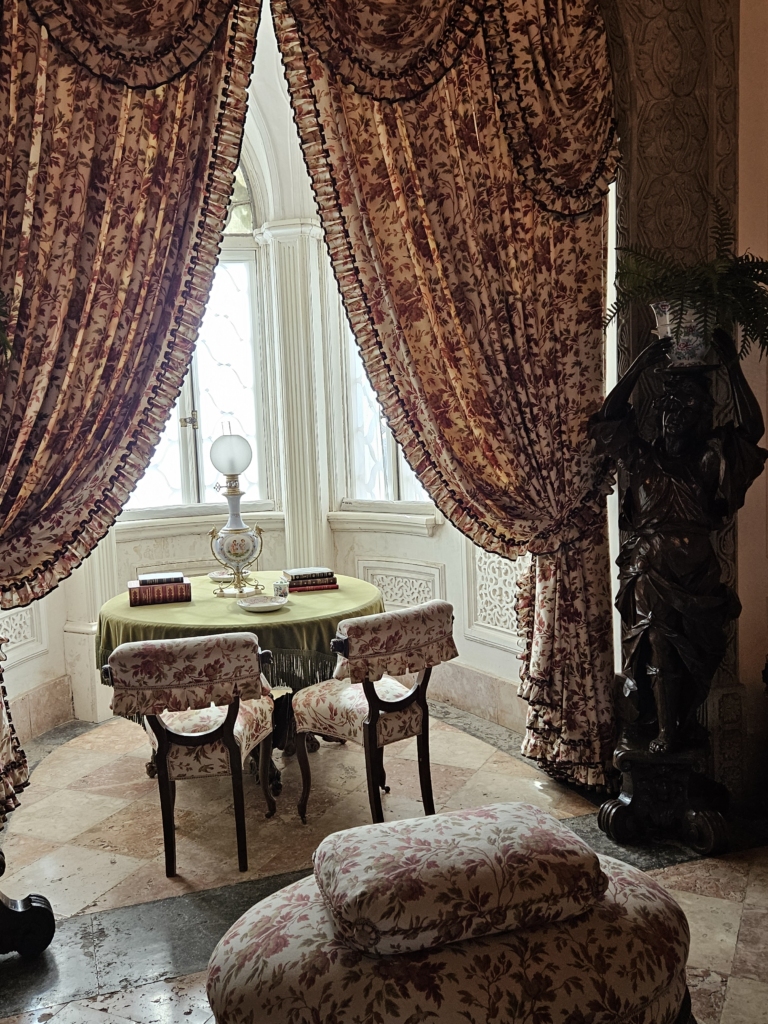
During the construction work, Ferdinand was keen to honour the remains of the destroyed monastery by restoring parts of it. A new section of the palace was also added. The interior design truly showcases the palace’s eclectic style, and we found the recurring Moorish elements particularly fascinating. We were especially captivated by the ceiling of the Smoking Room, which is pictured here.
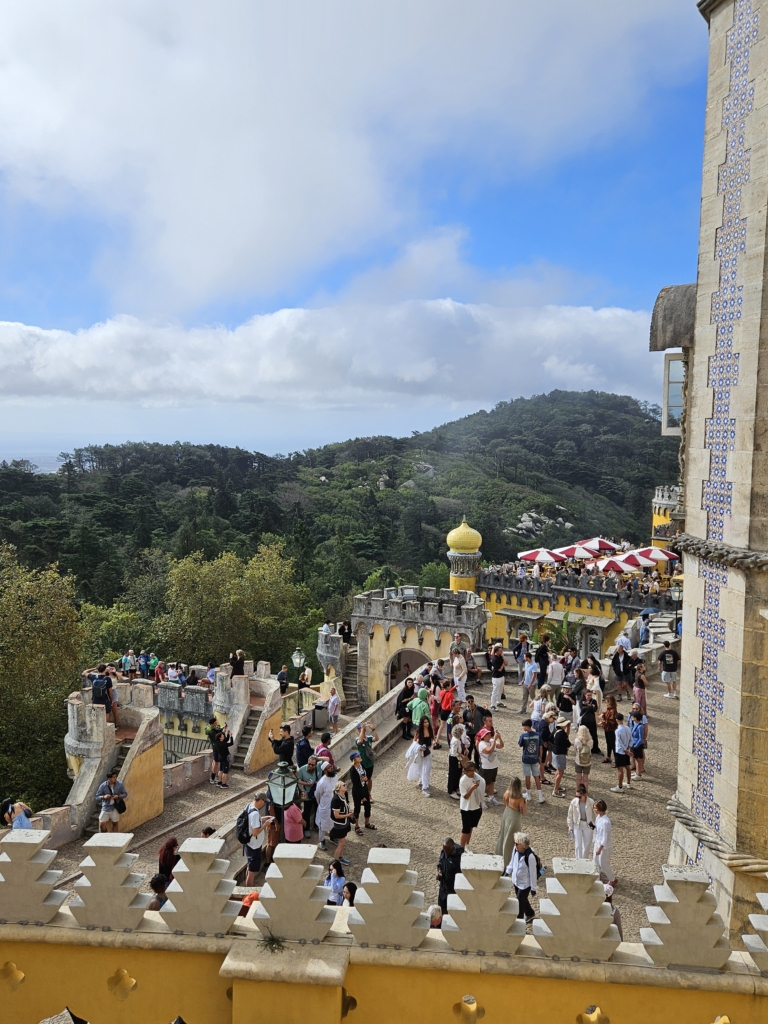
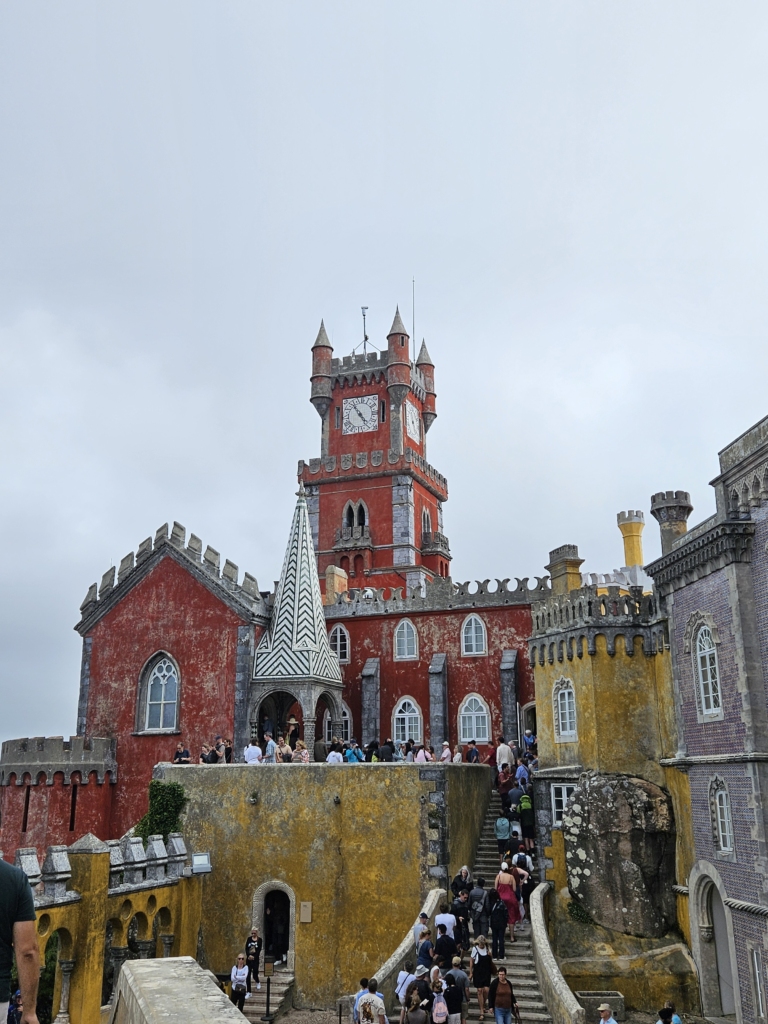
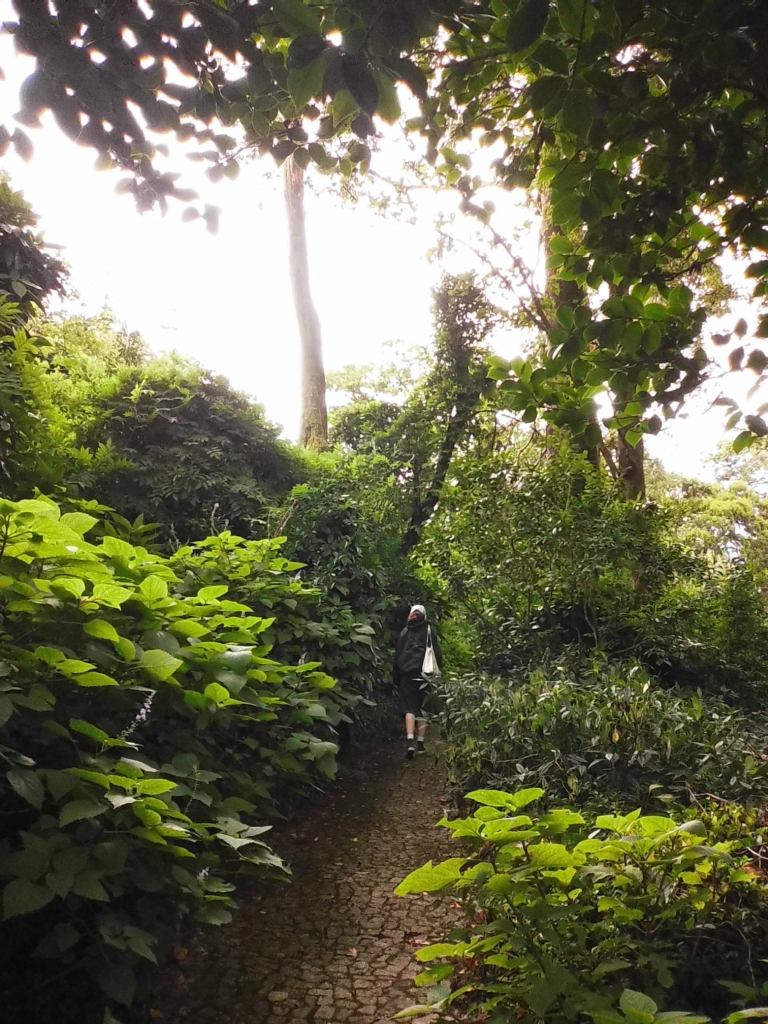
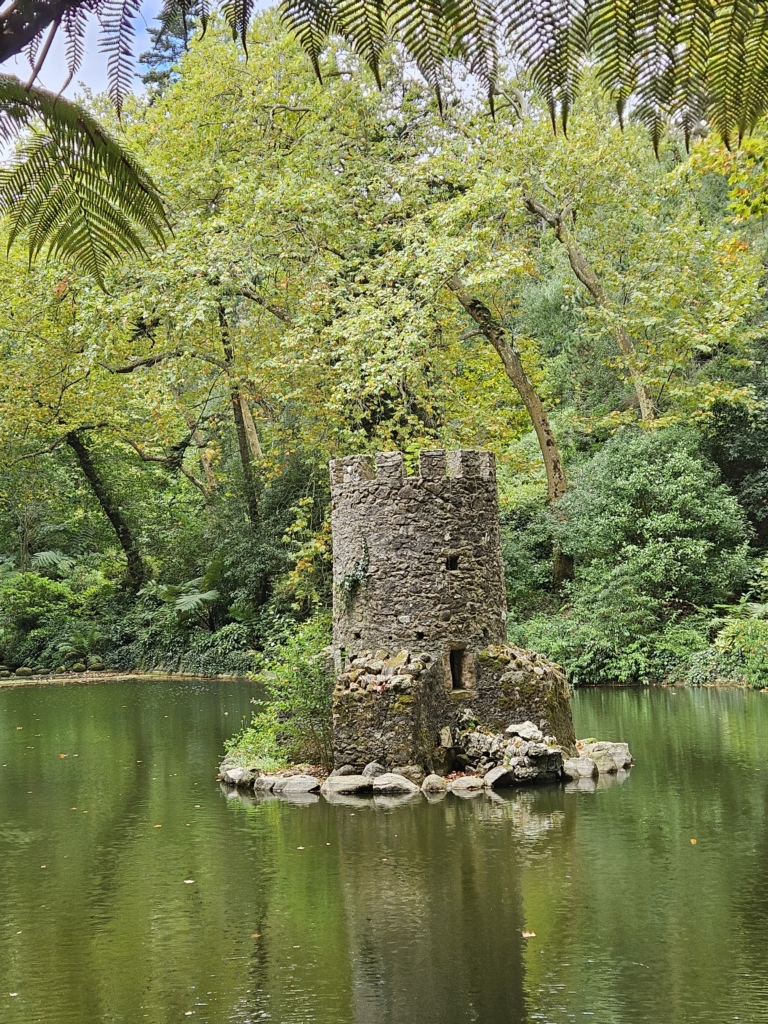
Once we had seen everything, we strolled through the vast palace gardens. They were like a dense forest, with many small, winding paths. We then came to a pond where ducks and geese were swimming. There, we briefly chatted with Kathi who was out riding in a horse-drawn carriage and who later gave tours to tourists. We continued on and arrived at a tower in the lake – It was like something from a fairy tale.
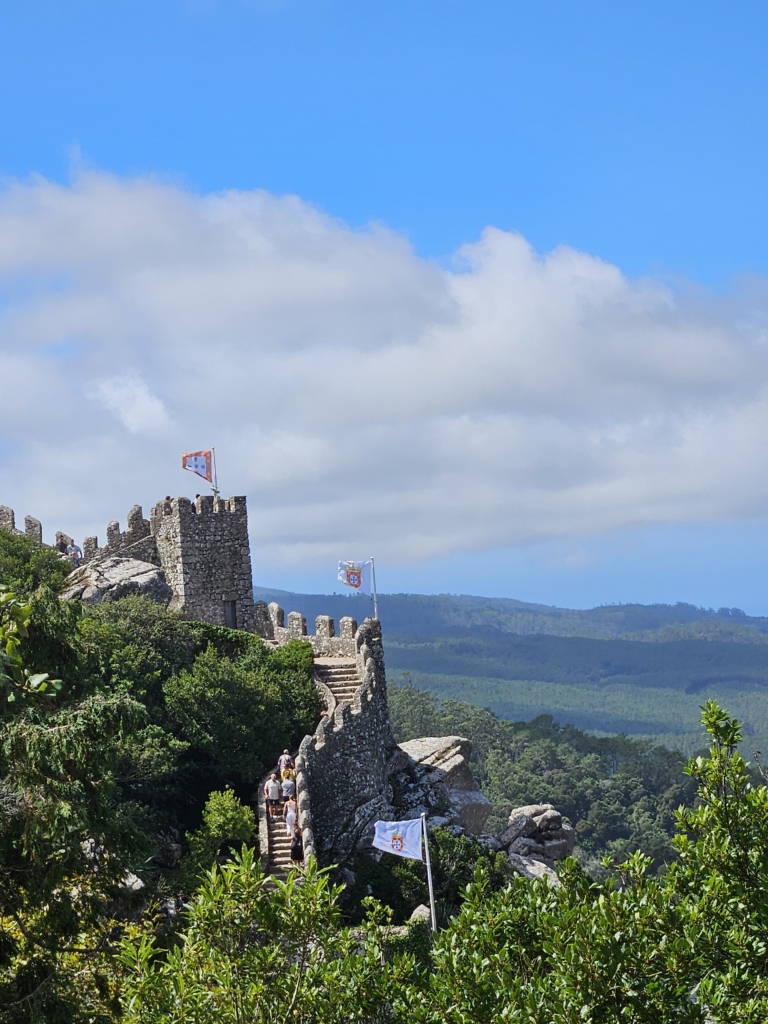
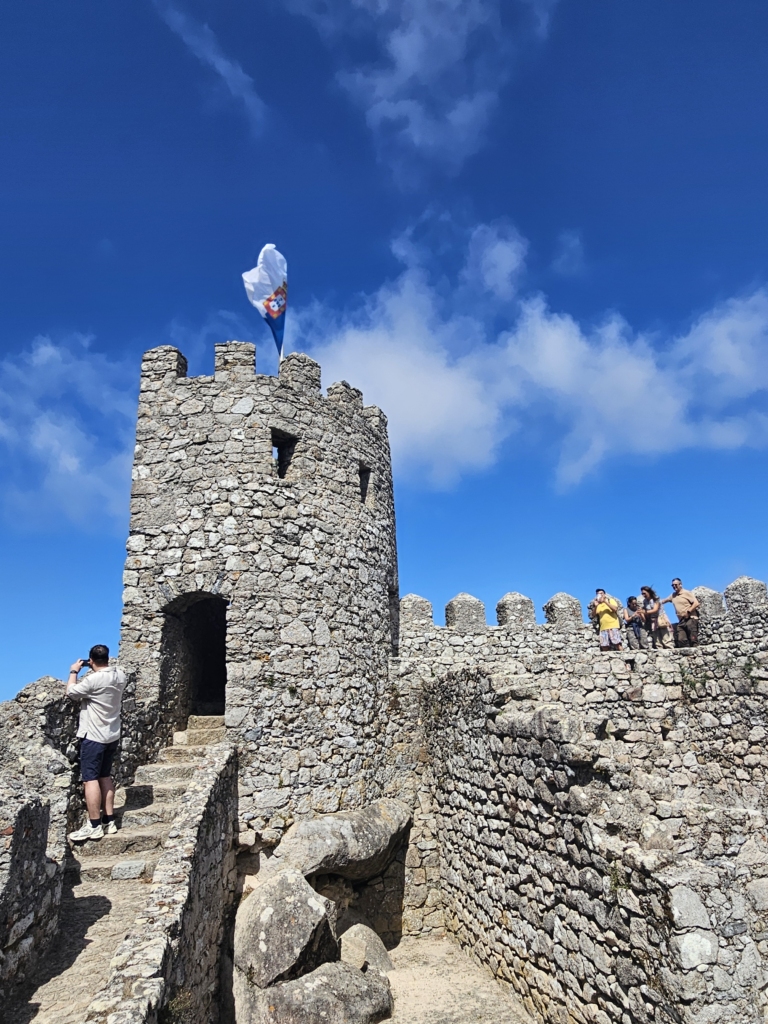
From there, we walked to the Moorish Castle. It was used in the 9th century during the Moorish occupation. After Portugal was reconquered, however, it was abandoned. It’s amazing that such a fortification could be built in such a high, hilly location. The way the stone castle wound its way along the landscape sometimes reminded us of the Great Wall of China.
As it was less crowded and quieter here, we were able to explore the castle at our own pace. It was enormous and offered truly unique views!
After our tour, we took the bus back down and stopped at a small café run by an older man. He told us that we wouldn’t find many young locals in the old town itself, but rather on the street parallel to the train station, as there are good restaurants.
The café owner was right. We really struggled to meet any young locals on our way to and through the town centre of Sintra. Eventually, however, we met Rodrigo and Lorenzo. Lorenzo owns a large café near the centre and spent a long time speaking openly with us about the challenges of living in Sintra. Unfortunately, the microphone ran out of battery, so we lost the audio for almost the entire interview :/
Local perspective: nature, surroundings, community and Mass tourism
Rodrigo has lived in Sintra all his life and believes that the community and its people are the most important aspects of the town. Similar lifestyles bring people together, even if they don’t really know each other. He also likes the location because it doesn’t take long to drive to the beach, Cascais or Lisbon. In his free time, he likes to visit the coast of Sintra or go further afield, as there are so many tourists in the old town. However, he mentioned Pirequita, a spot in the old town, as a place where he and the locals like to sit and eat pastries.
Lorenzo was born and raised in Sintra. Tourism has completely transformed life in Sintra for him and all the other residents. The streets where he used to play football as a child are now packed with tourists, even in the early morning. He said that hardly anyone from Sintra lives in the old town anymore, as they have moved over the mountains and towards the sea, since Sintra is so large. He owns a café in the old town, but he lives on the outskirts too. Although tourism creates many jobs, he wishes for more sustainability and for the local population to be better supported — in other words, he doesn’t want tourism and wealthy foreigners to dominate. He told us about his favourite bar, the ‘Fonte da Pipa’, which he used to enjoy visiting. Nowadays, the bar is very quiet and has changed its opening hours to cater for tourists, closing at 5 p.m. when they all head home.
Kathi has lived in Sintra for four years, having moved here for family reasons. To her, it is a quiet little town that has everything she needs. She enjoys the natural surroundings and finds the village of Azenhas do Mar, perched on the edge of a cliff, very peaceful. She also likes to spend her free time there or at the Palace of Monserrate. She loves living in Sintra because of the many opportunities to enjoy the surrounding area in her free time, as well as the tranquillity and abundance of nature.
After our conversations, we walked to Piriquita, which Rodrigo had suggested, and to Fonte da Pipa, which Lorenzo had suggested. Piriquita was very crowded and busy, there were many tourists here.
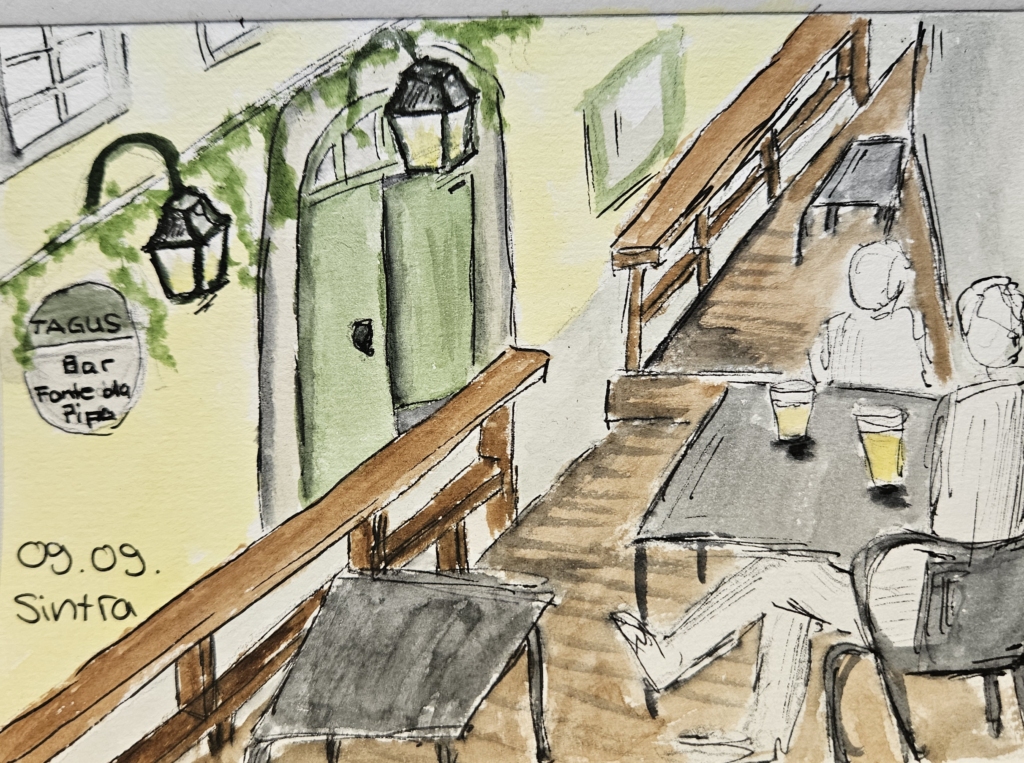
Sketch and watch: Fonte da Pipa
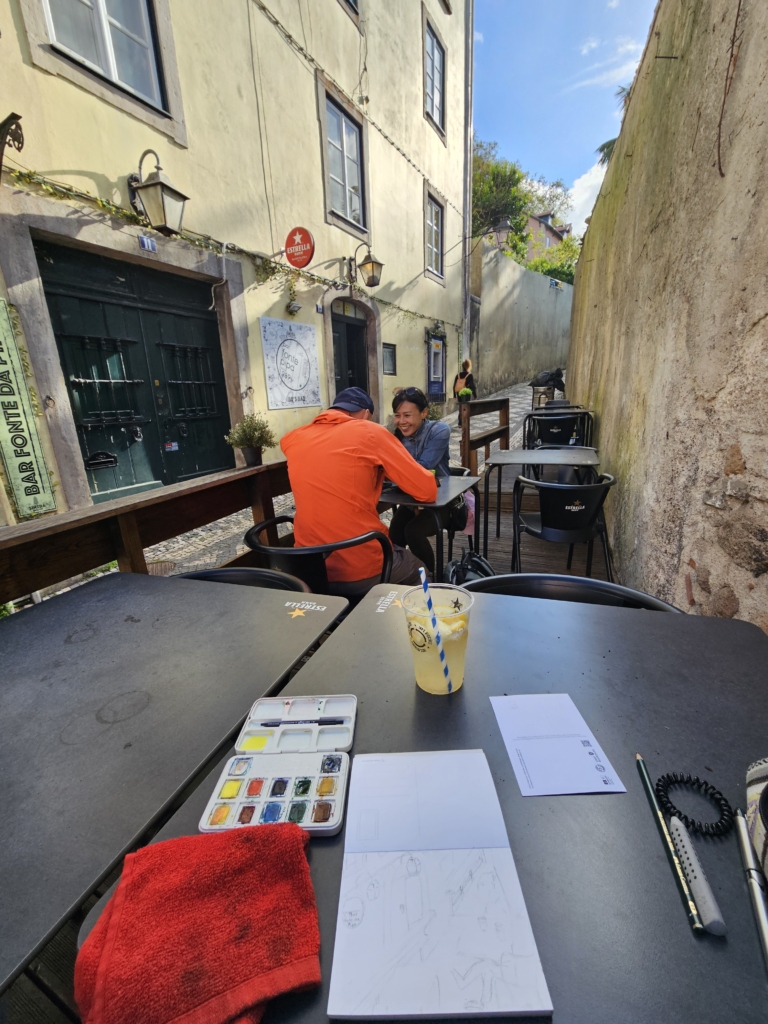
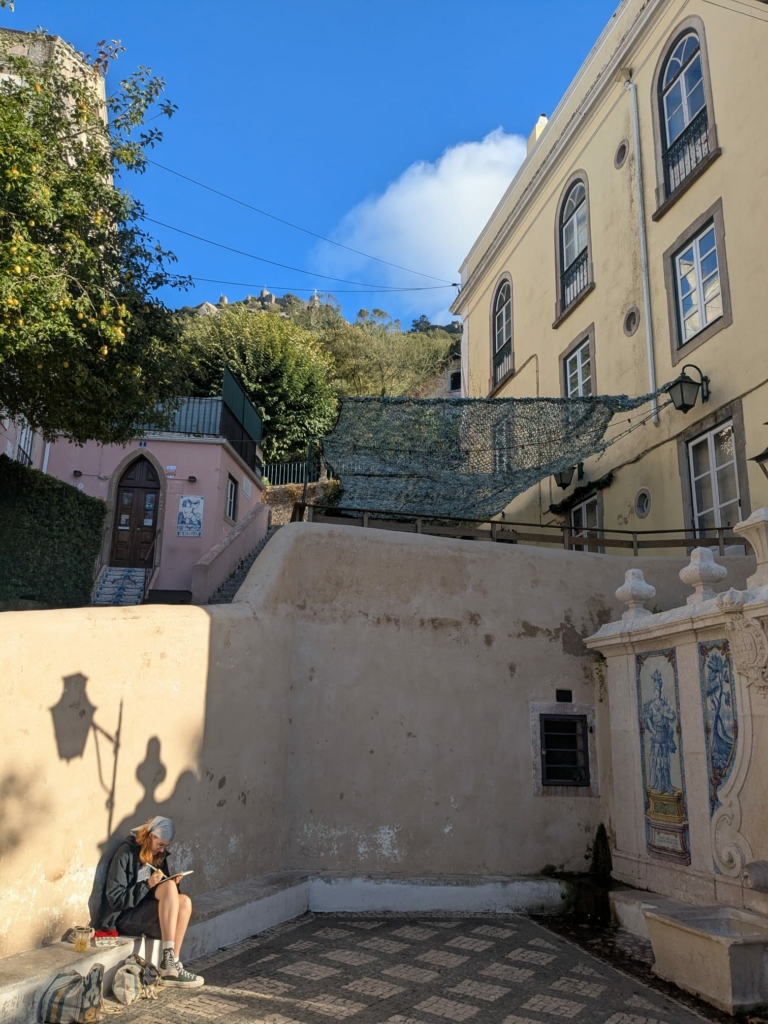
We arrived at Fonte da Pipa shortly before 5 p.m. Seeing only a handful of people sitting on the terrace and noticing that the bar was about to close made us realise that this was exactly what Lorenzo had told us! It was clear to us that we should hold our ‘sketch and watch’ session there.
Sintra - Closing Song at the Fonte da Pipa
1. Sintra’s historic town centre is absolutely packed. Germans, French and Americans are spending their money in souvenir shops or queuing up at a bakery to get their hands on one of the iconic queijadas de Sintra. Mass tourism is the order of the day.
2. At the end of the same street, we find the Fonte da Pipa. Although the bar is only a few minutes’ walk from the hustle and bustle, it’s clearly far enough away to attract hardly any tourists. The many seats on the small outdoor terrace are almost completely empty. From a distance, you can see that the tables haven’t been wiped down.
3. As we arrive, two young women are just about to leave. They stand up while continuing to chat in Portuguese to a garbage collector, who is leaning casually against the terrace railing. They don’t leave without shouting a goodbye to the barman inside the bar. Are they regulars?
4. Even before we sit down, a man kindly informs us that the bar is about to close – it’s only five o’clock. We speak English, but he has a strong German accent. He carries two plastic cups of beer over to a table where his wife is already waiting for him. They are the only guests left.
5. As if on cue, the young barman hurries out of the door. He tells us in English that he’s closing soon. However, he still offers to get us a quick drink. There’s a certain sense of urgency in the air, so we hurry into his bar. He grows impatient as I rummage through my wallet for my card. Without a word, he places our drinks on the terrace railing. They’re also served in plastic cups – so that we can dispose of them ourselves later. But when it comes to choosing our drinks, his true charm as a host shines through: the barman leans casually against the bar and asks us what we’d like to drink. He pauses briefly when we ask for something non-alcoholic, but then kindly lists his entire range. He recommends the house lemonade.
6. I catch only a brief glimpse of the bar’s interior, which features large leather armchairs, bar stools, bottles of spirits hanging from the ceiling and other bits and bobs. You can still hear the 1980s American music out on the terrace. The path leading to the entrance is paved with cobblestones, as if the street continued right into the bar. The bar has a modern décor, yet retains a rustic charm – it looks cosy!
7. The couple at the next table are chatting in English: they’ve had an overpriced breakfast, done some sightseeing and are planning to pop into a nearby supermarket later. The bar offers them a break. Two tourists wander down the street, discussing in German whether they should pop into the bar. The man replies to them in English that the bar has already closed. Later, when the couple ask us about Mia’s drawing, they also address us in English, even though they heard us speaking German. It’s clearly important to the German-speaking man that his wife understands all the conversations. She’s obviously still learning German – but she’s already making a pointed comment about the unpleasant weather with a simple “Kalt!”
8. Suddenly, small black chunks crash onto the couple’s table. We all look up at the same time. Pigeons have torn down parts of a wall. The man lets out an eccentric cry: HEY! The woman joins in: HEY! She imitates bird calls to scare the pigeons away. As the couple moves to another table, they joke about the man fishing the little chunks out of his drink with his hand. HANG ON: There are black bits in my drink, too! How on earth did that happen?!
9. The barman notices the situation: he hurries out and explains that, although the wall was cleaned only yesterday, they cannot clean the pigeons away. He jokes and apologises at the same time. He can’t stop the pigeons from doing what pigeons do, and somehow the situation has a certain charm to it.
10. Slowly but surely, the barman is closing up: you can hear him rearranging the furniture, closing the till and washing up glasses. The last ‘closing-time’ song is cut short. He also pops out briefly to dismantle two windowsills. There is place for several people to stand there and put their drinks down – but no one is doing that at the moment. After a brief chat with the garbage collector, the latter says his goodbyes and wheels rubbish bags and empty beer kegs up the hill. The barman locks the first door from the inside and the second gate from the outside. The bar is now officially closed.
11. Carrying a small rucksack and holding a motorbike helmet, he comes out onto the terrace. Whispering, he asks us to leave the bar in five minutes. Otherwise, the police will cause him trouble. We agree, and a short while later he whizzes past us on a moped, waving. Once the other couple have also said their goodbyes, there really is no one else there – apart from us.
A bar closing at five o’clock – that’s absurd! Mind you, I can well understand why: the peak visiting hours for Sintra are already over, and the Fonte da Pipa is obviously just far enough out of the way that only the most adventurous tourists end up here by chance. The locals aren’t in the mood to party just yet, or they live outside the city anyway. So why should the barman stay open any longer just for a few confused tourists like us? Yet at the same time, the young barman’s charisma, the two regulars, the plenty of seating and the cosy atmosphere give me the impression that it can be a great place to meet up with friends for a lovely evening. The Fonte da Pipa is certainly a second living room for many regulars. But as tourists, however, we weren’t part of the lively hustle and bustle of the locals in the bar – maybe it’s better that way, too.
After our day trip to Sintra, we headed back with mixed feelings. On the one hand, we were fascinated by the beautiful buildings, parks and views. On the other hand, we knew that tourism was taking space and opportunities away from residents, forcing them to move elsewhere and change their way of life. However, we also left feeling that we had only seen the touristy side of Sintra. At the same time, we became curious to explore the many places around touristy Sintra that locals cherish and frequent — spots that make life here so liveable, as we gathered from our conversations.