


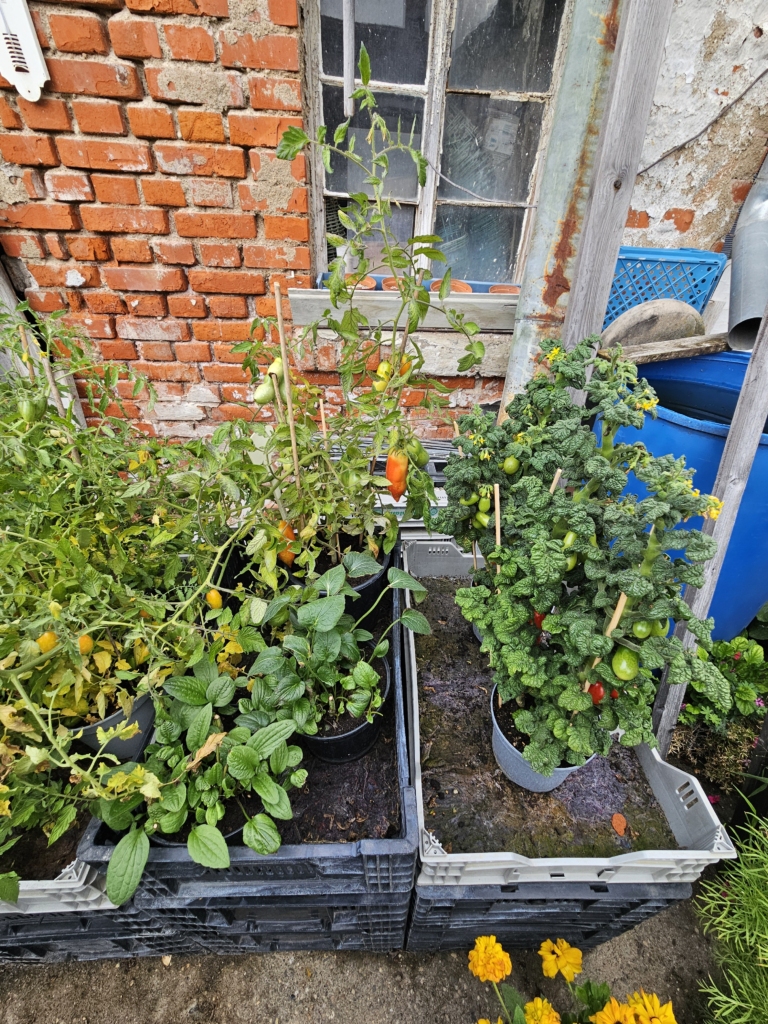
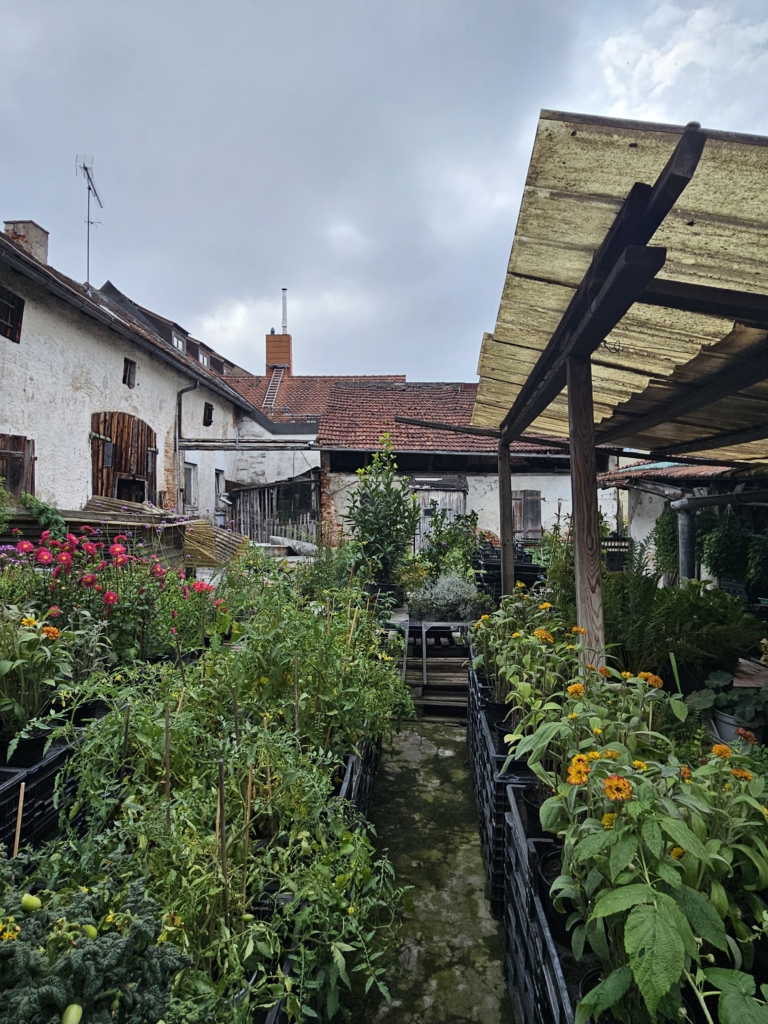
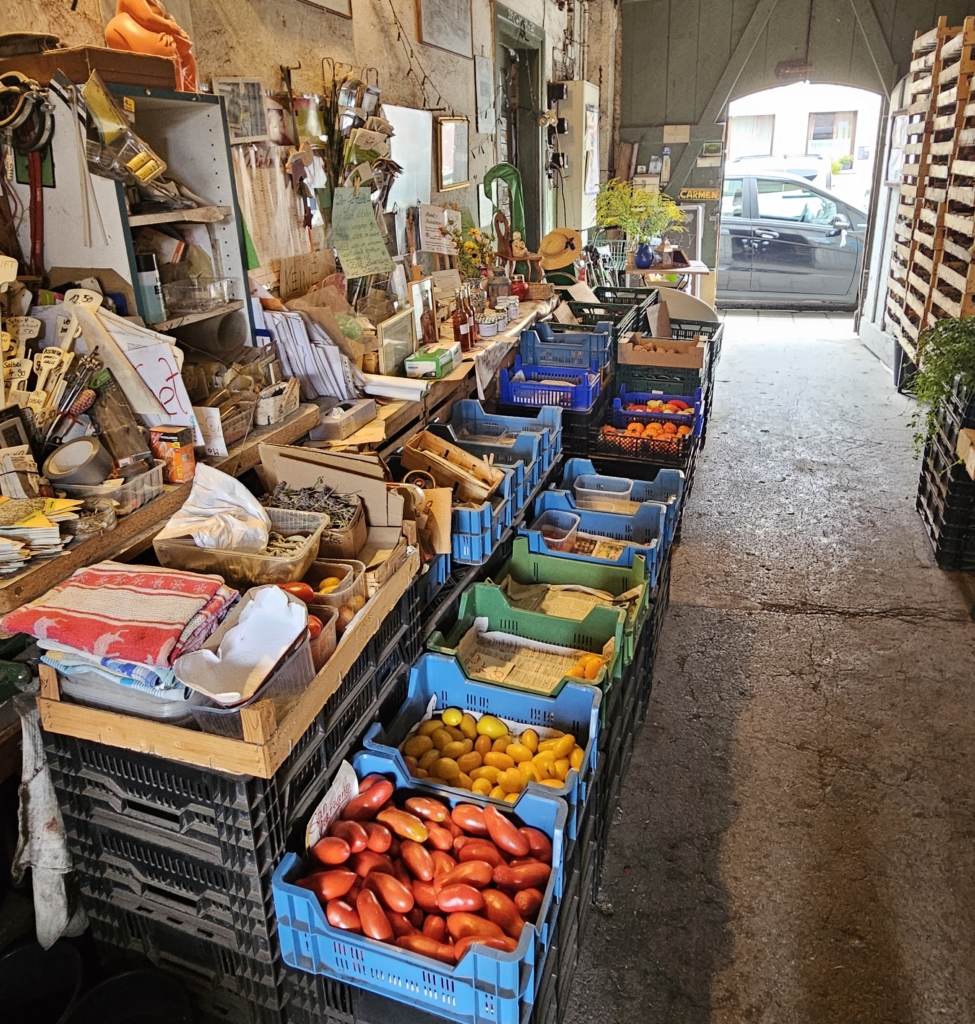
Once we arrived in Bamberg, we first explored one of its three unique historic districts: The Gärtnerstadt. As we passed a garden, a woman waved us inside. We were invited to take a tour of the entire garden, which surprised us with its size. Before us stretched a vast expanse filled with cultivated plants. There were bell peppers and tomatoes, strawberries and herbs.
An employee at the Hofstadt Garden told us that the farm has been in operation since the 16th century and that it covers 4,500 square metres. However, during our conversation, it also became clear that it is becoming increasingly difficult to keep the garden running due to a lack of support and customers. More and more locals are shopping at stores or online, whereas tourists are the ones who appreciate the work and tradition, she said. Afterwards, we stocked up on vegetables and made our way to the World Heritage Centre.
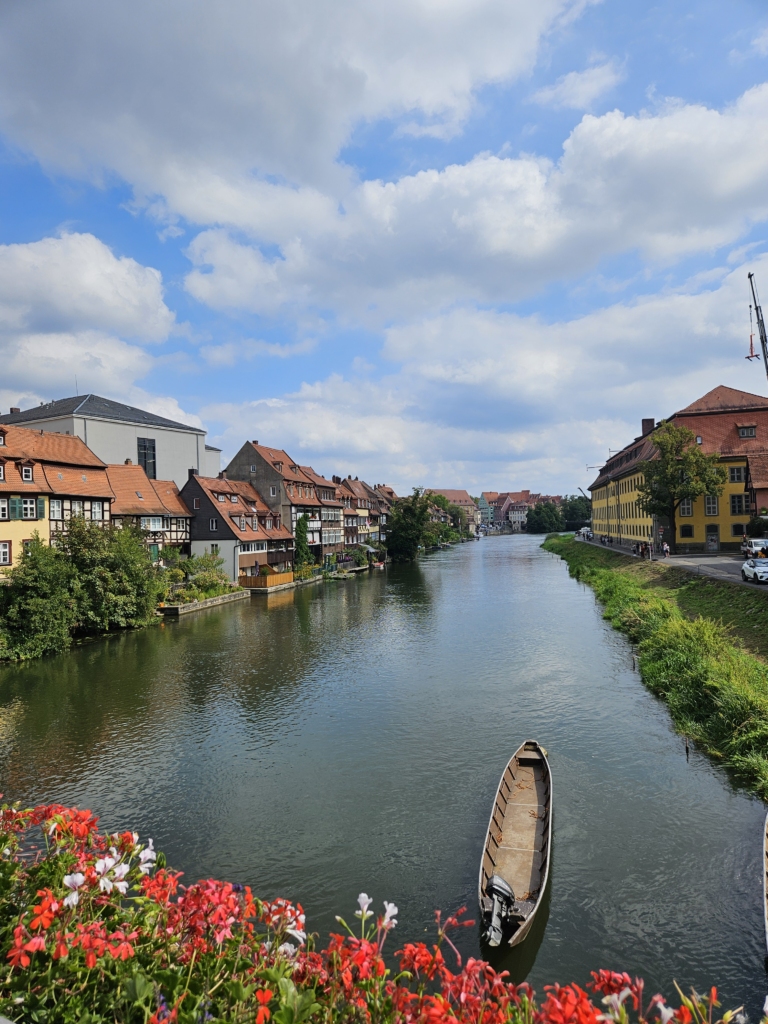
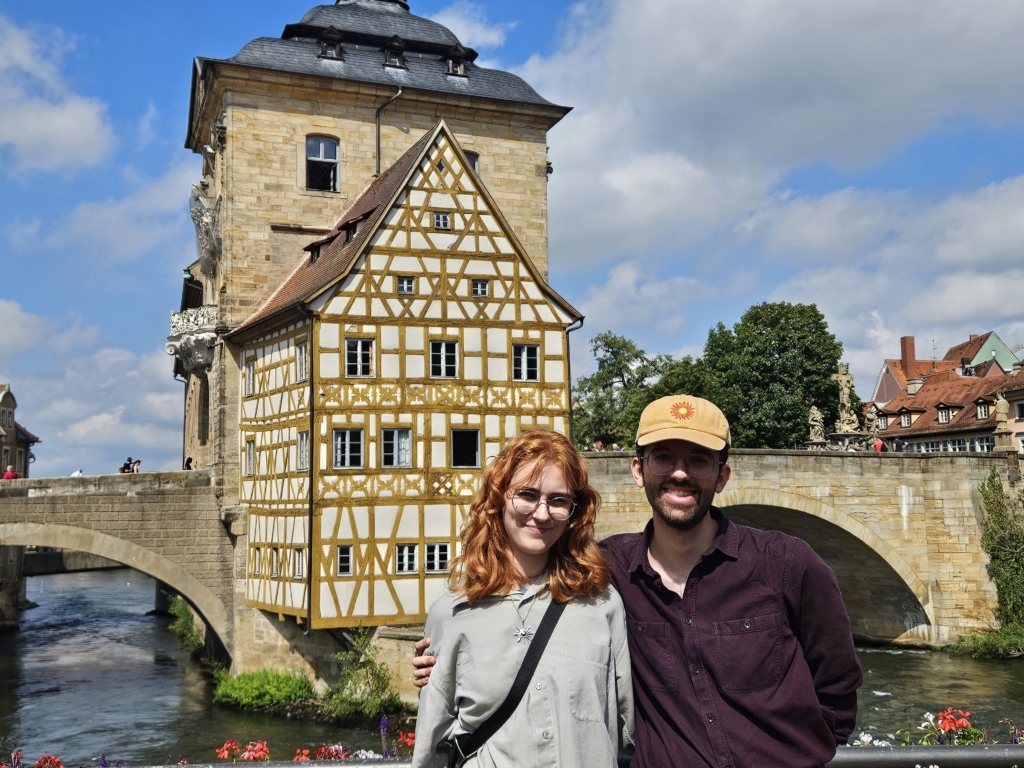
We were warmly welcomed there by Simona, Rabea and Maurice. We discussed how places like Bamberg can remain habitable and the challenges involved in preserving the gardeners’ way of life in the Gärtnerstadt district. We also learnt about the differences and unique features of the three historic districts. In the Gärtnerstadt, vegetables have been grown by hand and sold for many centuries. The Inselstadt, home to the old town hall, was the seat of the middle class, while the Bergstadt was the seat of the church and the powerful. All three districts are part of the UNESCO World Heritage Site, showing the city’s well-preserved early medieval structure.
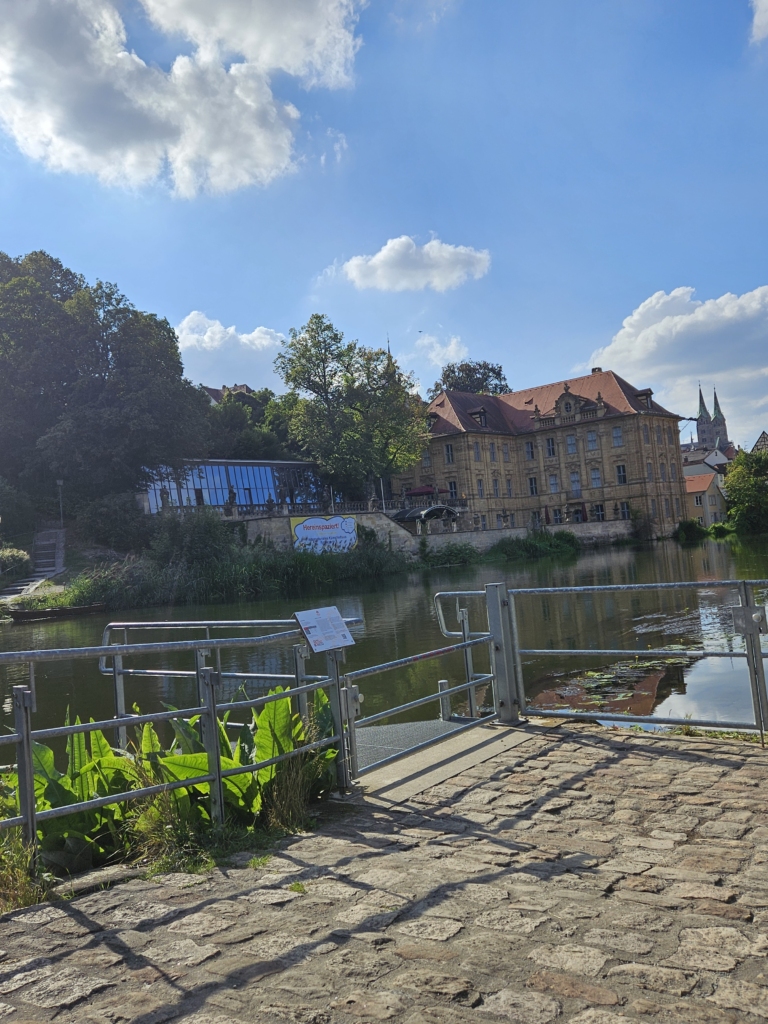
Maurice and Rabea’s favourite places to hang out were the recreational area in the Hain, the many beer cellars that serve as popular gathering places for locals and the party district of Sandstraße, including the Schlenkerla, where plenty of Rauchbier is drunk. They also mentioned ‘Am Kranen’ — a centrally located spot along the Regnitz where people often gather.
Later, we met Sophia, who moved to Bamberg for university. She said that the city is a great place to live, partly because of the university, which brings the city to life, and partly because of the nearby nature, such as the Hain and the Regnitz River, which is perfect for swimming or for people to gather in the summer. She also mentioned the vibrant pub culture on Sandstraße, as well as the concert hall, which is a popular spot for sports activities such as spike ball and volleyball.
Everyone highlighted the city’s compact size, diversity and proximity to nature in the Hain and along the Regnitz River as particularly appealing aspects of city life, as well as the lively beer cellar and pub culture. The beautiful architecture is also highly valued here.
After getting a sense of the city from the locals, we wanted to explore it a bit more on our own.
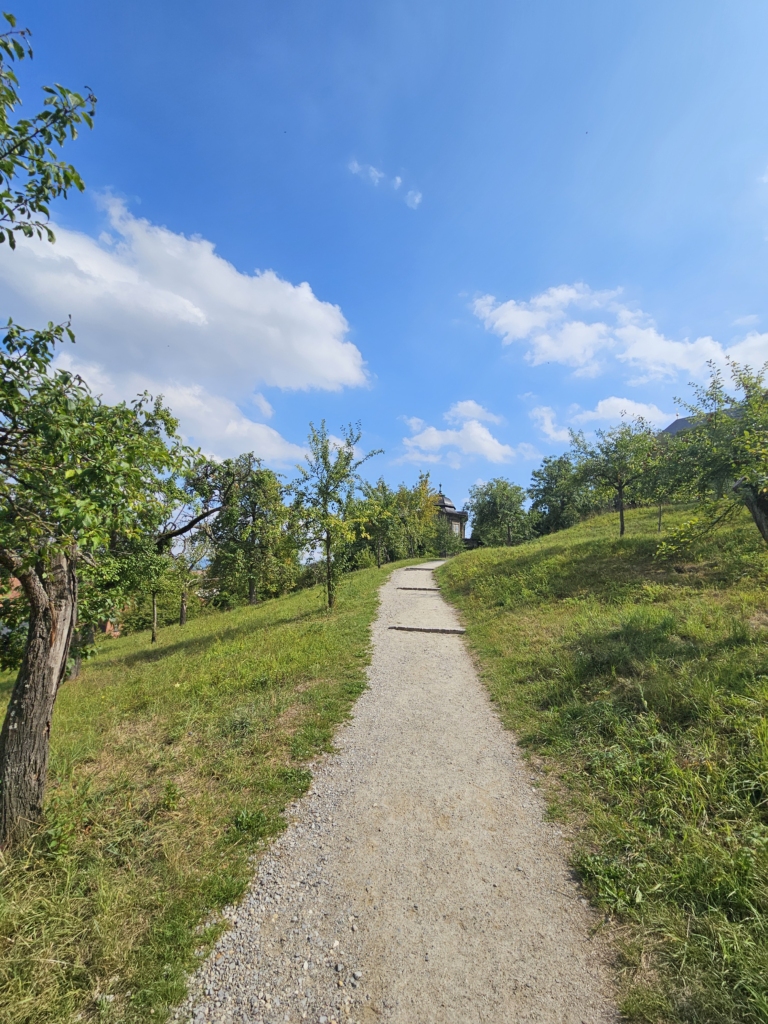
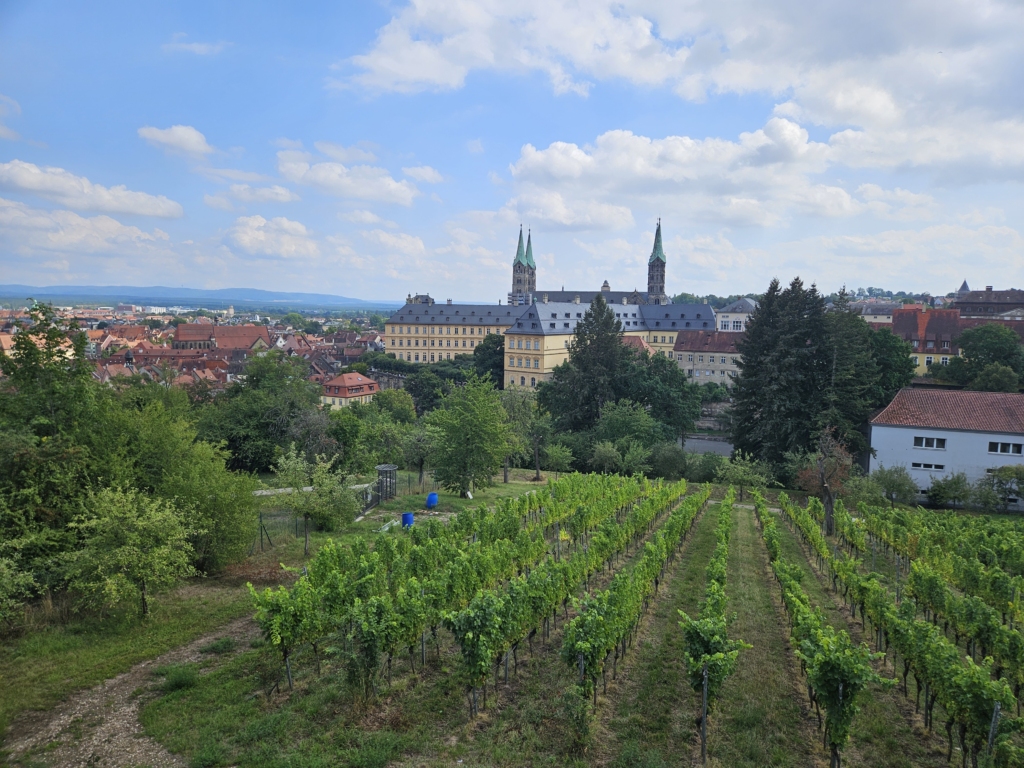
We first walked through the Inselstadt, and then walked up to the St. Michael monastery complex through an orchard meadow, which was quite a workout! Once we reached the top, we were rewarded with a beautiful view of the city.
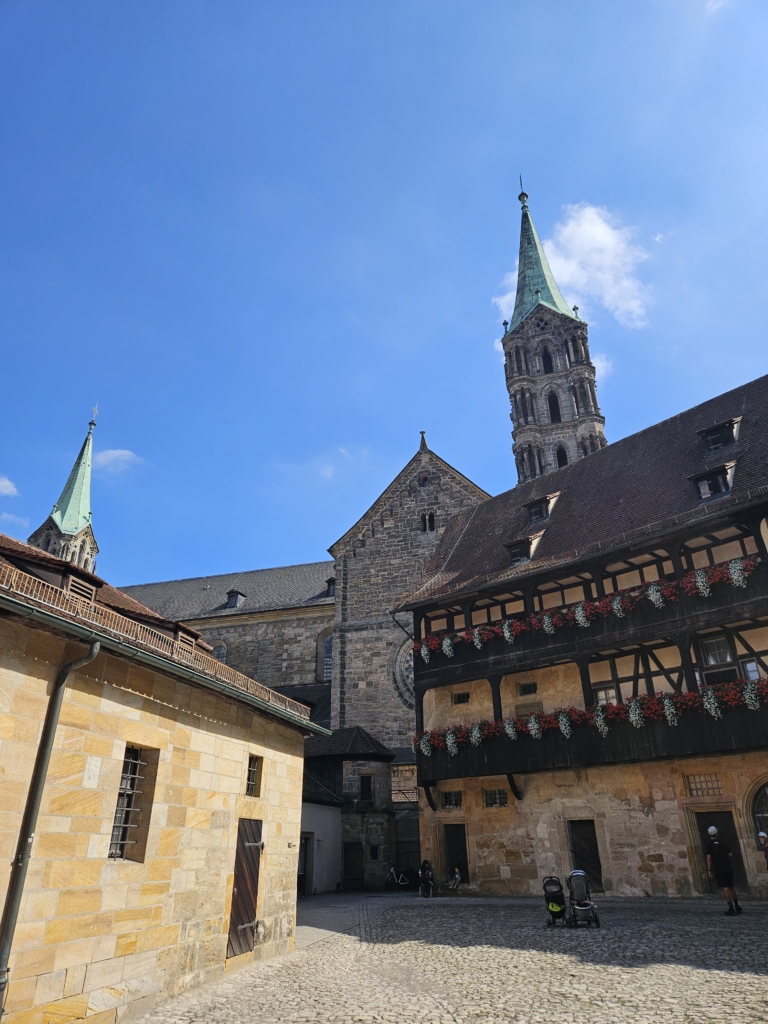
Unfortunately, due to construction work, we weren’t able to go inside the church. On our way back, we walked to Bamberg Cathedral and stopped for a quick bite to eat.
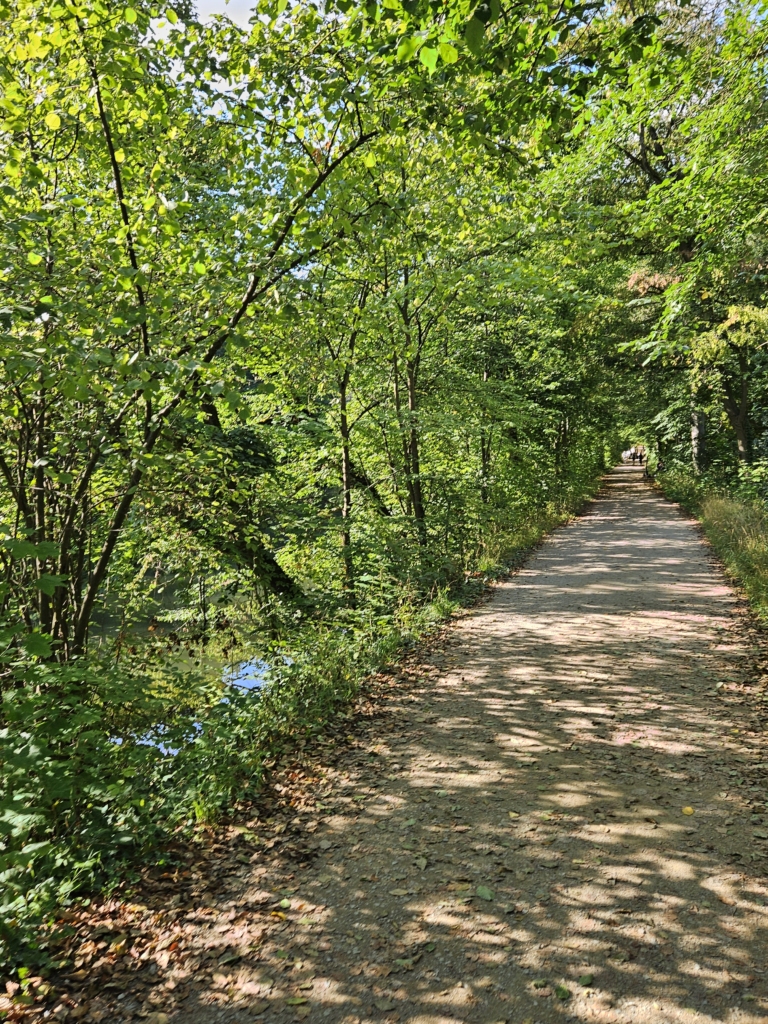
For our sketch and watch session, we started searching for a place recommended by the locals, where people like to spend their free time. After Maurice, Rabea and Sophia had recommended the Hain to us as a special gathering place and recreational spot, we set off along the Regnitz River to find it. The Hain was beautiful, wooded, and perfect for a walk. However, as we explored further, we didn’t see many people. Only a few people were swimming here and there, so we headed back.
Our next idea was to visit a beer cellar. To reach it, we spoke to the ferryman, who unfortunately informed us that the next two beer cellars were closed. During the conversation, he also shared his thoughts on the city. For him, too, nature and the Regnitz River play a very important role in his daily life. He also mentioned the Schlenkerla, talking about its Rauchbier culture as a place for people to gather.
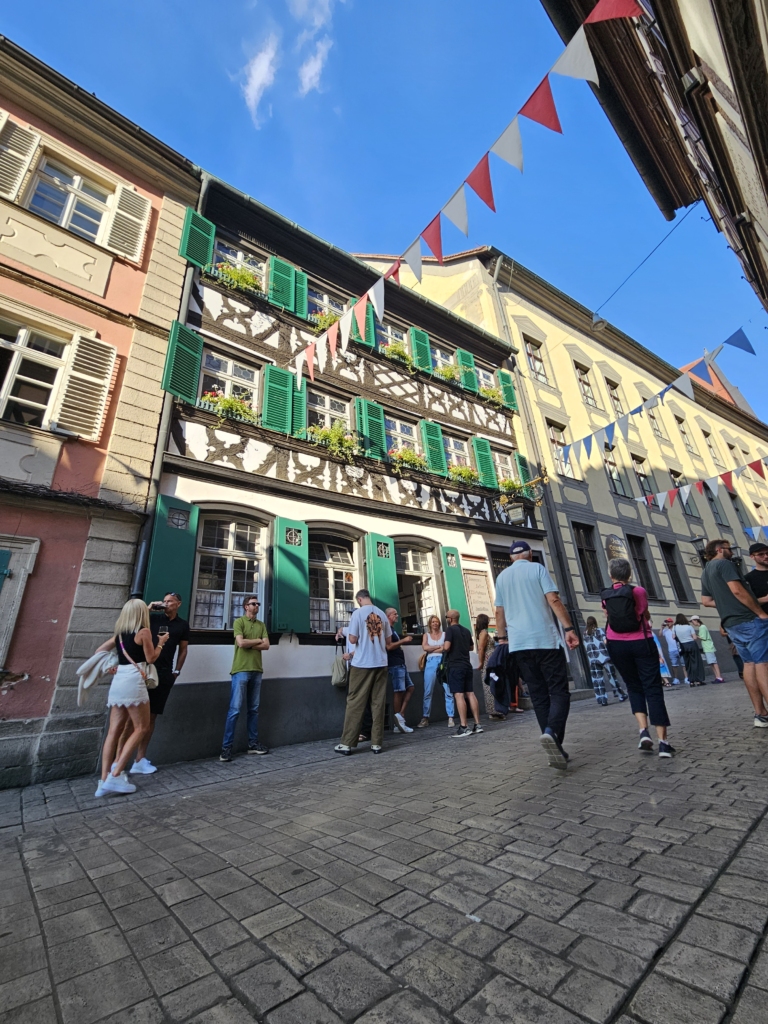
After searching for a long time, we finally arrived at the Schlenkerla, where lots of people were already standing outside with a beer in hand. That sealed the deal for us!
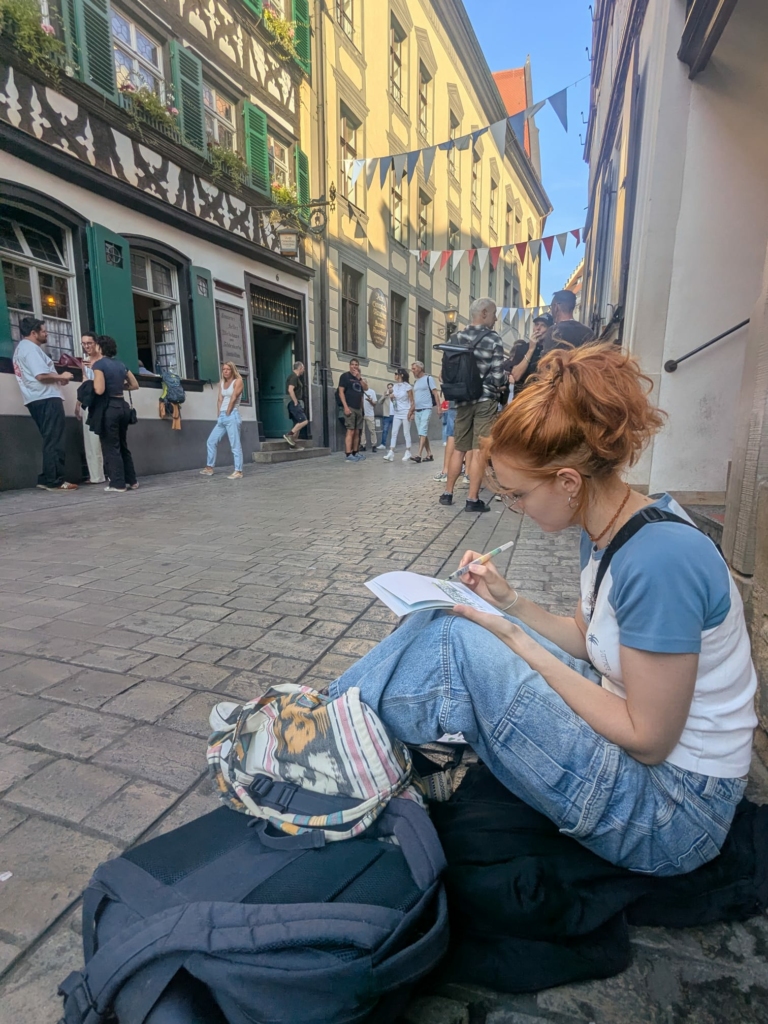
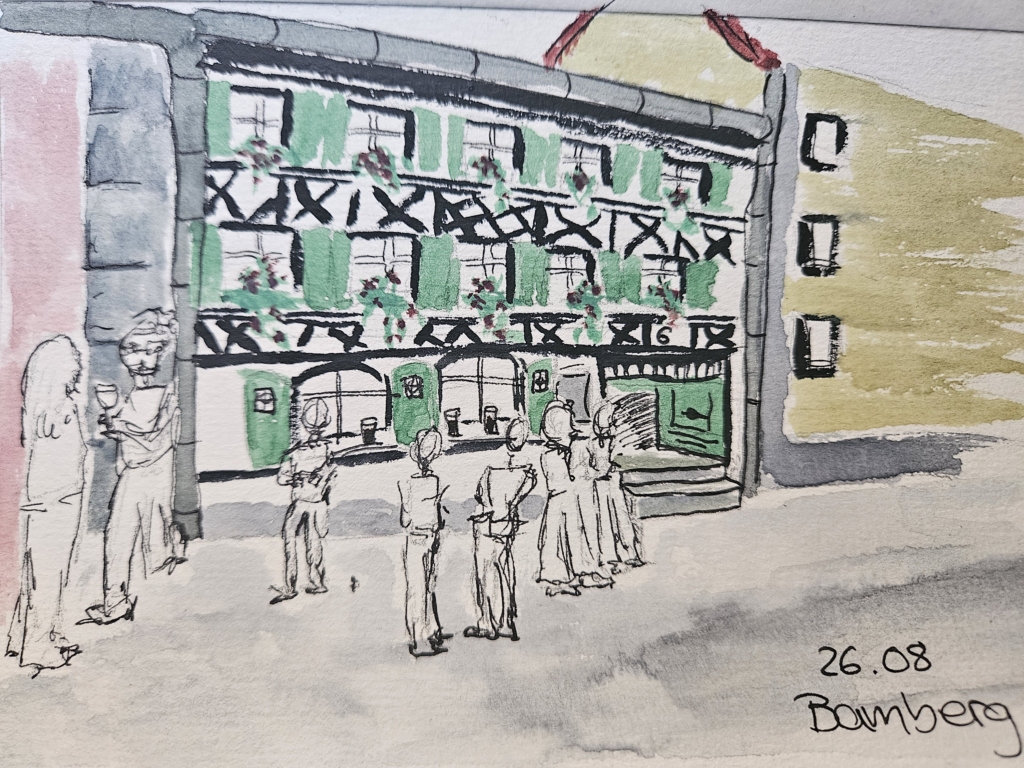
1. We’re sitting on the floor of Bamberg’s inner-city pedestrian zone with our rain jackets spread out beneath us. This exposed – and somewhat uncomfortable – position does, however, give us a perfect view of the hustle and bustle outside the ‘Schlenkerla’ pub.
2. At first, I’m puzzled: Guests enter the pub and leave again shortly afterwards. They deliberately stand in front of the pub and drink Rauchbier – a dark brown beer with a smoky flavour. The Schlenkerla’s windowsills become makeshift bar counters: people set their drinks down, chat with friends and strike up conversations with other guests. Although people stand back to back, it doesn’t feel cramped – quite the opposite: The street comes to life and, whilst enjoying the evening warmth, relaxed and spontaneous interactions arise.
3. One family in particular caught my attention: a father, a mother and two sons in their late 20s, all standing in front of the green-façaded pub with a Rauchbier in hand, chatting. After every sip, the father sets his glass down on the windowsill and tries several times, somewhat awkwardly, to rest his elbow casually on it – but it’s a little too high for him.
4. Shortly afterwards, a small dog on a lead walks past the Schlenkerla. As it passes, the dog barks at several of the guests. The father watches this unfold and starts barking back: woof, woof, woof. The dog’s owner is clearly surprised by this – as am I. The older son laughs heartily with his father, whilst the younger son bashfully holds his hand over his face – the dog continues to bark, undeterred. Later, another woman walks past them. They recognise her and have a long chat with her, while all the family members take turns stroking the dog, who is perched on his owner’s arm.
5. I’m amazed at the speed with which the older son downs his beers. In the end, I count four Rauchbiers, which he gets one after the other from the Schlenkerla. Consequently, his mood grows increasingly cheerful: he gives his brother a hug, clinks glasses with those around him and strikes up a conversation with a passing photographer who takes a picture of him. I get the impression that he’s neither extremely drunk nor a nuisance to those around him – he embodies the relaxed atmosphere outside the Schlenkerla perfectly.
6. A few moments after the family moves their ‘table’ to join another group, two young students take their seats. One of them casually hooks his shoulder bag onto a window hook – he’s clearly done this before. Both men are wearing baggy trousers, loose-fitting shirts and jewellery. As one of them is dazzled by the sunset, the other lends him his cap without a moment’s hesitation. I cannot make out what they are saying, but the accompanying gestures of one of the men suggest that they are discussing an interesting topic: he claps his hands, flexes his upper arms demonstratively and pulls several funny faces.
7. A middle-aged couple are standing right by the front door. They are chatting at length, occasionally exchanging kisses and hugs. They are clearly at ease and take up the space as if it were their own – whilst he drinks a Rauchbier and she drinks a glass of white wine. I notice that it is only women who choose white wine instead of beer. This also applies to two middle-aged women standing by the farthest window, who are chatting about what’s happening in the street.
8. A little further away, a young couple is leaning against the wall. They are sharing a Rauchbier rather unevenly: the man drinks most of it and occasionally pushes the glass into his girlfriend’s hand; she takes a small sip in passing and hands it back to him. She is much more focused on the conversation, showing her boyfriend several photos on her mobile phone and briefly pulling him into a side alley to draw his attention to something with her outstretched index finger. Her boyfriend’s attention, meanwhile, is clearly divided more evenly – between his girlfriend and the Rauchbier.
9. Towards the end of my observations, an elderly couple arrive at the Schlenkerla. While the woman went inside, the man waits in his wheelchair outside. Even before she comes out, he begins filming the entrance with his mobile phone. When she returns with two Rauchbiers in her hand, she notices his phone, poses briefly with a laugh, before giving him a beer and a peck on the cheek.
10. In a side alley, a couple in their late twenties are drinking a Weißbier – not a Rauchbier! Their large rucksacks are leaning against the wall. The man strikes up a conversation with an older man about his T-shirt. This marks the start of a Franconian monologue, in which the older man first explains that he had the logo of his own workshop printed on the T-shirt, before going to recount his entire life story. I’m surprised that the couple listens to him with interest, asking follow-up questions.
11. Amongst the many guests, there are certainly tourists outside the Schlenkerla too: An English-speaking South Asian man asks his wife to take a photo of him with a Rauchbier, whereupon she directs him into a good position. Another large group of men clink glasses repeatedly – they have small backpacks on their backs or between their legs. A day trip to Schlenkerla?
The street in front of the Schlenkerla becomes one big open-air bar for everyone. You can chat with your friends or strike up the sort of conversations you would have in a pub with people at ‘neighbouring tables’ or passers-by. The outdoor setting – and no doubt the Rauchbier too – creates a lively atmosphere where, in fine weather, you can forget your worries, get caught up in conversation and make new friends.
After spending a day in Bamberg, we have to say that it is a beautiful, compact and nature-oriented city with a lively atmosphere. The high quality of life was especially seen in the vibrant pub culture, as observed at Schlenkerla, where locals mingled together.