Skip to content Skip to sidebar Skip to footer

Split

Written by Jan-Gottfried

5–7 minutes

In Escaping the Sun, Leonie (28) and Jan-Gottfried (27) seek to find out how shade has historically been organised as a collective resource, and how third places allow young people to gather freely in the city.

Living with and managing type 1 diabetes since childhood, they bring a personal as well as an academic stake to the question of who public spaces are actually designed for. Together they embark on a journey to Ohrid, Kotor, Mostar and Split to ask people: Got shade?

Burn after reading

The bus ride from Kotor to Split took five hours. On the last kilometres along the coast, we witnessed the aftermath of the August wildfires near Omiš. Croatia’s fire chief Slavko Tucaković described the blaze as “one of the worst” in the country’s history. Around 1,200 residents and tourists were evacuated, while 286 firefighters, 90 fire engines and four aircraft battled the flames.

It was a strong fire, it swept everything in its way … there has been huge material damage.

Tucaković told Reuters

Scientists link the hot weather and drought to human-made global heating, which created ideal conditions for wildfires across Europe this summer. The world is burning, quite literally. I will never get used to the sight of scorched earth.

The Romans did it first

Just like Ohrid and Kotor, Split’s Old Town was inscribed as a World Heritage Site in 1979. Its origin story begins with a retirement plan. Diocletian, who ruled the Roman Empire from 284 to 305, picked the southern shore of the peninsula for his palace, not far from Salona, the Dalmatian provincial capital where he was born. His birth name was Diokles, a Greek name he swapped for the Latin Diocletianus once the army had hailed him emperor. He inherited an empire worn down by war and set about steadying it, reforming politics, the military and the economy. In 293 he went a step further and shared power among four rulers, the so-called tetrarchy. A system where retiring rulers needed places for them to retire to. In 305 Diocletian stepped down, left Nicomedia and moved into his still unfinished palace, where he lived out his days, until his death in 316.

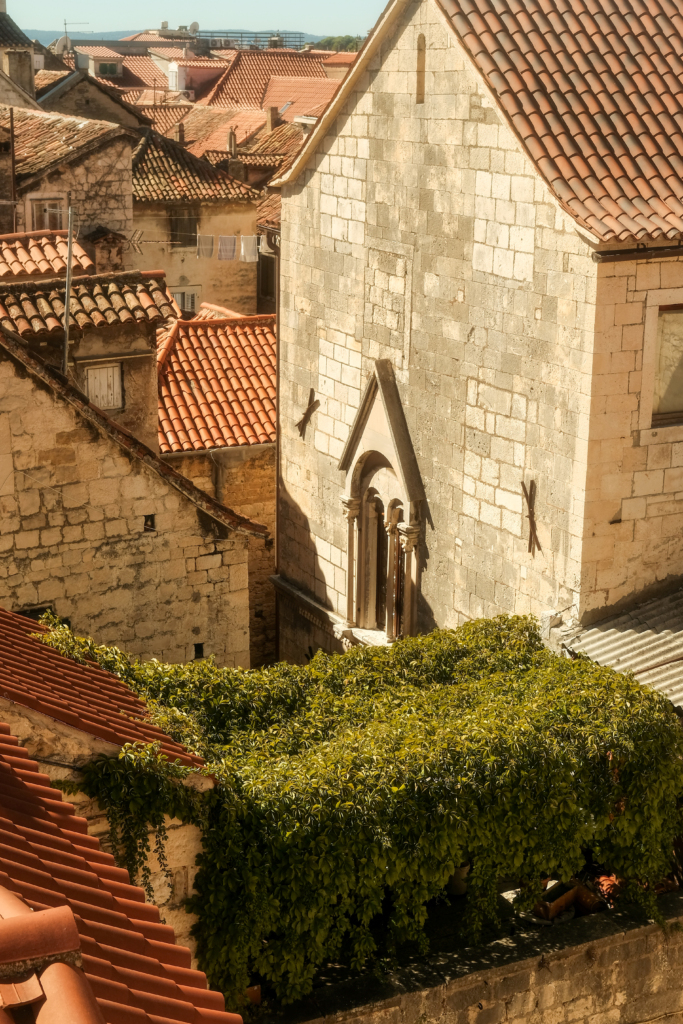
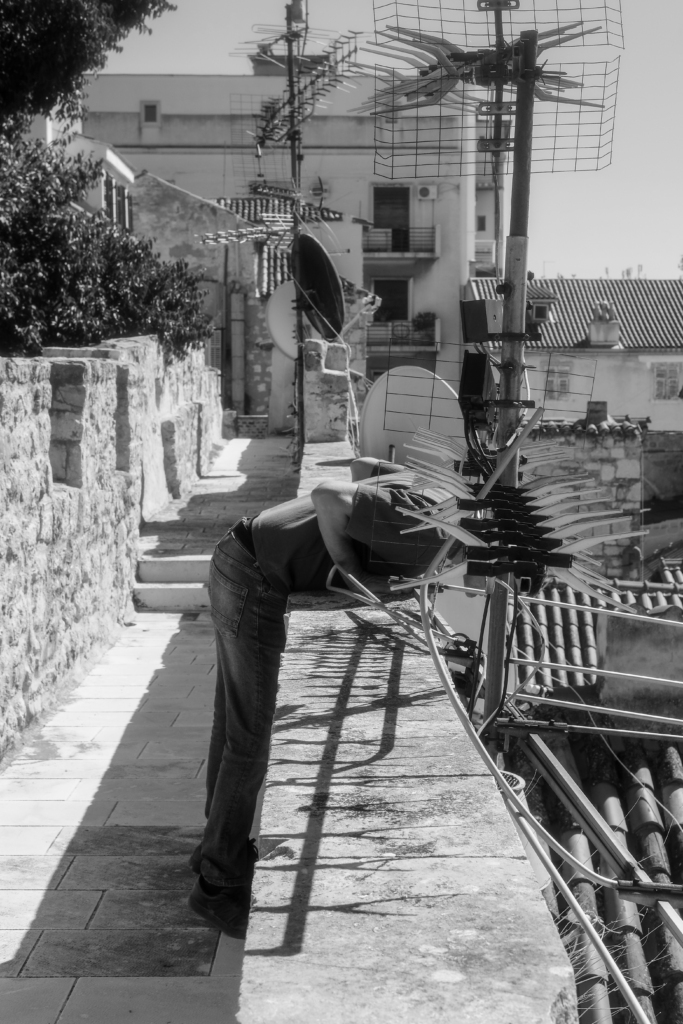
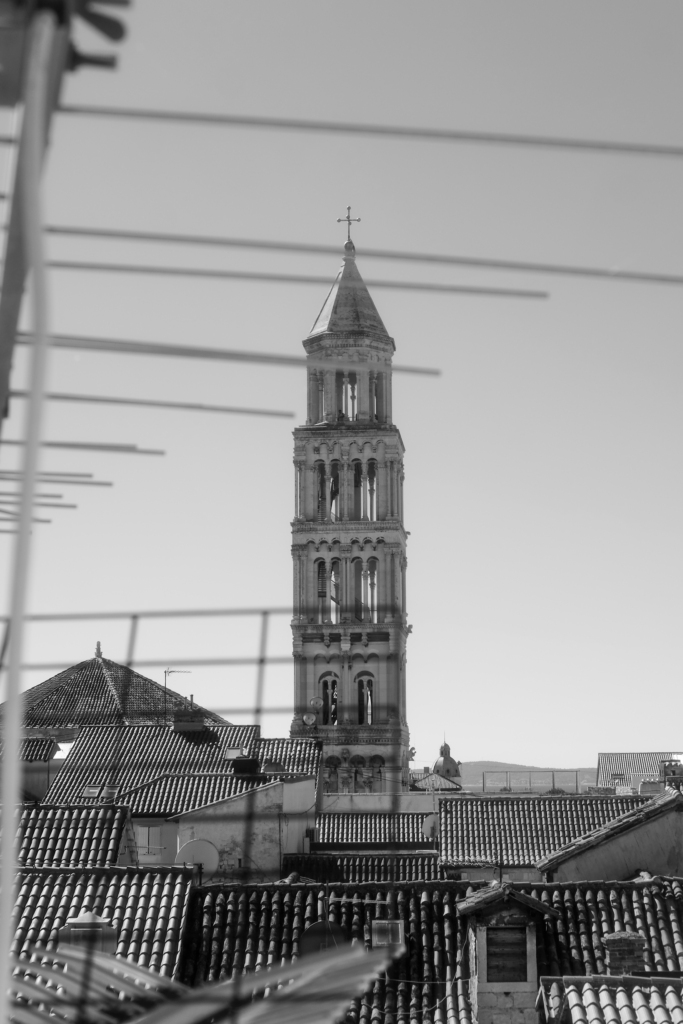
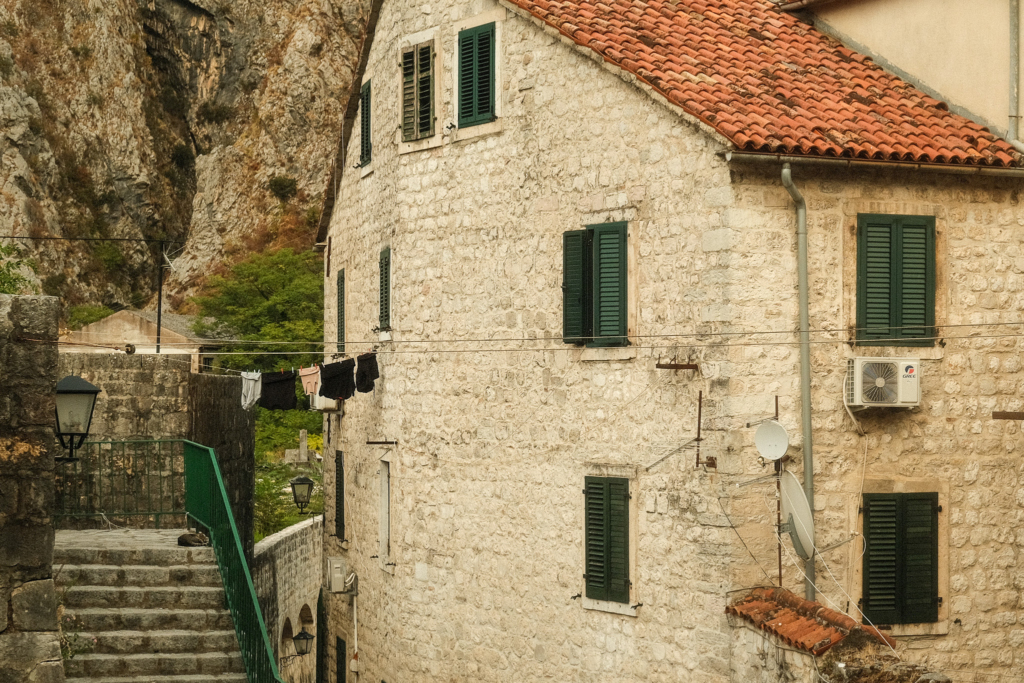
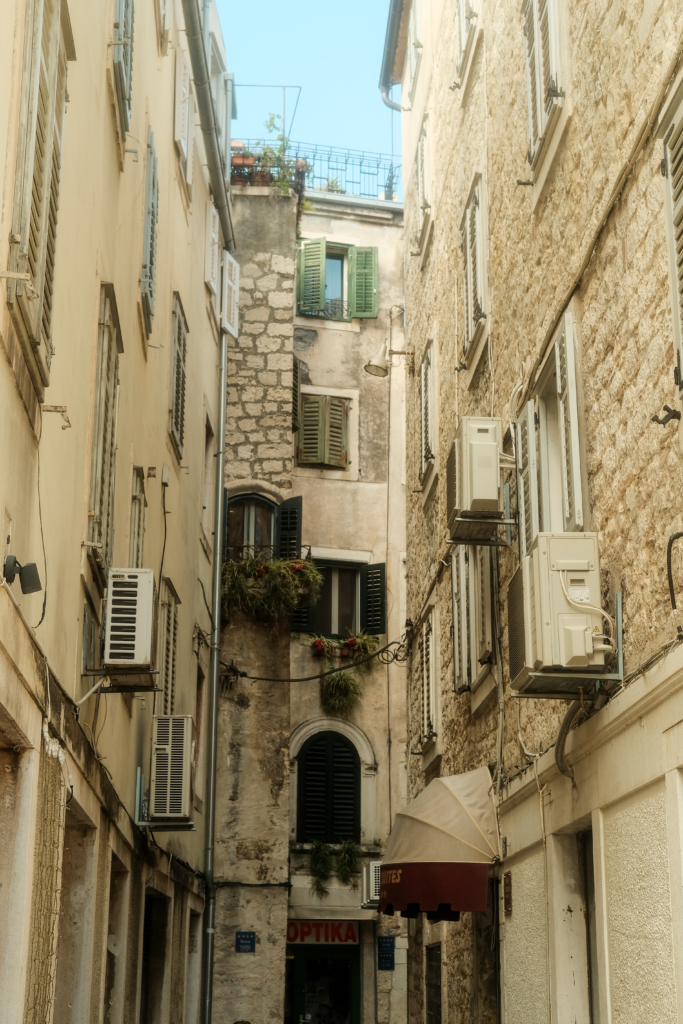
Since its construction, the city has been continuously inhabited. Buildings were added, altered and patched together from existing and new material. Today’s ground level is not the Roman one. The Middle Ages built on top of the Romans, and the Renaissance built on top of them. Modern times squeezed AC units in between. The only additions on top, so far, are satellite dishes. Sometimes you can still spot the changing styles from floor to floor.
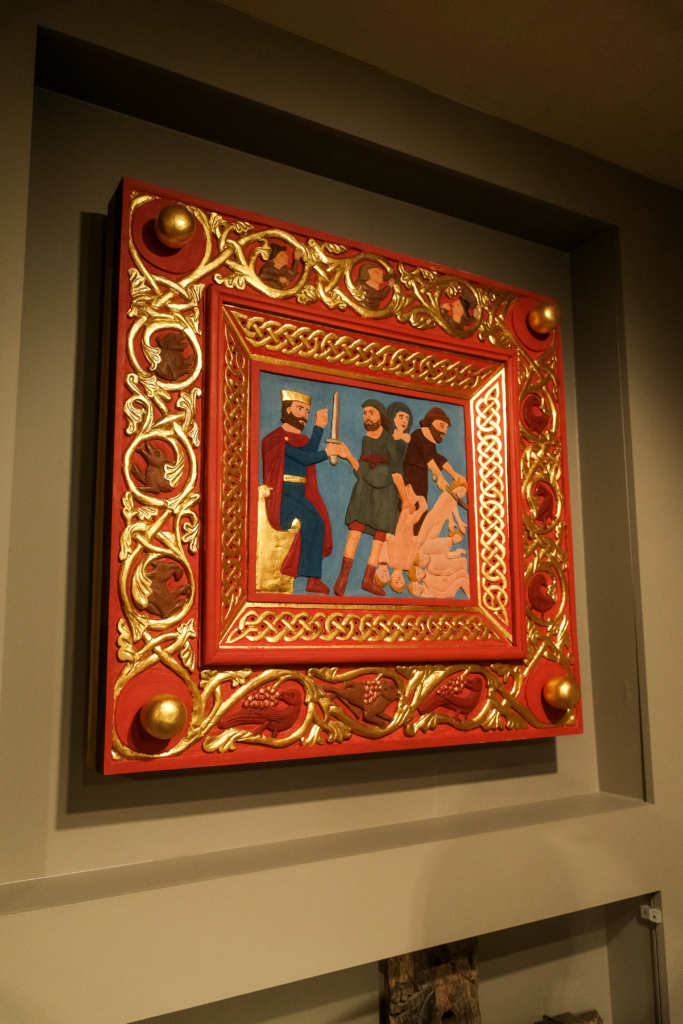
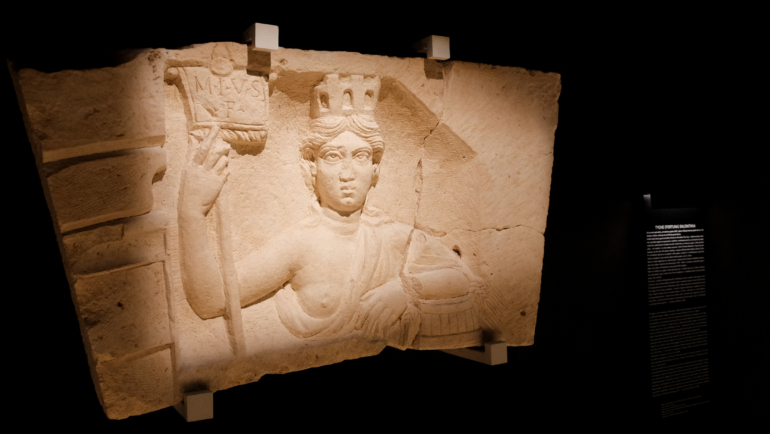
Transformational impacts

On our walk through the Old Town, we asked Jasna, Head of the Old Town Core Department, the question that had followed us from Ohrid to Kotor: does the architecture of a World Heritage city hold answers to modern challenges? She didn’t need long to think about it. “If it’s hot, it’s hot. The duration is the problem.” Still, the old builders got a few things right. The narrow streets between the pale Brač limestone houses cast shade for most of the day, and at dawn the sea breeze creeps through the alleys as it has done for centuries. No air conditioning required, at least in theory. In practice, you can see how many units have been squeezed in between anyway.

The scientific side is clear: depaving and planting greenery is one of the most effective ways to cool populated areas. Outside the walls, a newly created promenade already offers shade. Inside, the problem is the same as in Kotor: there is simply no space. Every tree needs a place to stand. In a Roman palace turned city, someone has to decide which use of space wins, and that is rarely a simple decision. Money plays its part as well. In a city that lives off visitors, restaurants earn better margins than cafés and ice cream shops, so restaurants are what you find. At the same time, the city is not only watching things change. Residents receive funds to repair or replace things like windows, so that the historic cityscape stays intact. It is an ongoing process of small decisions.

And remember the changing winds from Kotor? Jasna brought them up again. The Bora is the cold wind from the north, the Jugo the one from the south, bringing rain.
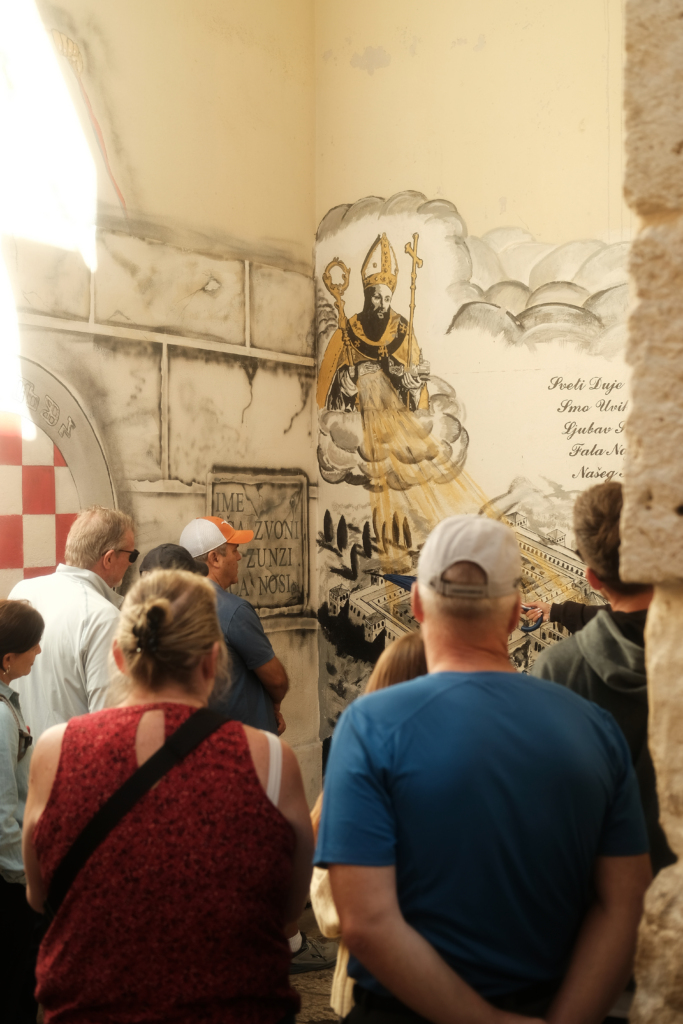
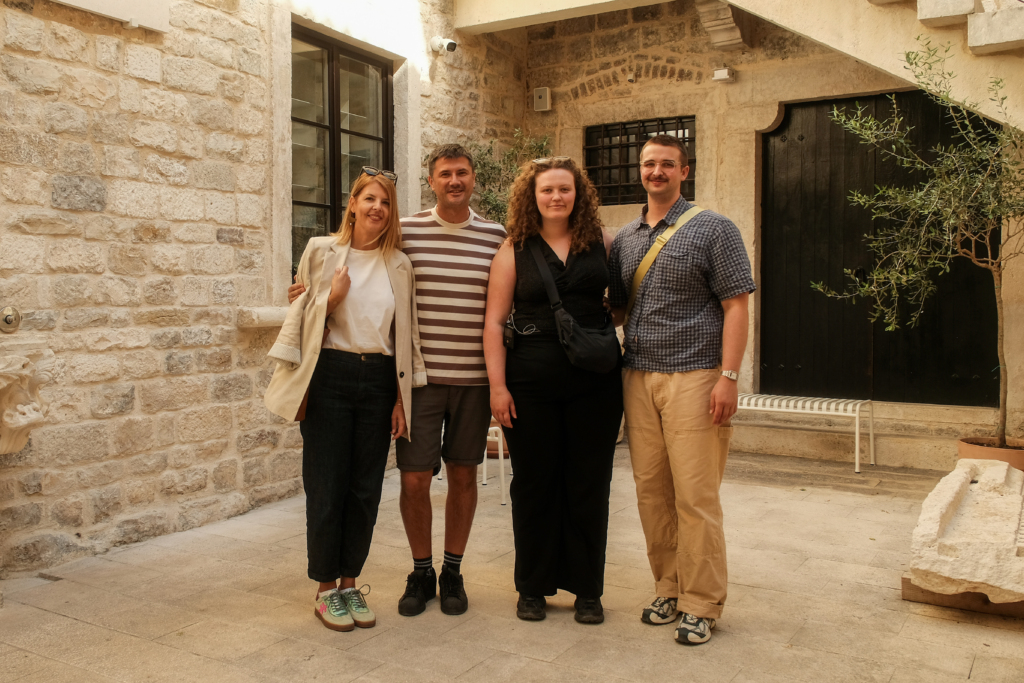
Jasna Jerkov, Nebojša Cingeli, Leonie Rinze and Jan-Gottfried Esser.

Nebojša, the archaeologist

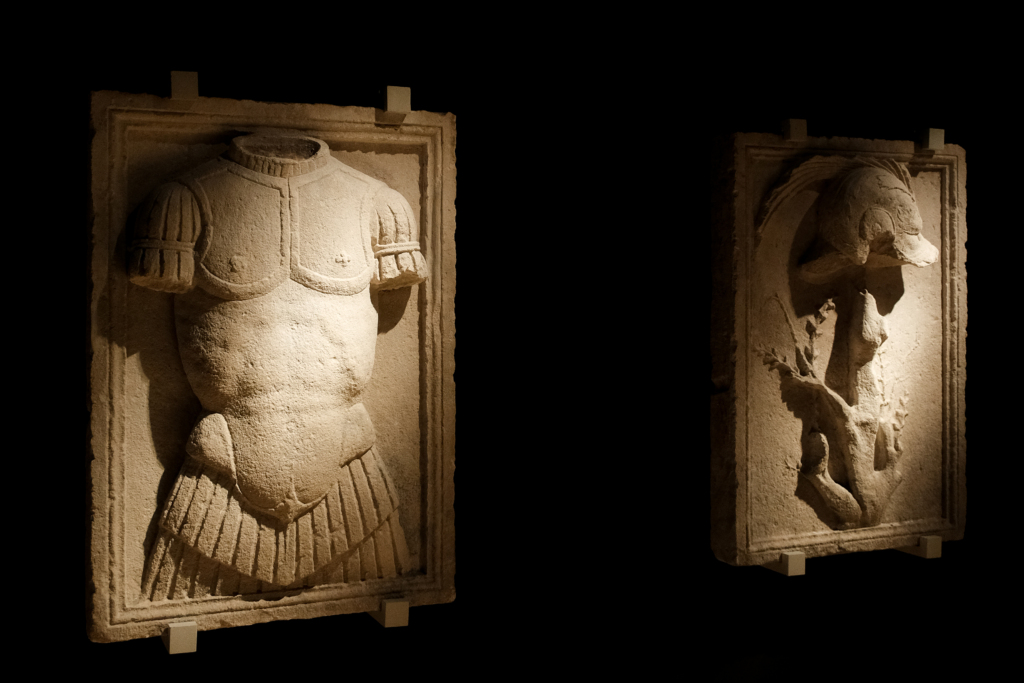
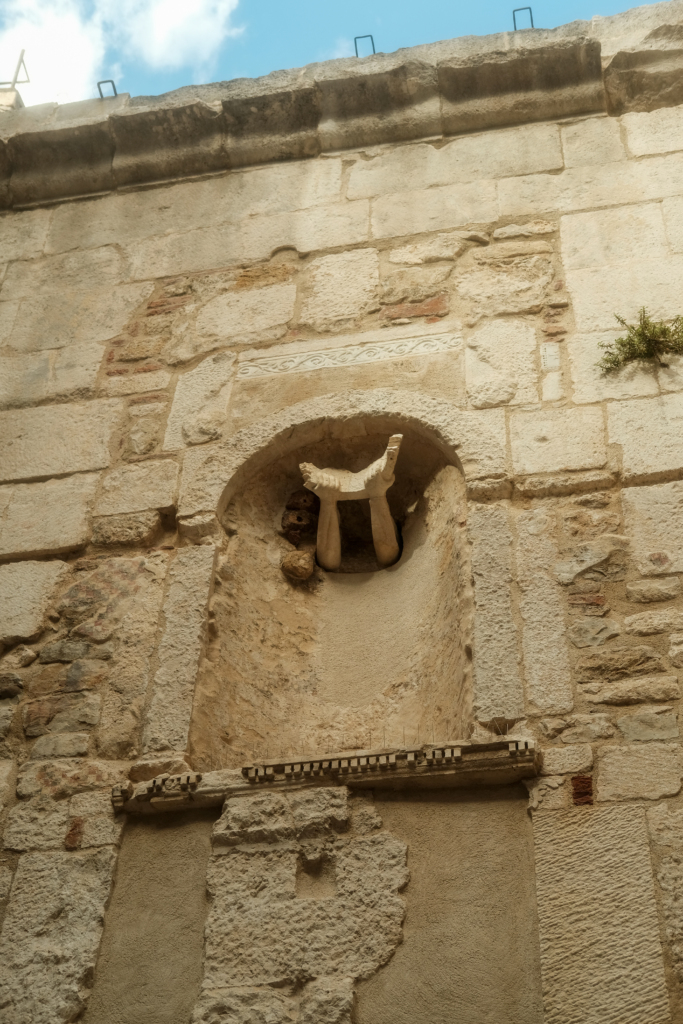
The more you know, the more you see. That sentence stayed with us after the tour with Nebojša, an archaeologist and curator at the Split City Museum. On our way to the entrance to the North Wall, he pointed out a small figurehead. Nobody can say for sure what it meant or where it came from. Its original meaning is lost, but at some point it had a purpose for someone. This realisation made us, two history buffs, smile, because part of the conservation job is keeping the materiality, the experience, even when the story stays incomplete.

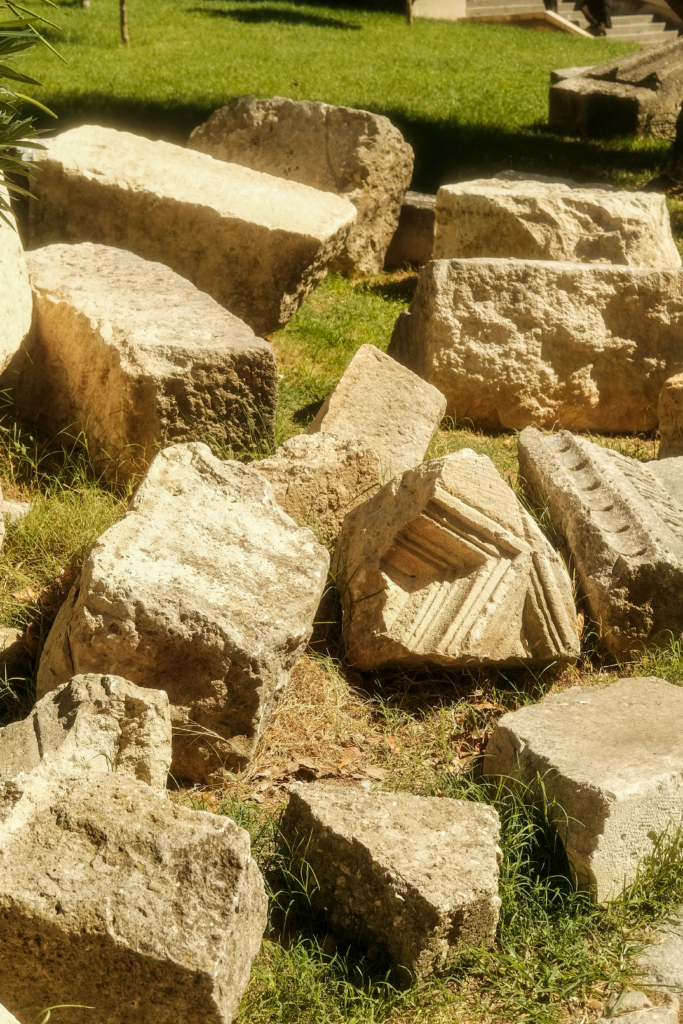
We walked through the maze of cafés and stopped at an old, tired-looking wall. The usually smooth limestone was rough and broken. He explained that fire does that.

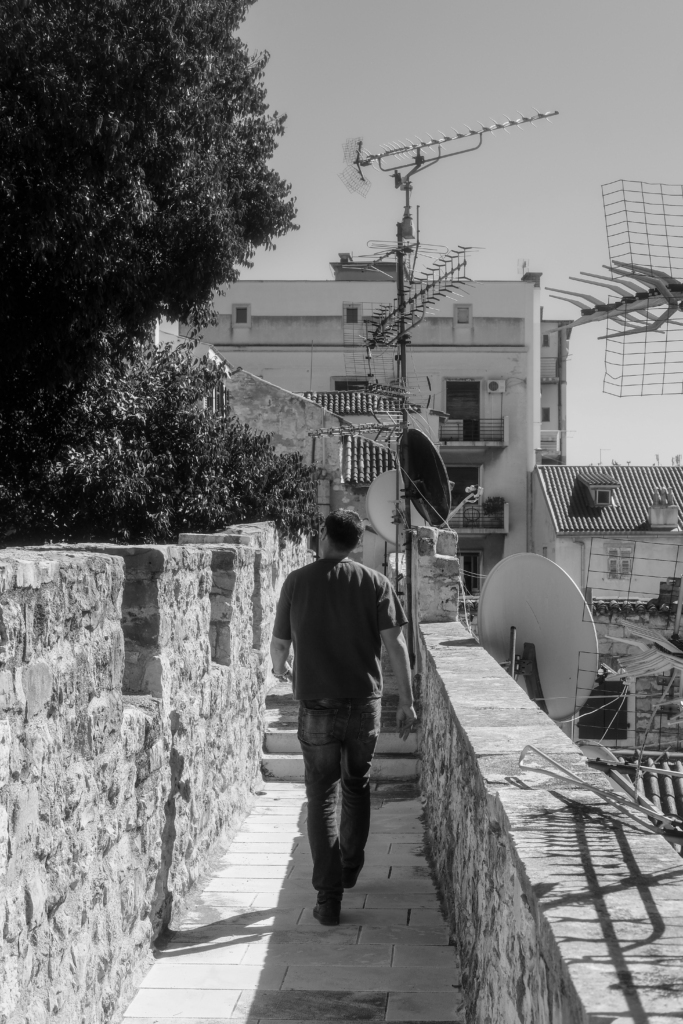
Much of the archaeological work in the Old Town took place in the 1970s. One of the preserved towers houses a seminar room, which feels about right for a city that treats its past as a working space. From the top floor of the tower, we accessed the wall itself. Unlike in Kotor, people still live in the historic city centre. Walking along the wall, we could look down on their homes. Between cafés, ice cream parlours, restaurants and small boutiques with high prices, it is easy to miss them. The city is trying to bring young people and artists back, and the museum plays its part: it has rooms for workshops and lectures. An extension with additional rooms and exhibition space is planned. I was able to get a brief glimpse of the plans. It will be modern and green. A true third place for the community.
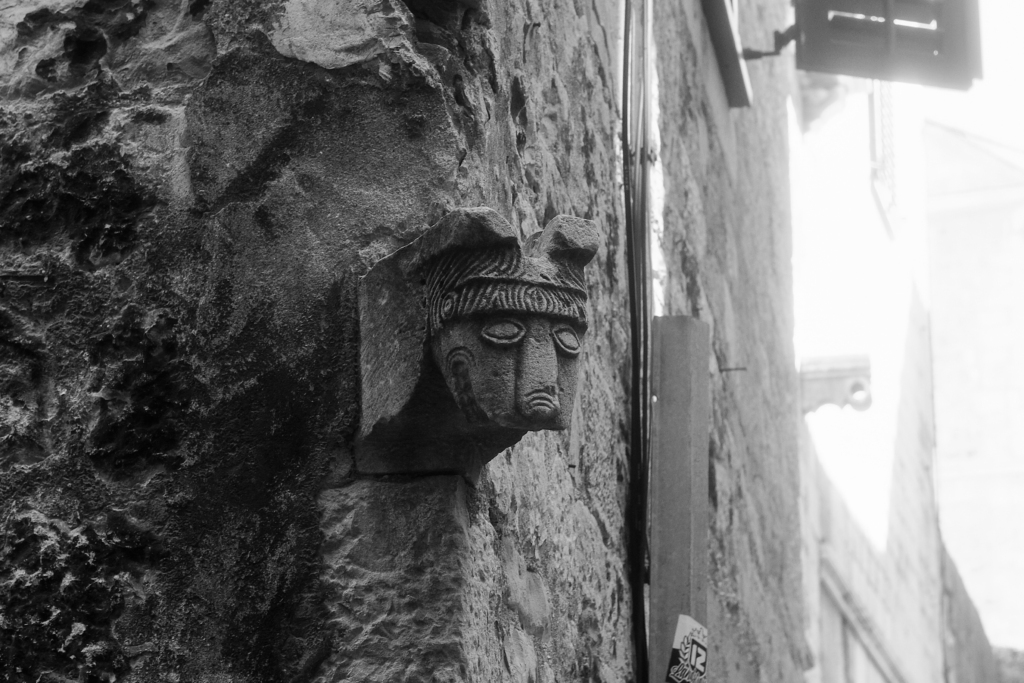
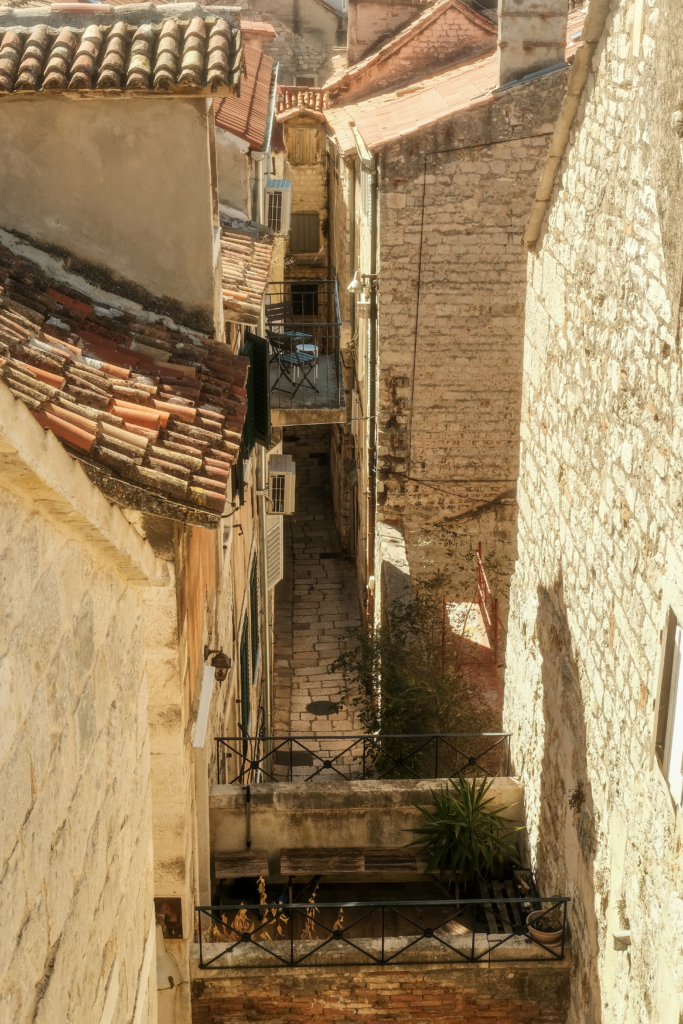
Layer on layer on layer. Every epoch built on the one before it. The wild 1990s left traces of their own: antennas that really ought to go, but tracking down their owners turns out to be harder than taking them down. Air conditioners, cameras and cables are simply what our time adds to the pile. Future archaeologists will have plenty to dig through. What will they think when they realise that we’ve excavated more than we’ve built above ground?

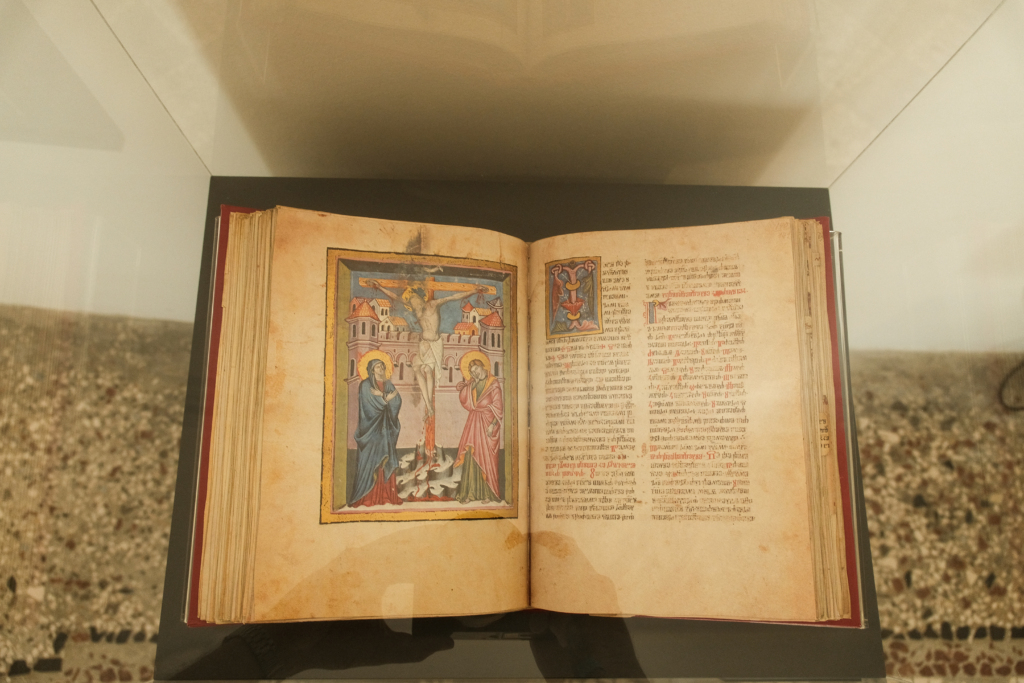
A small plug, then: support your local museum. Everything you hear on the tourist tours is researched and preserved by the museum’s scientists and staff. Split City Museum

“Split is also great for walking,” Nebojša says as we walk back to the centre. And it’s true: the best way to read this city is on foot, just like a legionarii.
Mostar / Mostar

Written by Leonie

5–7 minutes

In Escaping the Sun, Leonie (28) and Jan-Gottfried (27) seek to find out how shade has historically been organised as a collective resource, and how third places allow young people to gather freely in the city.
Living with and managing type 1 diabetes since childhood, they bring a personal as well as an academic stake to the question of who public spaces are actually designed for. Together they embark on a journey to Ohrid, Kotor, Mostar and Split to ask people: Got shade?

Crossing borders

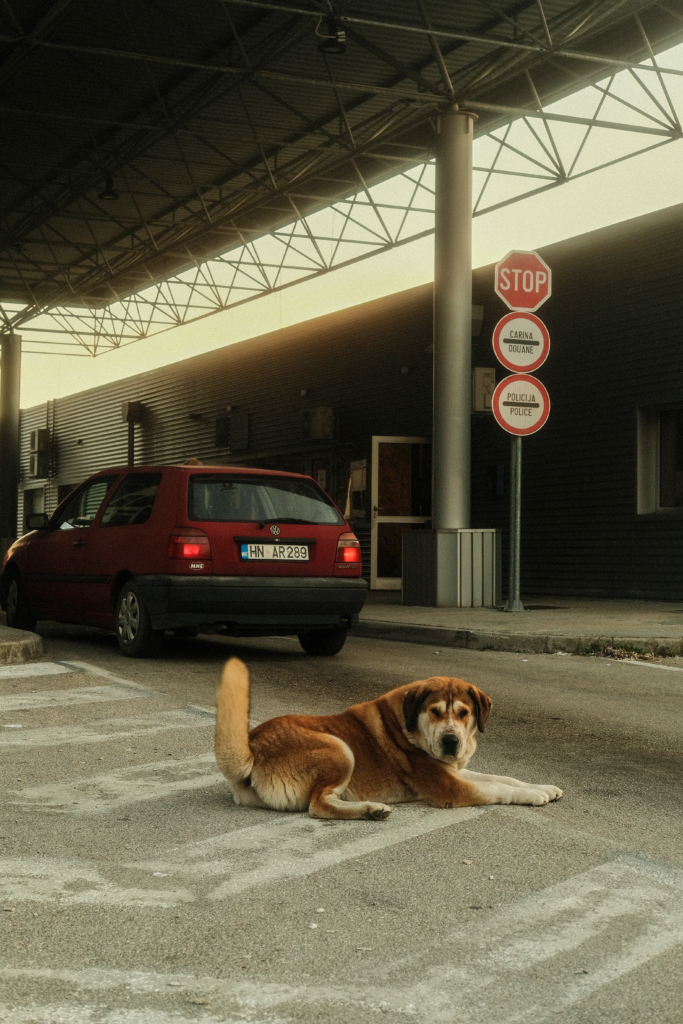
So we got lucky. We were not on the passenger list of the bus. We spiralled a bit because it turned out that we had accidentally booked our bus from Kotor to Mostar for July instead of our actual travel date in September. But the bus driver was very kind and still let us ride with them. It was a stunning scene, travelling along the Bay of Kotor, and taking a ferry. We also made a new friend on the bus: Mohammed from Lebanon. At the border between Montenegro and Bosnia and Herzegovina, a big dog wandering through border control welcomed us to the country.

After a somewhat prolonged bus journey, we arrived in Mostar at 21:00. We checked into our apartment and went out to find some food. A friend of ours, Sammy, was coincidentally in Mostar at the same time, also working on a project. With her recommendation, we found a restaurant that was still open at 22:00.

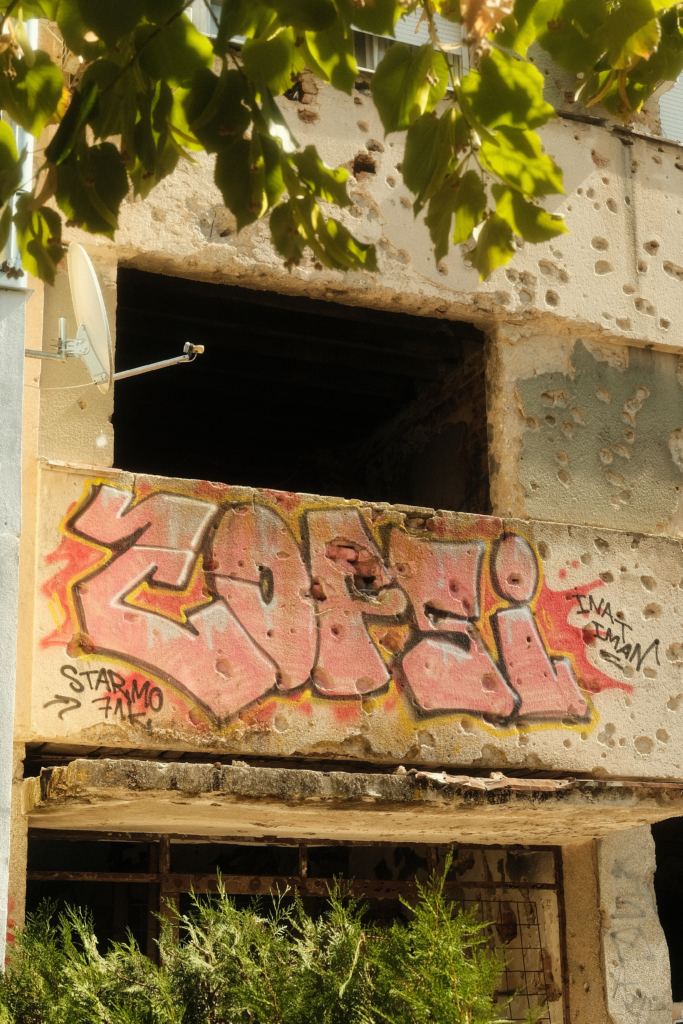
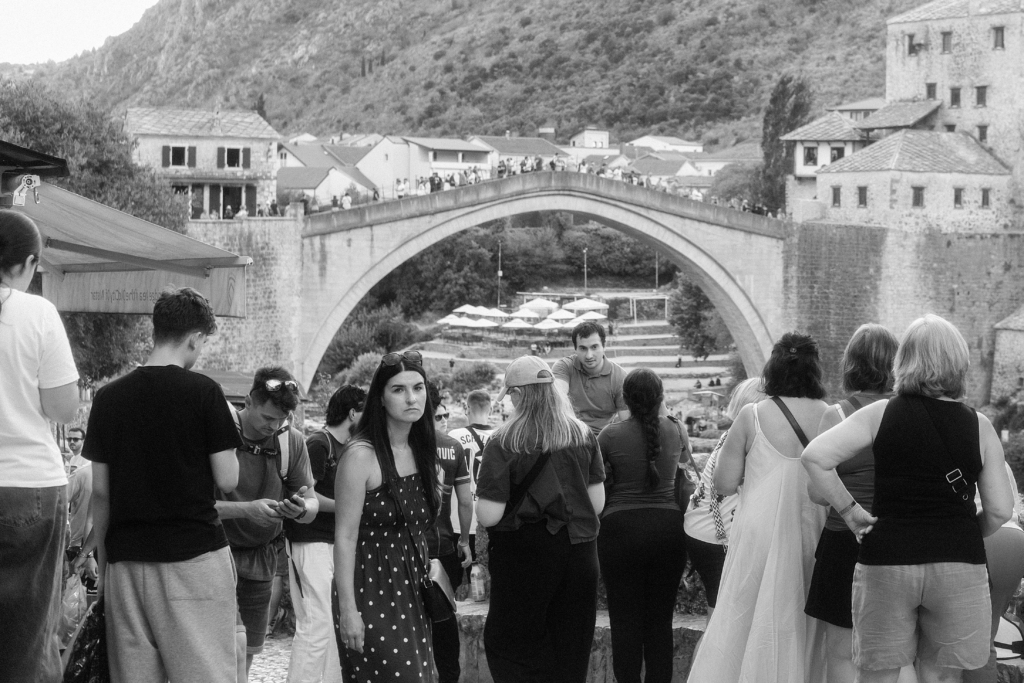
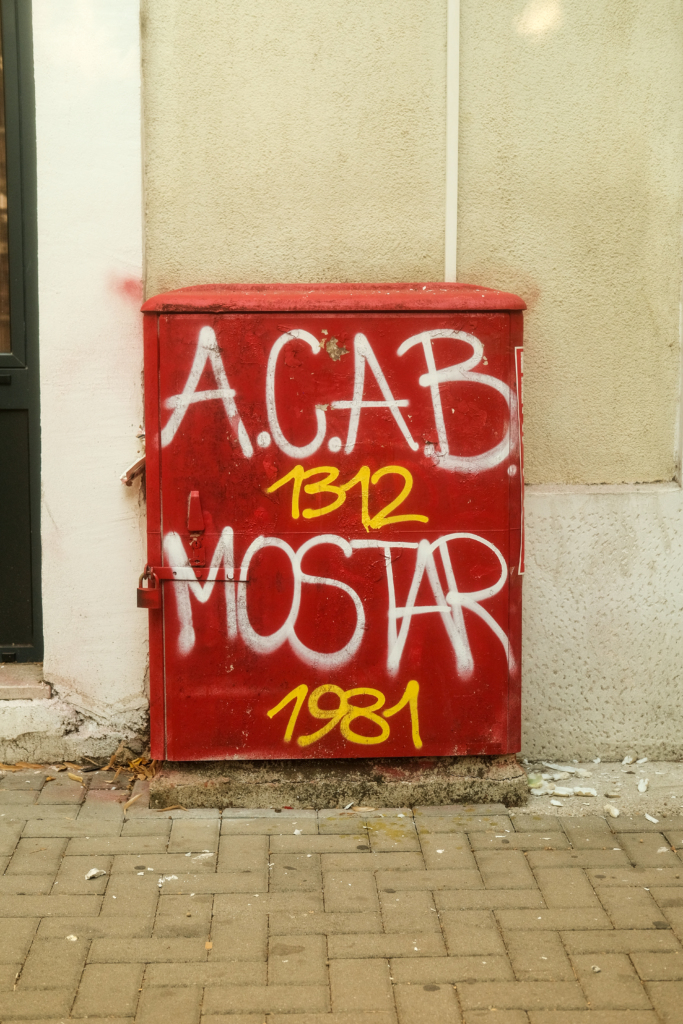
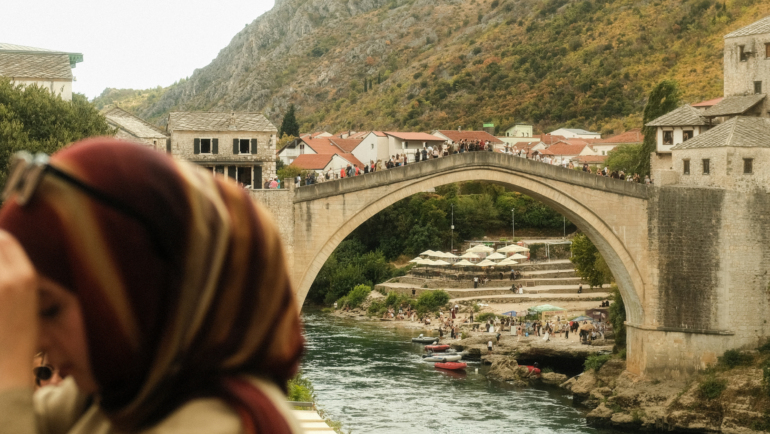
Walking through the empty old town, we experienced it as very quiet and serene at first. Walking over the empty Stari Most, with the polished stones reflecting the light, was quite impressive. Can recommend. The next day we discovered that our apartment was close to a prison with very impressive street art all around it.

Not only divided by the Neretva

Stari Most, meaning Old Bridge, was originally built in the 16th century by a famous Ottoman architect, Mimar Hayruddin. It was destroyed in 1993 in the Bosnian War. The bridge was shot at so many times that it broke down and vanished into the Neretva. After the war ended, the Bosniaks and Croats split the city in two. Only Bosniaks live in the east and only Croats in the west. Stari Most, the namesake of Mostar (which derives from the word for “bridgekeeper”), was then rebuilt with stones from the same quarry as the original. In 2005, Stari Most and the surrounding Old Town were inscribed as a UNESCO World Heritage Site.

One day we booked a tour called “Death of Yugoslavia”. On our first stop, our tour guide took us to an old, almost abandoned aircraft hangar, Project Buna, which was built in secret during Tito’s reign. Half of the hangar is now used as storage for construction material. As a lot of military construction and many bases were hidden from the public, it is almost unthinkable how such a big hall, built inside and under a mountaintop, could be hidden for so long. The other half of the hangar is used by Roma people as a home.

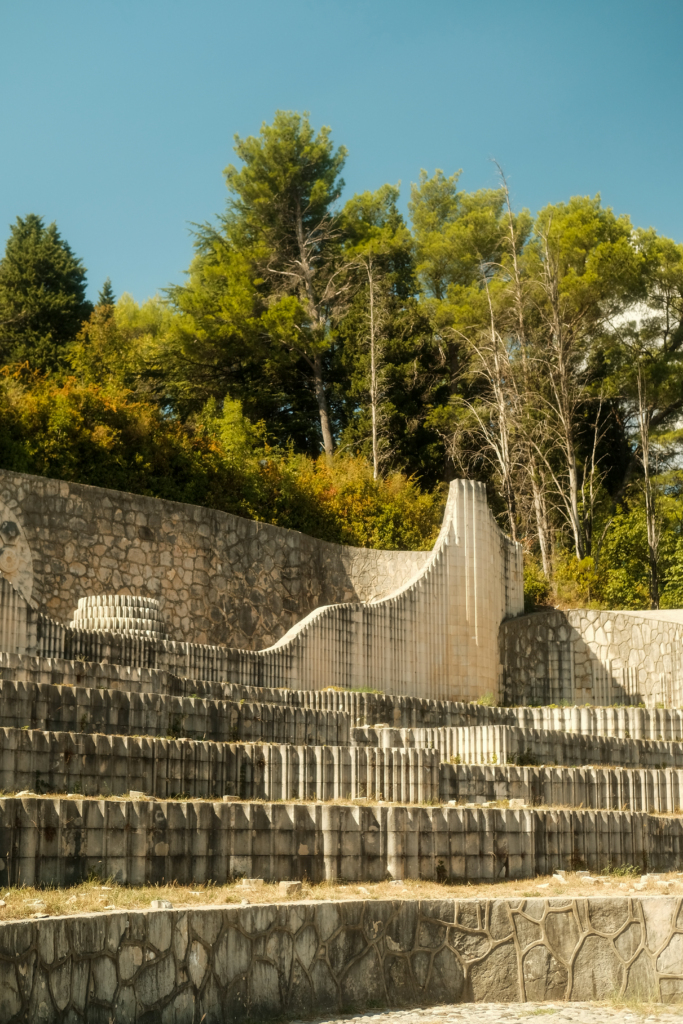
The third station was the sniper tower, where snipers who shot at random people were stationed. At our last stop, we went to the Partisan Memorial Cemetery of the Second World War, built under Tito’s rule in Yugoslavia. Our guide told us that when she was a child, she had to go there with her class and they pledged allegiance to Tito.

I really recommend reading the article by Arna Mackic on FailedArchitecture.com to get a deeper understanding of what destruction can do to a population and what the current state of feeling is. Now, 31 years after the Dayton Agreement was signed, Bosniaks, Serbs and Croats still keep to themselves. Bosniaks live in the east of Mostar and Croats in the west, which is quite noticeable in the separation of mosques on the east side and churches on the west. The electoral and presidential system is also divided. One Bosniak, one Croat (both elected from the Federation of Bosnia and Herzegovina) and one Serb take turns serving eight months each. The school system is also still divided into Bosniak and Croat schools, the only exception being the United World College (UWC) Mostar.

“Founded in 2006, initially as a short-term project, UWC in Mostar is now firmly established as a College at the heart of the UWC movement. Common to all UWCs, we educate students drawn from an extraordinary breadth of backgrounds and nationalities.” Source

A bombed bridge symbolises the underlying conflict between the two sides. It was rebuilt, but it will never be the same again. It is important to note that minorities living in Bosnia and Herzegovina have no state representative.

“The word ‘minority’ in Bosnia and Herzegovina (often referred to as ‘BiH’) is laden with political meaning. The former Yugoslav and current Dayton Constitutions reference ‘constituent peoples’, a concept that consciously divides society into groups who are recognized as having a stake in the country, and minorities who presumably do not. Fear of becoming a minority and memories of what happened to minorities during the World Wars fueled the 1990s war, and that fear is still the driving force in the country’s polarizing political system. As per the Dayton Agreement, there are 17 officially recognized national minorities in Bosnia and Herzegovina: Albanians, Czechs, Germans, Hungarians, Italians, Jews, Macedonians, Montenegrins, Poles, Roma, Romanians, Russians, Ruthenians, Slovaks, Slovenes, Turks and Ukrainians. However, all ethnic groups in Bosnia and Herzegovina can be considered minorities at least locally, as all face marginalization in areas where their ethnicity is not dominant.” Source

How do people escape the sun in Mostar?

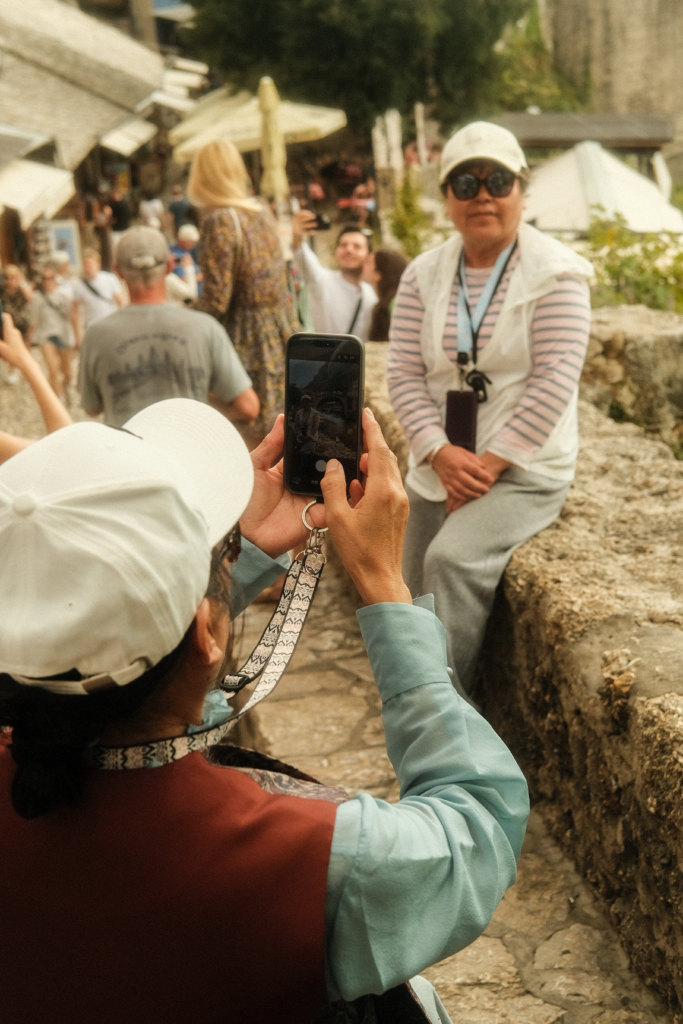
Our next days were again spent walking around and exploring the old town, but now it was different. During the day, the old town was crowded. It felt like a never-ending loop, watching people (and doing it ourselves) all taking the same photograph of Stari Most. What was also quite interesting is that, because of our “content production” for Instagram, one sees the same loop of scenic videos over and over again: people jumping from Stari Most (I could never; my CGM sensor would just vanish) and a panning drone view of the bridge and Old Town.

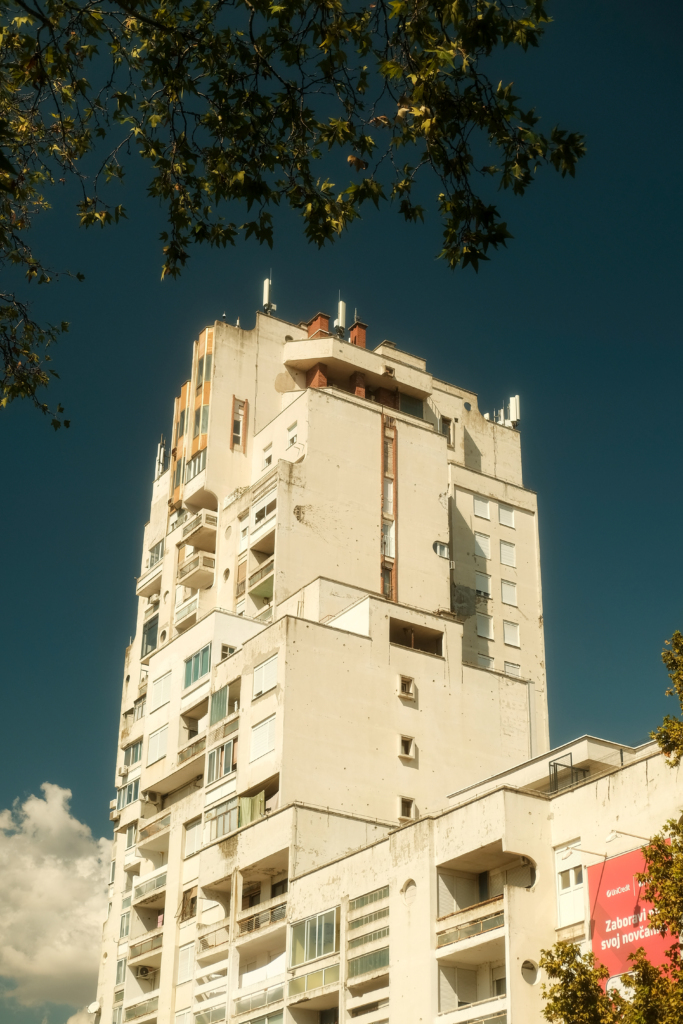
Coffee places are everywhere in Mostar. When you walk outside the old town, where wide streets start to form, lined with high-rise blocks from the Yugoslav era, you will find everyday life and actual shade. Enormous trees line the streets, and you will find coffee place after coffee place. On the Sunday when we walked this road, people had gathered in the cafés, easily shaded by tall buildings and trees.

In retrospect, Mostar and Bosnia and Herzegovina left a deep interest for exploring more of the country and gain a deeper understanding about differently experienced histories.

Kotor. The feline fortress

Written by Jan-Gottfried.

6–8 minutes

In Escaping the Sun, Leonie (28) and Jan-Gottfried (27) seek to find out how shade has historically been organised as a collective resource, and how third places allow young people to gather freely in the city.

Living with and managing type 1 diabetes since childhood, they bring a personal as well as an academic stake to the question of who public spaces are actually designed for. Together they embark on a journey to Ohrid, Kotor, Mostar and Split to ask people: Got shade?

A purrfect start

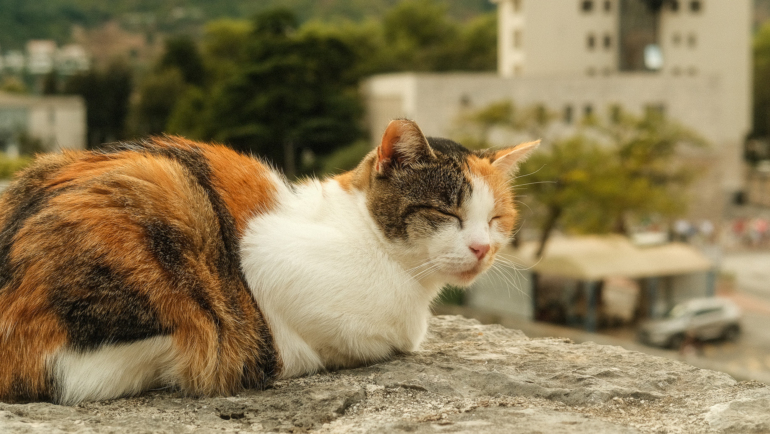
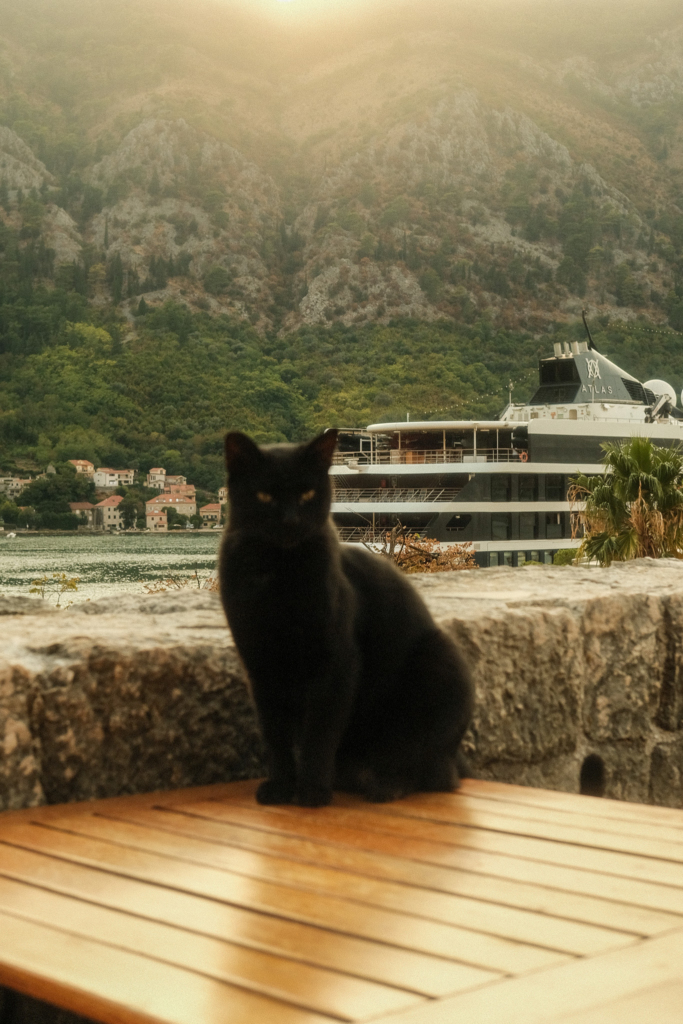
The biggest backpacking betrayal one can experience is being dropped off at the bus station two hours early. At 04:20, a ginger representative of the Kotor cat commission greeted us. Unfortunately, we had no gifts for him, except water. With only 10€ left in our wallets, we realised that our credit cards didn’t work. Hours later, with the cash problem solved (more or less), we gazed over Kotor’s sea bay during breakfast.

Located in the Bay of Kotor (Boka Kotorska) at the foot of Mount Lovćen, the Old Town sits between the Adriatic coastline and the mountain peaks. The first and thus oldest buildings were erected close to the cliffs, and the city expanded along the shore. The natural and culturo-historical region of Kotor was inscribed at the 3rd UNESCO session in 1979. At that time, Montenegro was still part of Yugoslavia. In 2006, Montenegro declared independence following the breakup of Yugoslavia and the dissolution of Serbia and Montenegro.

As a historian, I couldn’t help imagining how the fortified medieval city of Kotor has changed its face over the ages. The oldest known settlement can be traced back to ancient times. Roman founders named the city Acruvium. Over the ages, the city core, its buildings and its arts were shaped by every century. It was the region’s creative heart, with a profound and lasting influence on the Adriatic coast. Caught between the territories of powerful empires, it was a place of creation and destruction. Today, cruise ships lay siege to Kotor.

A city in layers

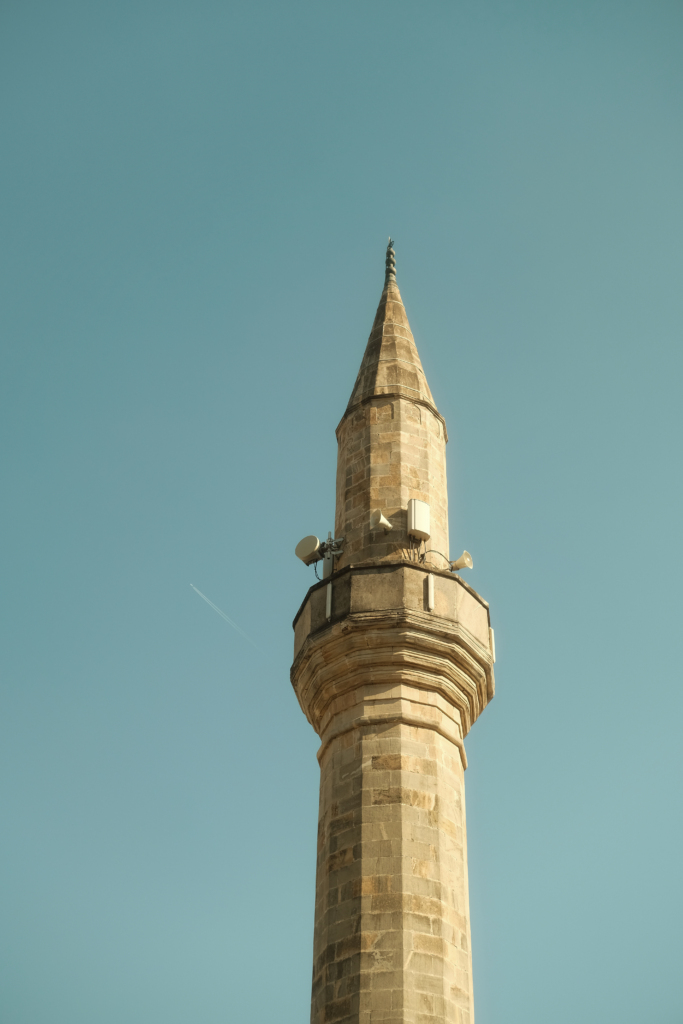
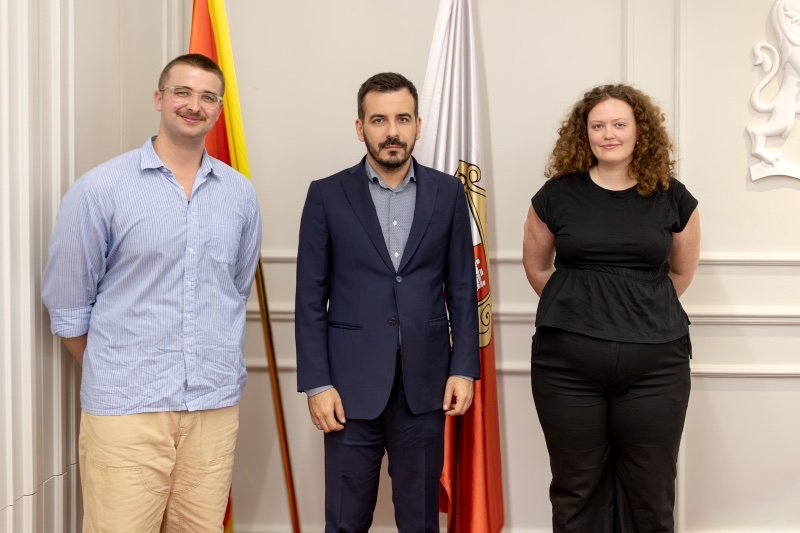
On our second day we had the opportunity to meet the mayor, Vladimir Jokić, after a guided tour of the Old Town. We met our guide, Jasna, in front of the main gate, which is one of three. Standing on the promenade with the sea at our backs, we entered through the portal. When this gate was built in 1555, it was only accessible by boat, since the boardwalk didn’t exist yet. Mythical griffins, the Venetian winged lion and other ornaments did not stand the test of time. They fell victim to vandalism between 1897 and the end of World War II.

The smaller north gate represents the Renaissance style and symbolises Kotor’s victory over the Ottoman admiral Hayreddin Barbarossa in 1539. The western gate was fortified by the Venetians in the 13th century and equipped with a movable bridge – try entering a city when you can’t even knock at the gate.

We didn’t have to walk far to stumble across a church. Right next to it, another church, and adjacent to the second church, a third. You see, while the oldest church – the Cathedral of Saint Tryphon, located on the city square, built in 1124 on top of an earlier church from 809 – was renovated and upheld over the centuries, every influential family, whether through trade or nobility, had its own little chapel or church in the city. Under Venetian rule, religious freedom – mostly within Christian beliefs – was granted as long as trade was flourishing. But affluent families weren’t the only force to change the face of the city. Two bell towers, for instance, had to be reconstructed in the 17th century following the earthquake of 1667.

Two additional buildings are worth mentioning: by the mid-17th century, the Church of St. Luke (1195) had been handed over from the Catholics to the Orthodox Christians, although the Catholics retained their altar until the mid-19th century. The Church of the Blessed Ozana (or: Church of St. Mary) dates back to the Romanesque period. Constructed on the site of an ancient basilica, it was consecrated in 1221.

The Church of St. Nicholas (1902–1909) is the largest Orthodox church in Kotor. It houses numerous valuable items, many of which were donated by wealthy local families. Adjacent to the church is the Treasury of the Serbian Orthodox Church, featuring a rich collection of icons, handicrafts and historical documents. We could extend the list of churches, but we think you get the gist. The monuments and cultural properties are authentically conserved and unique.

All numbers are sourced from the figures given in Kotor’s tourism brochure.

Vladimir Jokić, mayor of Kotor.

A city without its young

During the tour, our guide Jasna explained to us that young people are missing from the Old Town. Their leaving is driven not by heat, which would make the area physically impossible to inhabit, but by economic necessity. It begins when staying no longer makes it possible to work, access higher education, meet friends or imagine a future. Many return after finishing their university degrees, though, because they miss their social ties and networks. Most of the stores and infrastructure within the walls are built around the demands of mass tourism. Travel influencers highlight the cats and the scenic view of the bay from atop the mountain. The demand of two cruise ships’ worth of tourists at once – roughly 500 ships call at Kotor between March and November – mixed with backpackers and individual travellers, leaves little room for everyday life. Shops, restaurants and housing orient themselves towards guests who stay for hours, not residents who stay for decades. The cats stay, the young leave.

The city of heat and water

Getting back to the meeting with the mayor: he told us that the ecological conditions are changing. Every society reproduces itself through its metabolism with nature. The hot summers are the result of man-made climate change. This can’t be fixed at the local level. The development of new infrastructure and urbanisation cause an ongoing transformation of the area’s socio-economic structure. AC units are not a threat to Kotor’s unique cultural landscape, but congested traffic and buildings on the coast itself lead to a gradual transformation of the coastline.

Since many UNESCO cities in the region face the same challenges and demands, they support each other. On 12 December 2025, the CoMoCoSEE, the Council of Ministers of Culture of South-East Europe, convened its 9th ministerial meeting in Ohrid, North Macedonia, with UNESCO’s support – you can read about our experience in Ohrid in our first blog post. Ministers renewed their commitment to strengthening cultural collaboration at all levels. The Ohrid Declaration concluded the conference. The document highlights culture as a powerful enabler of cultural awareness and expression, inclusion, social cohesion, resilience and peace, and therefore as essential for the sustainable development of our societies and neighbourly relations.

While scouting the city, we wondered whether the infrastructure of the Old Town offers answers to current climatic or social problems. The answer we got was, as so often: it depends. The white stone of the narrowly built houses limits the inhabitable space, so the city can’t grow, but it also creates shade and channels the wind. The heat expelled by AC units, however, warms those alleys up again. We were told that this year’s summer was the hottest in five decades: only 28 mm of rain fell over 90 days, roughly 10% of the average, accompanied by temperatures between 38 and 40 °C. This heat is inescapable. To our surprise, the drinking water, sourced from two springs, was largely unaffected by it, though it is influenced by the tides of the sea.

Jasna shared an old saying with us: the wind from the sea brings rain. She was right. Two days later the wind turned. The cruise ships departed and the rain came.

As global heating redraws the physical conditions of life, only the test of time and the determination of decision-makers will tell whether Kotor has the social power to remain what it has been for centuries: a city that is lived in, not just visited.

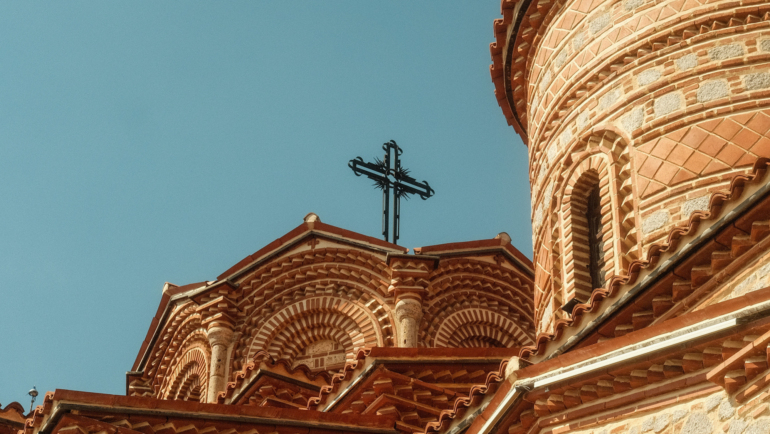
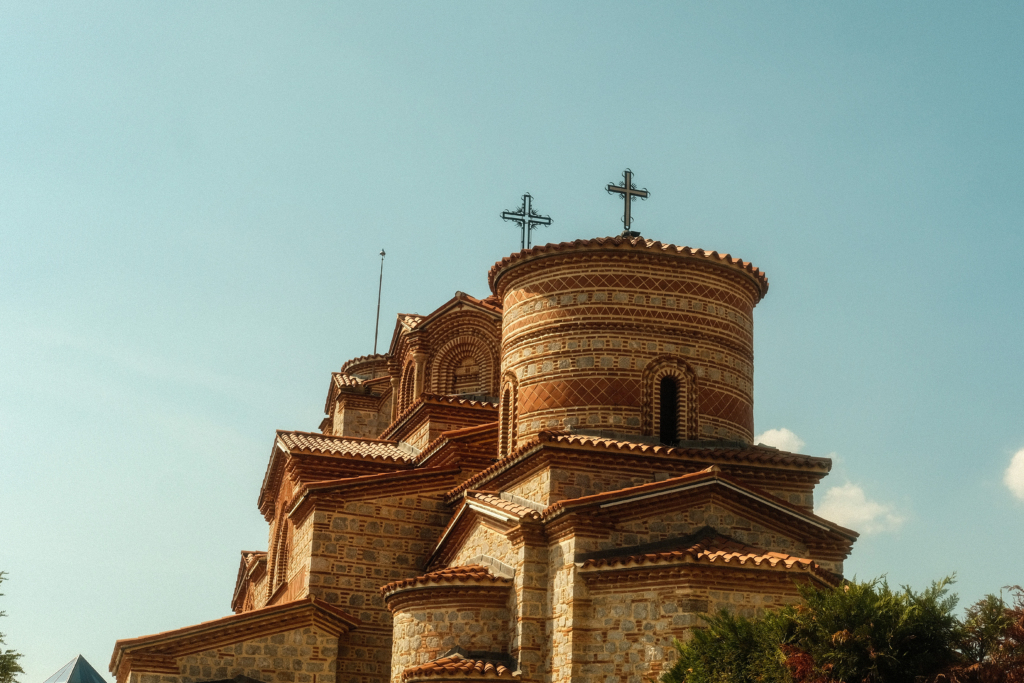
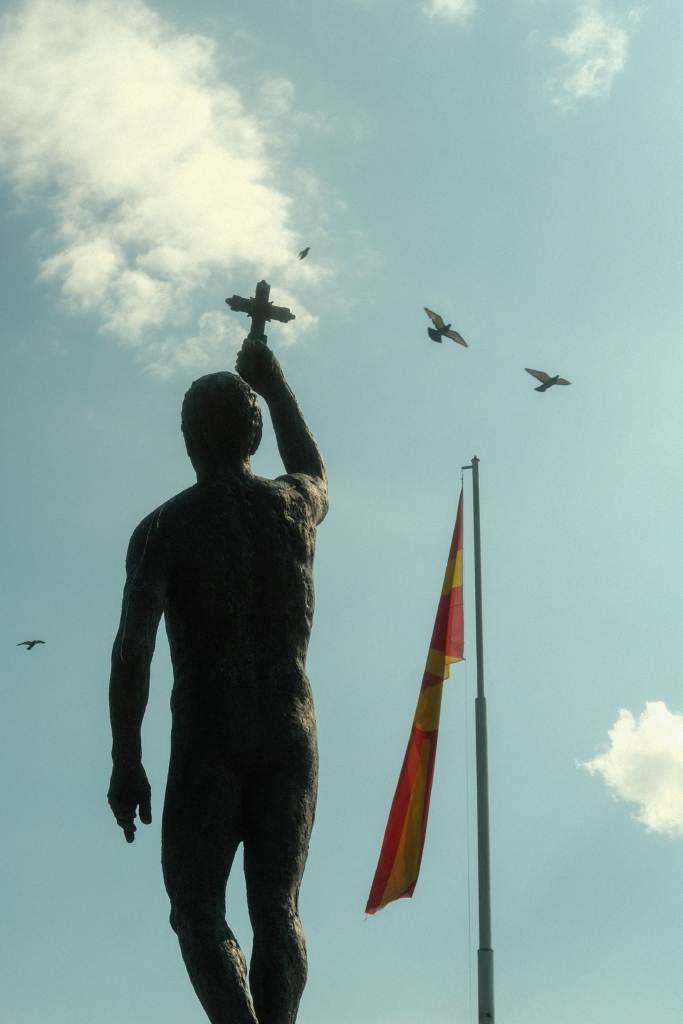
The cross of the Church of Saints Clement and Panteleimon in Ohrid, North Macedonia.

Ohrid. The city of 365 churches

Written by Leonie

6–9 minutes

In Escaping the Sun, Leonie (28) and Jan-Gottfried (27) seek to find out how shade has historically been organised as a collective resource, and how third places allow young people to gather freely in the city.

Living with and managing type 1 diabetes since childhood, they bring a personal as well as an academic stake to the question of who public spaces are actually designed for. Together they embark on a journey to Ohrid, Kotor, Mostar and Split to ask people: Got shade?

Arriving in North Macedonia

We, Leonie and Jan-Gottfried, both have diabetes: Leonie since she was 6 and Jan-Gottfried since he was 8 years old. So one can imagine that both of us have already travelled quite a bit while managing a chronic illness. Nonetheless, it is still a lot of work and requires consideration for each other and for the illness. Low blood sugars can be quite dangerous, and high blood sugars affect your health in the long term and quite often your mood and, overall, the relationship one has with one’s body. So let’s get into it!

Travelling with diabetes means getting the sunflower lanyard at BER first and coffee later. Easier said than done at 4 am. Driven by excitement and anticipation, we managed to get our extra medical luggage through security. Thanks to EU regulations, people travelling with disabilities can carry an extra bag for their supplies. Since we both have to carry our medication and supplies to manage our type 1 diabetes mellitus for the next two weeks, the supplies can add up in space, even more so since you are advised to pack double when on holiday. Imagine your medical supplies getting lost or arriving in a different country. Yikes. Most of the time, you have to dig through the airline’s website to find the right number to register your additional bag. It’s your right, but some staff at BER still get annoyed if you communicate your required special procedure.

Note: Never apologise if your chronic condition is a five-minute inconvenience for someone. 

After a short stopover in Vienna, we arrived at 12 pm at Ohrid St Paul the Apostle Airport. Ohrid St Paul the Apostle Airport is a small, pleasant airport with short distances. A tip: after security, put your ID right back into the designated container or bag. We had been in North Macedonia for less than half an hour when Jan-Gottfried’s ID slipped out of his trouser pocket as he took out his mobile phone. When we realised the ID was missing, we emptied and searched through all our luggage at our accommodation. Panic set in. Since we couldn’t reach anyone at the airport or the police station, and the driver hadn’t found it in the car either, we had no choice but to go and get something to eat for the time being.

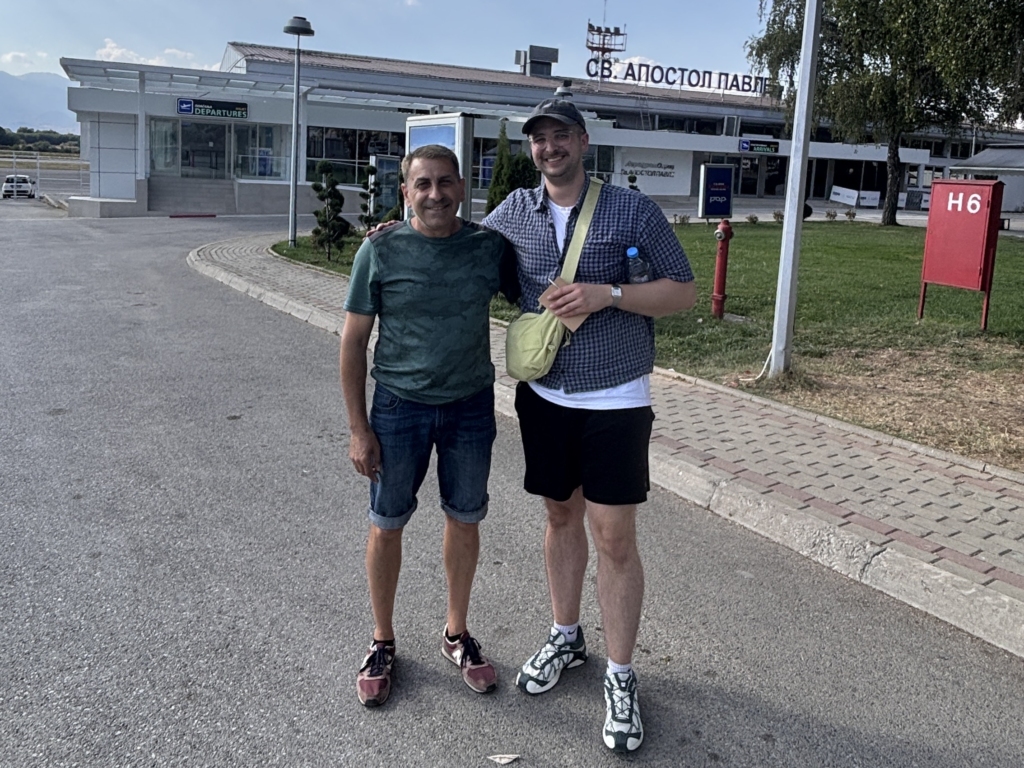
Nomche and Jan-Gottfried in front Ohrid Airport.
Nomche & Jan-Gottfried in front of Ohrid St. Paul The Apostle Airport.
Note: We found that in Ohrid someone always knows someone who works at the airport.

With the help of a waiter named Daniel, we learned that the ID card had been handed in right at the airport. Daniel also immediately arranged a driver called Nomche, who drove us back to the airport and then back again. Nomche’s family has lived in Ohrid for over 300 years, and when asked what he loves most about Ohrid, he naturally said Lake Ohrid. He dropped us off close to his home at the ancient theatre, which was built around 200 BC. It is fully accessible to walk around, and during the Ohrid Summer Festival from July until August it is still used as a theatre. Of the historic theatre, only a small part from the Hellenistic period remains at the bottom. After visiting the theatre, we were simply exhausted and truly relieved that Jan-Gottfried had his ID back. So we bought some food, went back to our accommodation and then went swimming.

Churches upon Churches

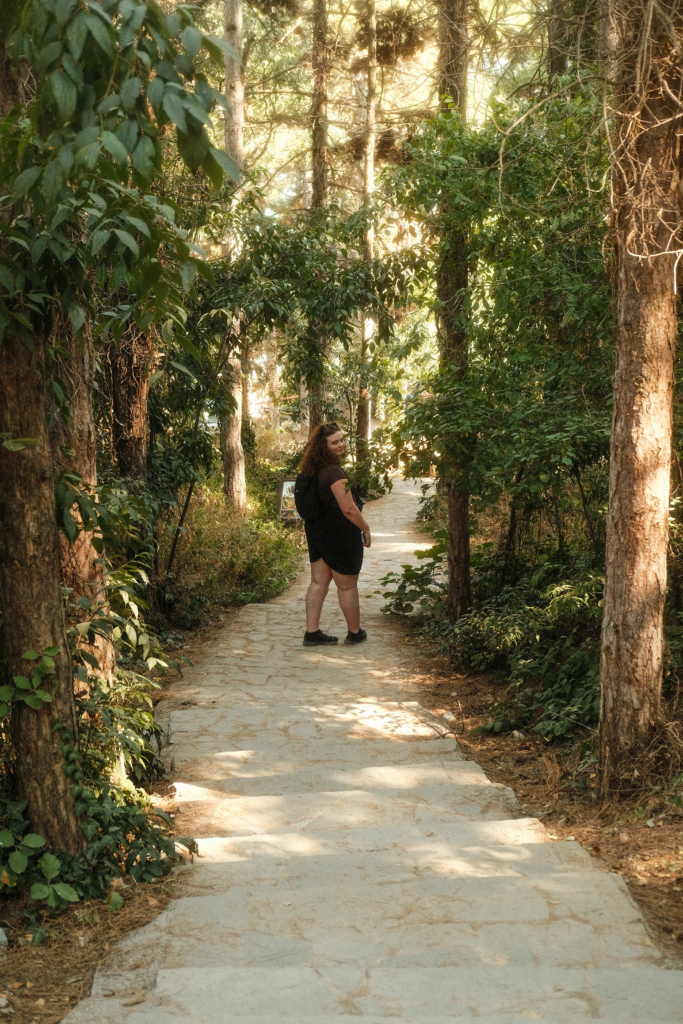
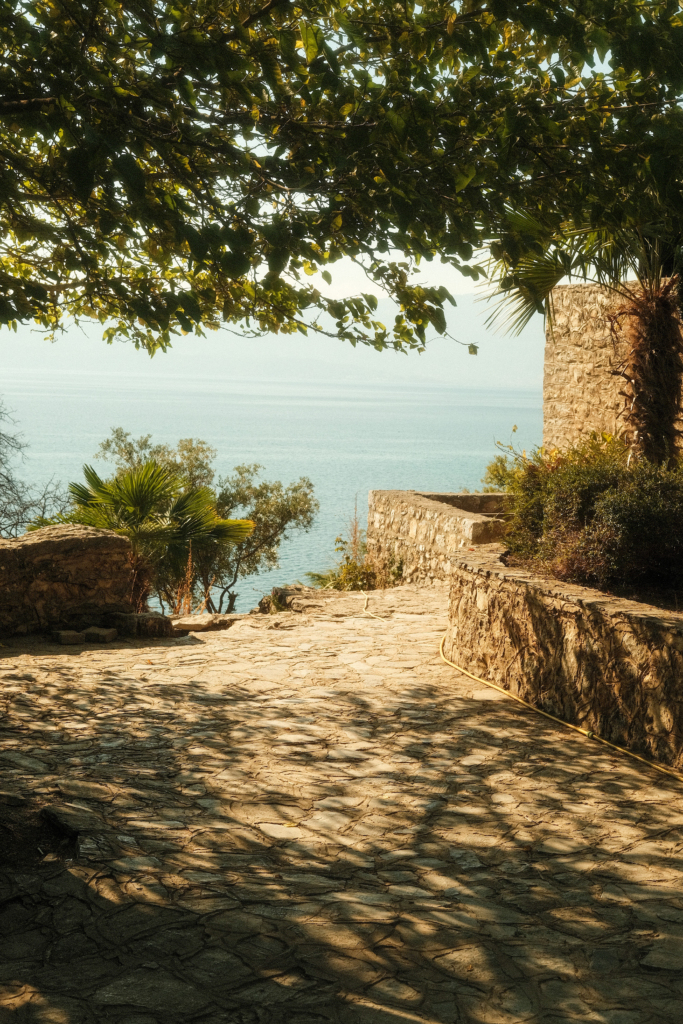
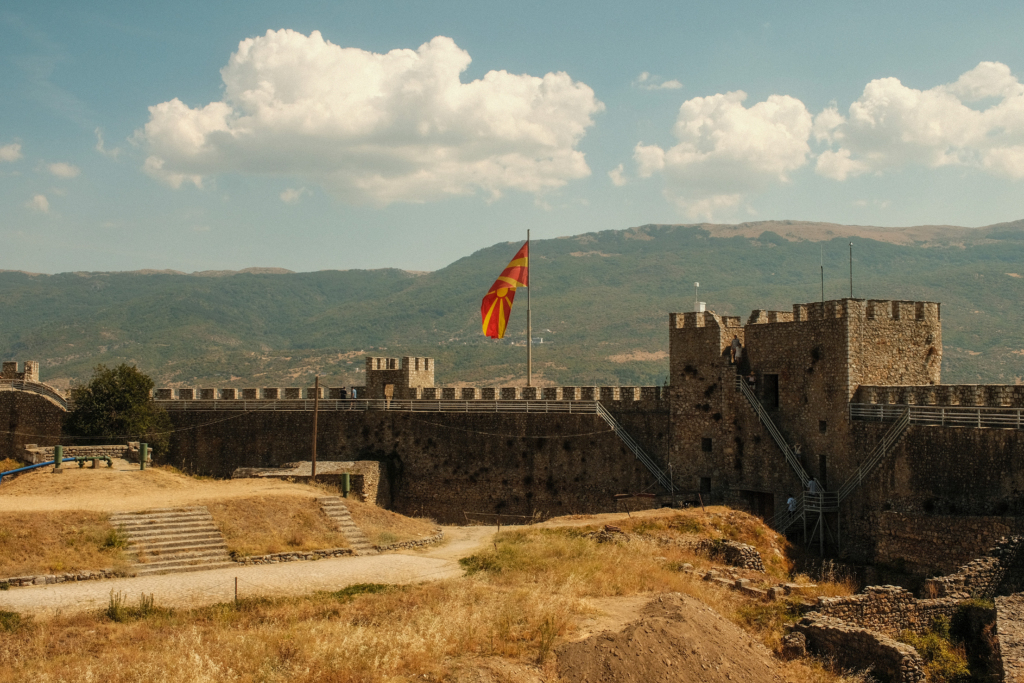
The next day we visited Samuel’s Fortress, which was built around 900 AD on top of an even older fortification. After a major restoration in 2003, one can walk through the ruins and along the top of the fortress walls. You get phenomenal views of the lake and the city, but almost no shade. You can cool down on a short walk through a little grove full of pines as you make your way from the fortress to St Clement’s Church, where the ruins of the even older St Clement’s Church are still visible and open to visit. From there, we could hike directly to the Church of St John at Kaneo, which is situated right on a cliff with a phenomenal view of the lake.

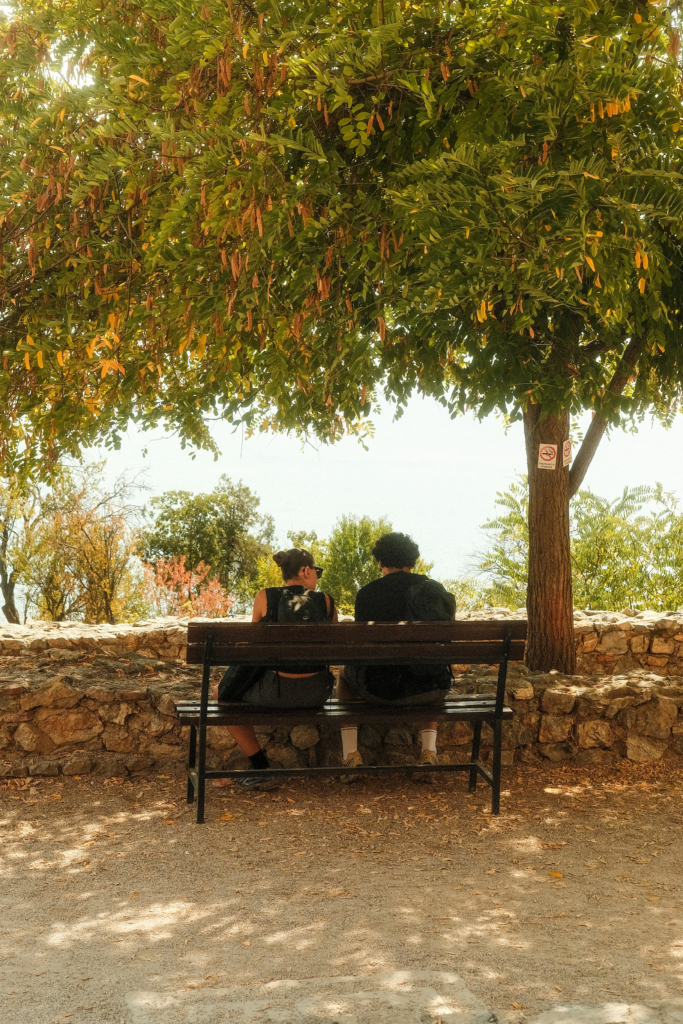
We took breaks in the shade every so often, which was provided by trees or stone fences along the way. So we walked in the sun a lot and always met other visitors who were also catching their breath after walking in the sun. Then we carried on through a neighbourhood beside a bathing area and back to our accommodation.

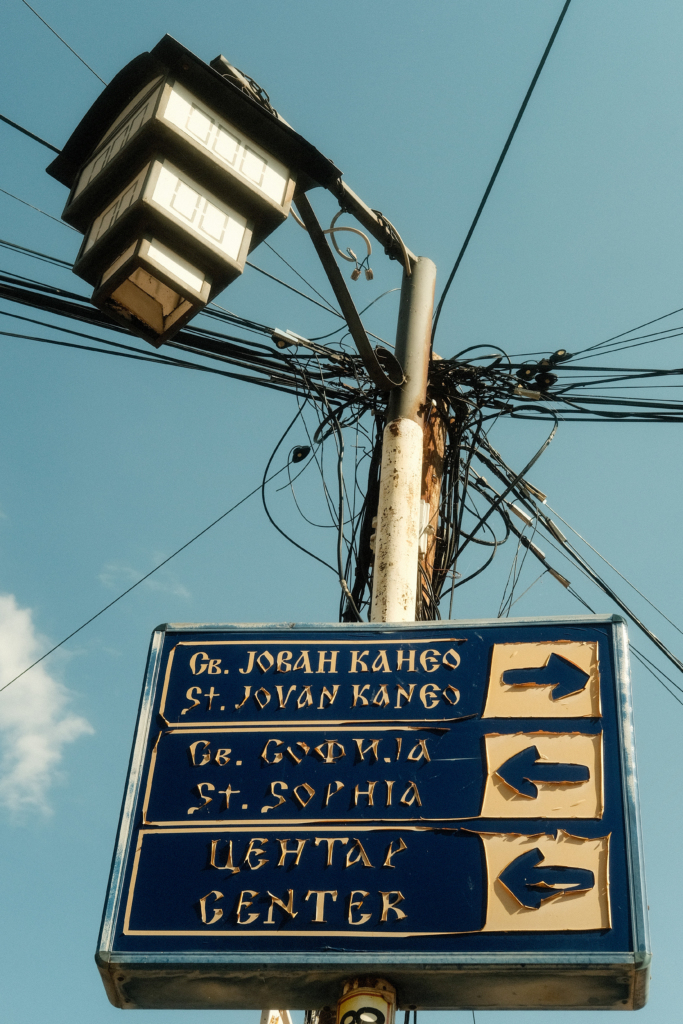
Of course, right beside our accommodation there is a church as well: St Sofia Church, to be exact. According to Nomche, Ohrid’s population is mostly Orthodox (and other Christians) at 80% and Muslim at 20%. The city counts 365 churches, hence the title: one for every day of the year. We also found out that locals mostly don’t have a fixed place of worship and tend to move between different churches. So basically, everywhere you go, you can’t escape God. There are also plenty of mosques that one can visit, the oldest being the Haydar Pasha Mosque, which dates back to Ottoman rule.

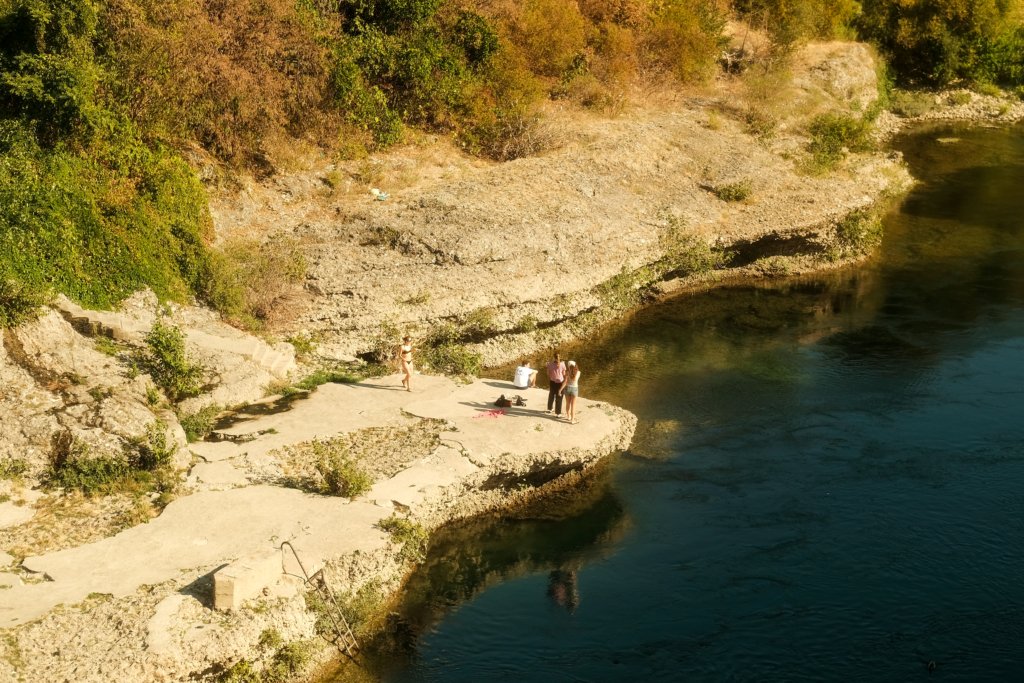
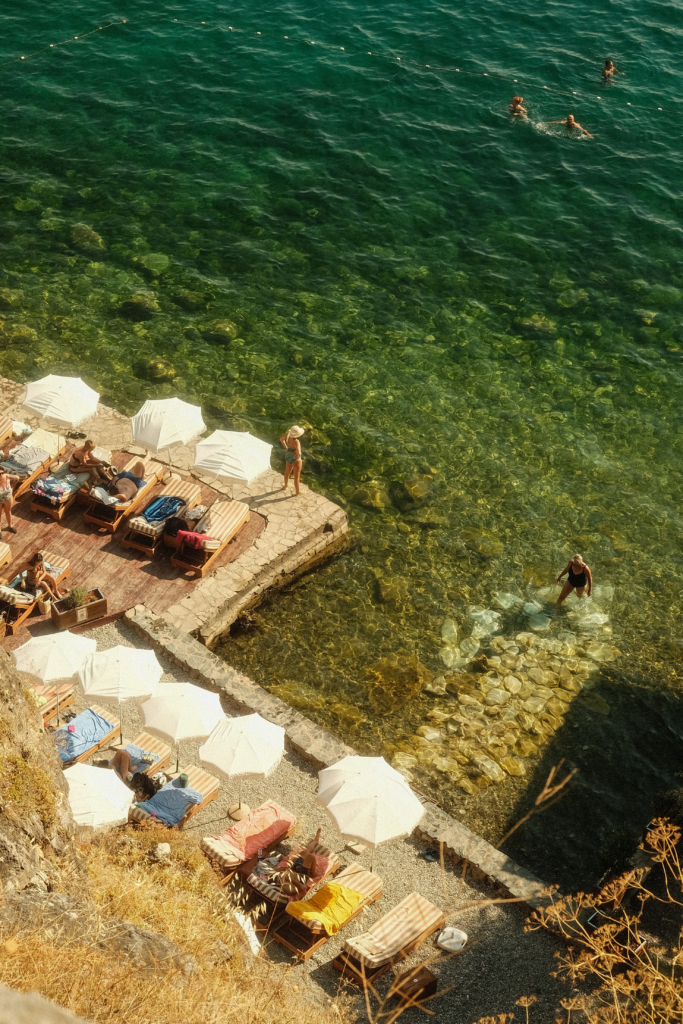
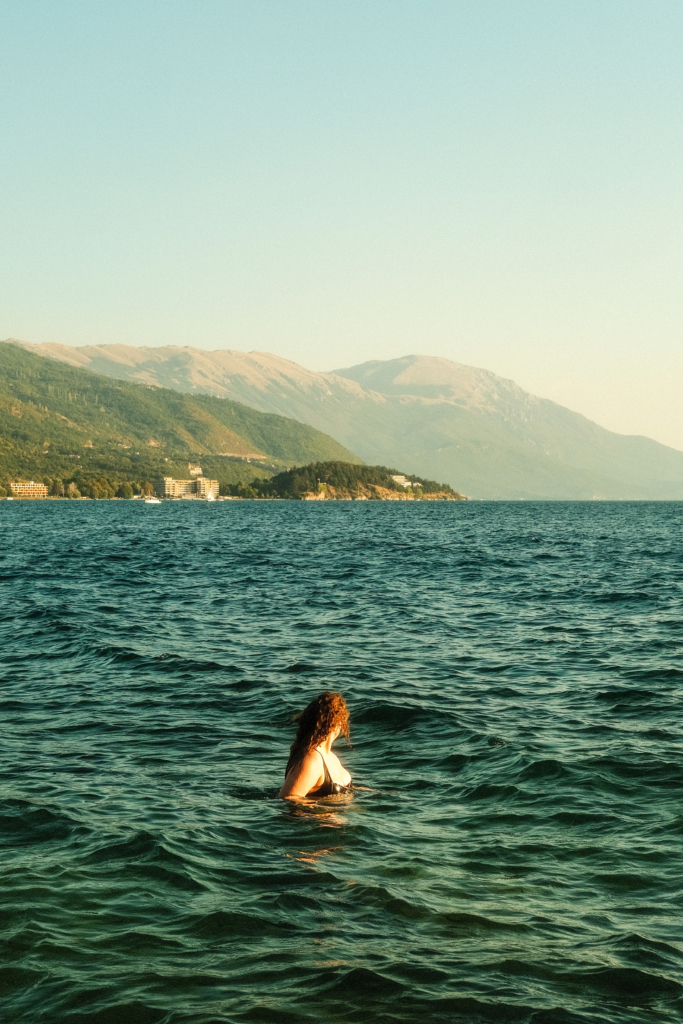
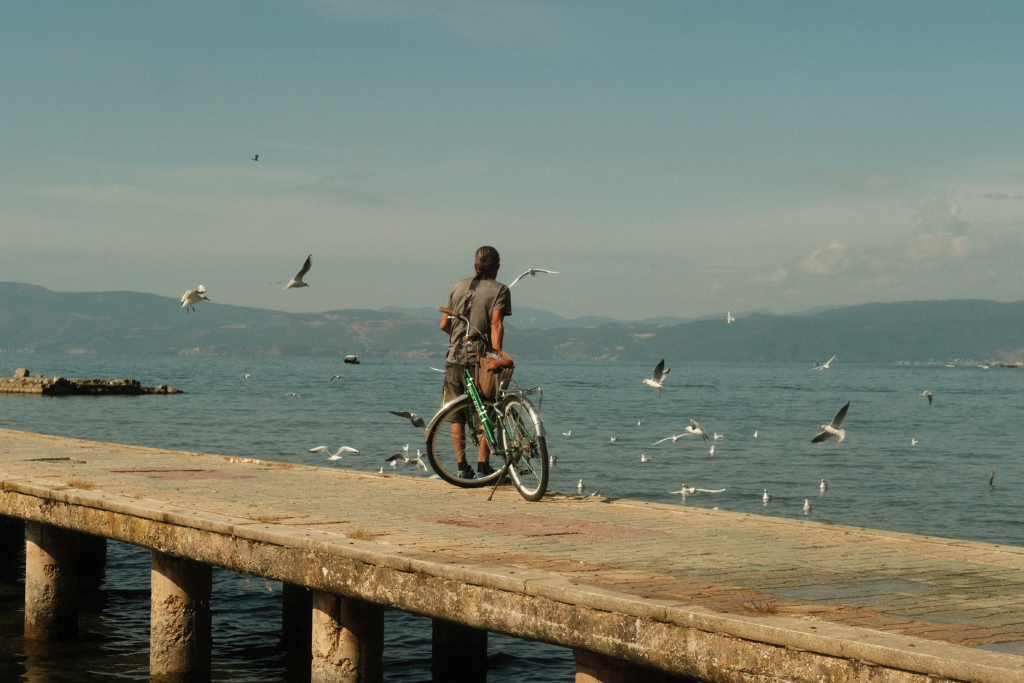
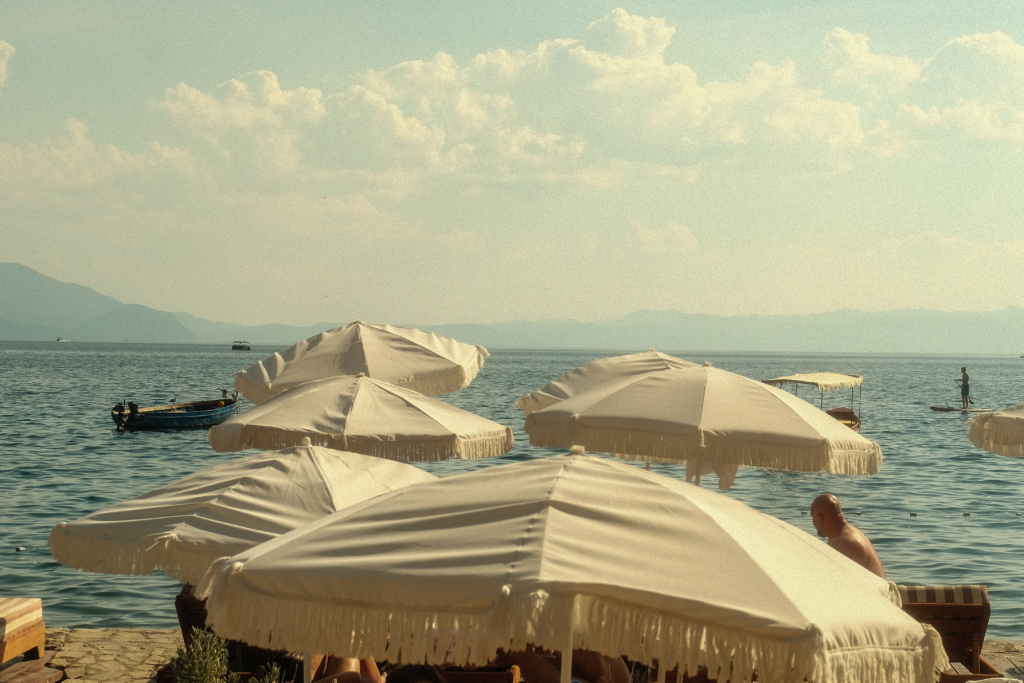
Swimming: in Ohrid you will find many beaches and places to swim almost right outside your door, which makes everything very serene. One finds not only tourists relaxing and enjoying the lake but locals as well.

Managing the D

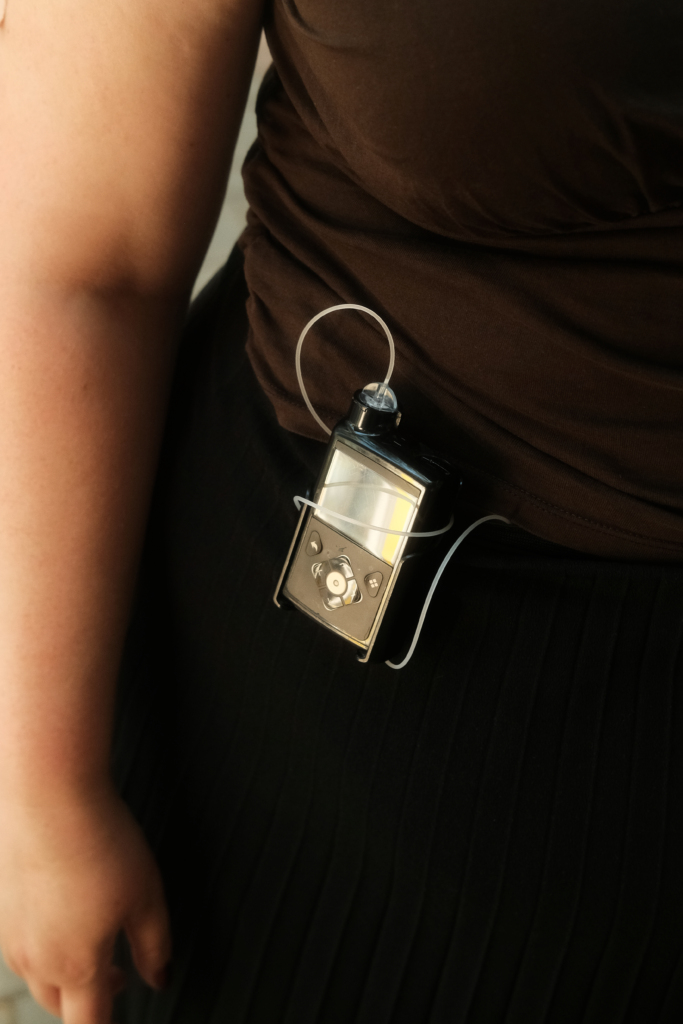
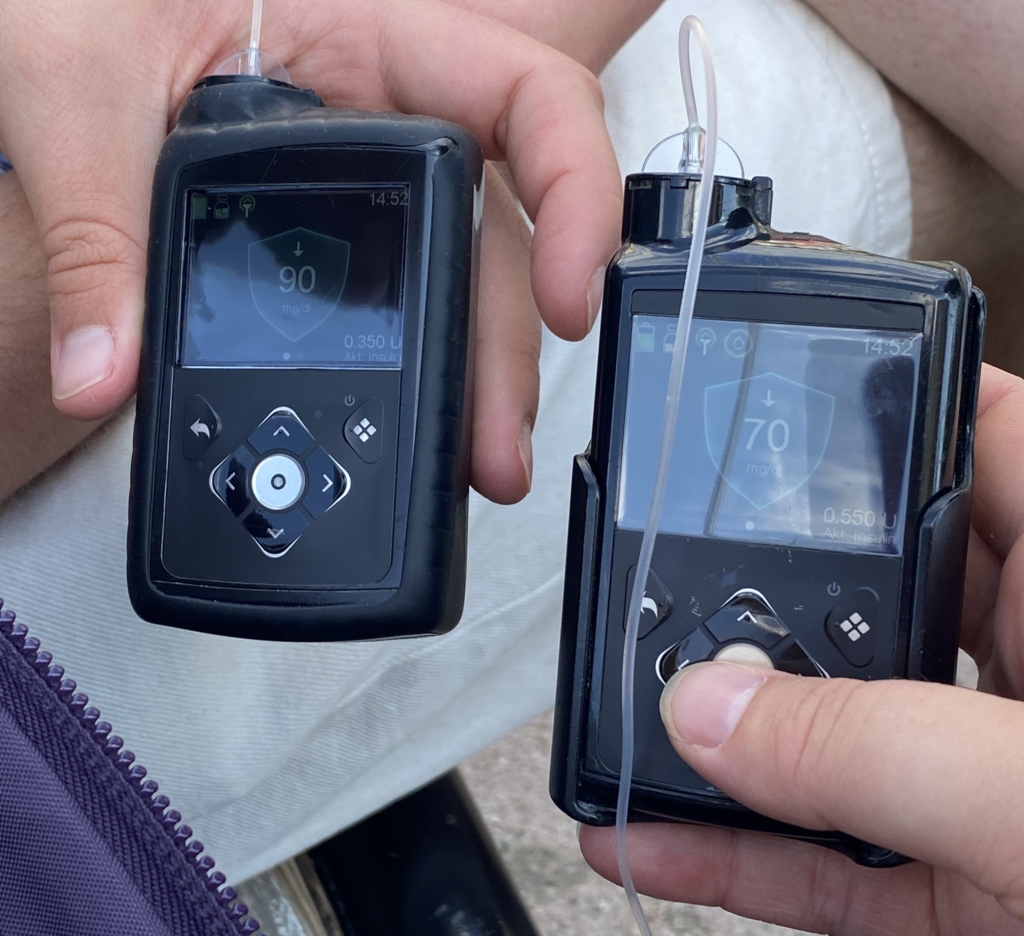
Of course, it can become a problem while travelling if both people with diabetes experience hypoglycaemia at the same time. (Image: Hypoglycaemia) You should factor in all the physical activity involved in exploring, swimming and perhaps even unplanned detours, and set the pump to Sport mode. The emphasis is on “should”, because turning on Sport mode on a pump means raising the target blood sugar level from 100 to 150 mg/dl. But for this to work correctly, you have to turn it on about 2 hours in advance. 

Being forced to take a break and have some snacks.

Culture

On our last night in Ohrid, we stumbled into the Night of Museums on Tsar Samoil Street. It is a walking tour with free entry to all participating museums in Ohrid, with complimentary  wine tastings and songs by a traditional group of singers who walked around. It culminated in an exhibition by local artists, who displayed their artworks in the garden of St Sofia Church.

Shady Places

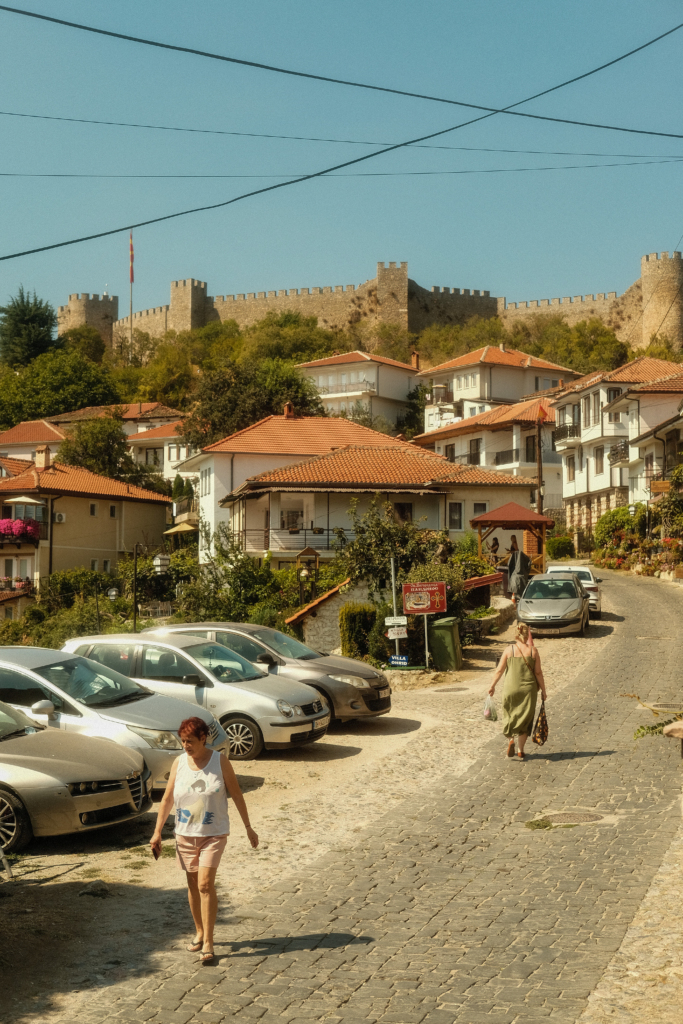
North Macedonia’s side of Lake Ohrid was declared a World Heritage Site by UNESCO in 1979, with the site being extended to also include the cultural and historic area of Ohrid in 1980. But the region is not just a World Heritage Site. It provides a livelihood for the people. It brings tourism to the region, it is of great ecological importance, and it generates income through fishing and boat tours. People rent out their homes in the Old Town, work in the hospitality industry, in restaurants and in cafés. Yet one gets the feeling that everyday life there goes on as usual. An elderly neighbour, who at first didn’t return our greetings, finally did so on our last day in Ohrid. Our driver and new friend Nomche still lives in the Old Town. Of course, the traditional architecture contributes to this in many ways. On the one hand, its design, narrow at the bottom and widening on the upper floors, allows for more living space and also provides more shade. In addition to the lower temperatures of the water, temperature regulation inside the houses is done by air-conditioning units, or AC units for short. Although they make living spaces habitable during the summer heat, the heat from inside is transported outside into the narrow alleyways. This excess heat, combined with the heat of the machinery, is trapped between tall buildings, raising pedestrian-level temperatures and thereby creating an urban heat island. Ohrid will not be the last place where we feel this happening.

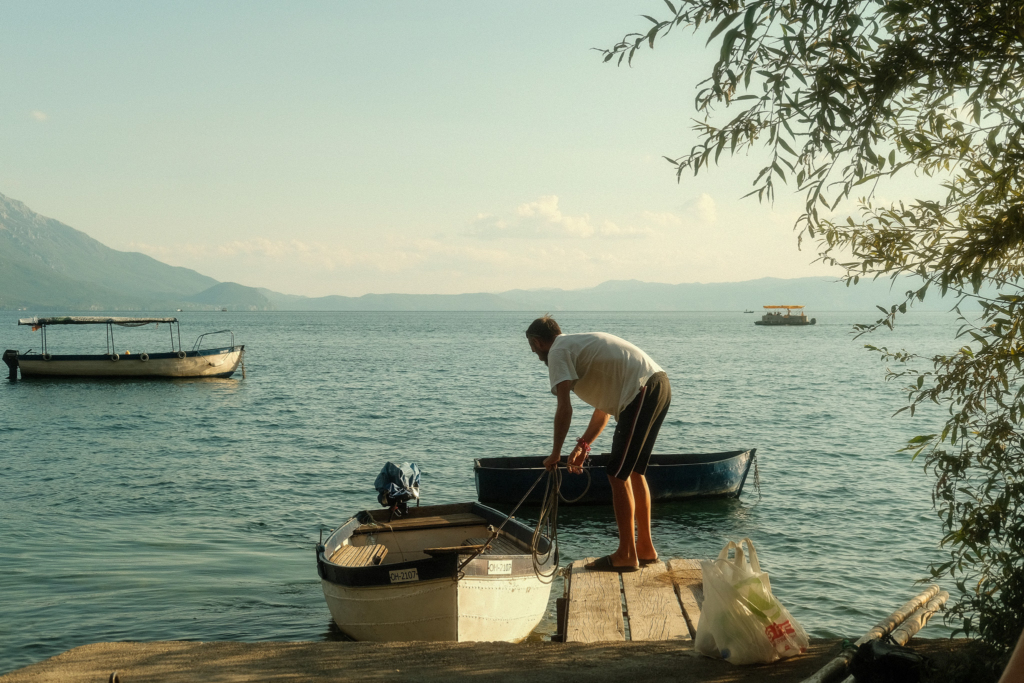
Therefore, cooling off in a historic city like Ohrid means that young children and adults jump into the water right in front of their homes. Of course, tourism always poses a risk to infrastructure and real estate prices and is generally harmful to nature if not properly managed. But as I wrote earlier: it’s a double-edged sword, since the infrastructure now depends on tourism. World Heritage sites and cities have to deal with this on a daily basis.

In Ohrid, one does not escape the sun in the shade but in the lake itself.