


Written by Jan-Gottfried
In Escaping the Sun, Leonie (28) and Jan-Gottfried (27) seek to find out how shade has historically been organised as a collective resource, and how third places allow young people to gather freely in the city.
Living with and managing type 1 diabetes since childhood, they bring a personal as well as an academic stake to the question of who public spaces are actually designed for. Together they embark on a journey to Ohrid, Kotor, Mostar and Split to ask people: Got shade?
Burn after reading
The bus ride from Kotor to Split took five hours. On the last kilometres along the coast, we witnessed the aftermath of the August wildfires near Omiš. Croatia’s fire chief Slavko Tucaković described the blaze as “one of the worst” in the country’s history. Around 1,200 residents and tourists were evacuated, while 286 firefighters, 90 fire engines and four aircraft battled the flames.
It was a strong fire, it swept everything in its way … there has been huge material damage.
Tucaković told Reuters
Scientists link the hot weather and drought to human-made global heating, which created ideal conditions for wildfires across Europe this summer. The world is burning, quite literally. I will never get used to the sight of scorched earth.
The Romans did it first
Just like Ohrid and Kotor, Split’s Old Town was inscribed as a World Heritage Site in 1979. Its origin story begins with a retirement plan. Diocletian, who ruled the Roman Empire from 284 to 305, picked the southern shore of the peninsula for his palace, not far from Salona, the Dalmatian provincial capital where he was born. His birth name was Diokles, a Greek name he swapped for the Latin Diocletianus once the army had hailed him emperor. He inherited an empire worn down by war and set about steadying it, reforming politics, the military and the economy. In 293 he went a step further and shared power among four rulers, the so-called tetrarchy. A system where retiring rulers needed places for them to retire to. In 305 Diocletian stepped down, left Nicomedia and moved into his still unfinished palace, where he lived out his days, until his death in 316.
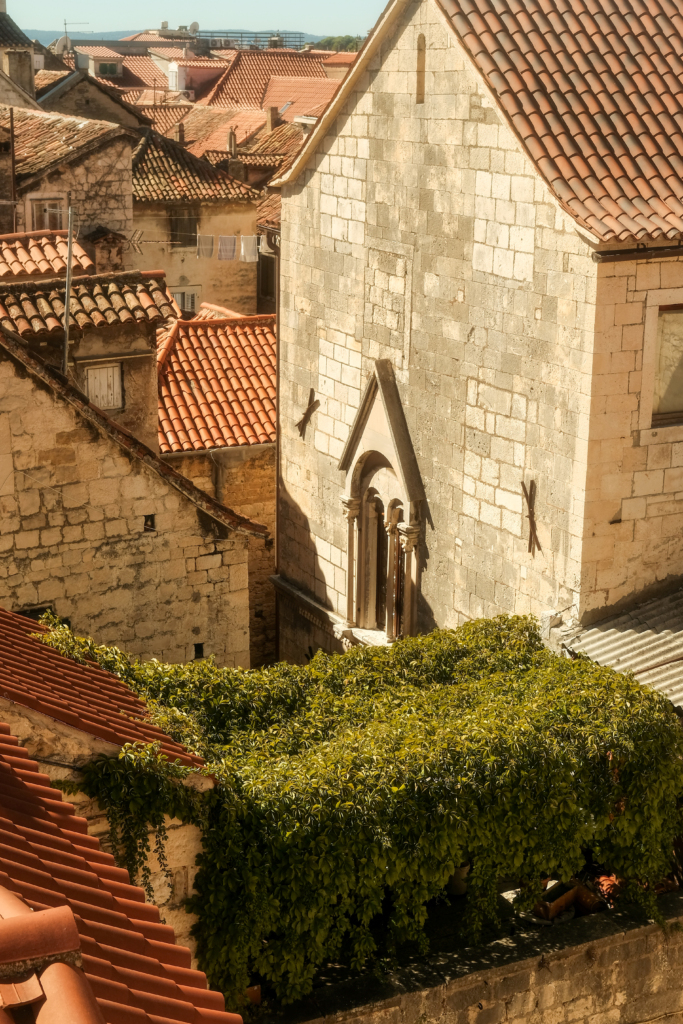
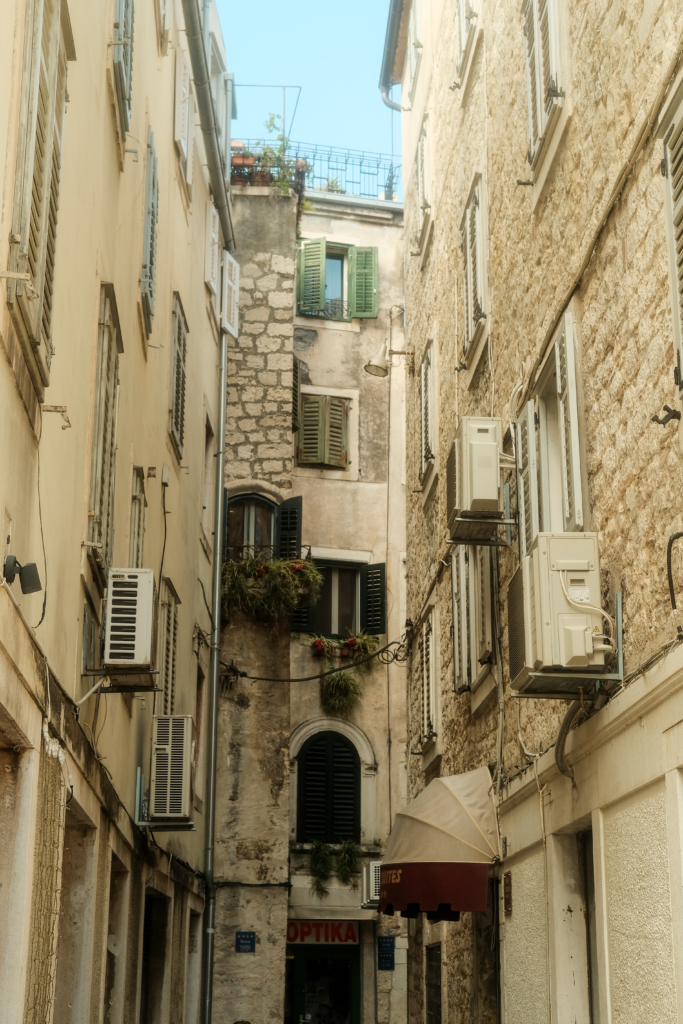
Since its construction, the city has been continuously inhabited. Buildings were added, altered and patched together from existing and new material. Today’s ground level is not the Roman one. The Middle Ages built on top of the Romans, and the Renaissance built on top of them. Modern times squeezed AC units in between. The only additions on top, so far, are satellite dishes. Sometimes you can still spot the changing styles from floor to floor.
Transformational impacts
On our walk through the Old Town, we asked Jasna, Head of the Old Town Core Department, the question that had followed us from Ohrid to Kotor: does the architecture of a World Heritage city hold answers to modern challenges? She didn’t need long to think about it. “If it’s hot, it’s hot. The duration is the problem.” Still, the old builders got a few things right. The narrow streets between the pale Brač limestone houses cast shade for most of the day, and at dawn the sea breeze creeps through the alleys as it has done for centuries. No air conditioning required, at least in theory. In practice, you can see how many units have been squeezed in between anyway.
The scientific side is clear: depaving and planting greenery is one of the most effective ways to cool populated areas. Outside the walls, a newly created promenade already offers shade. Inside, the problem is the same as in Kotor: there is simply no space. Every tree needs a place to stand. In a Roman palace turned city, someone has to decide which use of space wins, and that is rarely a simple decision. Money plays its part as well. In a city that lives off visitors, restaurants earn better margins than cafés and ice cream shops, so restaurants are what you find. At the same time, the city is not only watching things change. Residents receive funds to repair or replace things like windows, so that the historic cityscape stays intact. It is an ongoing process of small decisions.
And remember the changing winds from Kotor? Jasna brought them up again. The Bora is the cold wind from the north, the Jugo the one from the south, bringing rain.
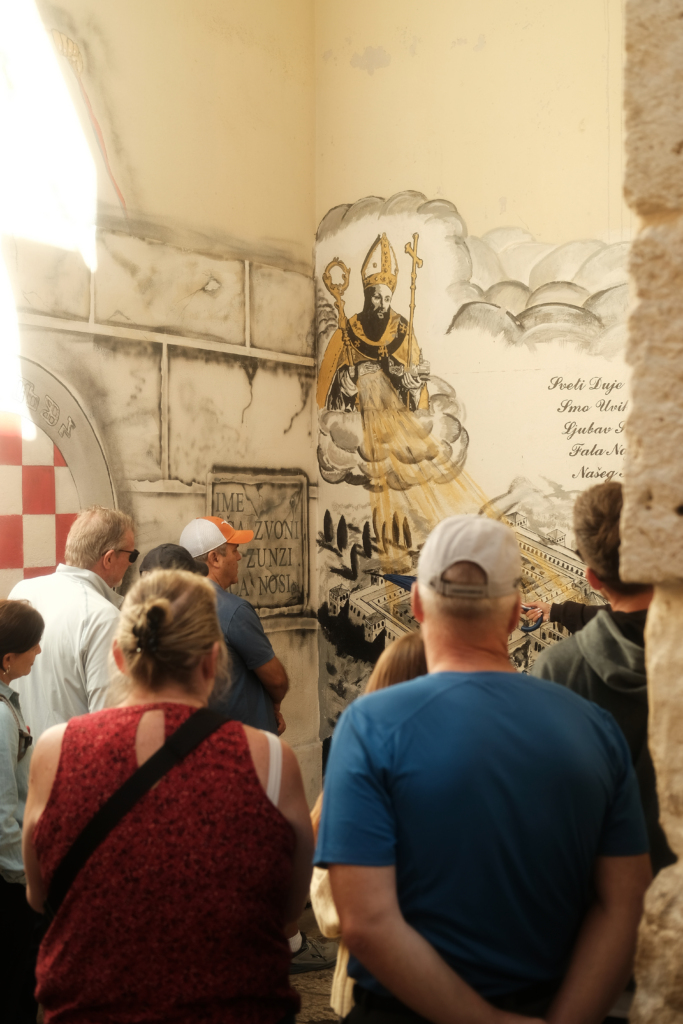
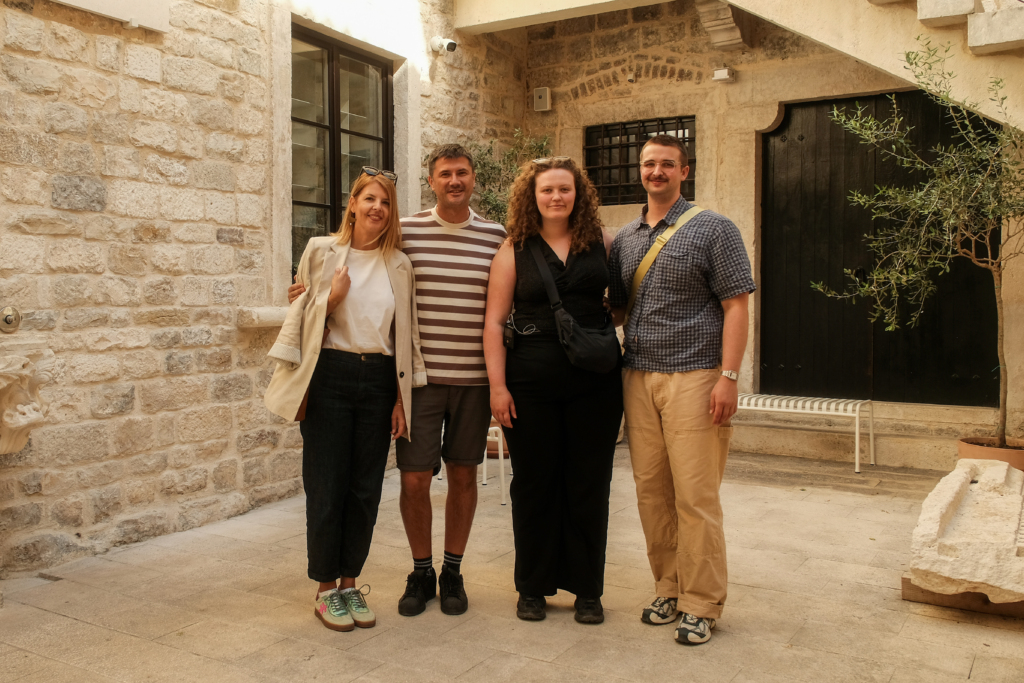
Jasna Jerkov, Nebojša Cingeli, Leonie Rinze and Jan-Gottfried Esser.
Nebojša, the archaeologist
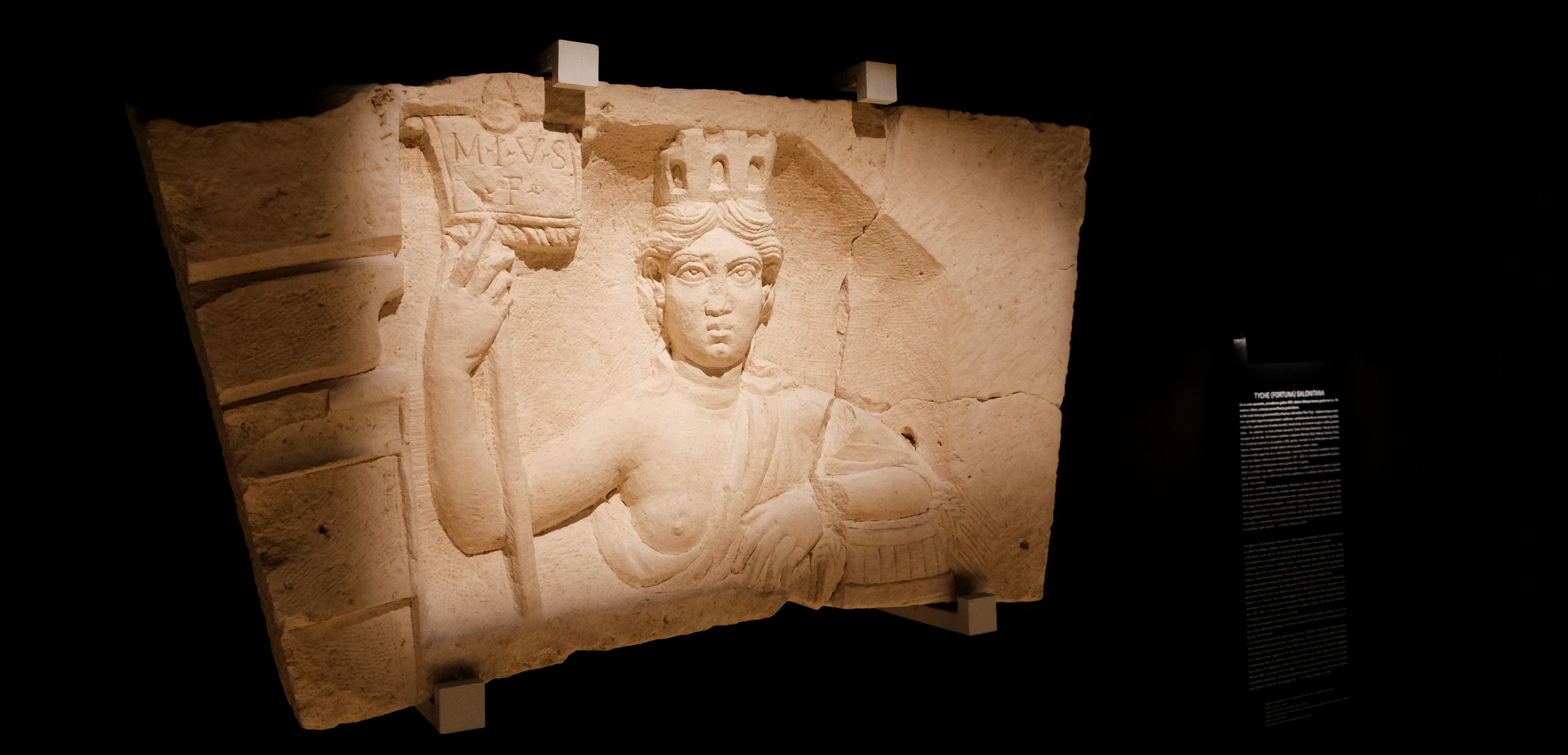
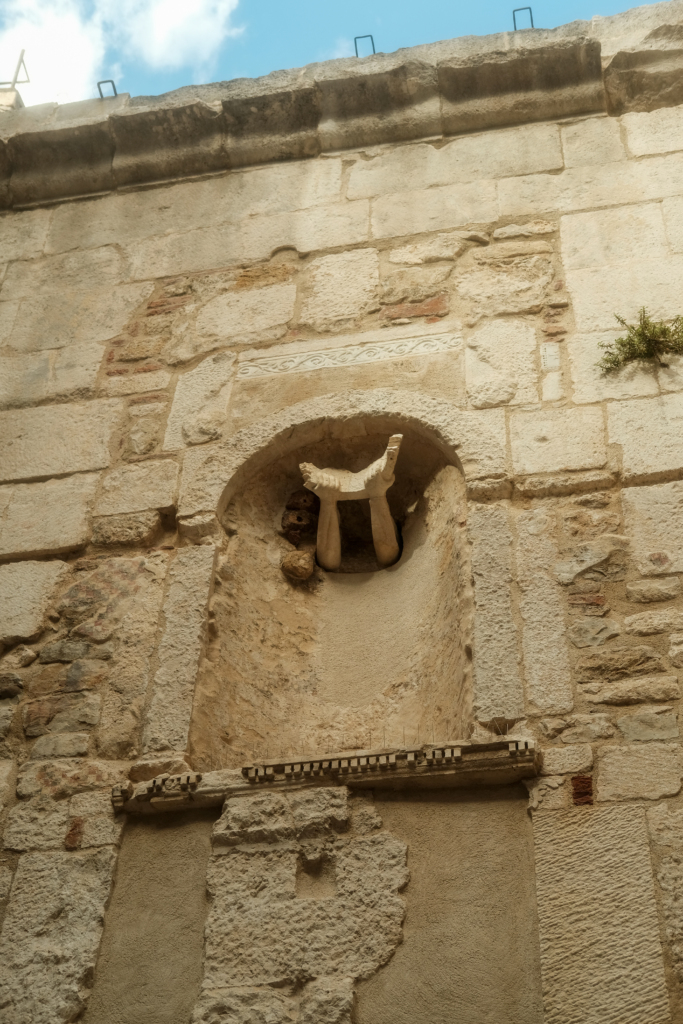
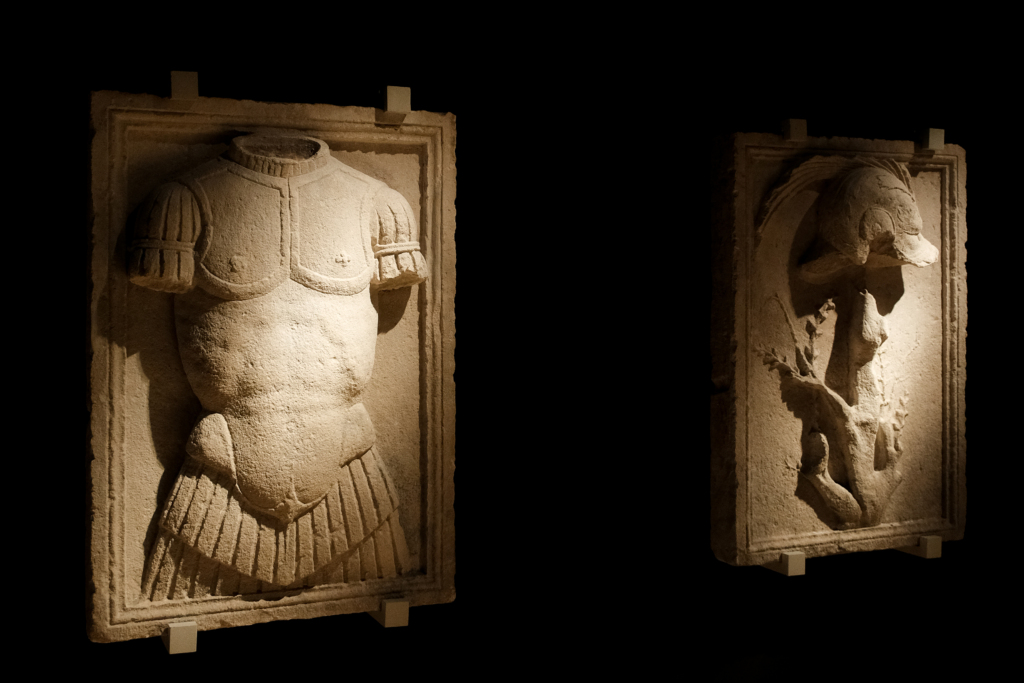
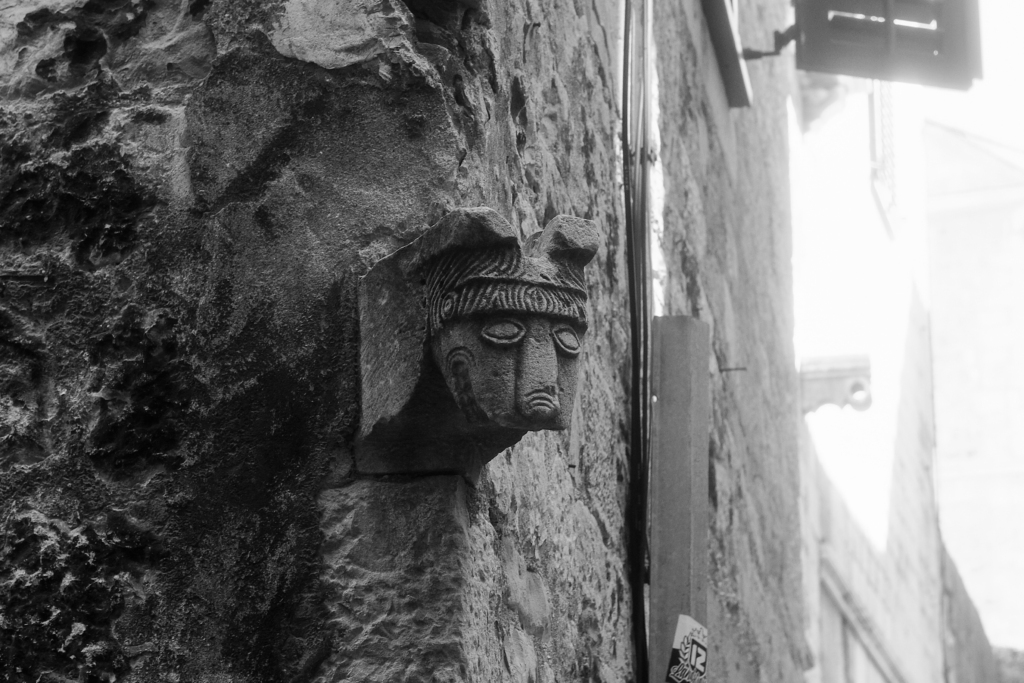
The more you know, the more you see. That sentence stayed with us after the tour with Nebojša, an archaeologist and curator at the Split City Museum. On our way to the entrance to the North Wall, he pointed out a small figurehead. Nobody can say for sure what it meant or where it came from. Its original meaning is lost, but at some point it had a purpose for someone. This realisation made us, two history buffs, smile, because part of the conservation job is keeping the materiality, the experience, even when the story stays incomplete.
We walked through the maze of cafés and stopped at an old, tired-looking wall. The usually smooth limestone was rough and broken. He explained that fire does that.
Much of the archaeological work in the Old Town took place in the 1970s. One of the preserved towers houses a seminar room, which feels about right for a city that treats its past as a working space. From the top floor of the tower, we accessed the wall itself. Unlike in Kotor, people still live in the historic city centre. Walking along the wall, we could look down on their homes. Between cafés, ice cream parlours, restaurants and small boutiques with high prices, it is easy to miss them. The city is trying to bring young people and artists back, and the museum plays its part: it has rooms for workshops and lectures. An extension with additional rooms and exhibition space is planned. I was able to get a brief glimpse of the plans. It will be modern and green. A true third place for the community.
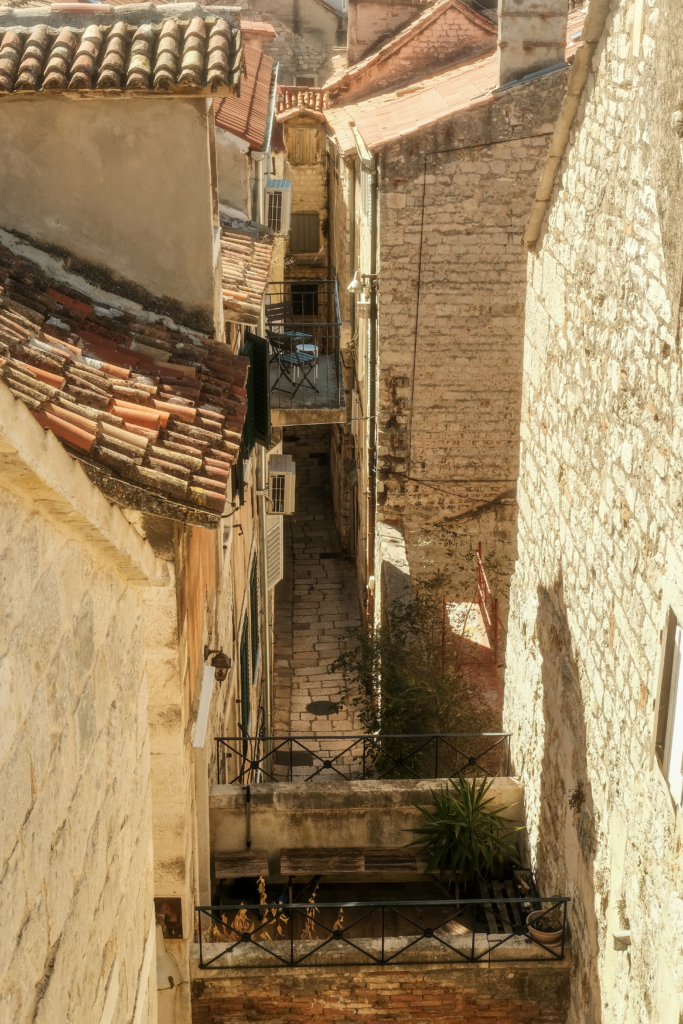
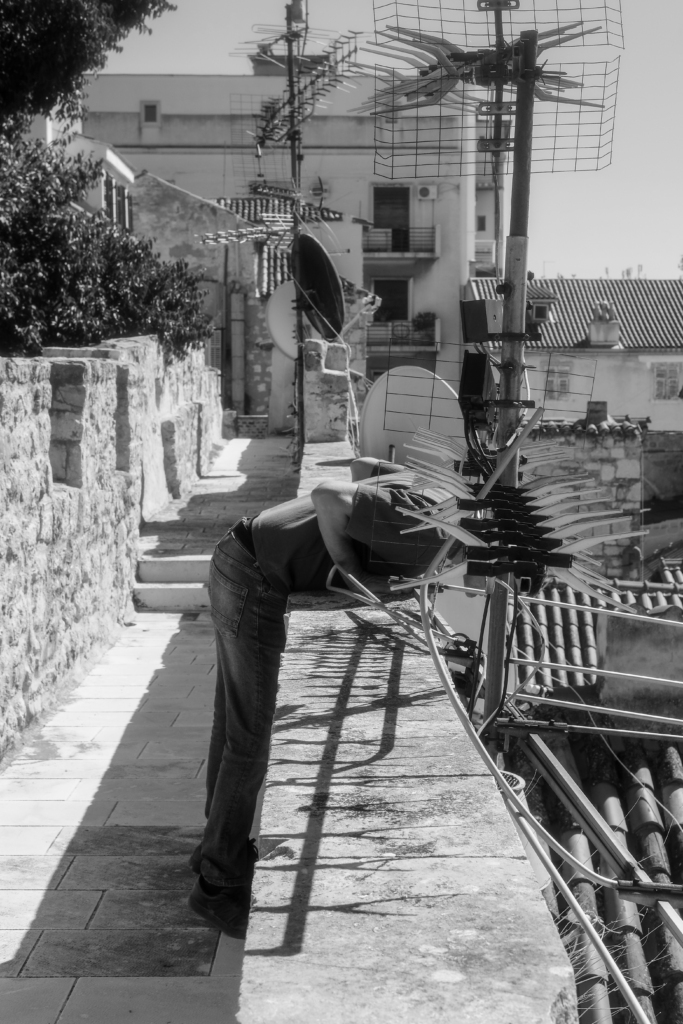
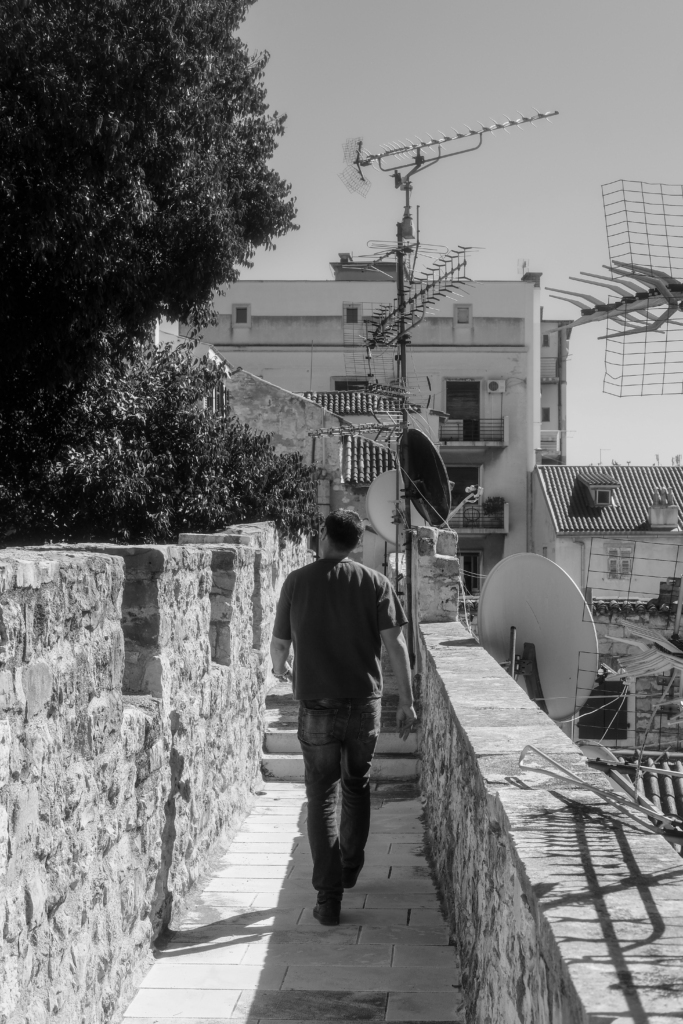
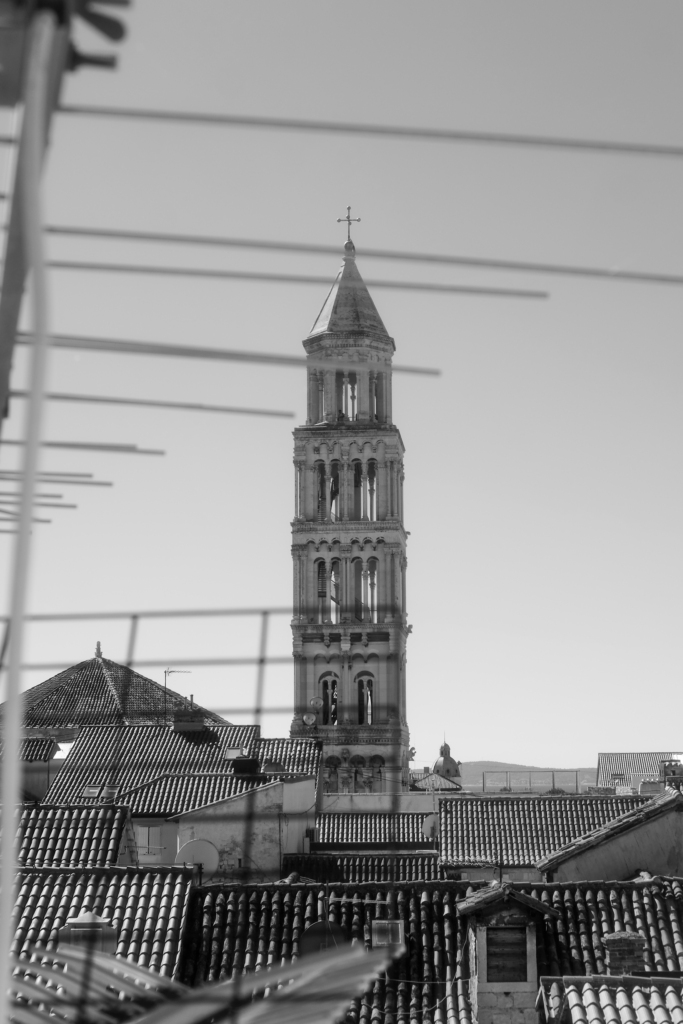
Layer on layer on layer. Every epoch built on the one before it. The wild 1990s left traces of their own: antennas that really ought to go, but tracking down their owners turns out to be harder than taking them down. Air conditioners, cameras and cables are simply what our time adds to the pile. Future archaeologists will have plenty to dig through. What will they think when they realise that we’ve excavated more than we’ve built above ground?
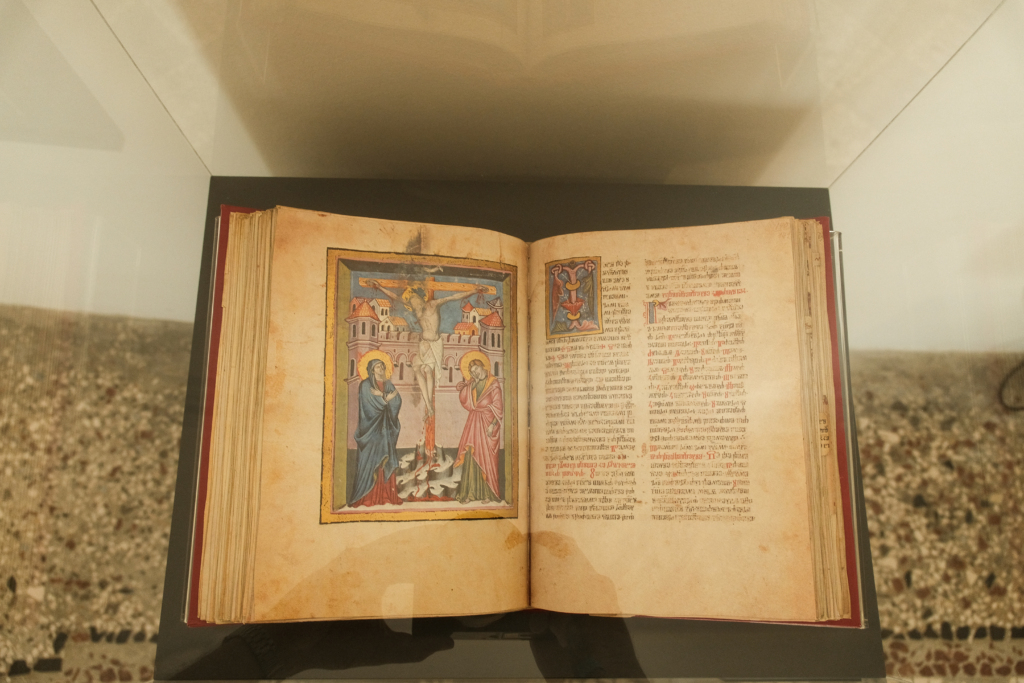
A small plug, then: support your local museum. Everything you hear on the tourist tours is researched and preserved by the museum’s scientists and staff. Split City Museum
“Split is also great for walking,” Nebojša says as we walk back to the centre. And it’s true: the best way to read this city is on foot, just like a legionarii.