


Written by Jan-Gottfried.
In Escaping the Sun, Leonie (28) and Jan-Gottfried (27) seek to find out how shade has historically been organised as a collective resource, and how third places allow young people to gather freely in the city.
Living with and managing type 1 diabetes since childhood, they bring a personal as well as an academic stake to the question of who public spaces are actually designed for. Together they embark on a journey to Ohrid, Kotor, Mostar and Split to ask people: Got shade?
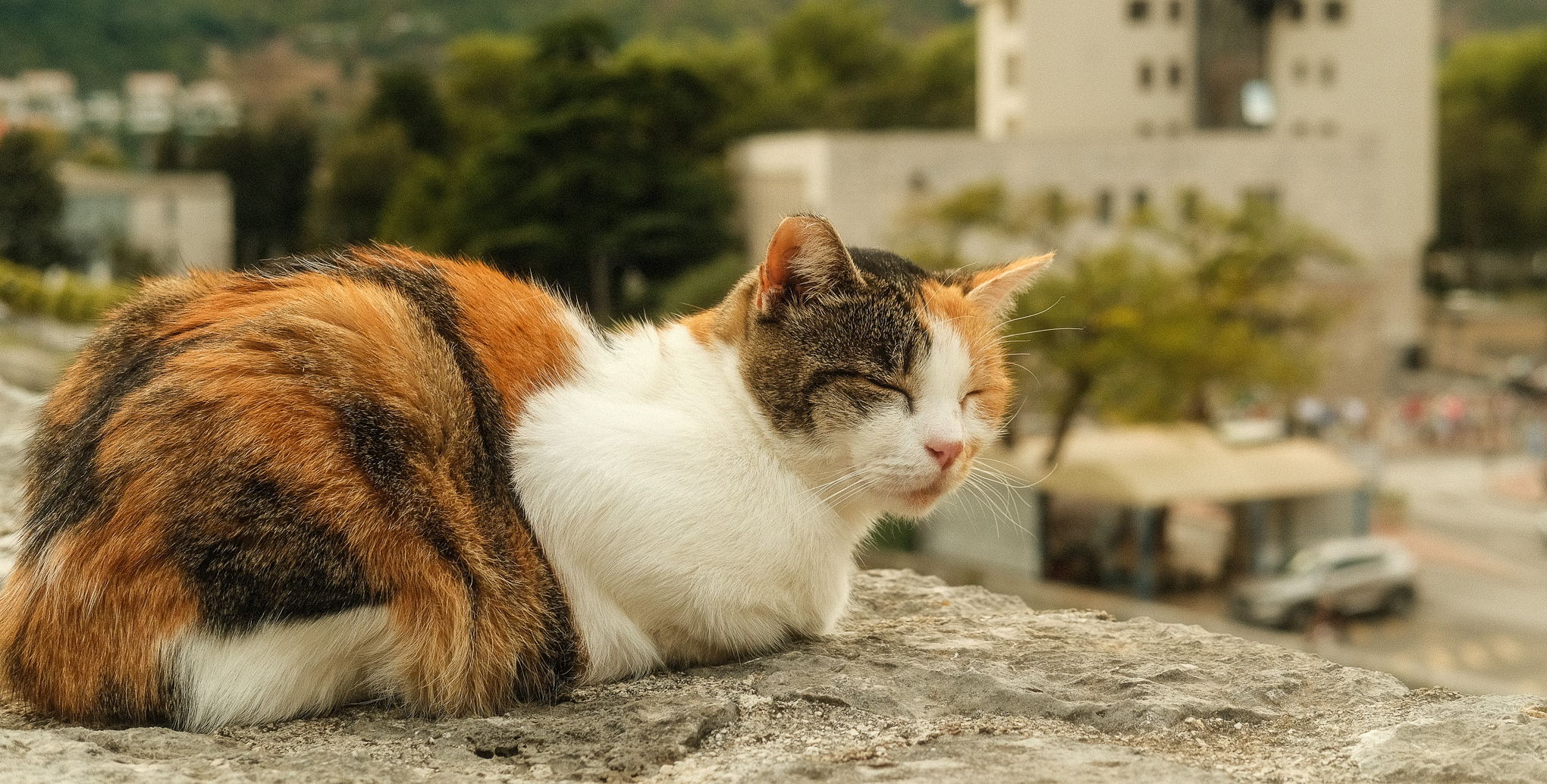
A purrfect start
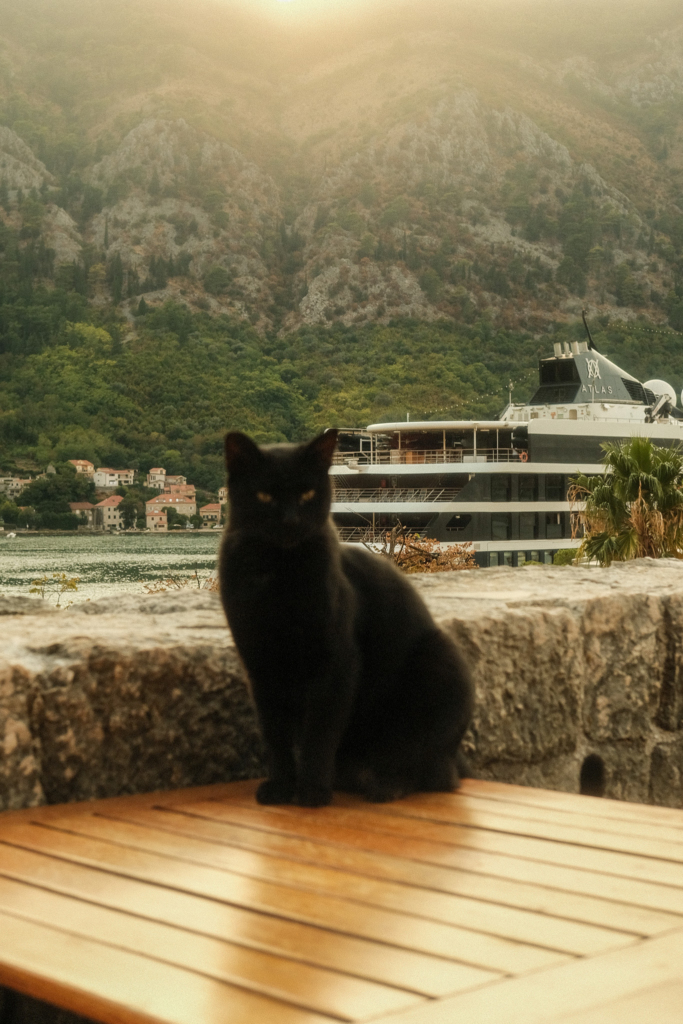
The biggest backpacking betrayal one can experience is being dropped off at the bus station two hours early. At 04:20, a ginger representative of the Kotor cat commission greeted us. Unfortunately, we had no gifts for him, except water. With only 10€ left in our wallets, we realised that our credit cards didn’t work. Hours later, with the cash problem solved (more or less), we gazed over Kotor’s sea bay during breakfast.
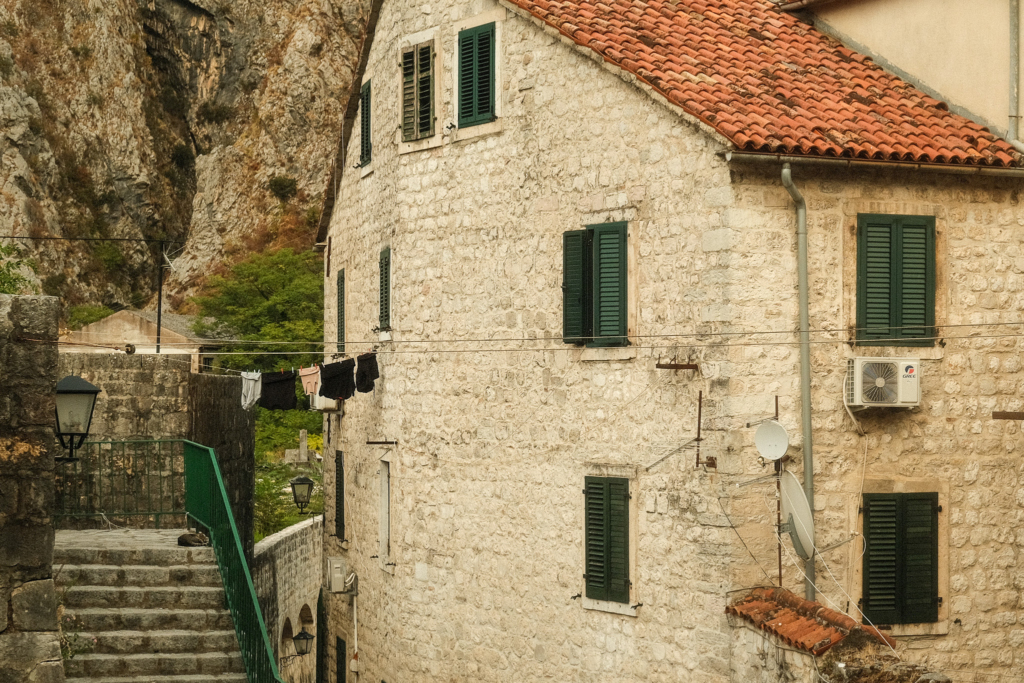
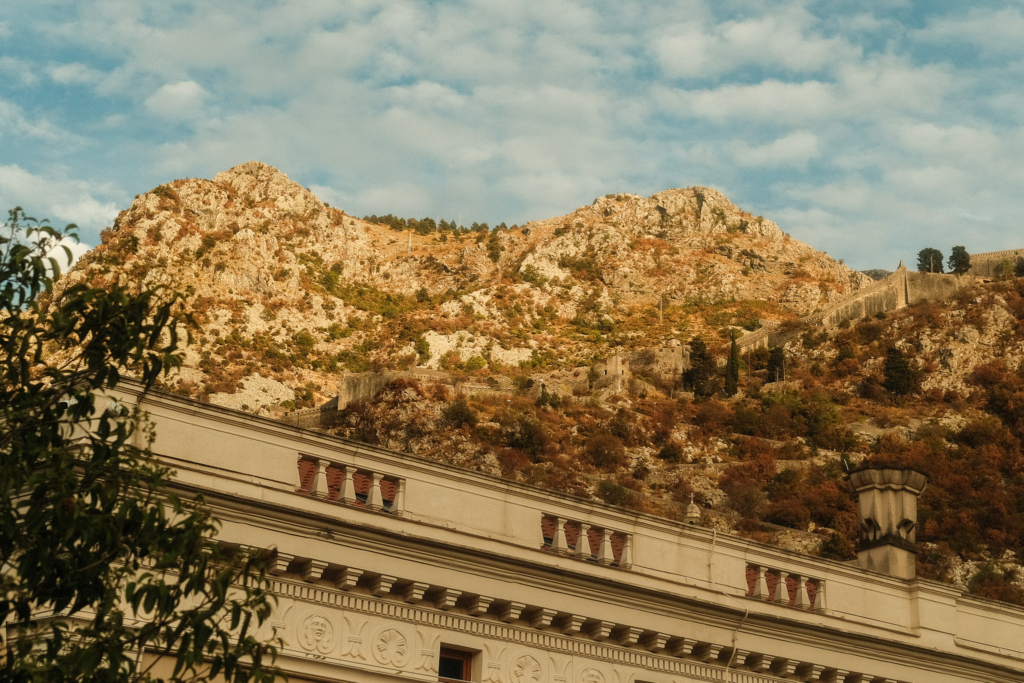
Located in the Bay of Kotor (Boka Kotorska) at the foot of Mount Lovćen, the Old Town sits between the Adriatic coastline and the mountain peaks. The first and thus oldest buildings were erected close to the cliffs, and the city expanded along the shore. The natural and culturo-historical region of Kotor was inscribed at the 3rd UNESCO session in 1979. At that time, Montenegro was still part of Yugoslavia. In 2006, Montenegro declared independence following the breakup of Yugoslavia and the dissolution of Serbia and Montenegro.
As a historian, I couldn’t help imagining how the fortified medieval city of Kotor has changed its face over the ages. The oldest known settlement can be traced back to ancient times. Roman founders named the city Acruvium. Over the ages, the city core, its buildings and its arts were shaped by every century. It was the region’s creative heart, with a profound and lasting influence on the Adriatic coast. Caught between the territories of powerful empires, it was a place of creation and destruction. Today, cruise ships lay siege to Kotor.
A city in layers
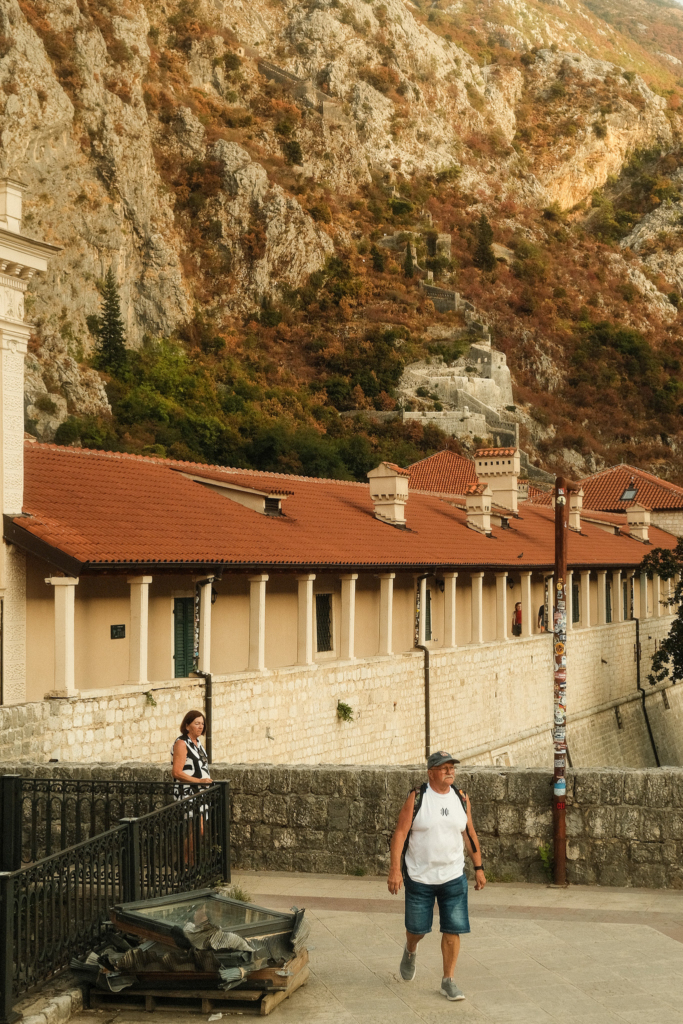
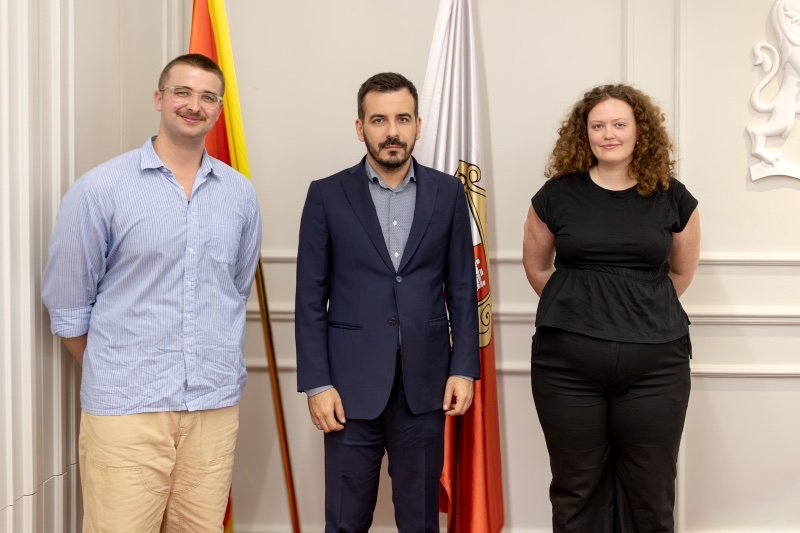
On our second day we had the opportunity to meet the mayor, Vladimir Jokić, after a guided tour of the Old Town. We met our guide, Jasna, in front of the main gate, which is one of three. Standing on the promenade with the sea at our backs, we entered through the portal. When this gate was built in 1555, it was only accessible by boat, since the boardwalk didn’t exist yet. Mythical griffins, the Venetian winged lion and other ornaments did not stand the test of time. They fell victim to vandalism between 1897 and the end of World War II.
The smaller north gate represents the Renaissance style and symbolises Kotor’s victory over the Ottoman admiral Hayreddin Barbarossa in 1539. The western gate was fortified by the Venetians in the 13th century and equipped with a movable bridge – try entering a city when you can’t even knock at the gate.
We didn’t have to walk far to stumble across a church. Right next to it, another church, and adjacent to the second church, a third. You see, while the oldest church – the Cathedral of Saint Tryphon, located on the city square, built in 1124 on top of an earlier church from 809 – was renovated and upheld over the centuries, every influential family, whether through trade or nobility, had its own little chapel or church in the city. Under Venetian rule, religious freedom – mostly within Christian beliefs – was granted as long as trade was flourishing. But affluent families weren’t the only force to change the face of the city. Two bell towers, for instance, had to be reconstructed in the 17th century following the earthquake of 1667.
Two additional buildings are worth mentioning: by the mid-17th century, the Church of St. Luke (1195) had been handed over from the Catholics to the Orthodox Christians, although the Catholics retained their altar until the mid-19th century. The Church of the Blessed Ozana (or: Church of St. Mary) dates back to the Romanesque period. Constructed on the site of an ancient basilica, it was consecrated in 1221.
The Church of St. Nicholas (1902–1909) is the largest Orthodox church in Kotor. It houses numerous valuable items, many of which were donated by wealthy local families. Adjacent to the church is the Treasury of the Serbian Orthodox Church, featuring a rich collection of icons, handicrafts and historical documents. We could extend the list of churches, but we think you get the gist. The monuments and cultural properties are authentically conserved and unique.
All numbers are sourced from the figures given in Kotor’s tourism brochure.
A city without its young
During the tour, our guide Jasna explained to us that young people are missing from the Old Town. Their leaving is driven not by heat, which would make the area physically impossible to inhabit, but by economic necessity. It begins when staying no longer makes it possible to work, access higher education, meet friends or imagine a future. Many return after finishing their university degrees, though, because they miss their social ties and networks. Most of the stores and infrastructure within the walls are built around the demands of mass tourism. Travel influencers highlight the cats and the scenic view of the bay from atop the mountain. The demand of two cruise ships’ worth of tourists at once – roughly 500 ships call at Kotor between March and November – mixed with backpackers and individual travellers, leaves little room for everyday life. Shops, restaurants and housing orient themselves towards guests who stay for hours, not residents who stay for decades. The cats stay, the young leave.
The city of heat and water
Getting back to the meeting with the mayor: he told us that the ecological conditions are changing. Every society reproduces itself through its metabolism with nature. The hot summers are the result of man-made climate change. This can’t be fixed at the local level. The development of new infrastructure and urbanisation cause an ongoing transformation of the area’s socio-economic structure. AC units are not a threat to Kotor’s unique cultural landscape, but congested traffic and buildings on the coast itself lead to a gradual transformation of the coastline.
Since many UNESCO cities in the region face the same challenges and demands, they support each other. On 12 December 2025, the CoMoCoSEE, the Council of Ministers of Culture of South-East Europe, convened its 9th ministerial meeting in Ohrid, North Macedonia, with UNESCO’s support – you can read about our experience in Ohrid in our first blog post. Ministers renewed their commitment to strengthening cultural collaboration at all levels. The Ohrid Declaration concluded the conference. The document highlights culture as a powerful enabler of cultural awareness and expression, inclusion, social cohesion, resilience and peace, and therefore as essential for the sustainable development of our societies and neighbourly relations.
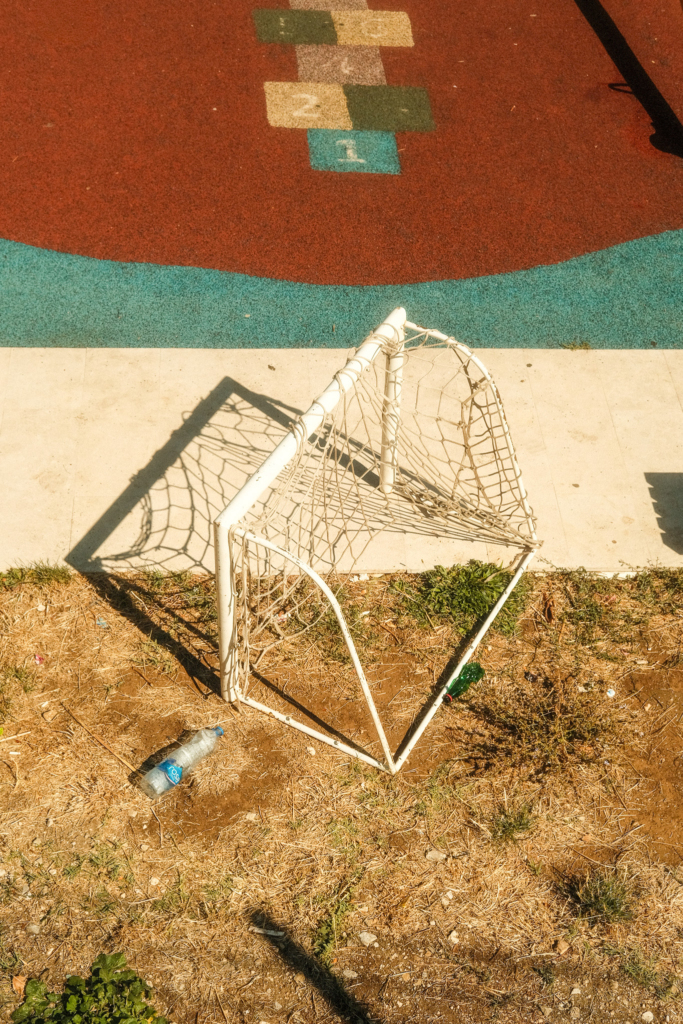
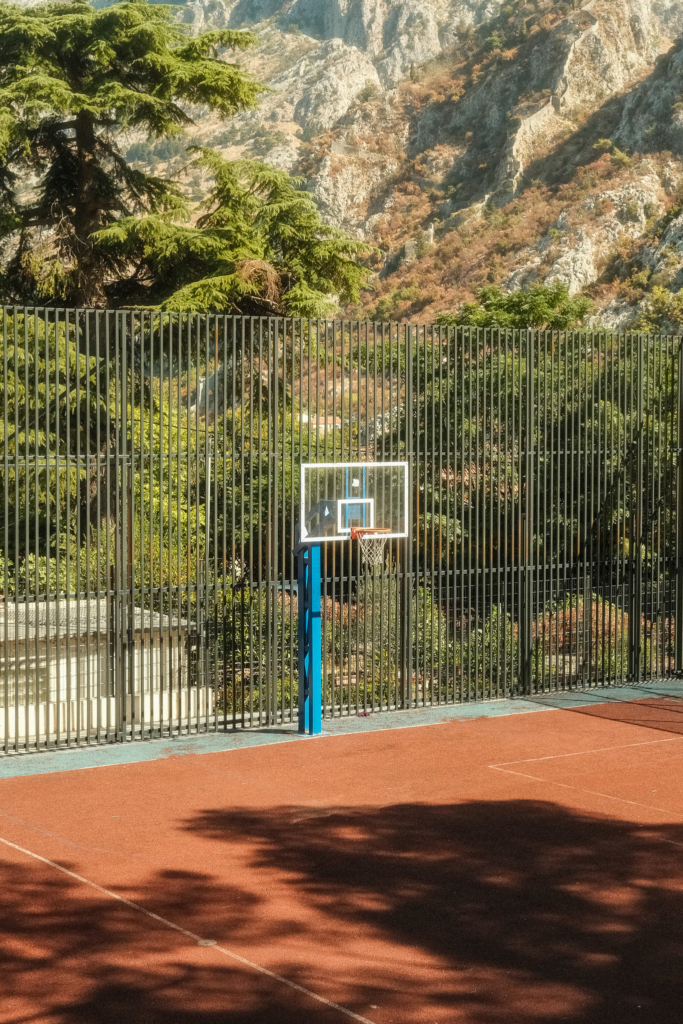
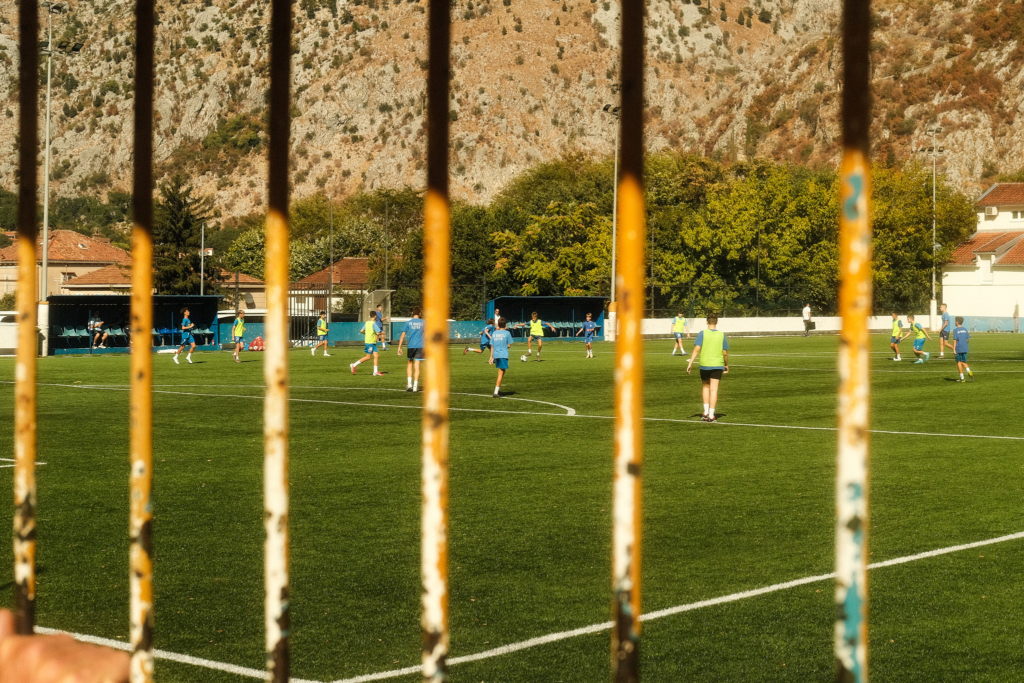
While scouting the city, we wondered whether the infrastructure of the Old Town offers answers to current climatic or social problems. The answer we got was, as so often: it depends. The white stone of the narrowly built houses limits the inhabitable space, so the city can’t grow, but it also creates shade and channels the wind. The heat expelled by AC units, however, warms those alleys up again. We were told that this year’s summer was the hottest in five decades: only 28 mm of rain fell over 90 days, roughly 10% of the average, accompanied by temperatures between 38 and 40 °C. This heat is inescapable. To our surprise, the drinking water, sourced from two springs, was largely unaffected by it, though it is influenced by the tides of the sea.
Jasna shared an old saying with us: the wind from the sea brings rain. She was right. Two days later the wind turned. The cruise ships departed and the rain came.
As global heating redraws the physical conditions of life, only the test of time and the determination of decision-makers will tell whether Kotor has the social power to remain what it has been for centuries: a city that is lived in, not just visited.