


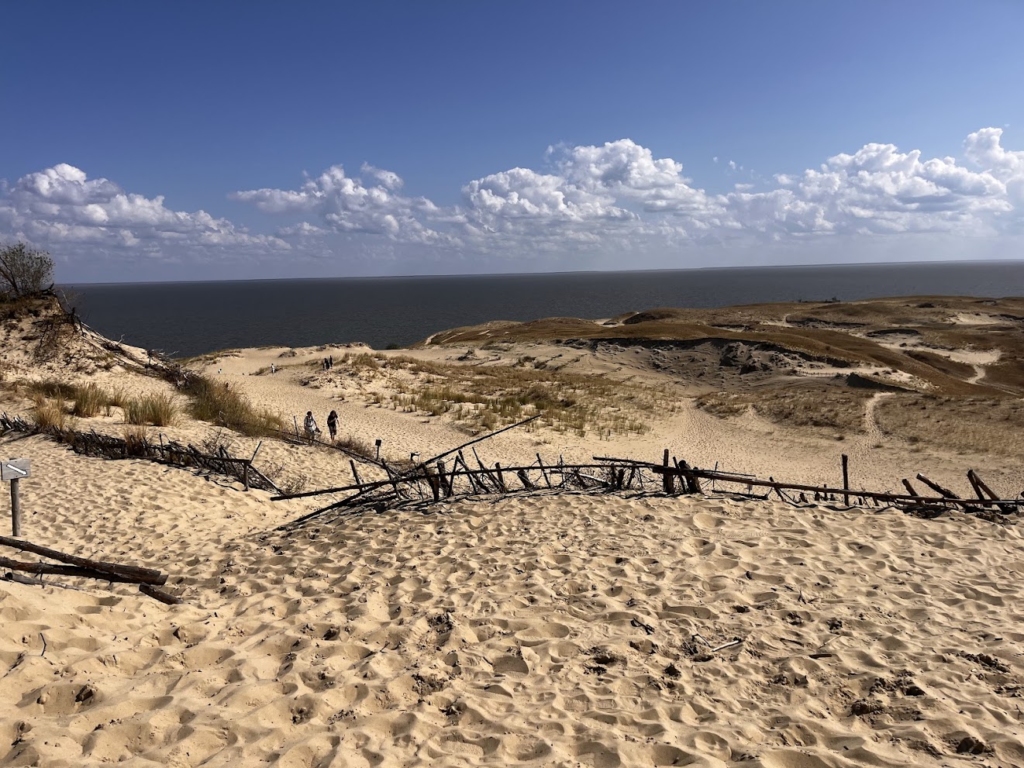
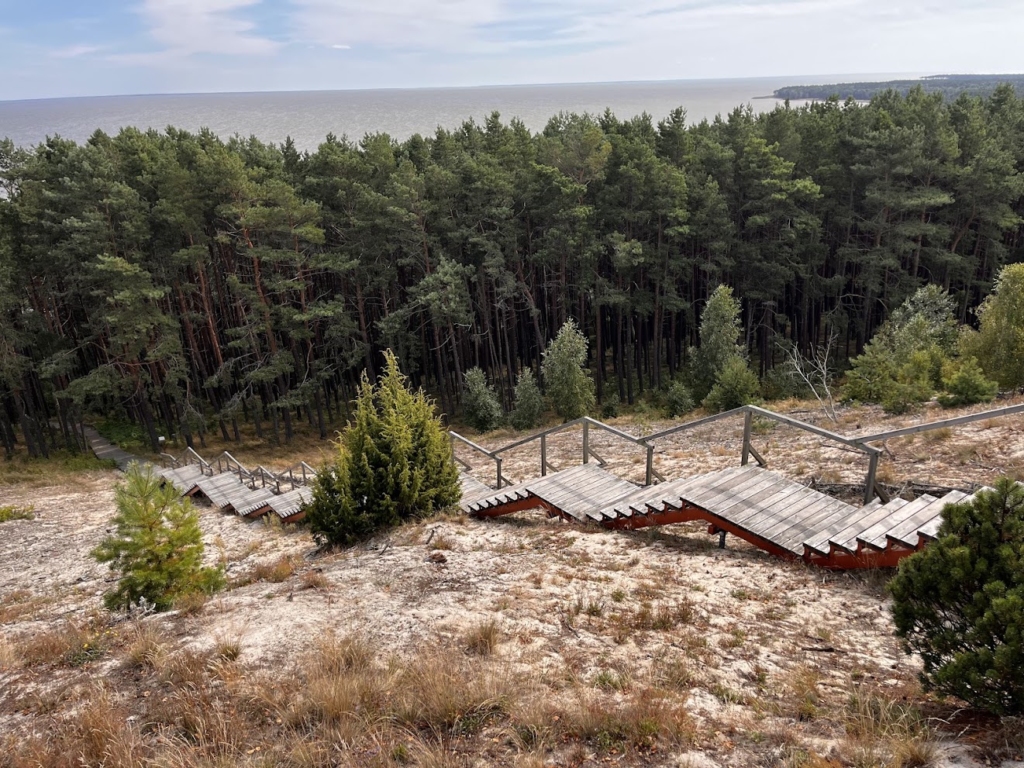
After the busy days in Vilnius, it was time to slow things down a little. My next stop was Neringa, in the north of Lithuania, on the Curonian Spit. It´s a completely different side of Lithuania with water, dunes, forests and small seaside settlements everywhere around me.
After Vilnius, my next stop was Neringa. I took a bus, and the journey took around five hours. Getting to the Curonian Spit was quite an experience in itself – the bus simply drove onto a ferry, we crossed the lagoon in about five minutes, and then continued our journey on the other side.
A French traveller was sitting next to me, so we started chatting. At one point, we got talking about how he had even discovered that Neringa existed in the first place. And honestly, it made me think – Neringa is not exactly the kind of place you accidentally end up in.
Neringa is a municipality on the Lithuanian part of the Curonian Spit, a long, narrow peninsula between the Curonian Lagoon and the Baltic Sea. It consists of four main settlements: Nida, Preila, Pervalka and Juodkrantė. Nida is the largest and the administrative centre, so this was my base for the next few days.
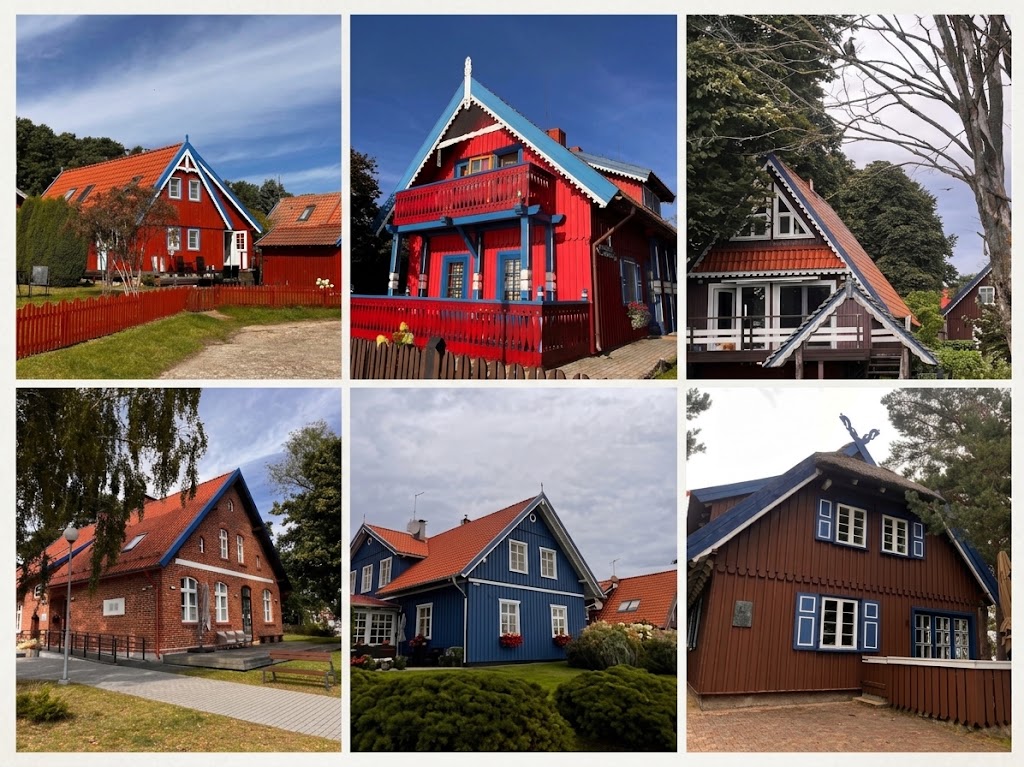
After arriving in Nida, I checked into my guesthouse, which was in a beautiful spot right next to the harbour and promenade. I went for a walk and immediately fell into the seaside atmosphere. Birds everywhere, boats in the harbour, fresh air – and a completely different pace of life from Vilnius.
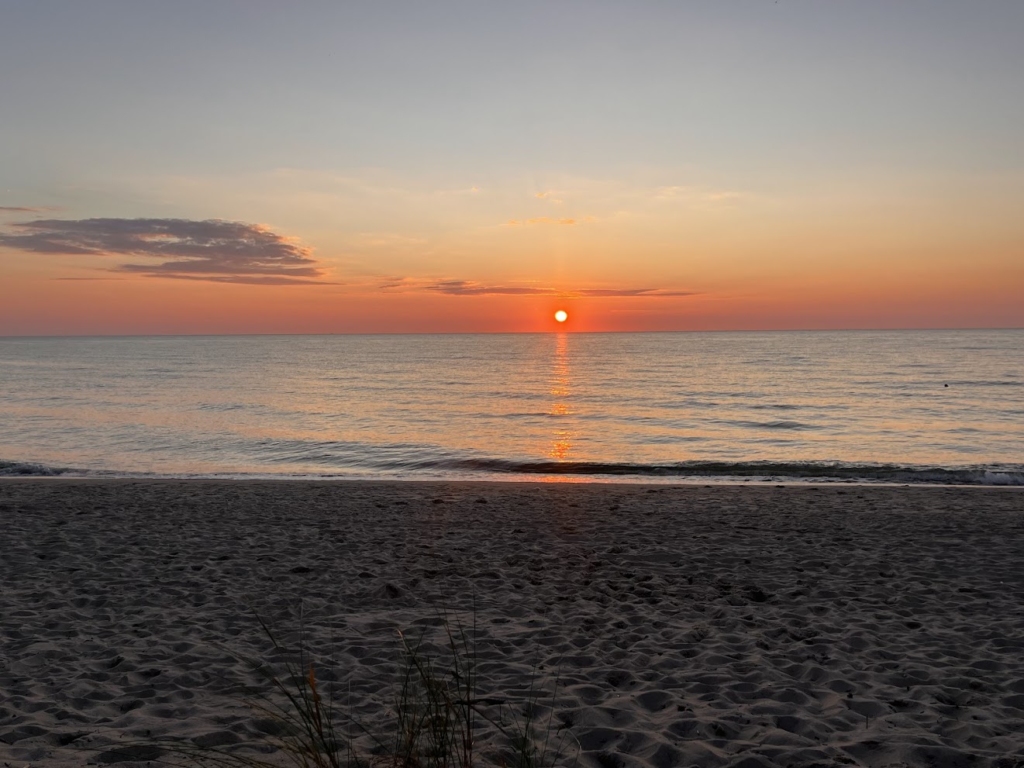
Later, I did some work on my blog and took a little break. In the evening, I walked across the peninsula to the Beach of Nida to watch the sunset. And just when I thought the day was ending perfectly, I spotted a fox after sunset.
My first day in Nida ended with a sunset and an unexpected encouter with wildlife ☺️
The second day started with some more exploring and lunch before things got a lot more interesting.
I met Vita Blažiūnienė, a heritage conservation specialist at the Neringa Municipality, and Angelina Ivanova, Deputy Director of the Nida Culture and Tourism Information Centre “Agila”. Angelina showed me the kind of tour they offer to visitors and explained how they approach tourism in Neringa. We talked about the constant balancing act between tourism and protecting the Curonian Spit National Park, why the area is recognised by UNESCO, what a cultural landscape actually means, and even the challenges of housing in such a protected place.
And then things got a little more adventurous.
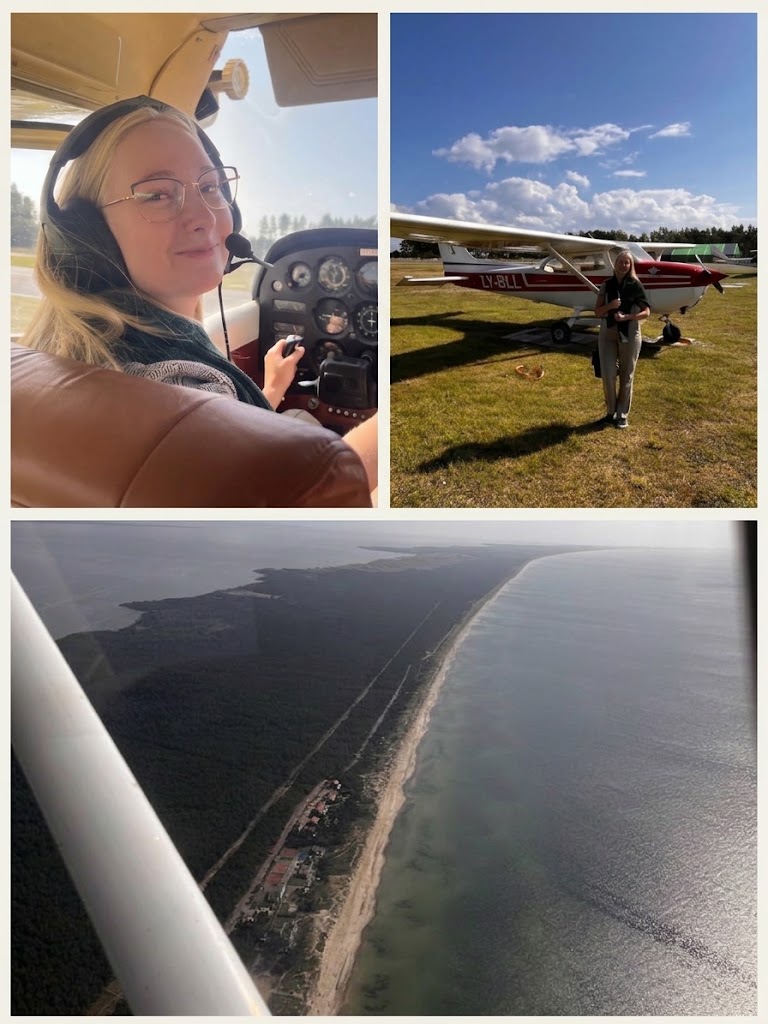
Vita took me to Nida Airfield, where I got to fly over Neringa – and even sit in the pilot’s seat. Nida has a long aviation tradition, including a gliding school established here in 1933.
Seeing the Curonian Spit from the air was incredible. Angelina had just been telling me about the shifting sands and how the dunes have shaped and continue to change the landscape, and suddenly I could see exactly what she meant. The narrow peninsula, the dunes, the lagoon on one side and the sea on the other looked completely different from above. I even spotted cormorants flying around us.
The atmosphere at the airfield was incredibly relaxed, and I am so grateful to the pilot and everyone who made this experience possible. I felt a little sick afterwards. But honestly, I would do it all over again.
After that, I finally slowed down and got some rest. In the evening, I walked around the harbour, watched the local life and chatted with some fishermen and a local 🐟
My third day in Nida was a rainy one, so I decided to embrace the weather and spend the morning indoors. I visited the Thomas Mann Museum, located in the summer house where the writer spent several summers with his family, and the Curonian Spit History Museum, which looks at the history and cultural heritage of the peninsula.
After the museums, I had one last lunch in Nida before heading back to Vilnius. From there, I caught my flight to Krakow – and just like that, my Baltic adventure came to an end 🧭