


16/Sep – 20/Sep
Nice felt like an appropriate place to end the journey because, perhaps more than any of the previous cities, its World Heritage story is about encounters.
Amsterdam had been structured by canals, Bruges by continuity, Brussels by multiple centres, Luxembourg by participation, Strasbourg by connections and Bern by landscape. Nice brought many of those ideas together through a different kind of urban history: a city repeatedly reshaped by people arriving from elsewhere.
I began in Vieux-Nice and later met Julie at the Centre Nice Patrimoine Mondial. That conversation immediately changed the way I understood the city.
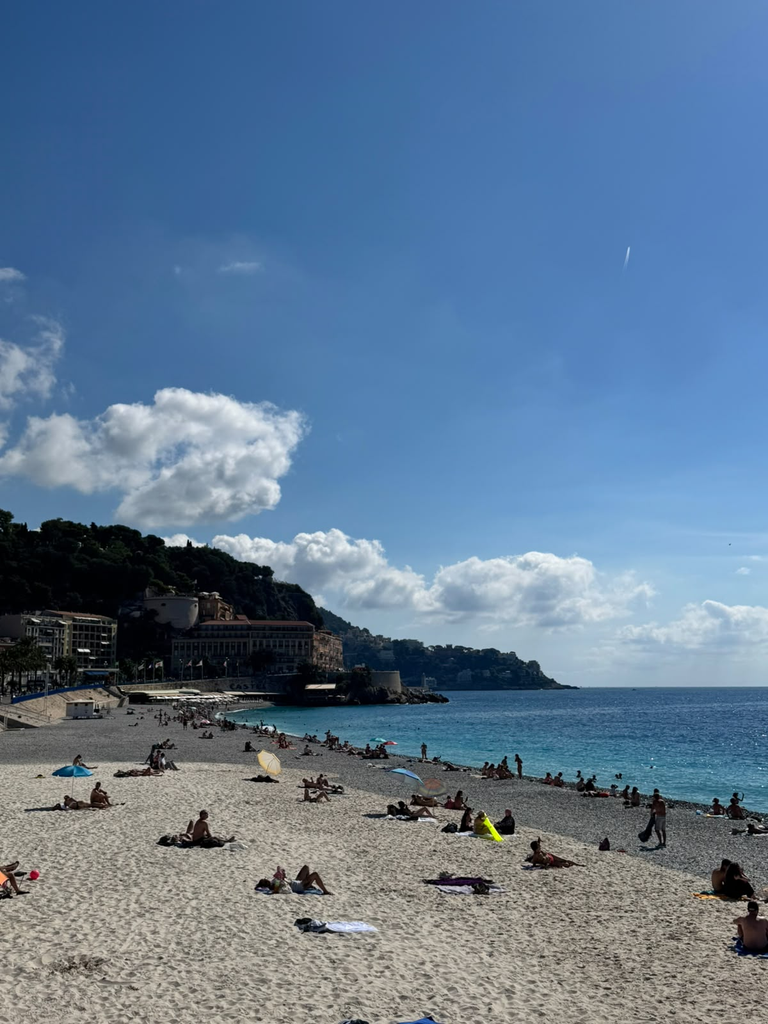
Nice obviously has a history long before tourism. But the UNESCO property focuses on a very specific chapter: the transformation of the city into a cosmopolitan winter resort from the mid-eighteenth century onwards.
The Nice recognised by UNESCO is not simply the old Mediterranean town. It is also the city that expanded beyond it, deliberately adapting its streets, architecture, gardens and relationship with the sea to receive people arriving from Britain, Italy, Russia, France and elsewhere.
What exactly is World Heritage here?
The property is officially called Nice, Winter Resort Town of the Riviera and was inscribed on the World Heritage List in 2021.
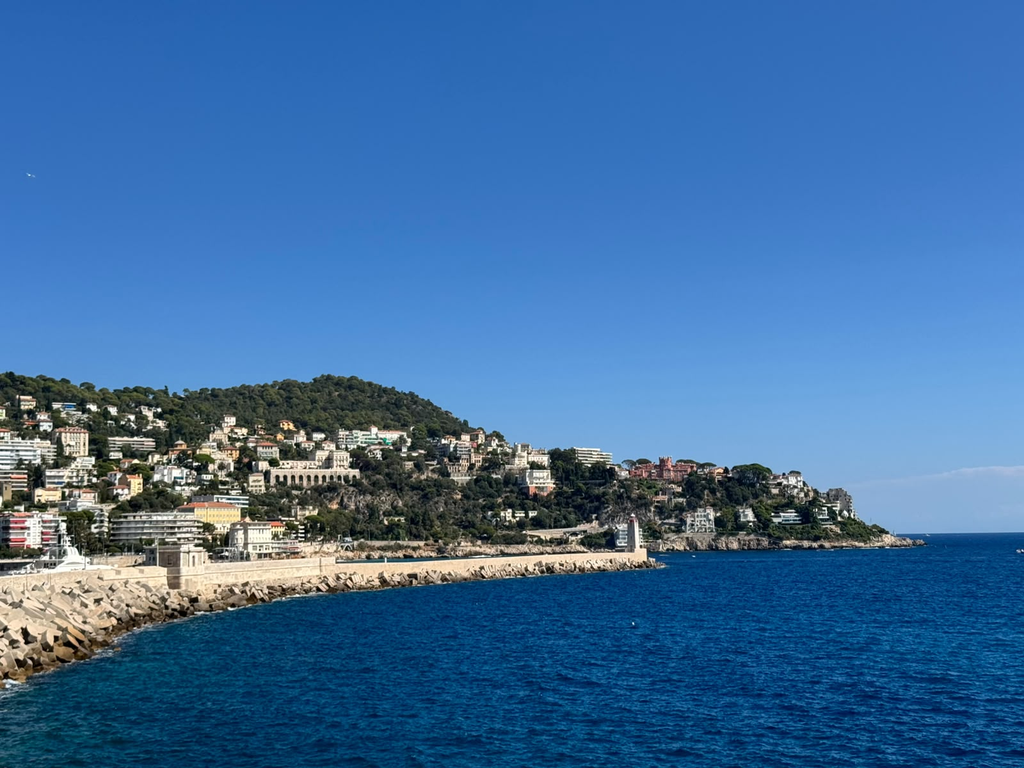
It covers 522 hectares and includes a remarkably broad urban landscape: the coastline from the Promenade des Anglais towards Mont Boron, central districts developed for winter visitors, promenades, gardens, hotels, villas, apartment buildings, places of worship and parts of the hills.
This is important because Nice is not recognised primarily as a medieval city.
From the middle of the eighteenth century, increasing numbers of wealthy winter residents, initially especially British, began spending the colder months there. Nice was still part of the Kingdom of Sardinia, and in 1832 the Consiglio d’Ornato was established to regulate urban expansion and create a city increasingly adapted to this international population. The modest coastal path created with British involvement in the 1820s eventually became the Promenade des Anglais.
After Nice became part of France in 1860 and joined the European railway network a few years later, the process accelerated. New districts developed outside the medieval core, while hotels, villas, gardens, promenades and places of worship responded to an increasingly diverse international clientele.
UNESCO describes Nice as an exceptional fusion of British, Italian, French, Russian and other cultural influences. That mixture is visible in architectural styles, decorations, urban planning and even the functions of buildings themselves.
This became the central way I read the city. Nice did not feel defined by one heritage identity., it felt like a collage.
A city built through outside influences
After meeting Julie, I took the lift to Colline du Château, the hill separating Vieux-Nice from the port.
There is no château anymore, but the elevated park, its waterfall and viewpoints provide perhaps the clearest way to understand Nice spatially.
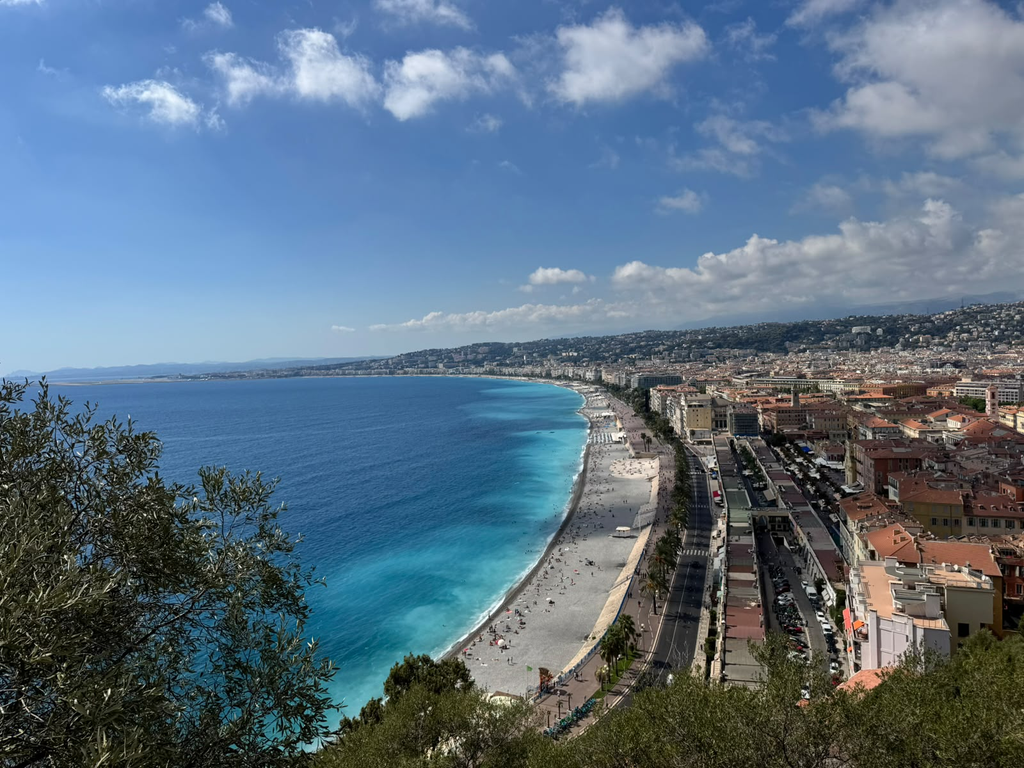
From above, the relationship between sea, city and hills becomes obvious. This geographical setting was not simply attractive scenery added to the World Heritage narrative. It was one of the conditions that produced it.
UNESCO identifies Nice’s mild climate, Mediterranean coastline, surrounding hills and views towards the mountains as fundamental attributes of the winter-resort landscape. The city’s urban form was deliberately organised to make use of sunlight, panoramas, vegetation and the relationship between sea and relief.
From the hill I continued along the waterfront, through the Promenade des Anglais and eventually towards the Port.
What initially looked like a straightforward coastal walk gradually became a lesson in how much of the city had been designed around movement, leisure and views. The promenades were not accidental spaces left between buildings and the sea. They were part of the urban model.
The same applies to gardens, terraces, broad boulevards and façades positioned to benefit from particular orientations. The Consiglio d’Ornato regulated parts of this expansion specifically to create an attractive and harmonious environment for residents and visitors.
Later, walking back inland, I began making small deviations whenever a building or street caught my attention.
Sometimes these choices were architectural. Sometimes they were much more practical. Nice was still hot, and I regularly changed direction simply because one side of a street offered more shade.
That seemingly trivial decision became unexpectedly useful.
The World Heritage description places considerable importance on vegetation, orientation and climate-conscious urban design. Parks, planted boulevards and private gardens were part of the image of a subtropical winter resort, but they also shaped the physical comfort of moving through the city.
The historical city designed to attract people through its climate is still experienced through climate today.
Reading cosmopolitanism in buildings
My second day became more architectural.
Rather than following one continuous route, I moved between buildings, gardens and districts associated with the development of Nice as a winter resort.
Places such as Hôtel Negresco, the façades and hotels along the Promenade des Anglais, the Masséna area, the Musiciens district, the gardens and villas around Cimiez, and later the architecture around Libération all reveal different stages of the city’s expansion.
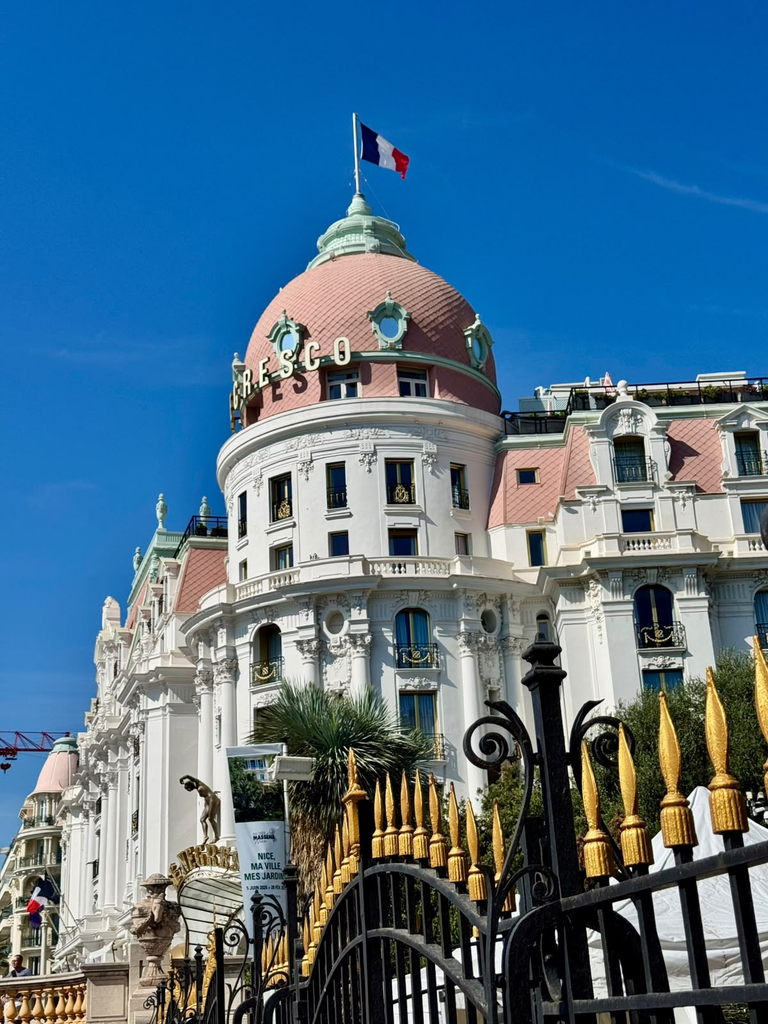
The variety is striking.
Neoclassicism, historicism, eclecticism, Belle Époque architecture, regionalist influences and later Art Deco coexist within the World Heritage property. UNESCO explicitly connects this diversity to the international sponsors, architects and craftspeople who brought styles and techniques from elsewhere and adapted them to Nice.
This made the idea of “foreign influence” feel inadequate. These influences were not simply added on top of an otherwise fixed local identity, they participated in producing modern Nice.
The same is true of vegetation. Imported and acclimatised species became part of the image of the Riviera, helping create the exotic garden landscapes associated with winter residence.
Nice therefore raises an interesting heritage question. At what point does something introduced from elsewhere become local heritage?
Here, the answer seems to be: when generations of exchange become part of the city’s own development.
That is why describing Nice simply as “French”, “Italian” or “Mediterranean” always feels slightly incomplete. Its heritage rests partly on the fact that it became a meeting place between them.
Religion, migration and another layer of the city
On my third day, I visited the Russian Orthodox Cathedral of Saint Nicholas.
Its scale and architecture are almost impossible to confuse with the surrounding city.
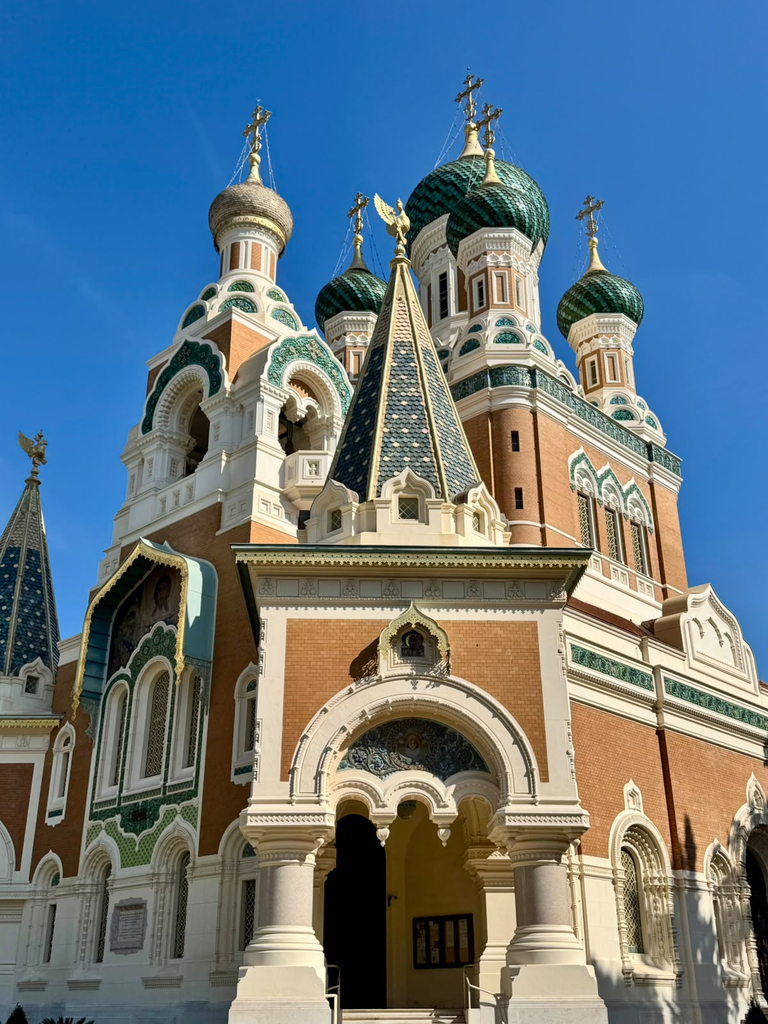
I arrived while a religious service was taking place, and the interior was filled with chanting.
That made the building feel very different from an architectural monument visited purely for its visual qualities.
The cathedral exists because Nice attracted a substantial Russian aristocratic presence during the winter-resort period. The city’s UNESCO interpretation specifically includes foreign places of worship among the urban functions created for international residents, and the Russian Cathedral lies within the inscribed area today.
But hearing the service made another point clearer.
Cultural influence is not necessarily something that belongs only to the past.
A building associated with historical migration can continue performing its religious function.
This is one of the more subtle dimensions of Nice’s heritage.
Hotels can remain hotels. Villas can remain residences. Churches can remain places of worship. Promenades can continue to be promenades.
UNESCO notes that many hotels, villas and apartment buildings within the property still retain their original or closely related functions. The continuity is therefore sometimes functional as well as physical.
That makes Nice quite different from places where preservation requires finding entirely new uses for historic structures.
Tourism as heritage, not simply pressure
Throughout the journey, tourism repeatedly appeared as a major urban force.
In Amsterdam it shaped commercial geography. In Bruges it concentrated particular functions. In Brussels it influenced the relationship between the historic centre and local everyday use. Nice complicated that discussion. Here, infrastructure created for visitors is itself one of the reasons the city is World Heritage.
The hotels, promenades, gardens, villas and leisure landscapes associated with tourism are not simply contemporary pressures acting on an older heritage city, they are part of the heritage.
This does not make current tourism neutral or remove contemporary housing and affordability questions. It simply means the historical relationship is different.
Nice grew partly because outsiders came to stay.
Its nineteenth- and early twentieth-century urban development was profoundly shaped by the infrastructure necessary to host them.
Preserving that history therefore also means preserving evidence of a city designed around hospitality, leisure, climate and international mobility.
This makes the usual opposition between “tourists” and “locals” much less useful. The visitor has been part of the urban story for centuries.
The more interesting question becomes how a city historically shaped by temporary residents continues functioning for permanent ones.
Who can occupy the Riviera?
That question became noticeable during my own stay.
Accommodation in central Nice was expensive enough that I stayed outside the city and travelled in each day.
I was therefore reproducing, on a tiny and temporary scale, a wider spatial relationship: the centre was where much of the activity and heritage I wanted to access was concentrated, but my everyday base was elsewhere.
I would be cautious about interpreting too much from my own travel budget. But the experience highlighted something spatially important.
Where people can afford to stay or live changes how they use the city.
A person living in central Nice has a different relationship with the Promenade, historic centre and public spaces from someone travelling into the city each day from elsewhere in the metropolitan area.
The city then becomes larger than its administrative or World Heritage boundaries through daily movement.
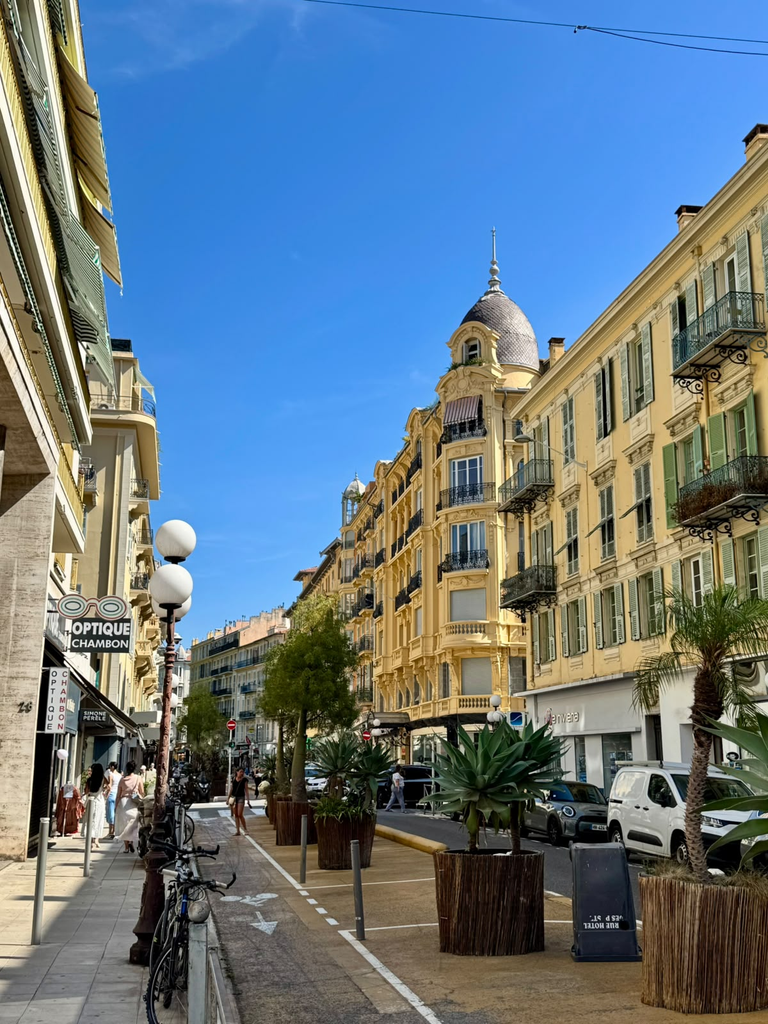
Nice also has a visibly luxurious side. Historic hotels, grand façades, waterfront properties and particular shopping or residential areas retain an atmosphere strongly associated with wealth. That is not incidental to the World Heritage history either.
The winter resort initially developed around aristocratic and upper-class visitors before broadening over time. The transformation from exclusive winter resort to larger tourist destination happened progressively, with seaside and summer tourism becoming increasingly important from the interwar period onwards.
This continuity between historic prestige and contemporary desirability is fascinating, but it would require much more data before drawing conclusions about who benefits from it today.
Housing prices, employment, tourism accommodation, commuting patterns and resident perspectives would all be necessary.
Again, walking revealed the question more readily than the answer.
A heritage city made from movement
This was perhaps the idea that stayed with me most. The World Heritage value of Nice is closely related to people arriving. British winter residents helped shape the Promenade. Russian communities left religious and architectural heritage. Italian and French political histories influenced planning and identity. Architects, craftspeople and investors brought styles from different parts of Europe. Rail connections dramatically expanded who could reach the city.
Different generations of visitors gradually transformed a winter resort into the Riviera destination recognised today. Movement is therefore not external to Nice’s heritage.
It is one of its historical engines.
This also explains why the World Heritage property is so spatially diverse.
It extends across the old town, coastline, planned central districts, hills, gardens and individual buildings whose relationship is not always obvious when encountered separately.
The common thread is not a single architectural style. It is the urban landscape created through cosmopolitan winter residence.
That distinction made Nice one of the most conceptually interesting stops of the journey.
What Nice left me with
Nice was the final city of Beyond the Postcard, and it challenged one of the assumptions that had quietly followed me through much of the trip.
I had often looked at heritage cities through tensions between local life and visitor pressure.
Nice showed why that relationship cannot be treated as universal.
Here, attracting outsiders was itself one of the forces that created the heritage landscape.
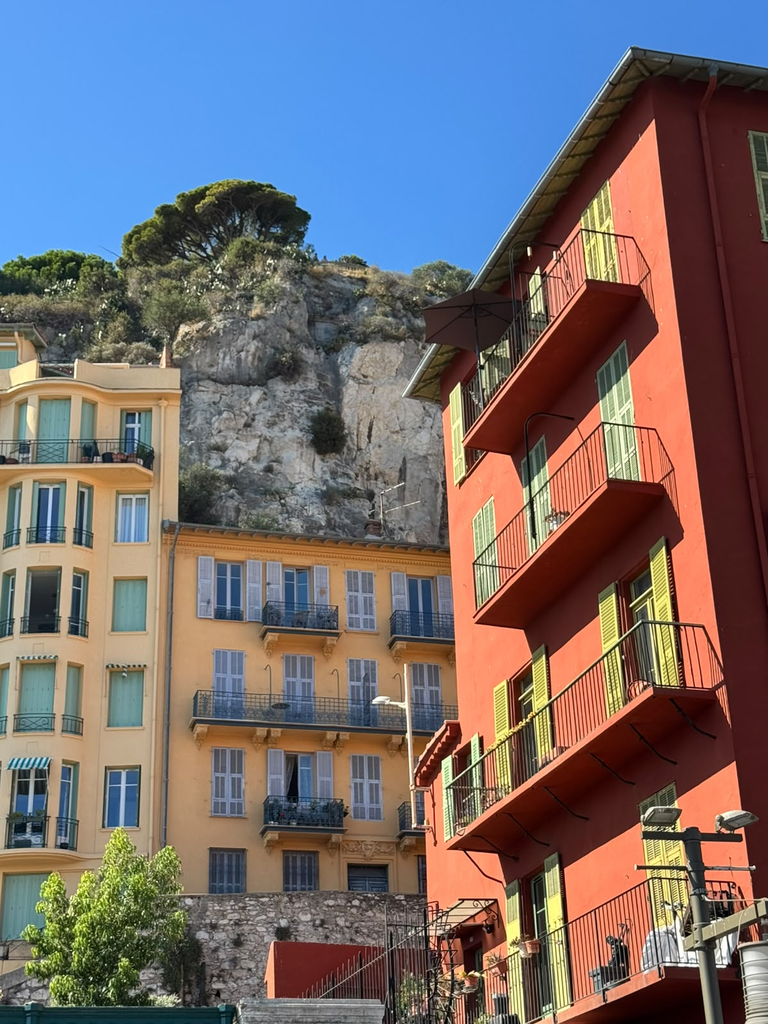
The Promenade des Anglais, international hotels, foreign churches, exotic gardens and eclectic residential architecture all document a city that developed through cultural exchange.
That does not mean contemporary tourism is automatically beneficial. It means its relationship with heritage must be understood historically before being evaluated spatially or socially.
Nice also brought the idea of multiple cities into a slightly different perspective. The different landscapes I encountered were not only residential, tourist or commercial. They were also cultural layers.
A Mediterranean city. A former Sardinian city. A French city. A British winter resort landscape. A Russian religious landscape. A Belle Époque city. A contemporary coastal metropolis. None completely replaces the others. They accumulate.
Perhaps that is why Nice sometimes feels less like a single historical narrative than a collage whose pieces gradually became inseparable.
Julie had helped me understand this at the beginning of the visit, and by the end it was visible almost everywhere: in gardens, façades, religious buildings, promenades, hotel architecture and the relationship between city, hills and sea.
For Beyond the Postcard, Nice became a final reminder that a living World Heritage City does not necessarily preserve one stable identity.
Sometimes its heritage lies precisely in the ability of different people, influences and ways of inhabiting a place to accumulate until they become part of the identity of the city itself.