Written by Leonie
In Escaping the Sun, Leonie (28) and Jan-Gottfried (27) seek to find out how shade has historically been organised as a collective resource, and how third places allow young people to gather freely in the city.
Living with and managing type 1 diabetes since childhood, they bring a personal as well as an academic stake to the question of who public spaces are actually designed for. Together they embark on a journey to Ohrid, Kotor, Mostar and Split to ask people: Got shade?
Crossing borders
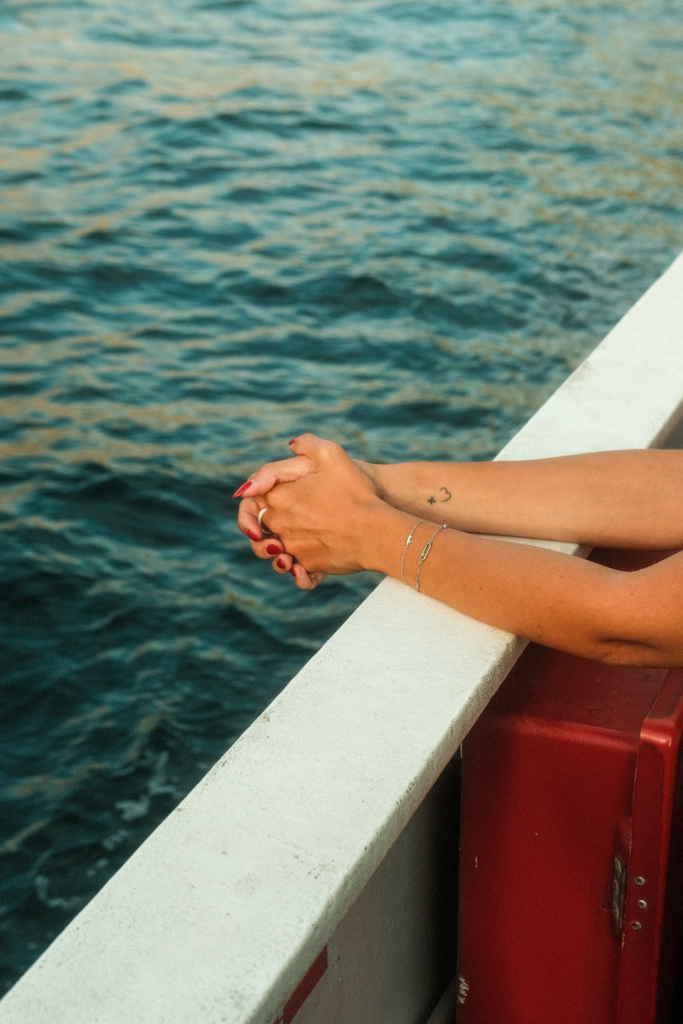
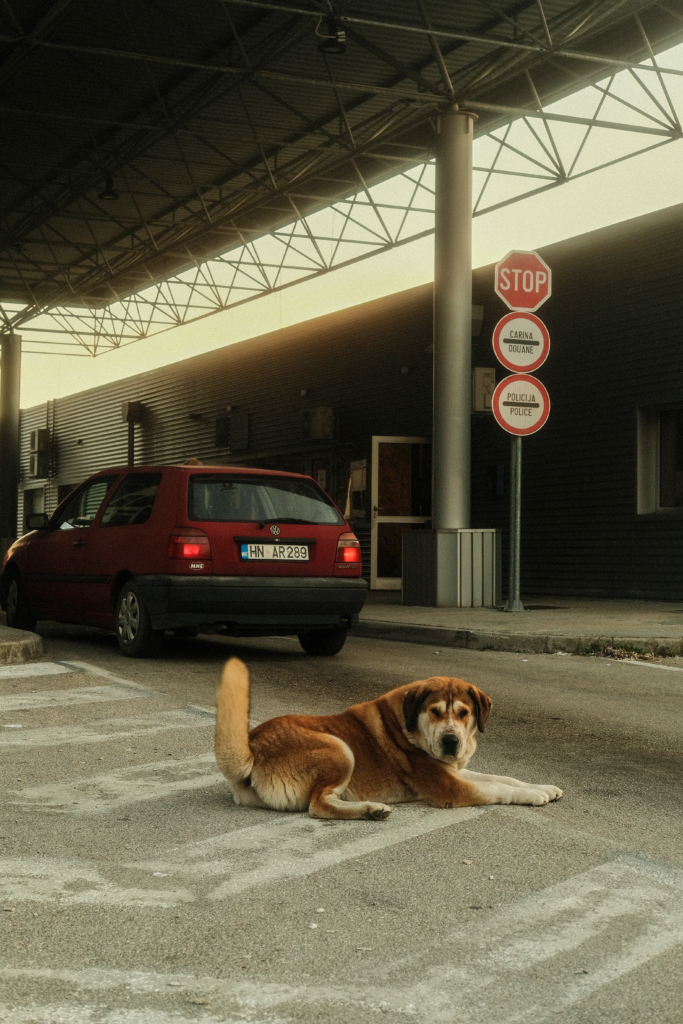
So we got lucky. We were not on the passenger list of the bus. We spiralled a bit because it turned out that we had accidentally booked our bus from Kotor to Mostar for July instead of our actual travel date in September. But the bus driver was very kind and still let us ride with them. It was a stunning scene, travelling along the Bay of Kotor, and taking a ferry. We also made a new friend on the bus: Mohammed from Lebanon. At the border between Montenegro and Bosnia and Herzegovina, a big dog wandering through border control welcomed us to the country.
After a somewhat prolonged bus journey, we arrived in Mostar at 21:00. We checked into our apartment and went out to find some food. A friend of ours, Sammy, was coincidentally in Mostar at the same time, also working on a project. With her recommendation, we found a restaurant that was still open at 22:00.
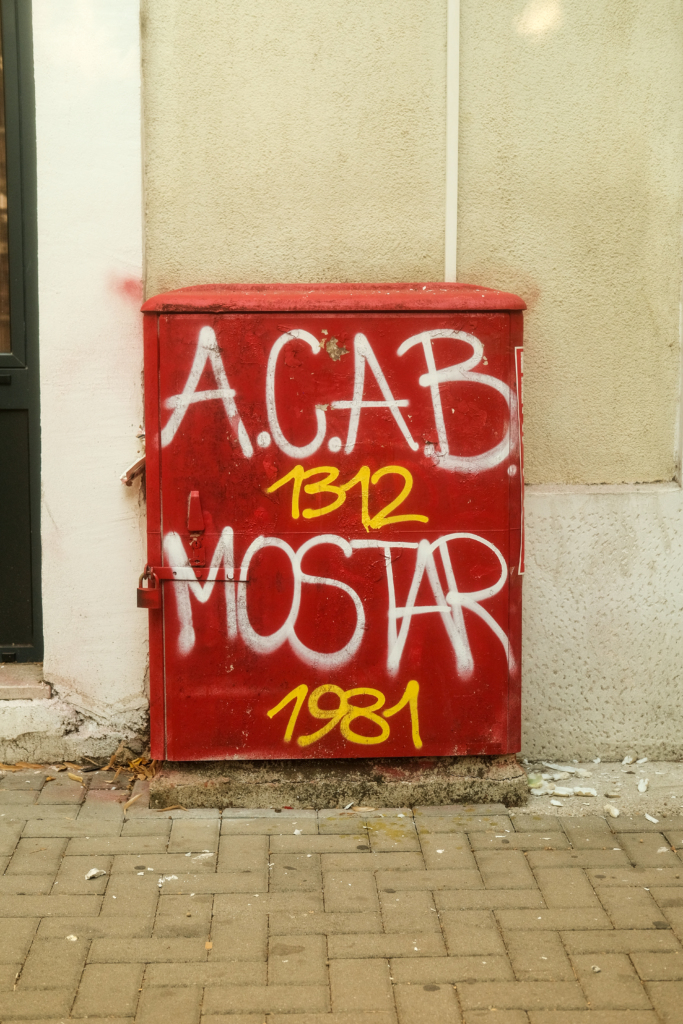
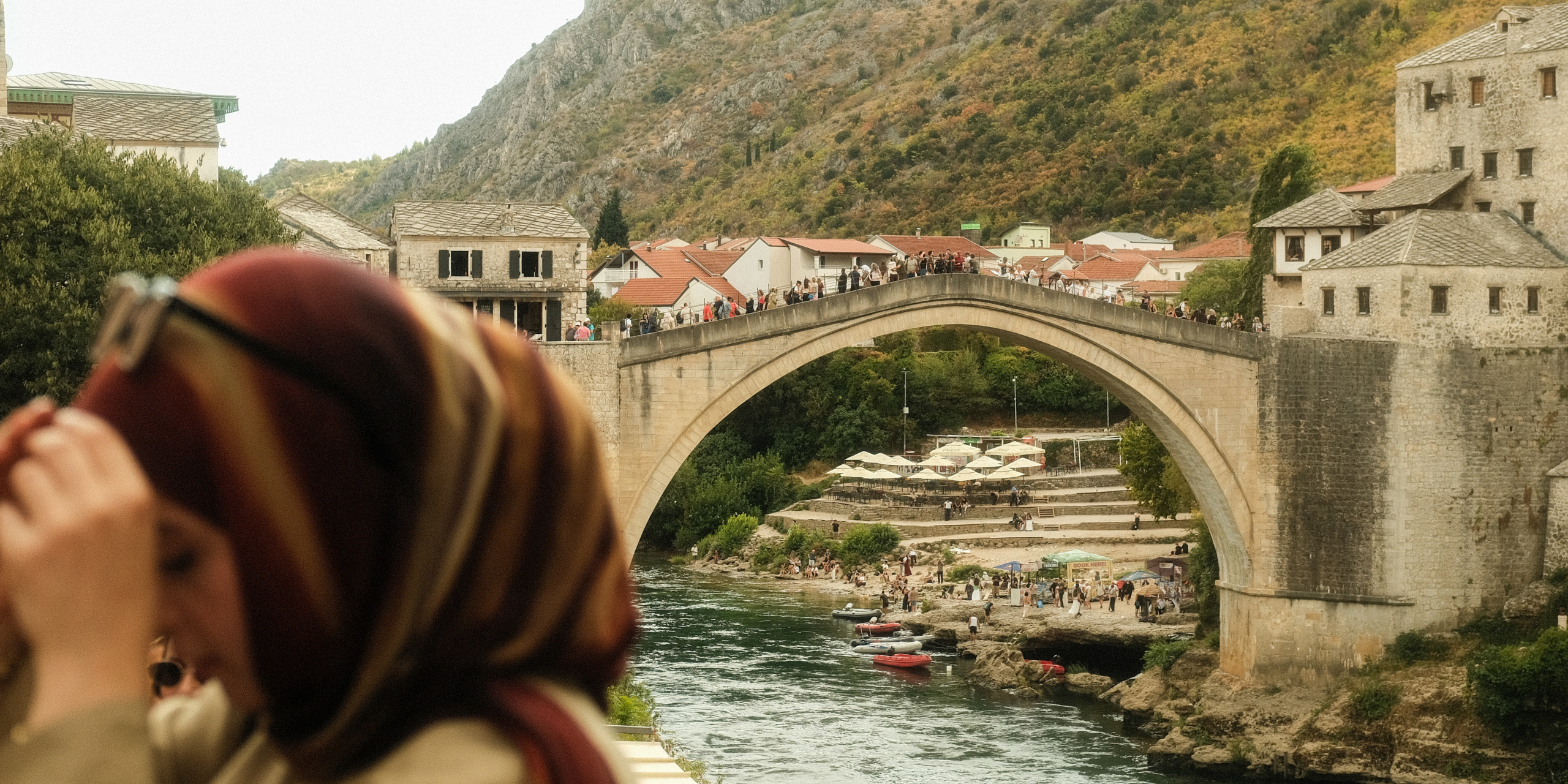
Walking through the empty old town, we experienced it as very quiet and serene at first. Walking over the empty Stari Most, with the polished stones reflecting the light, was quite impressive. Can recommend. The next day we discovered that our apartment was close to a prison with very impressive street art all around it.
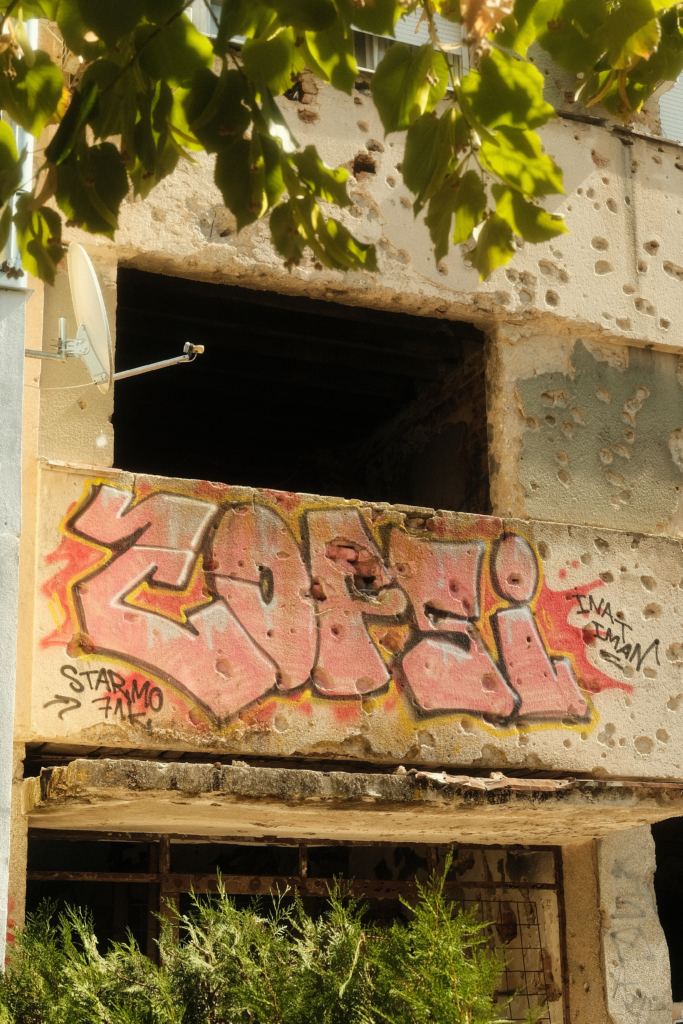
Not only divided by the Neretva
Stari Most, meaning Old Bridge, was originally built in the 16th century by a famous Ottoman architect, Mimar Hayruddin. It was destroyed in 1993 in the Bosnian War. The bridge was shot at so many times that it broke down and vanished into the Neretva. After the war ended, the Bosniaks and Croats split the city in two. Only Bosniaks live in the east and only Croats in the west. Stari Most, the namesake of Mostar (which derives from the word for “bridgekeeper”), was then rebuilt with stones from the same quarry as the original. In 2005, Stari Most and the surrounding Old Town were inscribed as a UNESCO World Heritage Site.
One day we booked a tour called “Death of Yugoslavia”. On our first stop, our tour guide took us to an old, almost abandoned aircraft hangar, Project Buna, which was built in secret during Tito’s reign. Half of the hangar is now used as storage for construction material. As a lot of military construction and many bases were hidden from the public, it is almost unthinkable how such a big hall, built inside and under a mountaintop, could be hidden for so long. The other half of the hangar is used by Roma people as a home.
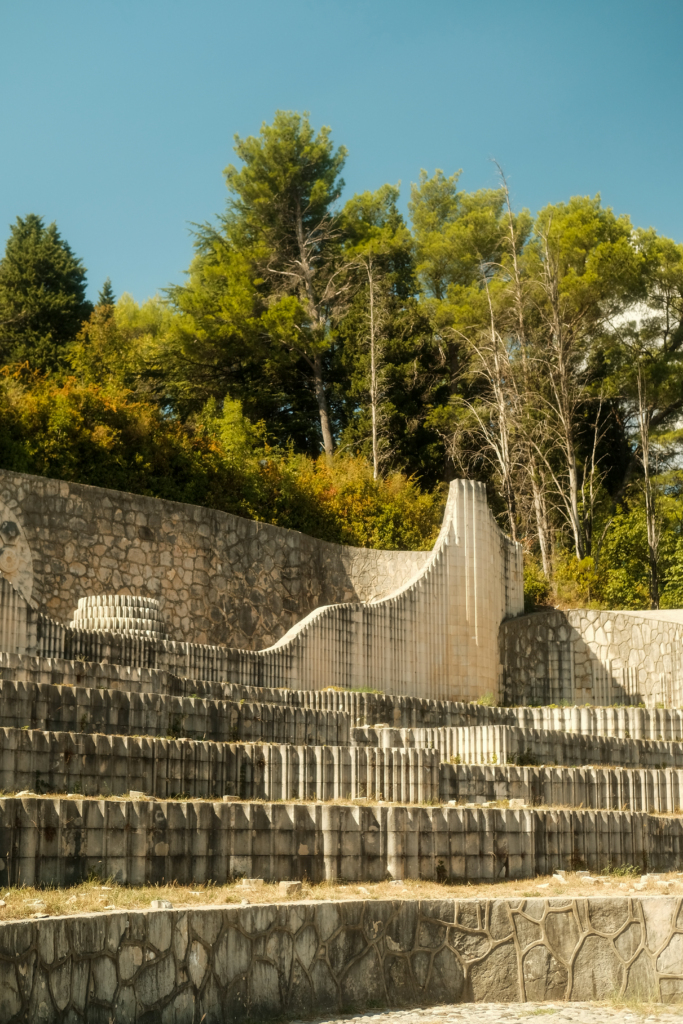
The third station was the sniper tower, where snipers who shot at random people were stationed. At our last stop, we went to the Partisan Memorial Cemetery of the Second World War, built under Tito’s rule in Yugoslavia. Our guide told us that when she was a child, she had to go there with her class and they pledged allegiance to Tito.
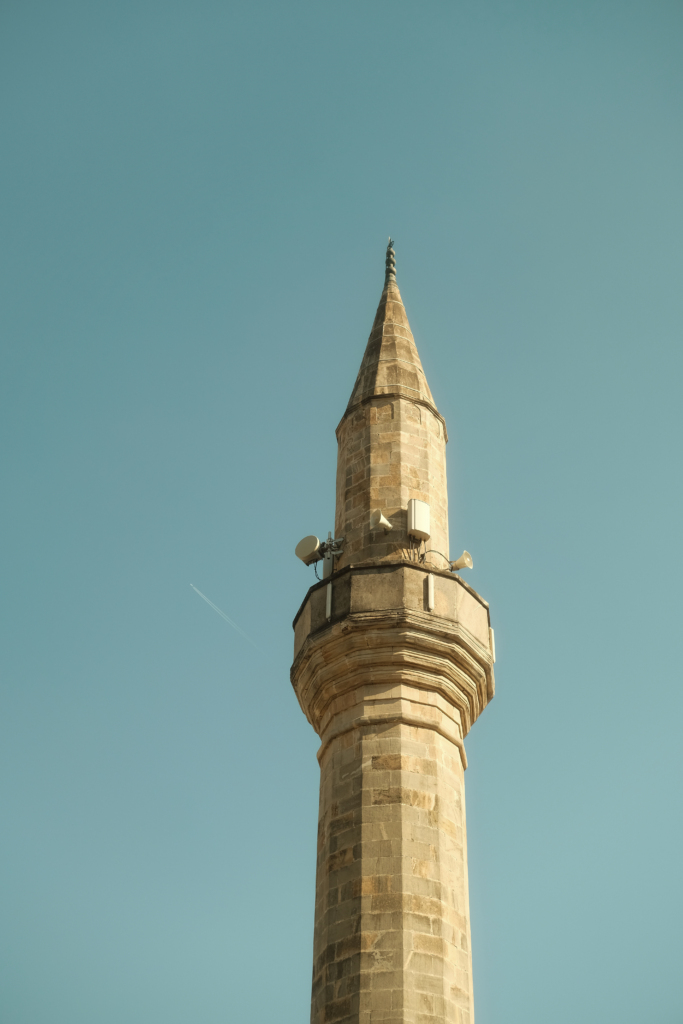
I really recommend reading the article by Arna Mackic on FailedArchitecture.com to get a deeper understanding of what destruction can do to a population and what the current state of feeling is. Now, 31 years after the Dayton Agreement was signed, Bosniaks, Serbs and Croats still keep to themselves. Bosniaks live in the east of Mostar and Croats in the west, which is quite noticeable in the separation of mosques on the east side and churches on the west. The electoral and presidential system is also divided. One Bosniak, one Croat (both elected from the Federation of Bosnia and Herzegovina) and one Serb take turns serving eight months each. The school system is also still divided into Bosniak and Croat schools, the only exception being the United World College (UWC) Mostar.
“Founded in 2006, initially as a short-term project, UWC in Mostar is now firmly established as a College at the heart of the UWC movement. Common to all UWCs, we educate students drawn from an extraordinary breadth of backgrounds and nationalities.” Source
A bombed bridge symbolises the underlying conflict between the two sides. It was rebuilt, but it will never be the same again. It is important to note that minorities living in Bosnia and Herzegovina have no state representative.
“The word ‘minority’ in Bosnia and Herzegovina (often referred to as ‘BiH’) is laden with political meaning. The former Yugoslav and current Dayton Constitutions reference ‘constituent peoples’, a concept that consciously divides society into groups who are recognized as having a stake in the country, and minorities who presumably do not. Fear of becoming a minority and memories of what happened to minorities during the World Wars fueled the 1990s war, and that fear is still the driving force in the country’s polarizing political system. As per the Dayton Agreement, there are 17 officially recognized national minorities in Bosnia and Herzegovina: Albanians, Czechs, Germans, Hungarians, Italians, Jews, Macedonians, Montenegrins, Poles, Roma, Romanians, Russians, Ruthenians, Slovaks, Slovenes, Turks and Ukrainians. However, all ethnic groups in Bosnia and Herzegovina can be considered minorities at least locally, as all face marginalization in areas where their ethnicity is not dominant.” Source
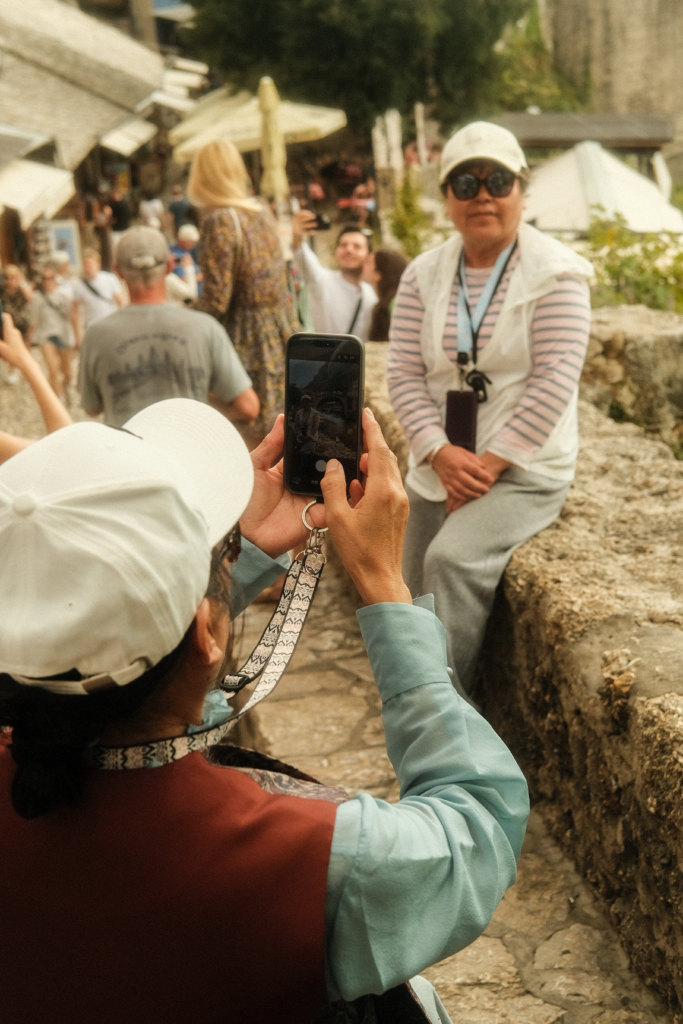
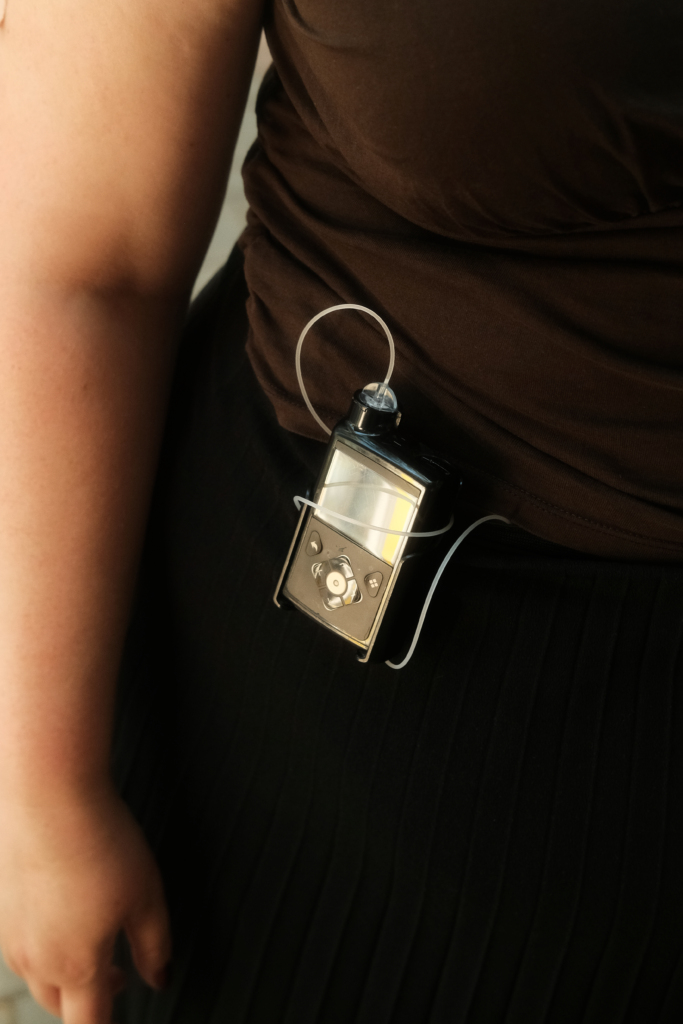
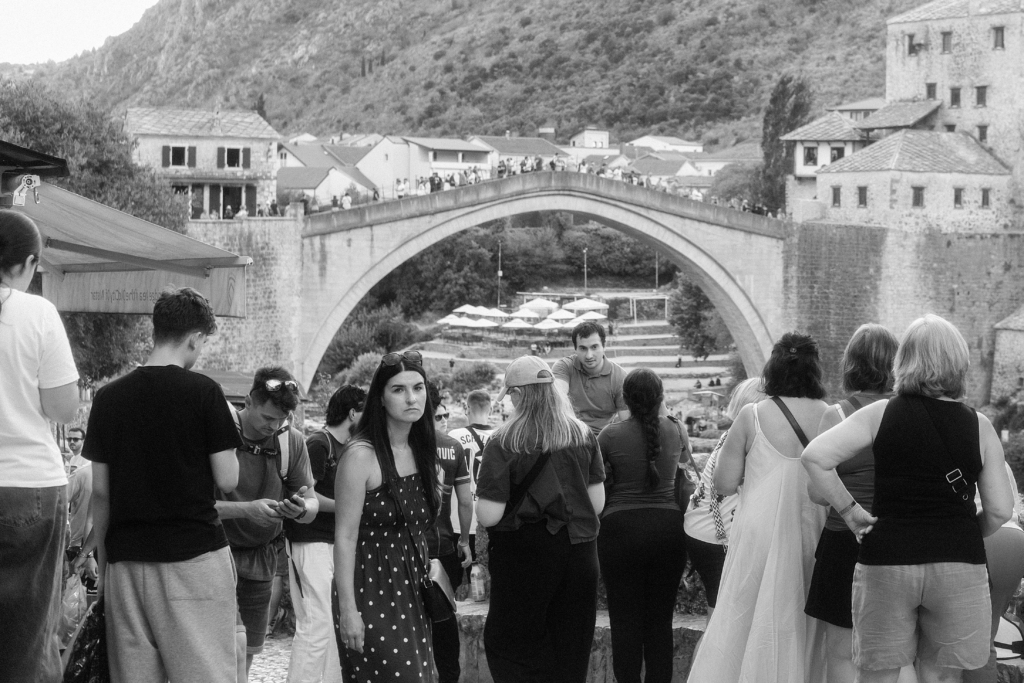
How do people escape the sun in Mostar?
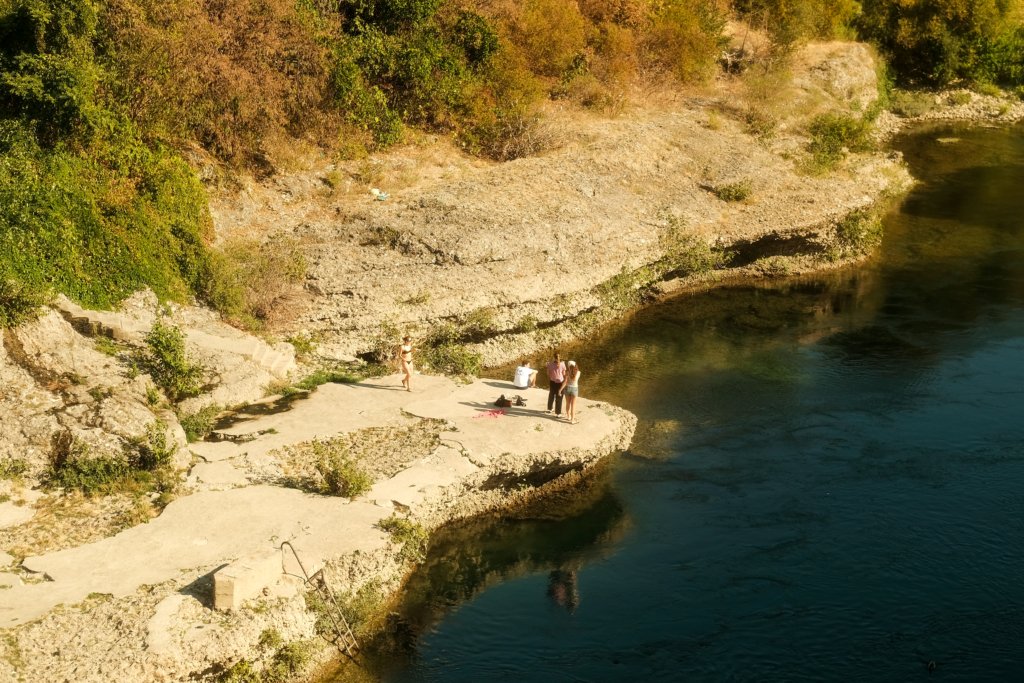
Our next days were again spent walking around and exploring the old town, but now it was different. During the day, the old town was crowded. It felt like a never-ending loop, watching people (and doing it ourselves) all taking the same photograph of Stari Most. What was also quite interesting is that, because of our “content production” for Instagram, one sees the same loop of scenic videos over and over again: people jumping from Stari Most (I could never; my CGM sensor would just vanish) and a panning drone view of the bridge and Old Town.
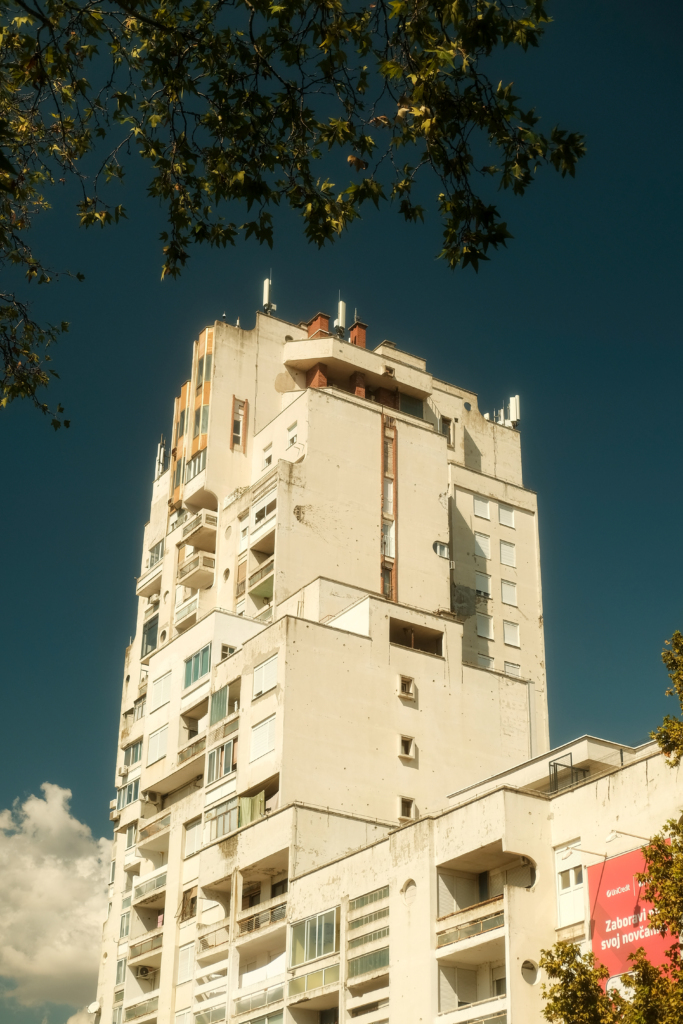
Coffee places are everywhere in Mostar. When you walk outside the old town, where wide streets start to form, lined with high-rise blocks from the Yugoslav era, you will find everyday life and actual shade. Enormous trees line the streets, and you will find coffee place after coffee place. On the Sunday when we walked this road, people had gathered in the cafés, easily shaded by tall buildings and trees.
In retrospect, Mostar and Bosnia and Herzegovina left a deep interest for exploring more of the country and gain a deeper understanding about differently experienced histories.