


Day 1
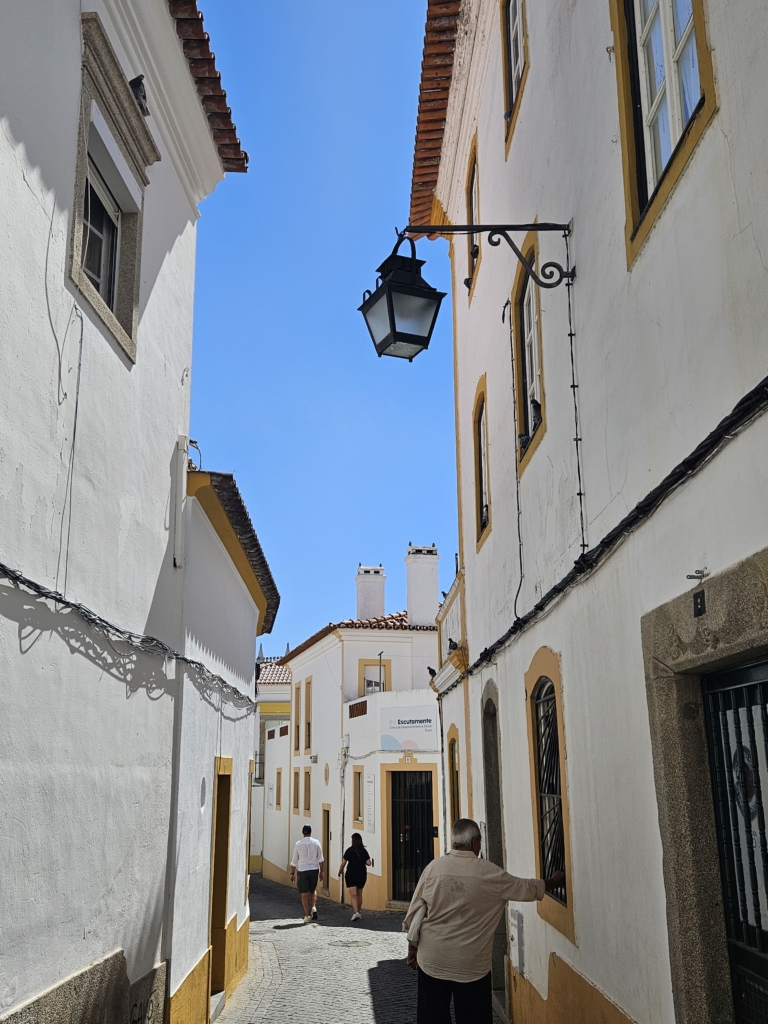
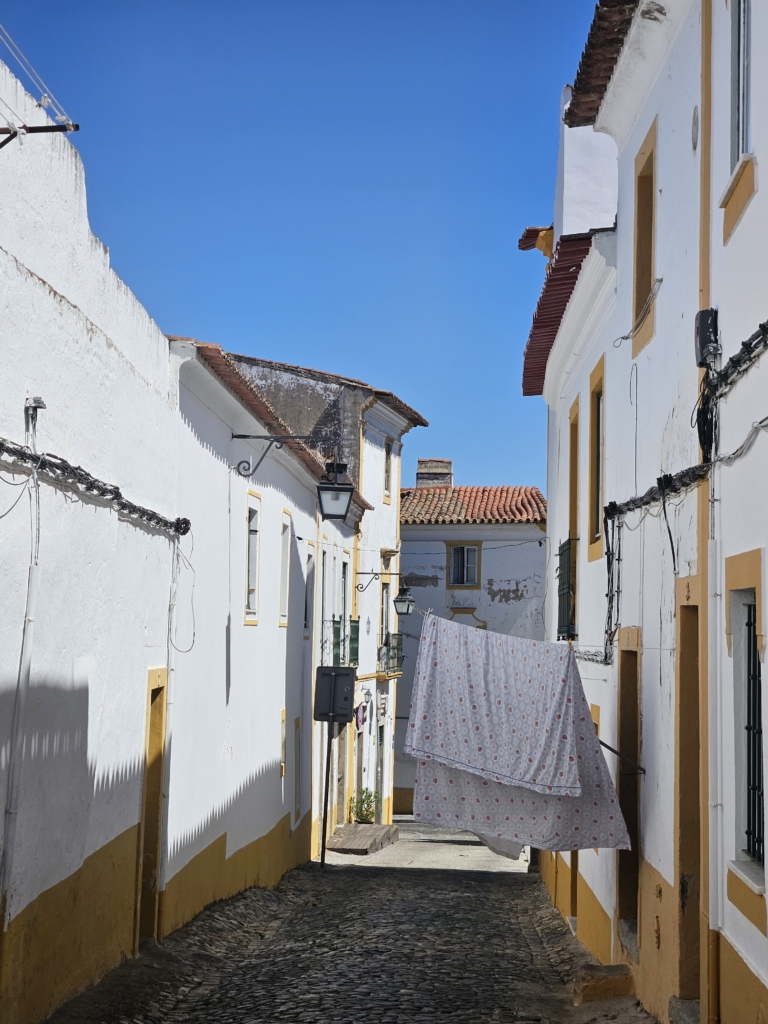
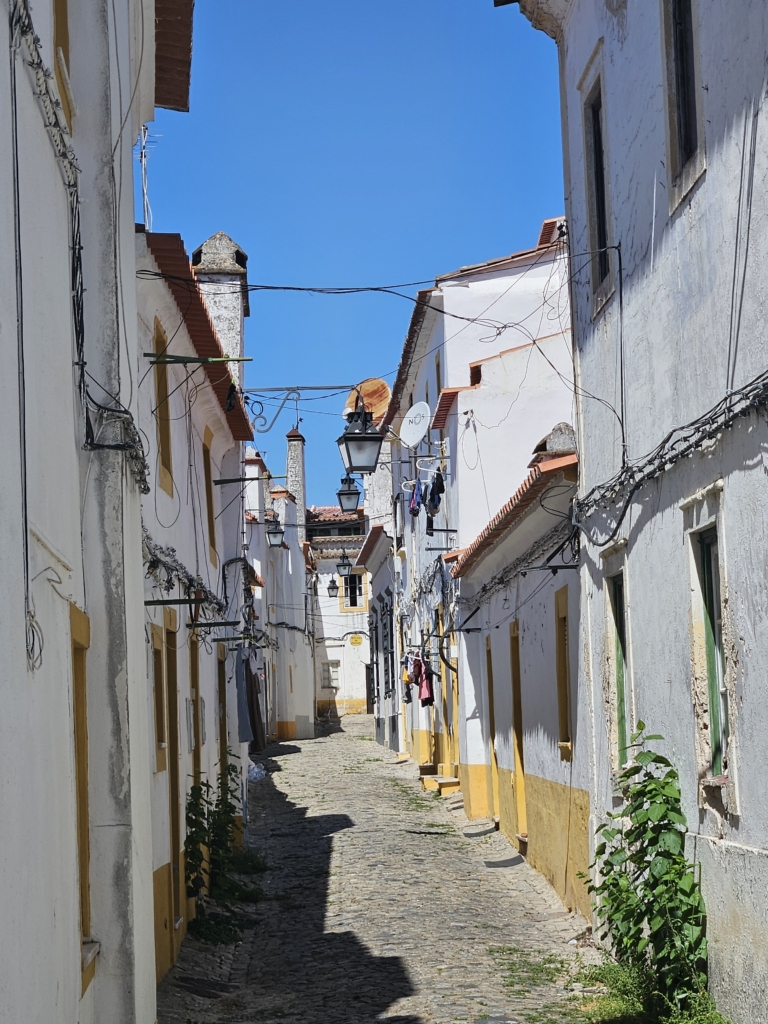
After enjoying a scenic train journey through the beautiful Alentejo countryside, we arrived in Évora. Once in the city centre, we set out to find some young locals. As we wandered through the narrow alleys, we were immediately captivated by the whitewashed houses with yellow trim. The winding streets and uniformly coloured houses made us feel as though we were in a maze.
After dropping off our backpacks, we went to the Jardim Público and visited the Palácio de D. Manuel. Built in the late 14th century on the site of the former São Francisco monastery, the palace served as the seat of the Portuguese royal family for a long time. It was Manuel I, however, who transformed the palace into a magnificent royal residence in the 16th century, giving it his name.
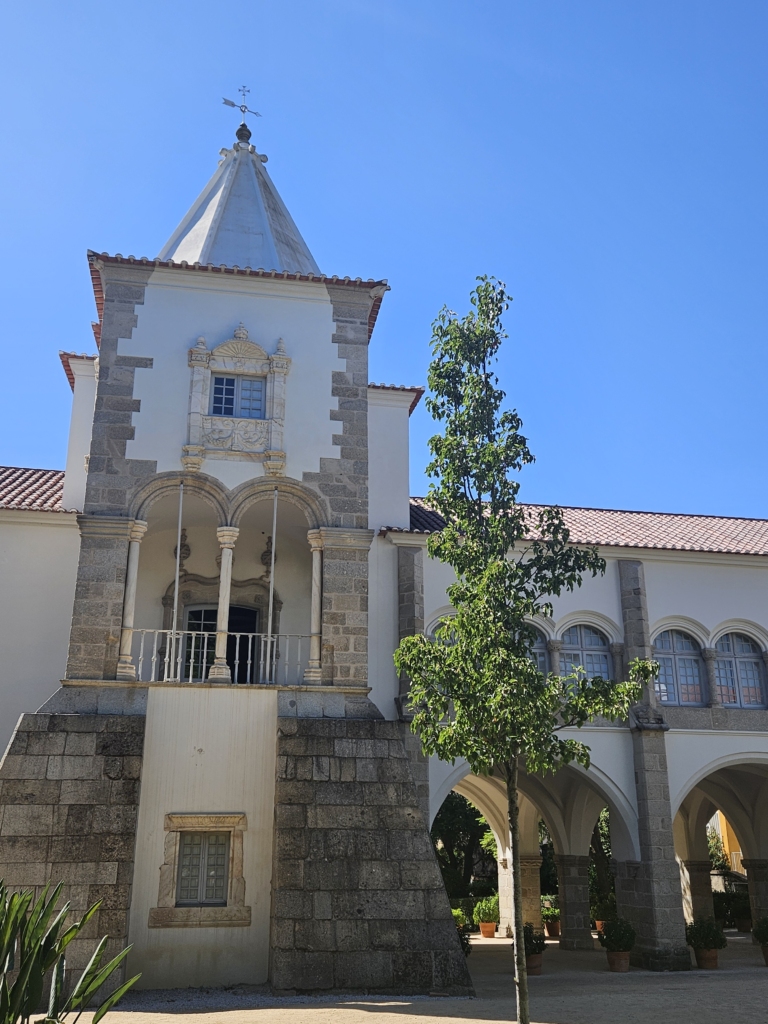
Today, the palace houses a museum dedicated to the history of Évora. Évora became a Roman municipium under the name Ebora Liberalitas Julia. During the Roman era, the city acquired its initial infrastructure and fortifications, and the Roman Temple in the city centre is unsurprisingly also from that time. From the 7th to the 12th century, Évora was an Islamic settlement known as Yāburah. A mosque and a trading centre were established here, as well as settlements outside the city walls. It was subsequently conquered by the Portuguese in the 12th century, after which it became part of the kingdom. Évora gradually expanded, adding new city walls, a cathedral, an aqueduct and an university, while gaining political importance within the realm. Thus, Évora has a remarkably diverse history, reflected in its cityscape.
Afterwards, we made an somewhat unusual stop at the university, where an anime convention was taking place. There were lots of young people in cool outfits and elaborate cosplays, as well as numerous artists, selling handmade stickers, keychains, jewellery and other anime-themed items at small stalls. One of the highlights for us was the ‘K-Pop random play dance’: visitors gathered in an open area while short excerpts from K-Pop songs were played in succession. If they knew the corresponding choreography, they stepped out of the crowd and performed the dance. It was wonderful to see how the anime convention created a safe space where people could celebrate themselves and each other, drawing attendees from far beyond Évora, as we discovered through conversation.
Local perspective: calmness, close community and culture
Beatriz has lived in Évora for almost a year. She moved here from Brazil to study at university. She likes living here because it is a friendly, relaxed city. However, she also sees some disadvantages, such as the supermarket being far from the city centre and there being too few public places for young people. She also feels that the public transport system could be better. She really enjoys the city’s energy and its historical and cultural aspects, as well as its young people. In her free time, she loves going to Praça Giraldo with her friends for coffee.
Nada grew up in Morocco and moved to Évora to study. She lived in Lisbon for a while, but returned to Évora because she feels calmer and safer here. She likes the fact that she can walk everywhere and doesn’t need to use public transport. In her free time, she enjoys visiting the Temple of Diana, the Praça de Giraldo and the Jardim Público.
Pedro was born in Évora, while Anna was born in Germany and moved here when she was a child. She likes that the city is quiet and calm. Pedro also likes the close-knit community, where everyone knows each other from school or university. He especially enjoys spending his free time at Alto de São Bento, a hilltop with stunning views of the city. They both also enjoy the viewpoint next to the Roman Temple of Diana.
Sketch and watch: Jardim Diana
We set off for the viewpoint next to the Roman Temple of Diana, Anna and Pedro’s favourite spot. By the time we arrived at the park, the sun was setting. We knew right then that this was the place where we’d hold our final ‘sketch and watch’ session.
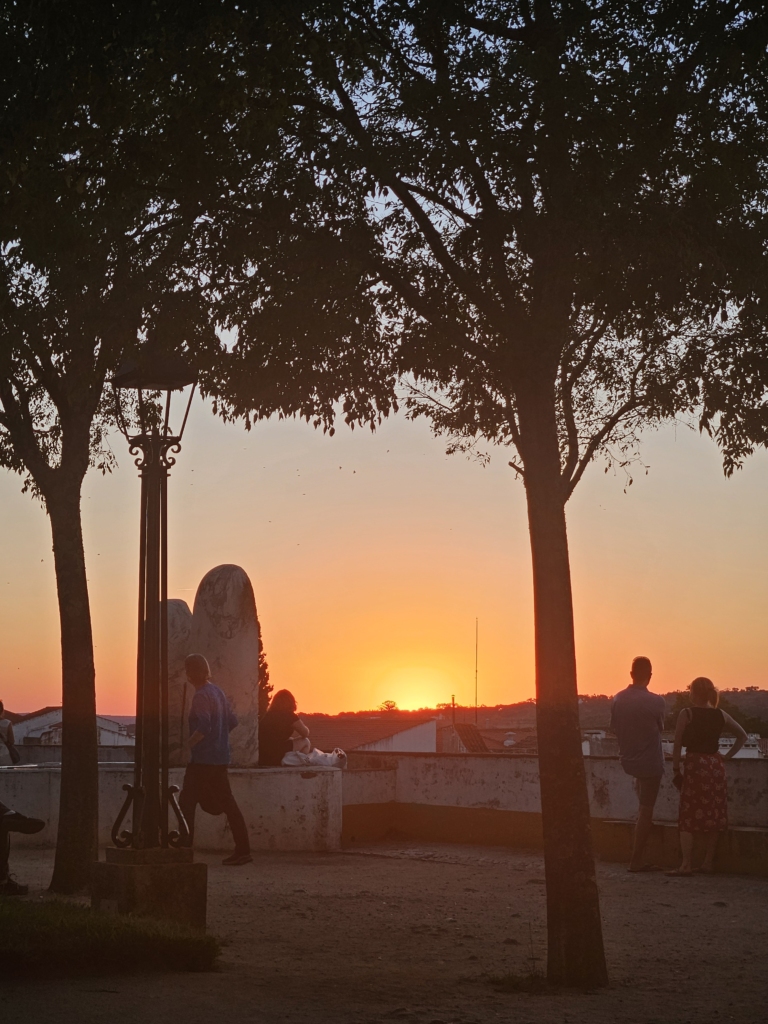
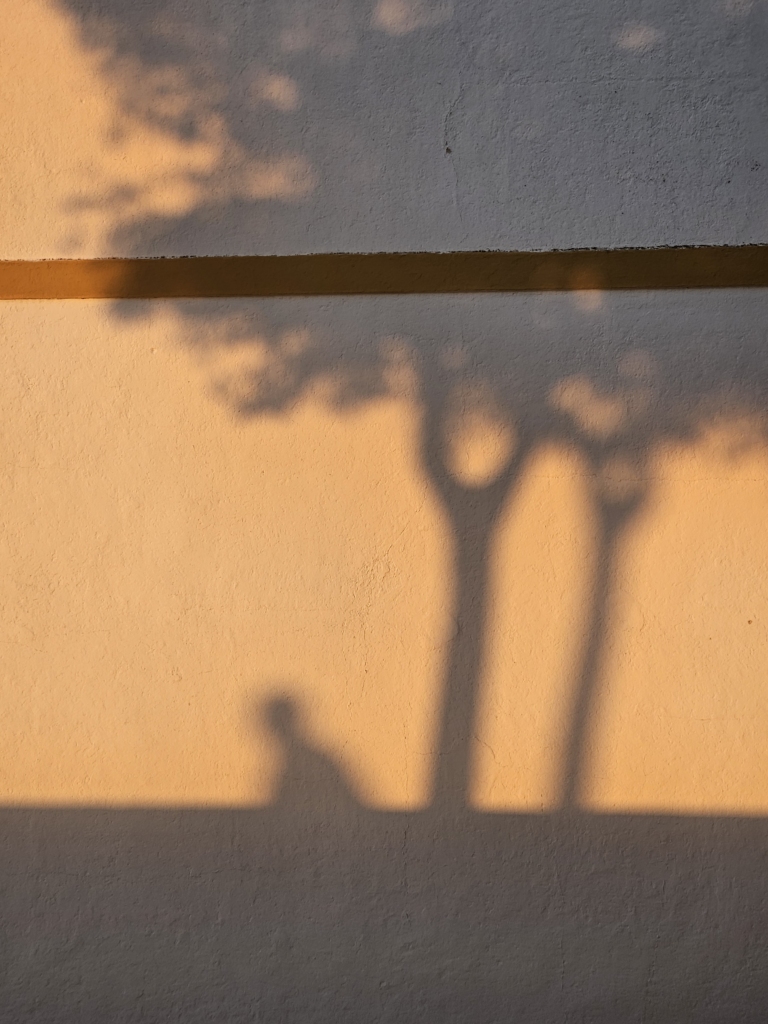
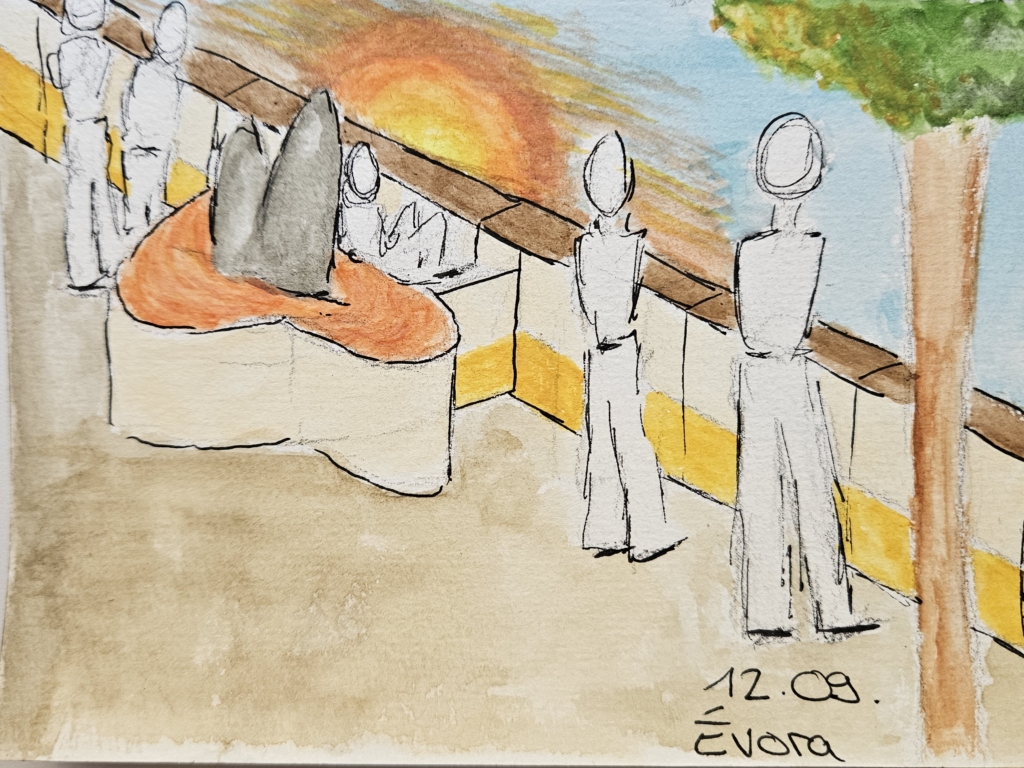
Évora – shared sunset at Jardim Diana
1. Jardim Diana is located right next to the Roman Temple in Évora. However, the park’s main attraction is not so much the nearby landmark, but the beautiful view of the northern part of the city with its narrow streets and yellow and white houses.
2. Our timing is perfect: we arrive at the park just in time for sunset. Many visitors are sitting on benches or leaning against the railing of the viewing platform. The setting sun casts its silhouette against the orange-lit building behind us.
3. This enchanting display of colour is complemented by a unique soundscape: several small flocks of birds swarm from tree to tree across the golden sky above Évora. Their collective chirping sounds like a mighty rumbling – both frightening and fascinating. Their singing ends just as the sun sets.
4. The many multilingual tourists on the viewing platform can be identified by their eagerness to capture the perfect sunset photo. Just before the golden moment, everyone jostles to reach the railing – it’s practically full to bursting. I, too, briefly pause my observations so as not to miss the beautiful sunset. I’m shocked that so many of the tourists leave the park straight away once the sun has set. They’ve just ticked that moment off their list – they haven’t really enjoyed it.
5. A man spends what feels like an eternity filming the sunset. Afterwards, he enthusiastically shows it to his wife. She seems uninterested. Instead, she hands her mobile phone to her husband. The purple sky and her purple evening dress provide the perfect backdrop for an Instagram photo – so, just to be on the safe side, a thousand photos are snapped from every angle.
6. A simply dressed man enters the park with his large dog on a red lead. Even at the entrance to the park, he has to calm the dog down, as it is very excited. They walk straight towards a water feature at the top of the platform. The dog dips its snout into the water – something it’s been looking forward to. They then walk over to a bench by the railing. The dog positions itself so that it can also look out at the sunset.
7. The dog stretches out on the bench, prompting its owner to strike up a conversation with an elderly woman sitting next to it. She starts talking in Portuguese, but they quickly switch to English – presumably because the man wouldn’t otherwise understand her. They chat about the dog whilst the woman strokes him. The dog is really enjoying it. The woman then gives the dog a command in Portuguese: ‘Sit!’ The dog obeys. Is he bilingual?
8. A young woman joins the group – they all greet each other warmly, speaking Portuguese. Equipped with a professional camera, she takes a photo of the woman, the dog and the owner. I’m confused. Why were they speaking English earlier? Are they strangers, friends or even family? Are they from Évora or are they tourists? In any case, the dog brings them all together – they enjoy the sunset in peace and conviviality.
9. An extended family makes their way to the viewing platform – they’re too late for the sunset. Some of them are taking photos of the view; children film videos and chase each other around the park; a boy is repeatedly pulled away from the parapet by his mother because he keeps trying to look over the edge. Depending on who is talking to whom, they switch between Portuguese and English. I get the impression that some of the twenty-strong family live in Évora, while the rest are visiting. One man in particular leads the group and tells the other members about what they’re seeing – the other group members are the ones taking most of the photos. After some of the family have already left the park, a loud whistle sounds, whereupon the remaining family members also slowly make their way away from the viewing platform.
10. A young woman sits cross-legged between the water feature and the parapet. Although she has a perfect view of the sunset, she remains cut off from the crowd. Several plastic bags lie beside her. Every now and then she eats a little something from them. Before, during and after the sunset, she enjoys her little picnic. Did she deliberately choose to spend her evening like this? Or did she come to the viewing platform on a whim after her shopping trip?
11. A young couple approaches the balustrade – he leans casually against the railing, she snuggles smoothly up to him. They talk intimately, exchange glances and enjoy the last light after sunset. They had previously been sitting on a bench away from the hustle and bustle for quite some time, only moving to the platform when it was virtually empty. They wanted some space to themselves.
12. Throughout my observation, two men sit on two opposite benches in the park: one man is very old. With his legs crossed, he sits slightly stooped, reading his little green booklet, which he holds up with one hand. The second man is young and wears a blue durag. He is also engrossed in a book, which he has opened on his lap. Neither of them seems particularly interested in the sunset.
The sun’s rays have now disappeared, and with them, so have almost all of the visitors. They experienced the sunset in very different ways: many tourists came just for a photo and left soon afterwards. The locals enjoyed the tranquillity with their loved ones, had a picnic to see the evening draw to a close, or lost themselves in a book. Ultimately, however, the sunset belonged to everyone – locals, tourists, dogs and birds. But surely not all visitors were able to truly experience the enchanting tranquillity of the moment.
Day 2
On our last day, we first made our way to the medieval aqueduct. We were amazed to see how the historic structure had been incorporated into the city, with houses even built into it.
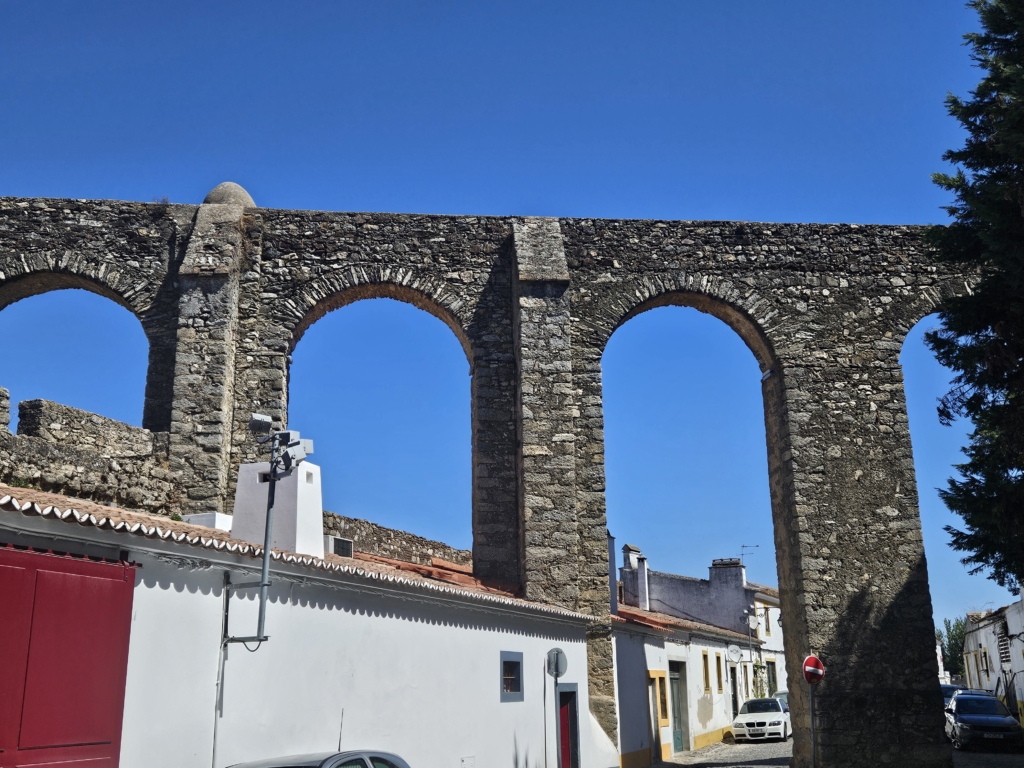
We then moved on to the Roman Temple. It was not until the 19th century, following archaeological research, that the ancient temple’s unique nature was recognised and appreciated. Prior to this, it had even served as a butcher’s shop. There is a persistent (though unconfirmed) belief that the temple was dedicated to the goddess Diana. Consequently, the locals consistently refer to it as the Temple of Diana, whereas official English translations simply list it as the Roman Temple.
Our next stop was the Cathedral of Évora, which is apparently the largest medieval cathedral in Portugal. The cathedral’s roof offered a panoramic view of the entire city; surprisingly there was a large number of yellow butterflies up there. We were captivated by the blend of Romanesque and Gothic architectural styles in the cathedral, in particular also the interplay of light and shadow in the cloister.
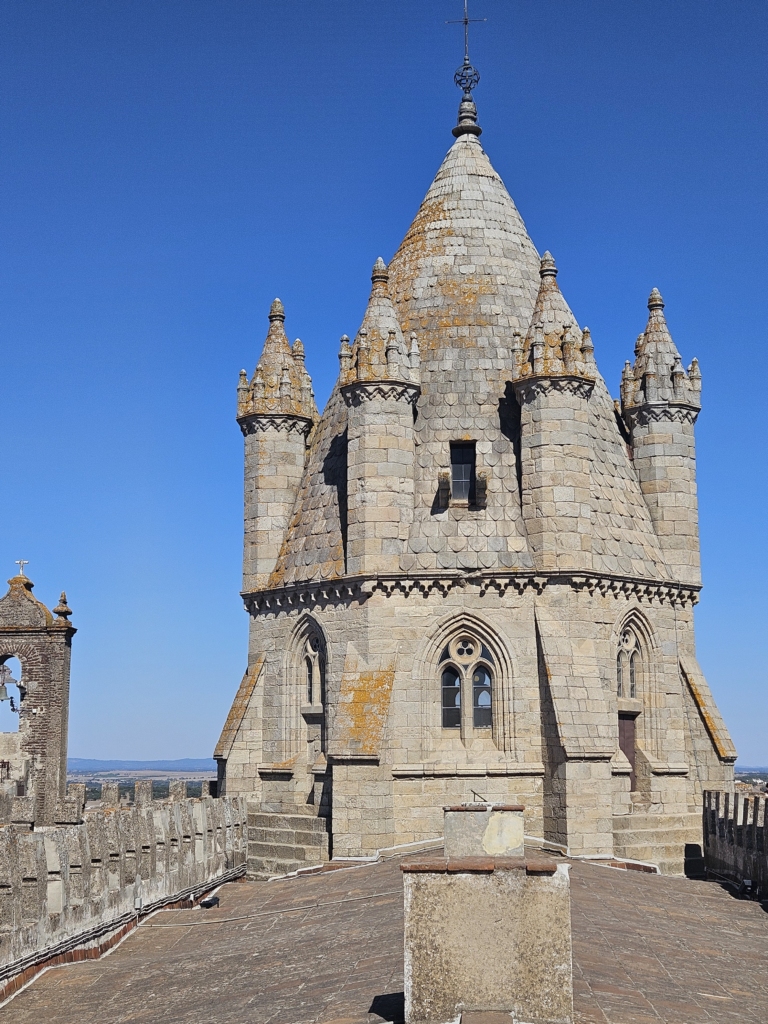
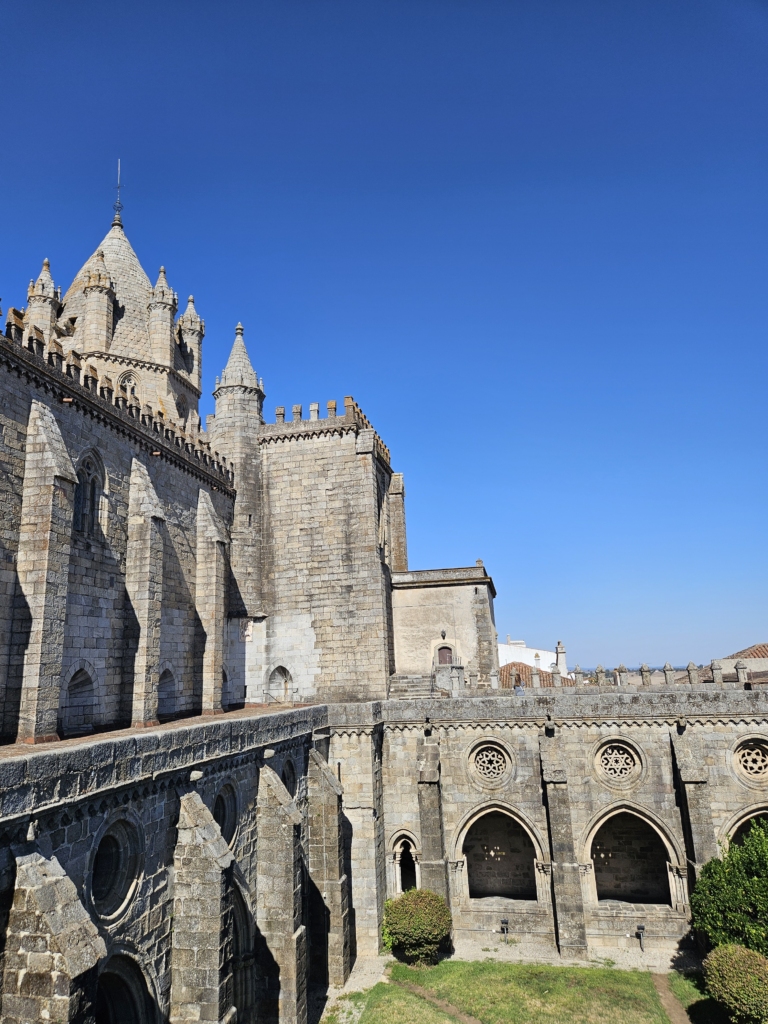
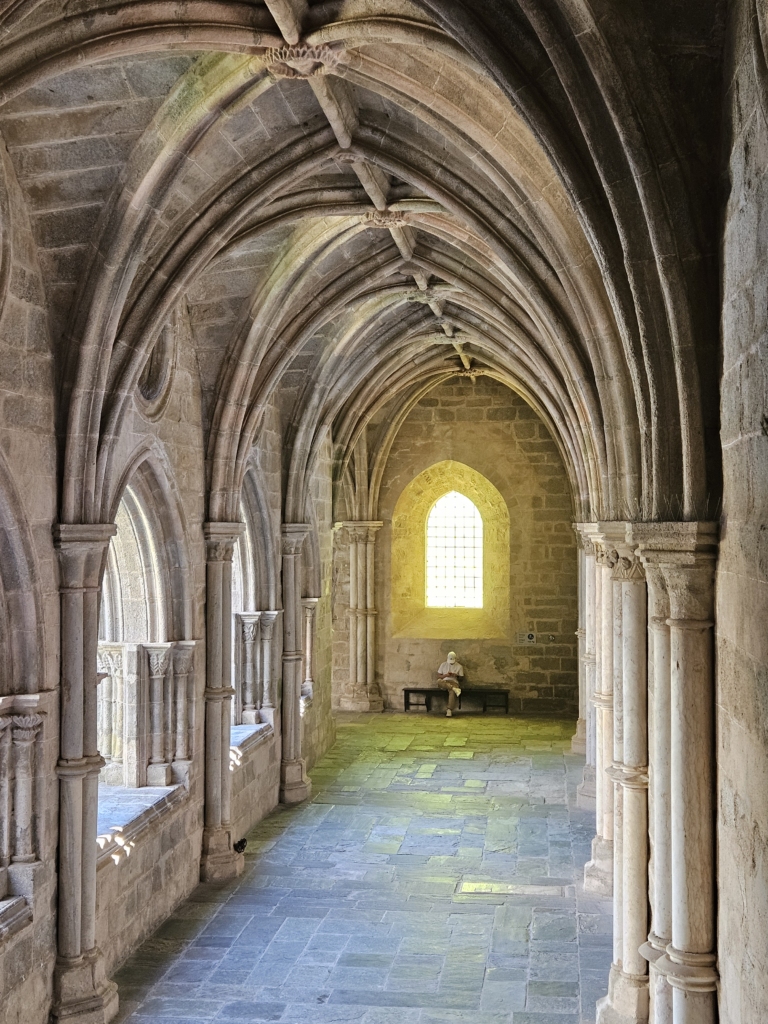
After a brief visit to the beautiful and much larger-than-expected Igreja e Mosteiro de São Francisco, we took a short break and enjoyed some ice cream in the Jardim Público. While we were there, we saw lots of peacocks that apparently live in the park.
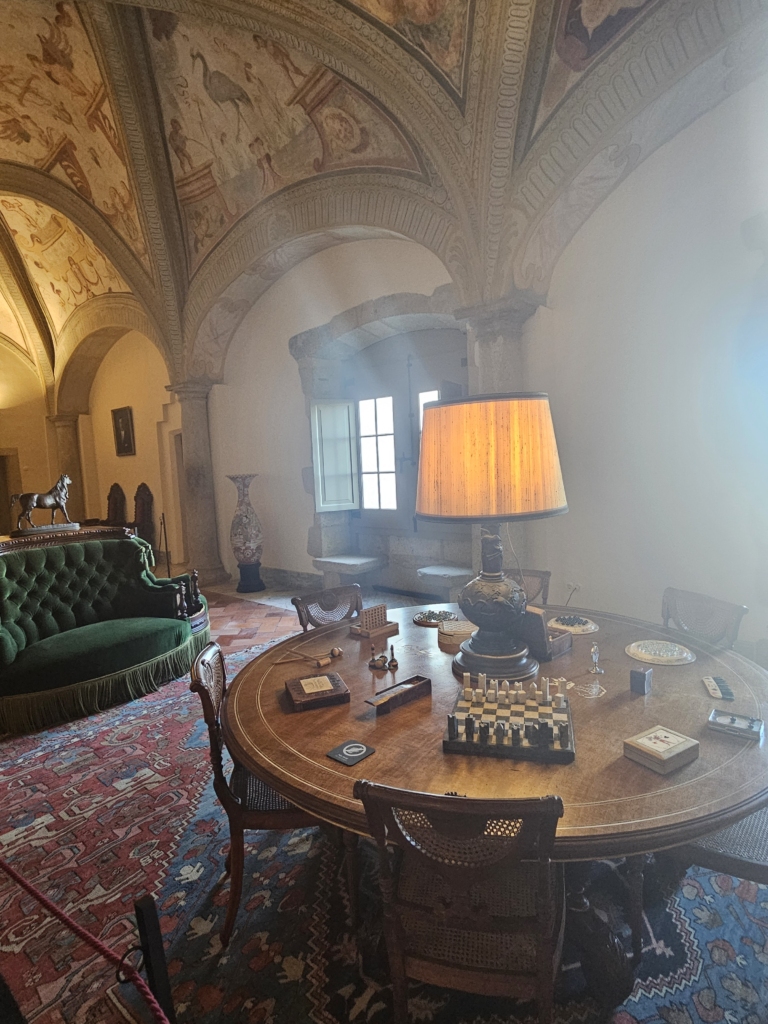
Our final stop of the day was the Paço de São Miguel, a building with a long history dating back to the city’s Muslim era. It has had numerous owners and undergone many changes. Highlights include the ceiling frescoes depicting Ovid’s Metamorphoses, the well-maintained garden, the extensive collection of kitchen copperware and the impressive furniture.
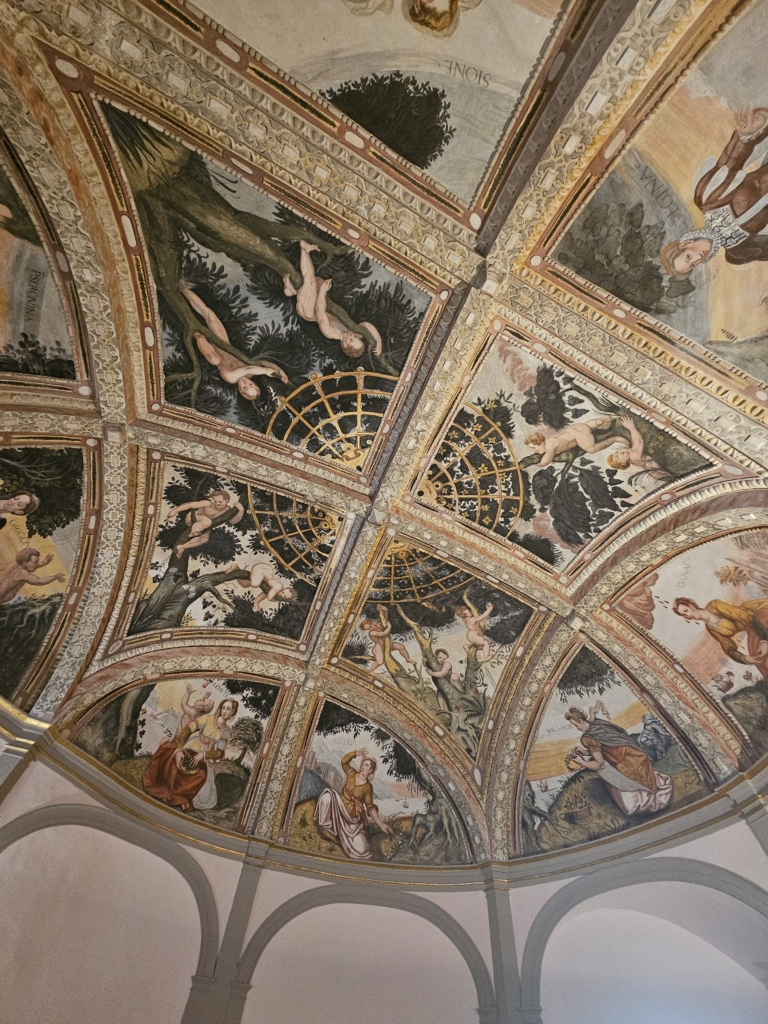
Once again, we ended our day at the viewing platform by the Roman Temple. The sunset the previous day had been so beautiful that we wanted to enjoy it again on the last evening of our trip. Sadly, we had to leave Évora the next morning, but not before having a quick coffee with Paula from the Municipality of Évora!
The locals painted a picture of Évora as a tranquil place with a close-knit community. By the end of our trip, we could really feel this sense of unwinding. Although the city itself is small, it has a young, international population — largely thanks to the university — and is located in a beautiful region that lends itself to exploration, which is highly valued.